Residential Tuckpointing and repointing in Atlanta
Repointing swaps the worn mortar between your bricks for new mortar. The bricks stay put, and the joints get a fresh start that keeps water out of the wall.
Qualified MasonsVerified ProfessionalsFree EstimatesOn Time
What tuckpointing and repointing involves
Here's what that means in plain words. Mortar is the softer part of a brick wall, and it's meant to wear out before the brick does. We grind or rake the tired mortar out to a steady depth and pack in new mortar matched to your house. Chimneys, porch steps and garden walls get the same attention as the front of the house.
So when do you need it? When joints turn sandy, crack, or sit back from the brick face, rain gets in and works on the wall from the inside. Freezing weather makes it worse, because water in a joint expands as it freezes. Waiting rarely saves money. We'll look at your house, show you what we find, and give you a free estimate anywhere in Atlanta.
Signs you need tuckpointing and repointing
Key testPress a house key into a joint and drag it. If mortar scrapes out easily or crumbles, it has lost its grip and it's time to call us.
Sand at the baseLook on the ground or the sill below a wall. A little pile of grit means the joints are breaking down and washing out.
Recessed jointsWhen mortar sits well behind the face of the brick, water has a ledge to collect on. Run a fingernail along the joint and you'll feel the gap.
Damp insideStains, peeling paint or a musty smell on an inside wall can mean water is coming through open joints outside. We'll check the brick first.
What we handle
Spot repointingSome walls wear in patches, usually where a downspout splashes or the weather hits hardest. We cut out only the bad areas and blend the new mortar into the old.
Full-wall repointingWhen the joints are worn across the whole wall, patching leaves a quilt. We redo the entire wall so the color and joint finish stay consistent.
Chimney repointingChimneys take sun, wind and rain on every side, so their joints fail early. We work from the top down and tell you what we see at the crown while we're up there.
Steps, porches and garden wallsMortar here takes frost and foot traffic. We repoint the joints and tell you if any bricks are loose enough to need resetting.
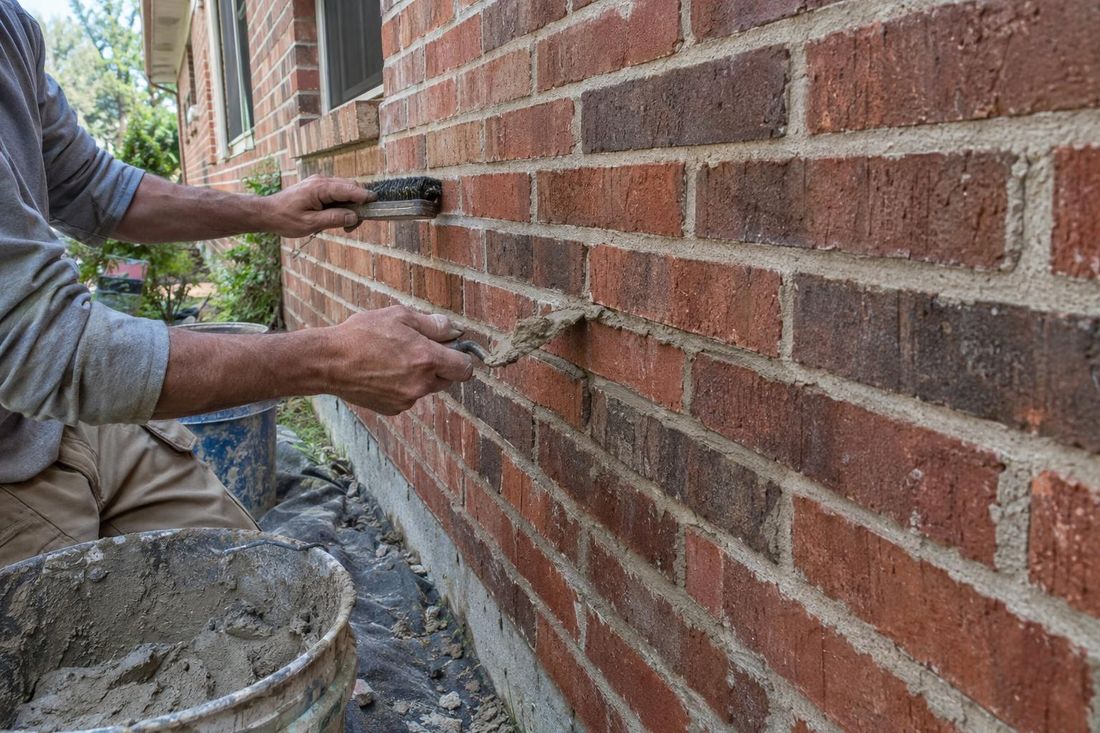
Hand repointing red brick wall A person holds a small trowel with fresh gray mortar against the joints of a red brick wall, with a wire brush in the other hand. A bucket of mortar sits in the foreground, and the newly filled joints appear lighter than the surrounding brick.
How we do it
We start by grinding or raking the old mortar out to a consistent depth, about twice the width of the joint. A grinder does the long runs. Hand tools finish the corners and tight spots, where a blade could nick the brick. Then we brush the joints clean and dampen them, so the dry brick doesn't pull the water out of the new mortar too fast.
New mortar goes in thin layers, packed tight with a pointing trowel. Then we tool it to match the shape of your existing joint, like concave or flush. Mortar type and color are matched to the house. On older brick we use a mortar that's no harder than the brick, because mortar that's too hard can chip the brick edges.
How a job with us goes
Free estimate and a mortar color sample
We walk the wall, press on a few joints and tell you what we see. Then we make a mortar color sample, so you can judge the match before we start.
Old mortar removed to depth
We grind or rake the joints out to a consistent depth. New mortar needs enough depth to grip, and a shallow cut can let go early.
Joints cleaned and dampened
We brush out the dust and dampen the joints. Dry brick drinks the water out of fresh mortar, and weak mortar is exactly what we're trying to get rid of.
New mortar packed and tooled
We pack the mortar in layers and let each one stiffen a bit. Then we tool the joint to match the existing profile. Layers cut down on voids, and tooling compresses the surface so it sheds water.
Wall brushed and cleaned after curing
Once the mortar has set, we brush the face and clean off haze and crumbs. We wait because scrubbing too early smears fresh mortar.
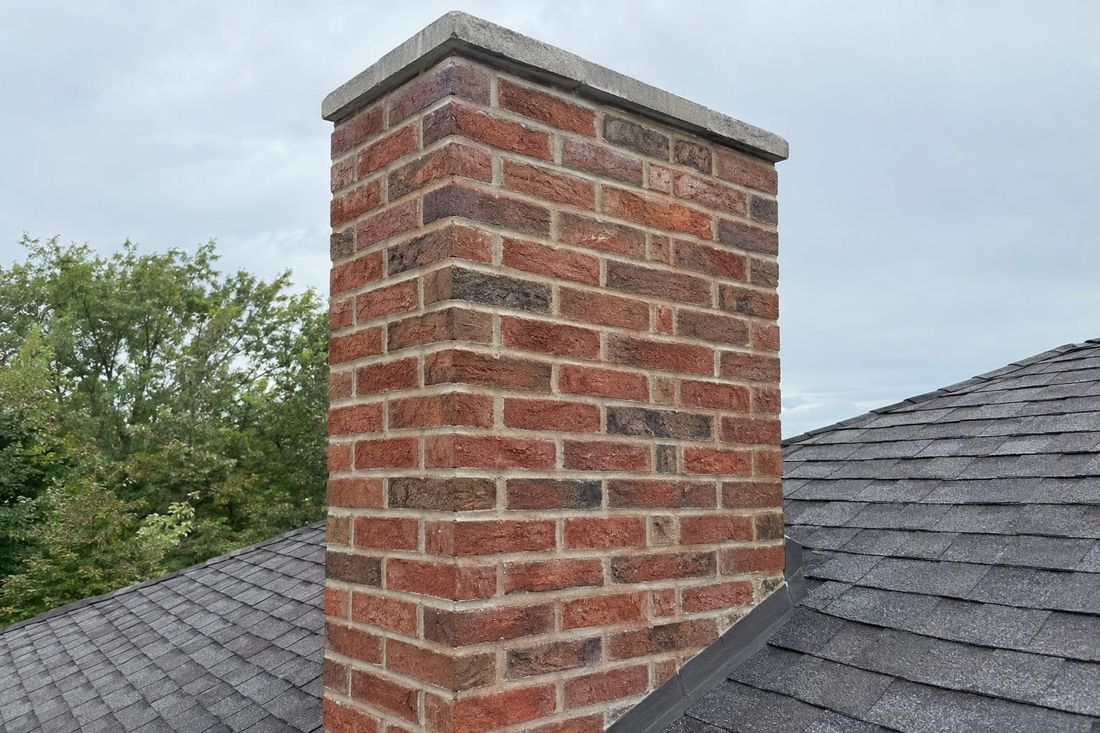
Red brick chimney with fresh mortar A red and brown brick chimney rises from an asphalt shingle roof, topped with a concrete cap. The mortar joints between the bricks look clean, uniform and light in color, which is what tuckpointed or repointed brickwork looks like.
What drives the cost
Price follows the work. The biggest driver is square feet of wall, since every foot of joint gets cut and filled by hand. Next is how deep the old mortar has failed. Joints rotten an inch back take longer than ones worn at the surface. Height matters too, because working from a ladder or scaffold slows the job and adds setup. And color counts. A close match is simple. An exact match to a weathered, one-of-a-kind mortar means more samples and more mixing. Show us what's bothering you and we'll give you a free estimate with those pieces laid out.
How long it takes
A chimney or a small wall is typically one to two days. A full house is commonly a week or more. Tall walls and deep failed joints push that number up. Weather has a say, too. Mortar doesn't set well in a hard freeze or a downpour, so we may pause and pick back up. We'll tell you our plan when we schedule.
Local expertise: residential tuckpointing and repointing in Atlanta
Atlanta gets about 49.7 inches of rain a year. Late winter, early spring and July are the wettest stretches, and fall, especially October, is the driest.
What it means for your job
Mortar, stucco and sealers need dry time. Fall is the easiest season for repointing and sealing, and summer work is planned around afternoon storms.
Overnight freezes can be expected on about 40 days a year in Atlanta.
What it means for your job
Water that soaks into brick, stone and mortar and then freezes is what pops faces off brick and opens joints. Keeping water out matters more here than in places that rarely freeze, and winter mortar work has to be protected overnight.
Repointing fixes the joints, not the bricks. If a brick is cracked or spalled, meaning its face has flaked off, we replace it as a separate job. Pointing around a failing brick only hides the problem. New mortar will look lighter than the old until it weathers, so don't be alarmed on day one. We also can't repoint our way out of a wall that's moving. If we see bowing or a stair-step crack running through the wall, that needs a closer look before any mortar goes in. And a color match is a close match, never a perfect twin.
Scrape a key across a joint. If mortar comes out, you see gaps or sandy joints, or the mortar sits well behind the brick face, it's time.
What is the difference between tuckpointing and repointing?
Repointing is replacing mortar. Tuckpointing strictly means a two-color joint finish, but most folks use the words interchangeably, and we'll know what you mean either way.
Will the new mortar match my old mortar?
Close, yes. We match mortar type and color to your house and bring a sample before we start. New mortar looks lighter at first and darkens as it weathers.
Is it messy?
Grinding makes dust, so we run a dust shroud on the grinder. We ask you to close windows on the working side and move cars, grills and patio furniture away. We clean up when we're done.
Can't I just caulk the cracks?
We wouldn't. Caulk over a bad joint usually peels and traps water behind it. Mortar is the right material for brick joints.