A paver driveway is built for the weight of your truck, not just your feet. Done right it outlasts concrete, and when something goes wrong we fix one paver instead of tearing out a slab.
Qualified MasonsVerified ProfessionalsFree EstimatesOn Time
What paver driveways involves
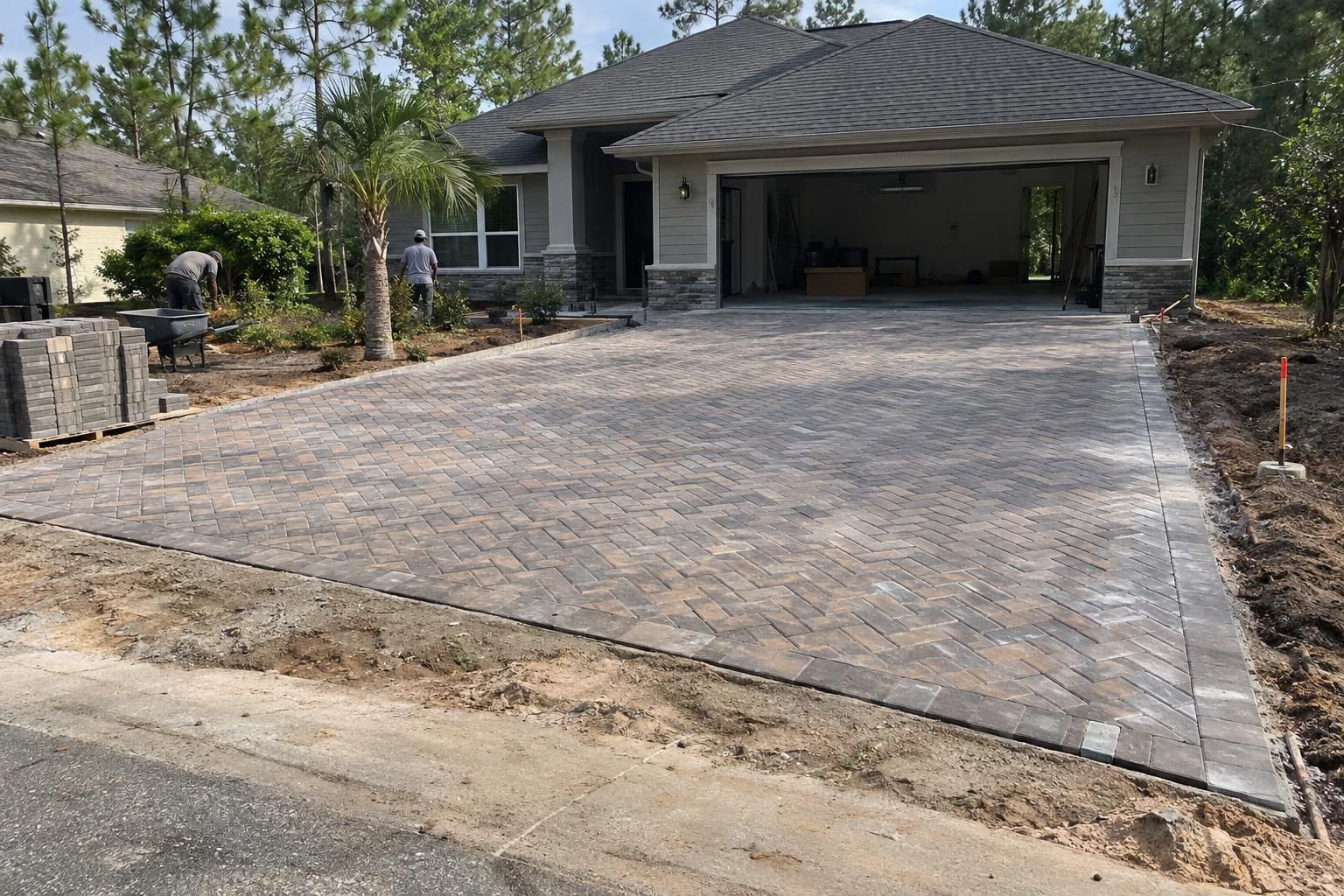
Here's what it is. We dig out the old drive, build a deep base in compacted layers, and set vehicle-rated pavers on top with a concrete edge holding them in. That base runs deeper than the one we'd put under a patio, because a driveway carries your car, the delivery truck, and the occasional moving van.
So when do you need one? Usually when your concrete has cracked, heaved or stained past the point of patching. Or when you're adding a parking pad and want it to look like it belongs to the house. We'll look at what's under your drive before we talk about what goes on top of it. Call us for a free estimate.
Signs you need paver driveways
Cracks that keep coming backPatching a slab once is fair. If you've done it twice, the base underneath has moved and the slab will keep splitting.
Sections that heaved or sankRoots, water and soft ground push and drop concrete. Pavers flex with that movement, and we can lift and reset them.
Stains and scaling you've stopped fightingOil, rust and flaking surface are hard to hide on a slab. A stained paver can be swapped out.
Water headed toward the garageIf puddles sit by the door after rain, the grade or the drainage needs work, and we can fix that while the drive is open.
What we handle
Full paver drivewayWe remove the old drive and build the whole thing new, from base to pattern. This is the right call when the slab has failed across most of its length.
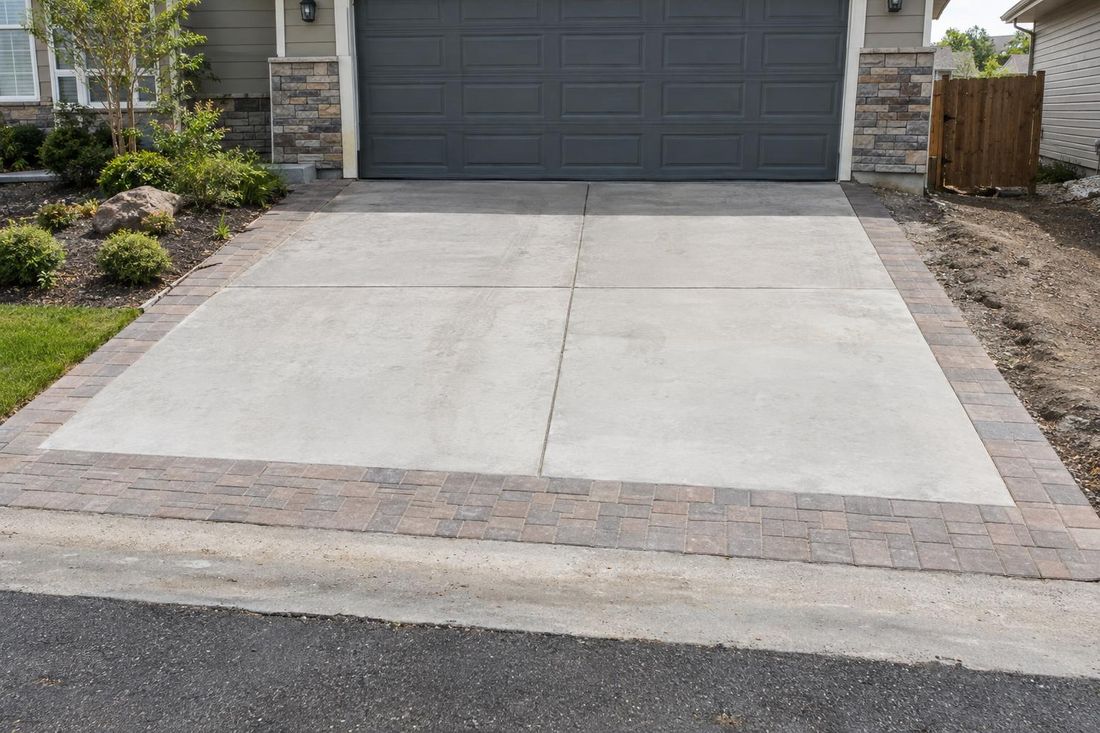
Paver apron or border on a concrete driveIf the middle of your slab is sound, we can frame it with pavers or replace the worn apron at the street end. It's a smaller job with a big change in looks.
Permeable paver drivewayWe set pavers with open joints over a stone base that lets rain soak down instead of running off. It suits lots where drainage is a worry.
Driveway extension or parking padNeed room for a second car or a boat? We tie new pavers in beside the existing drive and match the pattern.
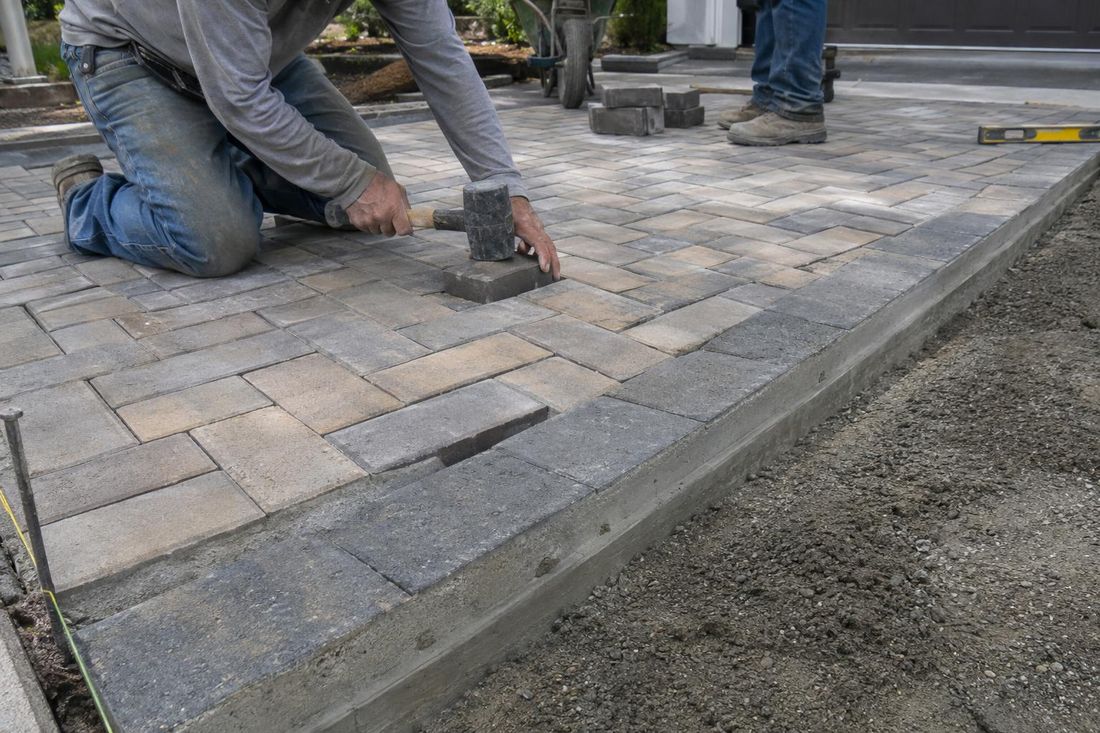
Worker laying interlocking concrete pavers A worker kneels on a partly finished paver surface and taps a paver into place with a rubber mallet. A concrete edge restraint runs along the side, with a gravel base, a level and a wheelbarrow nearby.
How we do it
We use thicker pavers rated for vehicles, never the thin ones sold for patios. Under them goes a deep base of crushed stone, and a driveway base is deeper than a patio base because it has to carry far more weight. We spread it in layers and run a plate compactor over every layer, because a base compacted all at once settles later. A screeded layer of bedding sand goes on top.
We hold the whole field in with a concrete edge restraint, since the edge is where a drive starts to spread. And we favor a pattern such as herringbone, which locks up under turning tires instead of letting the pavers creep. Straight running bond looks fine on a patio, but it can shift where wheels twist at the garage. Once the pavers are down, we compact them, sweep joint sand in, and compact again.
How a job with us goes
Free estimate and paver choice
We walk the drive with you, check the slope and where the water goes, and show you vehicle-rated pavers. You pick the color and pattern, and we talk through what's under the old drive.
Old driveway removed
We break out and haul away the concrete or asphalt. Then we dig down to the depth the new base needs, so we're building on firm ground and not on old fill.
Deep base compacted in layers
We add crushed stone a layer at a time and compact each one. It's slow, but it's what keeps the drive from rutting under cars.
Pavers laid and edged
We screed the bedding sand, lay the pavers in the pattern, and cut them to fit. The concrete edge restraint goes in to hold everything tight.
Final compaction and joint sand
We run the plate compactor over the finished surface and sweep sand into the joints. Then we compact again and check that water runs where it should.
Concrete driveway with paver border A residential driveway in front of a dark gray garage door has a center of large concrete slabs framed by a border of multicolored brick pavers. Landscaped beds with shrubs and a rock sit to the left, and bare soil lies to the right.
What drives the cost
Price follows square footage first, since more drive means more base, more pavers and more hours. Removing the old drive comes next, and a thick slab or a reinforced one takes longer to break out and haul. Base depth matters too. Soft or wet ground may need more stone under it. The paver you choose and the pattern both count, because a cut-heavy pattern or a custom border takes more time to lay. Drainage is the last piece. If water needs a new path, we'll price that in. We look at all of it during the free estimate so nothing surprises you later.
How long it takes
Most driveways take about a week from the day we start digging. A smaller extension or parking pad can move faster, and a big drive with a thick slab to remove can take longer. Rain slows us down, because we won't compact a base that's sitting in water. Once the final compaction is done, you can drive on it, so you won't be waiting around for anything to cure. We'll give you a plan for the days ahead at the estimate, and we'll call you if the weather changes it.
Local expertise: residential paver driveways in Atlanta
The red clay of the Georgia Piedmont is typified by the Cecil soil series: very deep, well drained soil on ridges and side slopes, with a red subsoil that averages 35 to 60 percent clay.
What it means for your job
Clay holds water against a wall and does not recover well once it is compacted, so drainage behind a retaining wall and a properly built base under pavers and footings matter more here than the surface material.
Atlanta gets about 49.7 inches of rain a year. Late winter, early spring and July are the wettest stretches, and fall, especially October, is the driest.
What it means for your job
Mortar, stucco and sealers need dry time. Fall is the easiest season for repointing and sealing, and summer work is planned around afternoon storms.
Overnight freezes can be expected on about 40 days a year in Atlanta.
What it means for your job
Water that soaks into brick, stone and mortar and then freezes is what pops faces off brick and opens joints. Keeping water out matters more here than in places that rarely freeze, and winter mortar work has to be protected overnight.
Any work in the strip between the sidewalk and the street usually needs a city right-of-way permit from Atlanta. We'll tell you at the estimate if your job touches that strip. We never use thin patio pavers on a driveway, even if they're the color you love, because they crack under vehicle weight. We don't lay pavers over an old slab. The base has to be built right, so the old drive comes out first. And if the ground under your drive is poor, the plan may need extra excavation before we can start.