Commercial Storefront and facade repair in Atlanta
The front of your building is the first thing customers see, and it takes the worst of the weather and the traffic. We repair it so it looks cared for and stays put.
Qualified MasonsVerified ProfessionalsFree EstimatesOn Time
What storefront and facade repair involves
Storefront and facade repair covers the brick, stone, sills and trim on the street face of a building. That means the brick above the windows, the stone base at the sidewalk, the sills, the bands and the cornice up top. Our masons rebuild what's failing, match what's already there, and re-anchor decorative pieces that have gone loose.
So when do you need us? Usually when you spot a crack that follows the mortar joints, a brick that's pushed out, or water stains under a sill. Property managers call us after an inspection letter. Owners call when the front just looks tired. Small problems on a facade don't stay small, because water gets in behind the face, rusts steel lintels and pushes brick off the wall. And nobody wants a loose piece of stone hanging over a sidewalk. We start with a look, and the estimate is free.
Signs you need storefront and facade repair
Cracks in the mortar jointsHairline cracks happen. Joints that are open, sandy or missing let water in behind the brick, and that's where the real damage starts.
Brick faces flaking or popping offThat's spalling, and it usually means water is trapped in the brick. We tap it with a hammer to see how far it goes.
Rust stains or a bulge above a window or doorThe steel lintel is probably rusting and swelling. As it grows, it pushes the brick up and out.
Loose sills, bands or cornice piecesIf a stone or trim piece rocks when we press on it, its anchor or mortar bed has let go. Over a sidewalk, that's a safety problem, not just a looks problem.
What we handle
Brick and stone repair on street facadesWe cut out cracked or spalled units and set matching ones in fresh mortar. Then we repoint the joints around them so the patch doesn't stand out from across the street.
Sill, band and cornice repairThese stick out, so they catch the most water. We rebuild the mortar bed, re-anchor or replace loose pieces, and make sure the top surface sheds water instead of holding it.
Storefront base and column repairThe base takes the knocks from carts, delivery trucks and snow shovels. We rebuild damaged brick or stone at the bottom of the window line and repair cracked columns.
Refacing a dated facadeSometimes the wall is sound and just looks tired. We can reface it with new brick or stone, tied back to the wall behind with anchors, and give the building a new face.
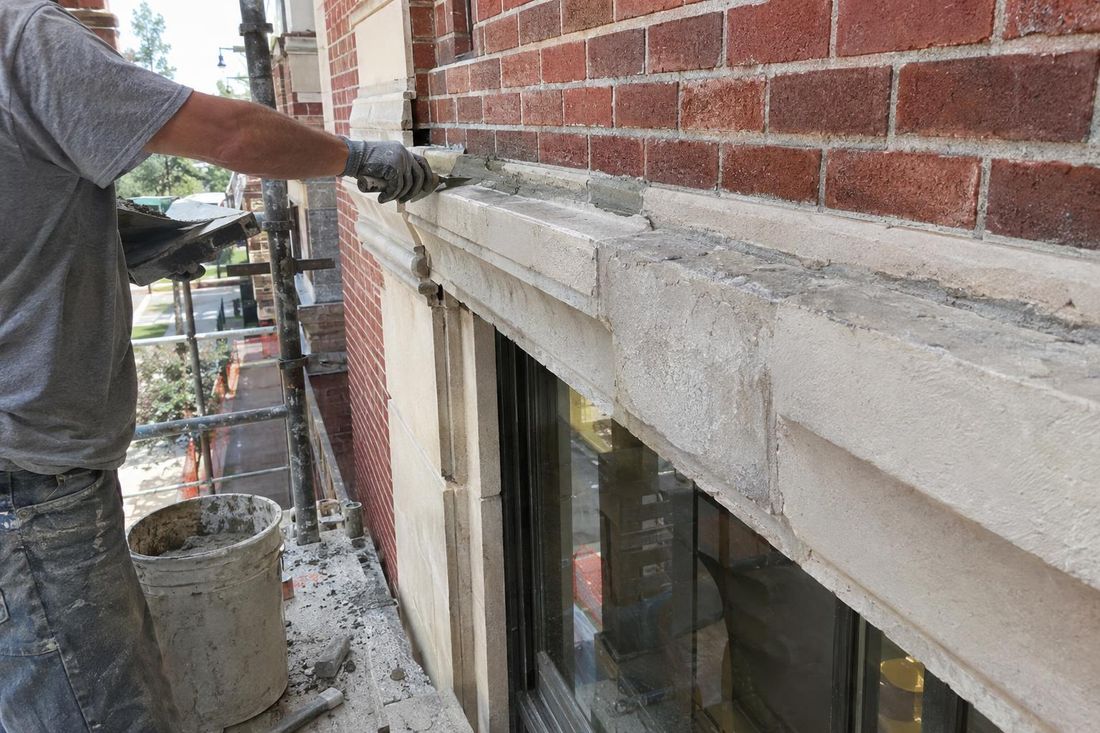
Mason pointing stone lintel on brick facade A worker in gloves uses a trowel to apply mortar along the top edge of a limestone window lintel set in a red brick wall. He stands on scaffolding with a bucket of mortar beside him.
How we do it
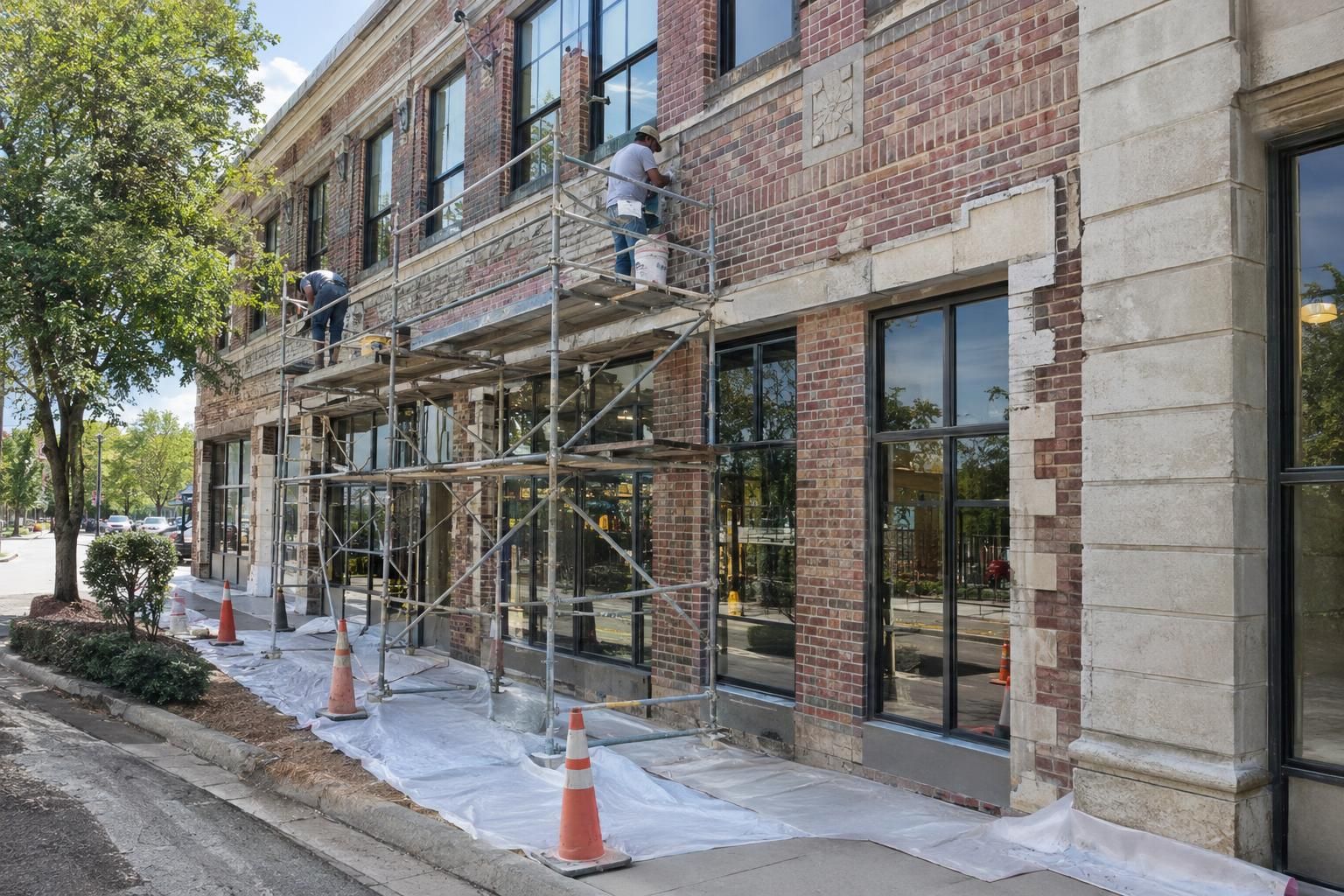
We work from scaffolding or a lift, depending on the height and how much of the face we're touching. The sidewalk below gets protected so people can walk past safely, and your entrance stays clear. Before we repair anything, we sound the wall with a hammer, because hollow brick and loose stone don't always show to the eye.
Matching is where the craft shows. We match brick for color and size, stone for type and finish, and mortar for color, texture and strength. Mortar that's harder than old brick will crack the brick, so we mix it to suit the wall. Loose decorative pieces get re-anchored or replaced, and we use stainless steel anchors so they don't rust. And the joints where masonry meets windows get cut out and resealed with sealant, because mortar isn't meant to flex there.
How a job with us goes
Facade survey from the street and up close
We look from the sidewalk first, then go up close and tap the brick and stone with a hammer. A hollow sound tells us what the eye can't.
Scope, sidewalk permit and schedule
We write up what needs repair and what can wait, and we file for the sidewalk permit. Then we set dates around your business hours so you know when the noise is coming.
Setup and protection
We put up the scaffolding or lift and cover the sidewalk below. Walkers and customers need a clear, covered path, and your entrance needs to stay usable.
Repairs with the entrance kept open
We cut out bad mortar and failed units, set matching material and re-anchor loose pieces. Loud grinding goes in the off-hours when we can.
Cleaning and sealant work
We clean the new work, reseal the joints at windows and sweep the sidewalk before the protection comes down. Then we walk the facade with you.
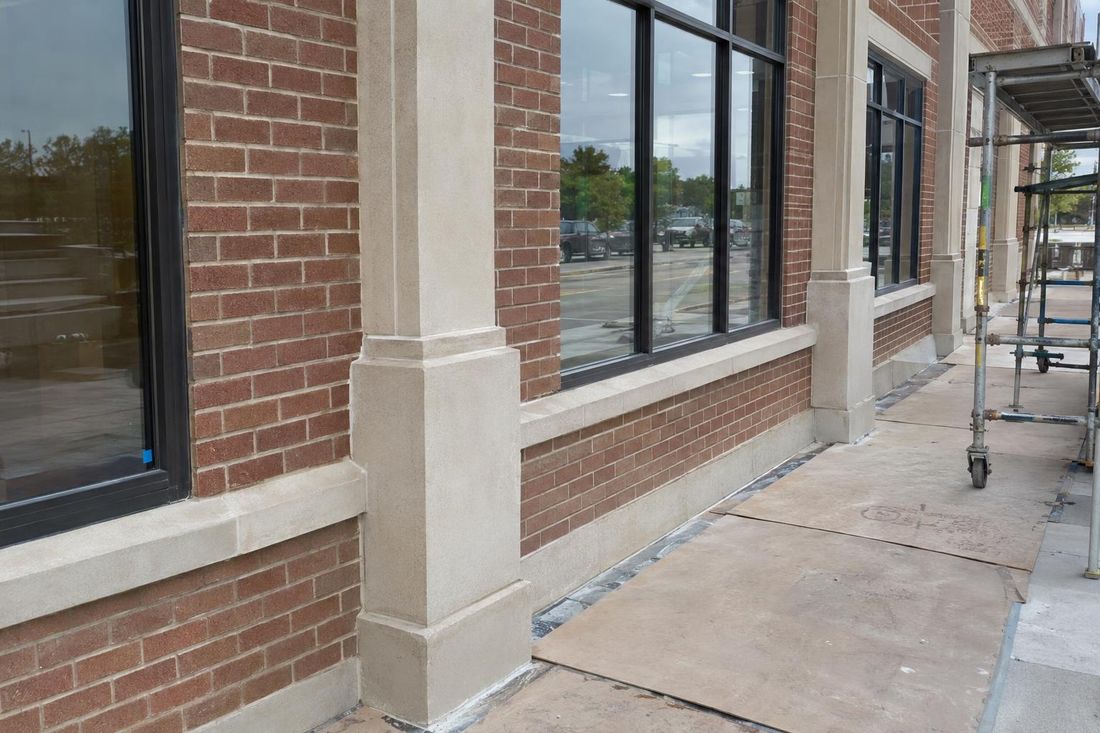
Brick storefront with stone columns, scaffolding A commercial building facade with red brick walls, tan stone columns and sills, and large black-framed windows. Protective sheeting covers the sidewalk, and a rolling scaffold stands at the right edge.
What drives the cost
Height and width of the facade set the base, since a taller wall means more scaffold or lift time. Decorative detail costs more than plain brick, because carved stone, cornices and bands take slow, careful hands. Sidewalk protection and permits add their own line. Off-hours work does too, since we're working around your business. And what we find behind the face matters. A repoint is a lot less work than replacing brick and a rusted lintel. Hard-to-match brick or stone can also move the number. We'll walk the wall with you and explain each piece.
How long it takes
Plan on one to several weeks, depending on height and detail. A low, plain storefront goes faster than a tall front with carved stone and a cornice. Permit lead time comes before we start, and weather can push the work back, since mortar needs decent conditions to cure. We'll give you a schedule after the survey and tell you straight if something changes once the wall is open.
Local expertise: commercial storefront and facade repair in Atlanta
Atlanta gets about 49.7 inches of rain a year. Late winter, early spring and July are the wettest stretches, and fall, especially October, is the driest.
What it means for your job
Mortar, stucco and sealers need dry time. Fall is the easiest season for repointing and sealing, and summer work is planned around afternoon storms.
Overnight freezes can be expected on about 40 days a year in Atlanta.
What it means for your job
Water that soaks into brick, stone and mortar and then freezes is what pops faces off brick and opens joints. Keeping water out matters more here than in places that rarely freeze, and winter mortar work has to be protected overnight.
Buildings in a historic district may need design review before we start, and that can add time and shape the materials we use. Glass, awnings and signs are other trades, so we'll work around them, and if one has to come off for the repair, we'll coordinate with whoever handles it. Old brick and stone can be hard to match exactly, and we'll tell you what we can and can't get close to. If the damage looks structural, the wall may need an engineer's eye before we repair it. Refacing only works over a wall that's sound. And we don't lay mortar in hard rain or freezing weather.
Storefront and facade repair questions
Will my store have to close?
Rarely. We protect the entrance and schedule noisy work for off-hours, so customers can still get in.
Do we need a permit to work over the sidewalk?
Usually a right-of-way permit from Atlanta. We handle the paperwork and the filing for you.
Can you match my old brick?
We get as close as the material allows. We take samples, check color, size and texture, and show you what we've found before we set a single brick.
Do you take down awnings and signs?
Those are other trades. We coordinate with whoever handles them, and we work around what we can.
Is a loose piece of stone an emergency?
Over a sidewalk, treat it like one. Keep people clear of it and call us, and we'll come look.