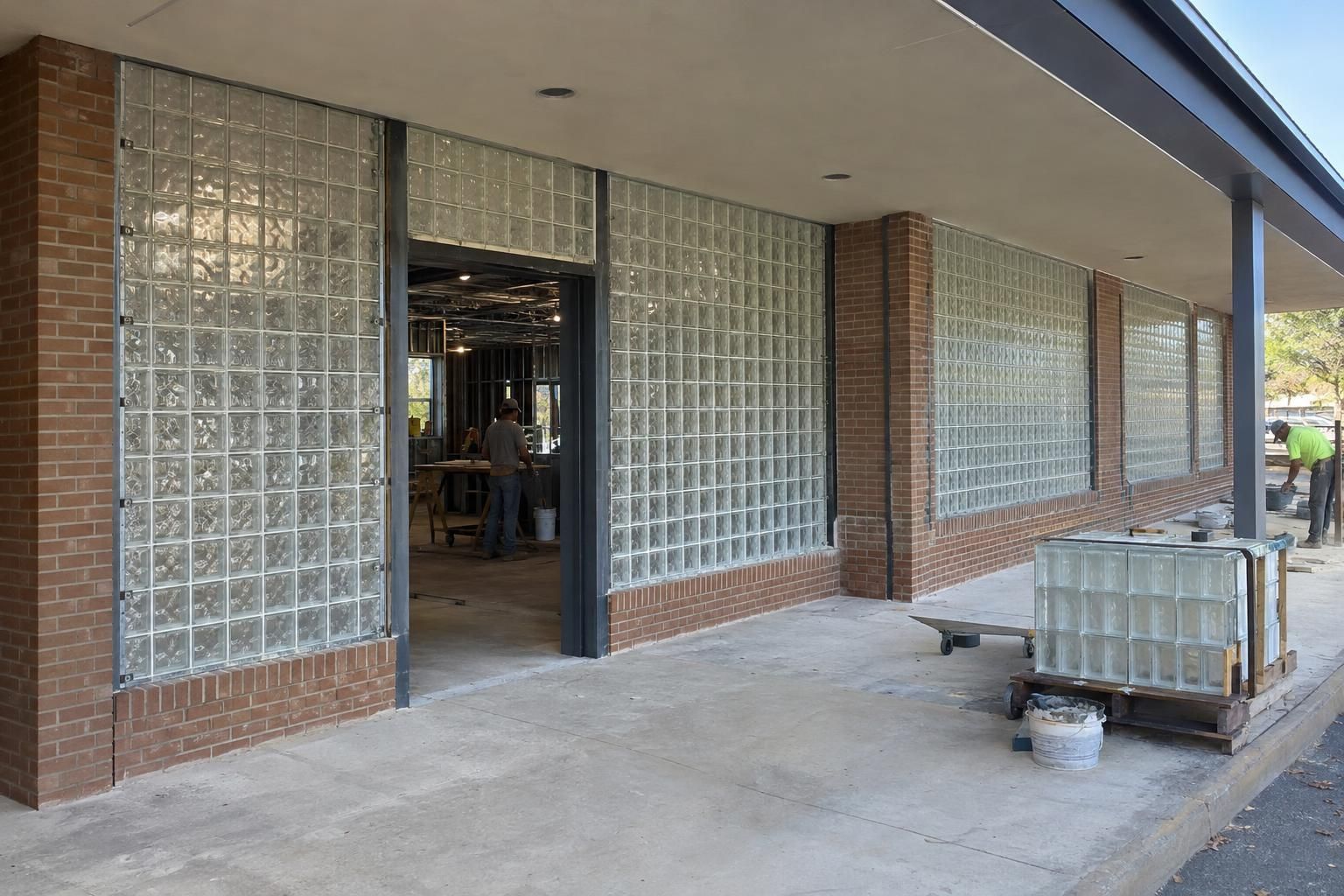
Glass block gives a commercial building daylight without the privacy and security headaches of clear glass. We build new panels, and we fix the old ones that nobody has looked at in years.
Qualified MasonsVerified ProfessionalsFree EstimatesOn Time
What glass block installation involves
Glass block is solid glass units set in mortar and reinforced with steel. It passes light and hides what's behind it, and a street-level wall of it is a lot harder to get through than a pane of window glass. That's why it shows up in stairwells, corridors, restrooms and storefront side walls.
You need us when a new opening has to bring in light without a view, when a wall calls for a rated assembly, or when an older panel is cracking, leaking or missing blocks. Honestly, repair is most of what we do here. Owners, property managers and general contractors all call us, and we'll come out and look for free. Not sure what you've got? Ask us, and we'll tell you straight whether it's a repair or a rebuild.
Signs you need glass block installation
Cracked or missing blocksA cracked unit is more than a looks problem. Water gets in through the break and sits in the joints below it.
Powdery or sunken mortar jointsIf we can scrape the mortar out with a screwdriver, the joint has lost its grip. Water follows, and so does more cracking.
Stains or damp at the sill or jambsStreaks under a panel or damp drywall beside it usually mean the perimeter sealant has failed or the sill has been taking water.
A bulge or a gap at the headA panel that bows, or pulls away from the frame, has lost its expansion joint or its anchors. Call us before it gets worse.
What we handle
New glass block panels and partitionsWe build panels for stairwells, corridors and interior partitions, sized within the manufacturer's limits. Bigger openings get stiffeners, and we lay it all out with your architect or GC.
Security windows at street levelGlass block fills openings where clear glass is a break-in or privacy worry. We anchor the panel at the jambs and head so it stays tight in the opening.
Restoring older glass block wallsThis is most of our work here. We replace broken blocks when we can match the size and pattern, repoint failed joints and redo the perimeter sealant.
Fire-rated glass block assembliesRated openings take listed block and the listing's details, with no substitutions. We build to the listing and stay inside its size limits.
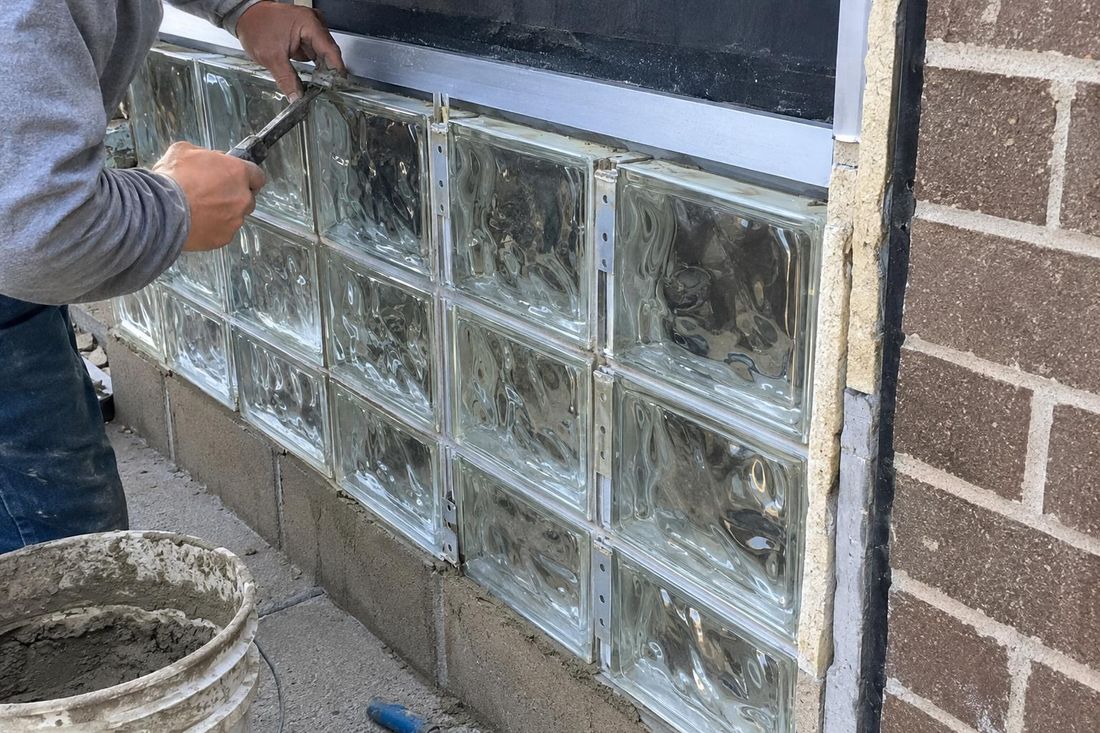
Worker installing glass block window A person in a gray long-sleeve shirt uses a hand tool to work on the joints of a glass block panel set into a masonry opening. Metal panel anchors sit between the blocks, a bucket of mortar is in the foreground, and a brick wall is on the right.
How we do it
We size every panel within the manufacturer's limits, because wind load and the block tables set the ceiling. Panel anchors tie the panel to the jambs and head, and joint reinforcing runs through the horizontal mortar joints. At the perimeter we leave an expansion joint, since a panel locked tight to its frame will crack the first time the building moves. Larger openings are divided by stiffeners.
Glass block takes a portland and lime mortar, and we keep the joints full and tooled even. Rated openings use listed block and the listing's details. On repairs, we cut the mortar out around the damaged unit, clean every shard out of the cavity, and set the new block in fresh mortar with the reinforcing lapped back in. Then we finish the perimeter with backer rod and sealant.
How a job with us goes
Estimate and measure
We bid from drawings or a site measure, and the estimate is free. On a repair we walk the wall first and look at the joints, the sill and the perimeter sealant before we put a number on anything.
Submittals
We send block, anchors, reinforcing and sealant for approval before we order. GCs and property managers usually need that paperwork, and special-order block has to be settled early.
Preparation
We protect floors and set up dust control. We also check the opening for square and level, because glass block won't hide a crooked frame.
Installation
We set the block course by course with reinforcing and anchors in place, keeping joints even. On repairs we take out only what's damaged.
Perimeter sealant and cleaning
Once the mortar has set, we pack and seal the perimeter, then clean the glass. We want the panel to look finished and to stay dry.
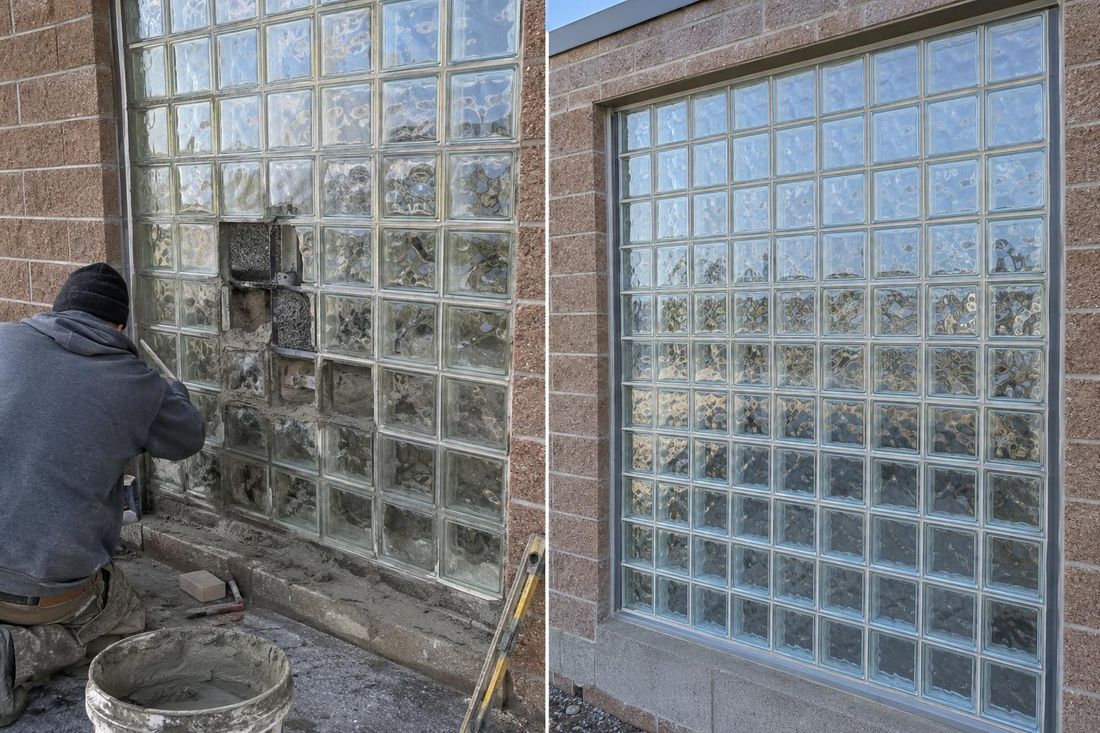
Glass block window in brick wall A two-part photo: on the left, a worker in a dark beanie kneels beside a glass block panel with several blocks missing and mortar exposed, next to a mortar bucket. On the right, a complete glass block window is set in a tan brick wall with a metal frame.
What drives the cost
Panel area drives most of it, since more block means more mortar, reinforcing and labor. Rated block costs more than standard block, and so does the added detailing a listing requires. Large panels may need structural framing or stiffeners, and that changes the scope. Access matters too. A panel up a stairwell or over a lobby needs a lift or scaffold, and after-hours work takes planning. On repairs, the big question is whether we can find matching block or have to special order it. We'll give you a free estimate and show you which of these is moving the number.
How long it takes
Most openings take us days, not weeks, and a small repair can go faster. Mortar has to set before we tool, seal and clean, so we don't rush that. Special-order block adds lead time, and rated assemblies often need approvals first. That's why we ask about block early. Tell us your deadline when you call and we'll say plainly what we can hit.
Local expertise: commercial glass block installation in Atlanta
Atlanta gets about 49.7 inches of rain a year. Late winter, early spring and July are the wettest stretches, and fall, especially October, is the driest.
What it means for your job
Mortar, stucco and sealers need dry time. Fall is the easiest season for repointing and sealing, and summer work is planned around afternoon storms.
Overnight freezes can be expected on about 40 days a year in Atlanta.
What it means for your job
Water that soaks into brick, stone and mortar and then freezes is what pops faces off brick and opens joints. Keeping water out matters more here than in places that rarely freeze, and winter mortar work has to be protected overnight.
Panel size is limited by wind load and the manufacturer's tables, so some openings have to be divided or framed. Discontinued block patterns may not be matchable, and we'll tell you if yours is one of them. A rated wall only takes listed fire-rated block, within the size limits of its rating. Glass block isn't a fix for a frame or wall that is moving. If a large panel needs structural framing, an engineer's drawing may be needed, and that comes from you or your architect. We can't promise a replacement block will look identical to an old one.