The crown and cap are the hat your chimney wears, and a bad one lets the weather straight into the brick. We repair and build both, and we start with a free estimate.
Qualified MasonsVerified ProfessionalsFree EstimatesOn Time
What chimney crowns and caps involves
The crown is the concrete slab across the top of the chimney. The cap is the metal cover over the flue. Together they keep rain, birds and squirrels out of a place they have no business being. A cracked crown is the most common cause of chimney damage we see, and it's far easier to deal with early than late.
So when do you need us? When you spot cracks across the top, when the concrete is flaking at the edges, or when your flue has no cap at all. Water gets into a small crack, freezes in cold weather and pushes it wider. We'd rather look at it with you now than after the bricks below start to go. Send us photos and we'll tell you straight what you've got in Atlanta.
Signs you need chimney crowns and caps
Cracks across the crownHairline ones can often be sealed. Wide ones mean water is getting in with every rain and the crown is moving.
Crumbling or flaking edgesThe concrete is breaking down, often because it was made from plain mortar. Sealer won't hold on that, so we'll talk about a new crown.
White powder or damp stains on the brickThat's water traveling through the masonry, and it often starts at the top. We look at the crown first.
No cap, or a rusted, loose oneRain, birds and squirrels have an open door. A cap that rattles in the wind isn't fastened the way it should be.
What we handle
Crown sealing for hairline cracksWe clean the crown, fill the cracks with a flexible masonry sealant and coat the top with a water-repellent sealer. It works on minor cracking only, so the sooner you call, the better your odds.
New cast concrete crownWe remove the old crown and form and pour a new one with the right slope and overhang. This is the real fix when the old one is crumbling or was made from leftover mortar.
Stainless or copper flue capsBoth stand up to weather for a long time, and copper darkens and greens with age. We size the cap to your flue, with mesh sides to keep animals out and a lid to keep rain out.
Full-coverage chase coversIf your chimney is a framed chase and not solid masonry, a sheet metal cover goes over the whole top with a drip edge. It takes the place of a concrete crown.
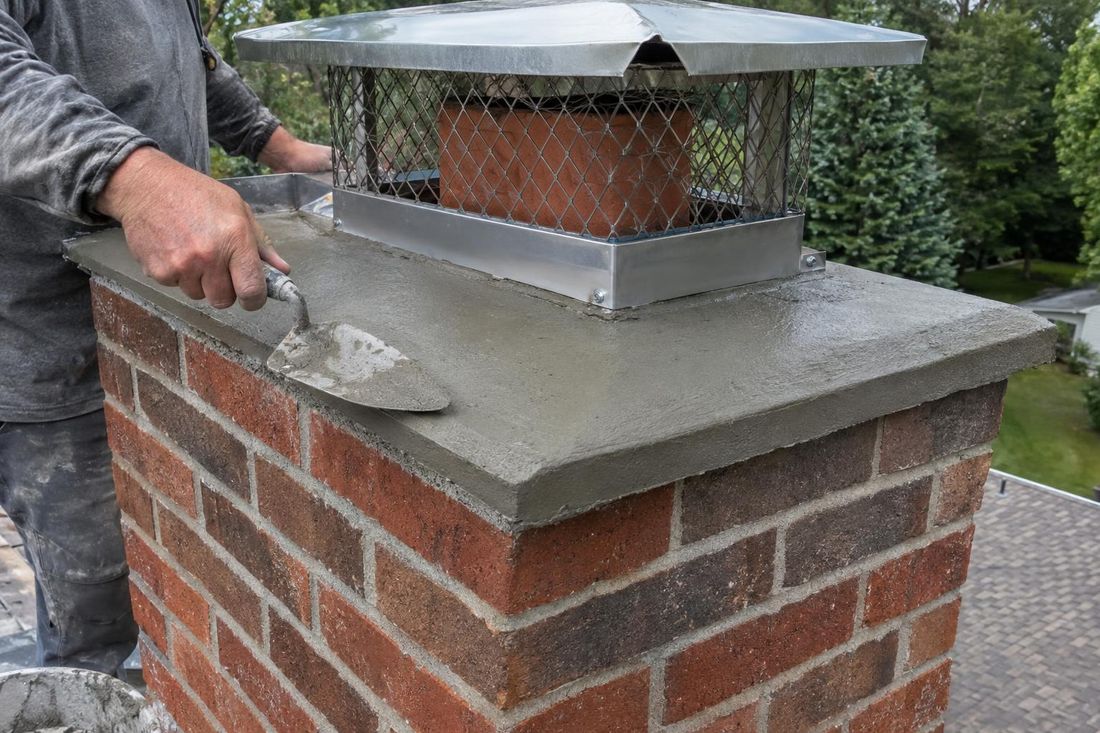
Mortar crown and cap on brick chimney A worker's hand uses a trowel to smooth a fresh gray cement crown across the top of a red brick chimney. A metal mesh chimney cap with a flat metal cover sits on a metal base on top of the crown.
How we do it
A proper crown is cast concrete, not leftover mortar. Mortar shrinks as it cures and cracks, and that's the story behind a lot of the crowns we tear off. We slope the top so water runs off, and we make it overhang the brick on every side with a drip edge underneath, so water falls free and doesn't run down the face. We also leave a flexible joint between the crown and the flue tile. Tile and concrete expand and shrink at different rates, and a rigid joint there will crack.
We build a form out of boards around the top of the chimney, set reinforcing in the concrete and trowel the surface to the slope we want. Caps are fastened to the flue or crown, never just set on top, because a loose cap is a cap that ends up in your yard after the first big wind. Then we check that the mesh openings are small enough to stop animals.
How a job with us goes
Free estimate with photos
Send us pictures of the top of your chimney and we'll tell you what we think before anyone climbs a ladder. Then we come out, check it up close and give you a plain answer on sealing versus replacing.
Old crown removed
We chip off the failed crown with a hammer drill and chisel, working carefully so we don't loosen the brick below. Then we clean the top course and look at the flue tile, because we want to see what's under there.
New crown formed and cast
We build the form, set the reinforcing, pour the concrete and finish it with a slope and an overhang. We leave a flexible joint around the flue tile so the crown can move without cracking.
Cap fitted
Once the crown is set up, we fasten a cap sized to your flue. Fastening it right is what keeps it there in the wind.
Walkthrough and cleanup
We go over the finished work with you, then clear off the roof and the yard. We'll also tell you how to keep the new concrete from drying too fast.
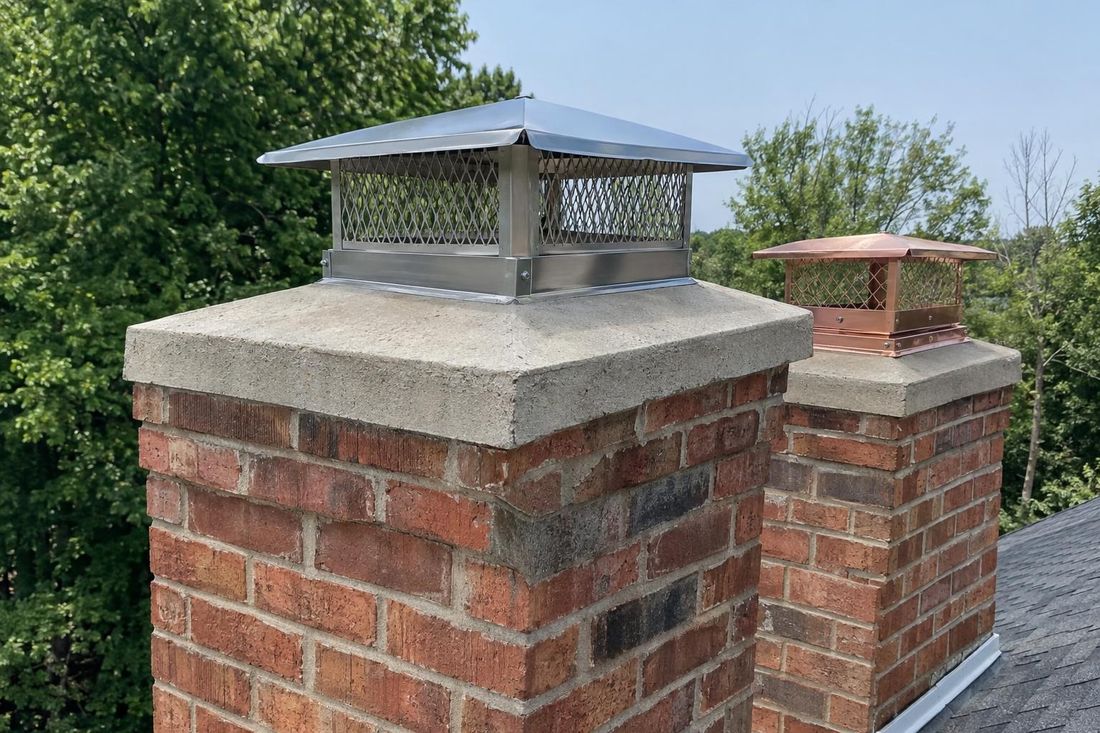
Brick chimneys with crowns and caps Two red brick chimneys are topped with concrete crowns, each holding a mesh-sided chimney cap. The nearer cap is stainless steel and the farther one is copper, and both have sloped metal lids.
What drives the cost
Price follows the size of the job. A big chimney with a wide top takes more concrete and more forming than a small one. Two or three flues cost more than one, since each needs its own cap and its own joint. Sealing a crack is a smaller job than removing and casting a whole crown, so the condition of your crown matters most. Cap material makes a difference too, because stainless and copper don't cost the same. And roof access counts. A steep pitch, a tall house or a chimney that's hard to reach means more setup and more time. We'll go over all of it with you at the free estimate.
How long it takes
Most crown and cap jobs are done in a day. Sealing a crack takes less time than casting a new crown, and a chimney with several flues or a tricky roof can take longer. The concrete needs time to cure after we leave, so we'll tell you what to expect over the next few days. We'll also tell you if the weather says to wait, because pouring concrete in a downpour or a hard freeze is asking for trouble.
Local expertise: residential chimney crowns and caps in Atlanta
Atlanta gets about 49.7 inches of rain a year. Late winter, early spring and July are the wettest stretches, and fall, especially October, is the driest.
What it means for your job
Mortar, stucco and sealers need dry time. Fall is the easiest season for repointing and sealing, and summer work is planned around afternoon storms.
Overnight freezes can be expected on about 40 days a year in Atlanta.
What it means for your job
Water that soaks into brick, stone and mortar and then freezes is what pops faces off brick and opens joints. Keeping water out matters more here than in places that rarely freeze, and winter mortar work has to be protected overnight.
Sealing only works on minor cracks. If your crown is crumbling, we replace it, because sealer can't hold together concrete that's falling apart. This service covers the crown and cap. If we find loose brick, bad mortar joints or a damaged flue liner underneath, that's separate masonry work and we'll point it out and quote it separately. We also can't cast concrete in rain or freezing temperatures, so some jobs wait on the weather. And if we can't get safely onto your roof, we'll tell you what it takes to fix that.
Chimney crowns and caps questions
Do I really need a chimney cap?
Yes. It keeps out rain, birds and squirrels and costs little compared with the damage it prevents.
Why did my crown crack?
Many were made from plain mortar, which shrinks and cracks. Concrete with an overhang lasts.
Can't you just seal over my cracked crown?
If the cracks are hairline and the concrete is solid, yes. If it's crumbling, sealer just hides the problem, so we replace it.
What's a drip edge?
It's a groove or lip under the overhang of the crown. Water drips off there instead of creeping back along the underside and running down your brick.
Will a cap hurt my chimney's draft?
Not if it's sized to the flue. We pick mesh openings small enough to keep animals out but not so fine that they clog.