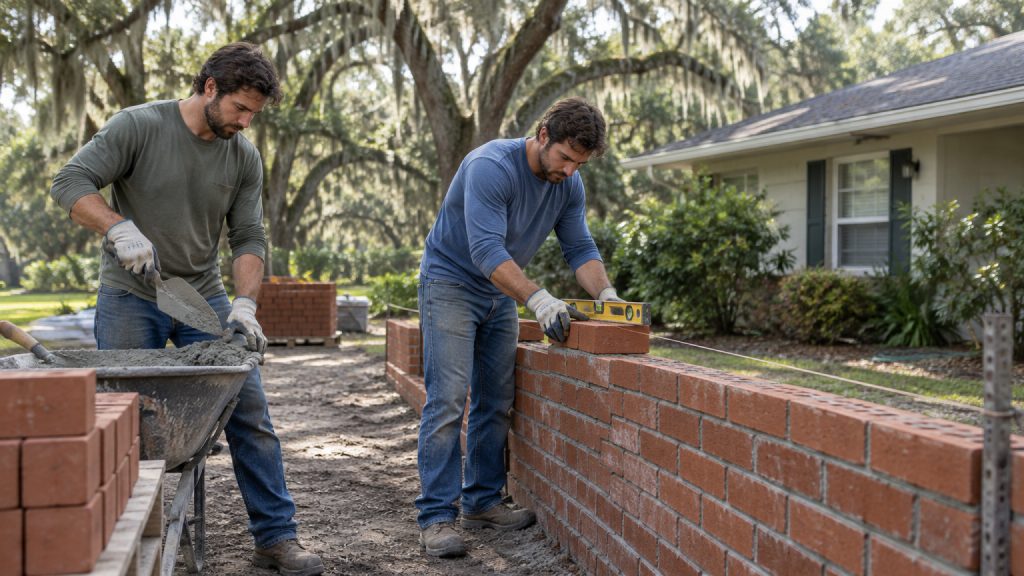
Dalton Brothers Masonry Alpharetta
Masonry in Alpharetta, GA
The call we hear most out of Alpharetta starts the same way: "Something out by the ground has moved." The front steps have dropped on one side, or the backyard wall has started to lean.
Call (470) 837-6333Our services in Alpharetta
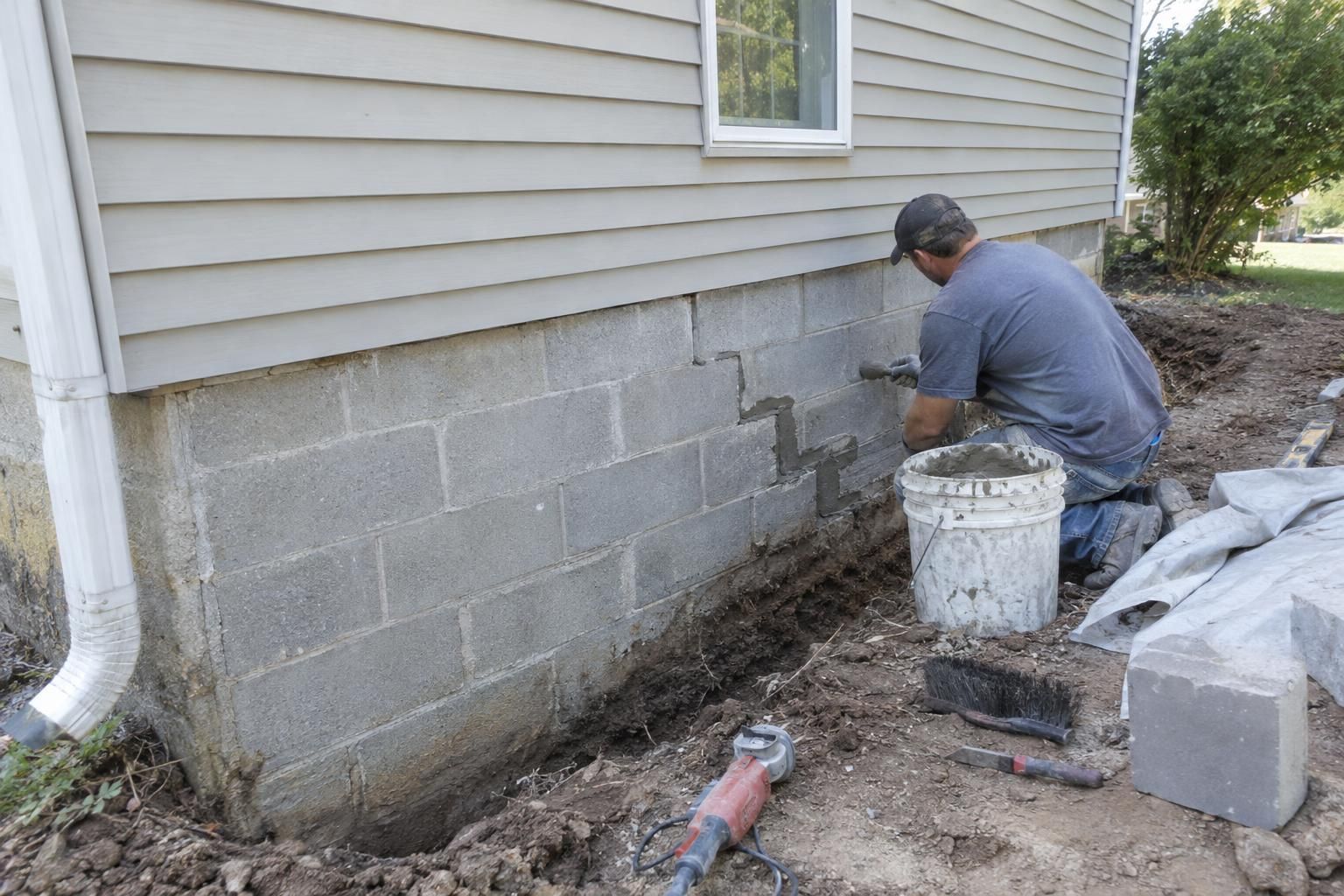
Block foundation repair
Cracked block under your house can usually be fixed without tearing the place apart. We repair stem walls and crawl space walls in Atlanta, and we start by working out why the wall moved.
Get a free estimate →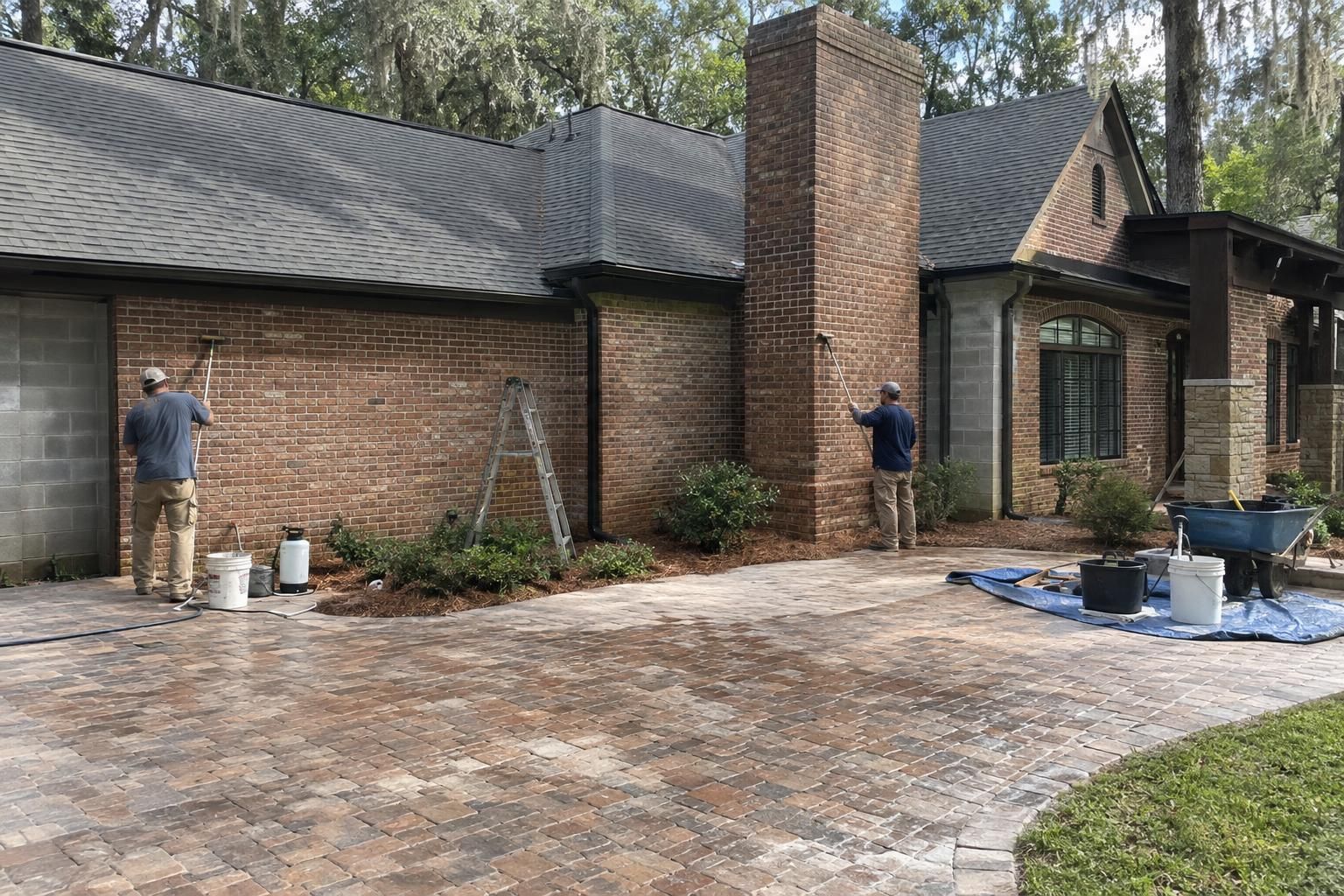
Brick and masonry sealing
Sealing is a clear water repellent that soaks into your brick, block, stone or pavers so rain beads off and the wall can still dry out.
Get a free estimate →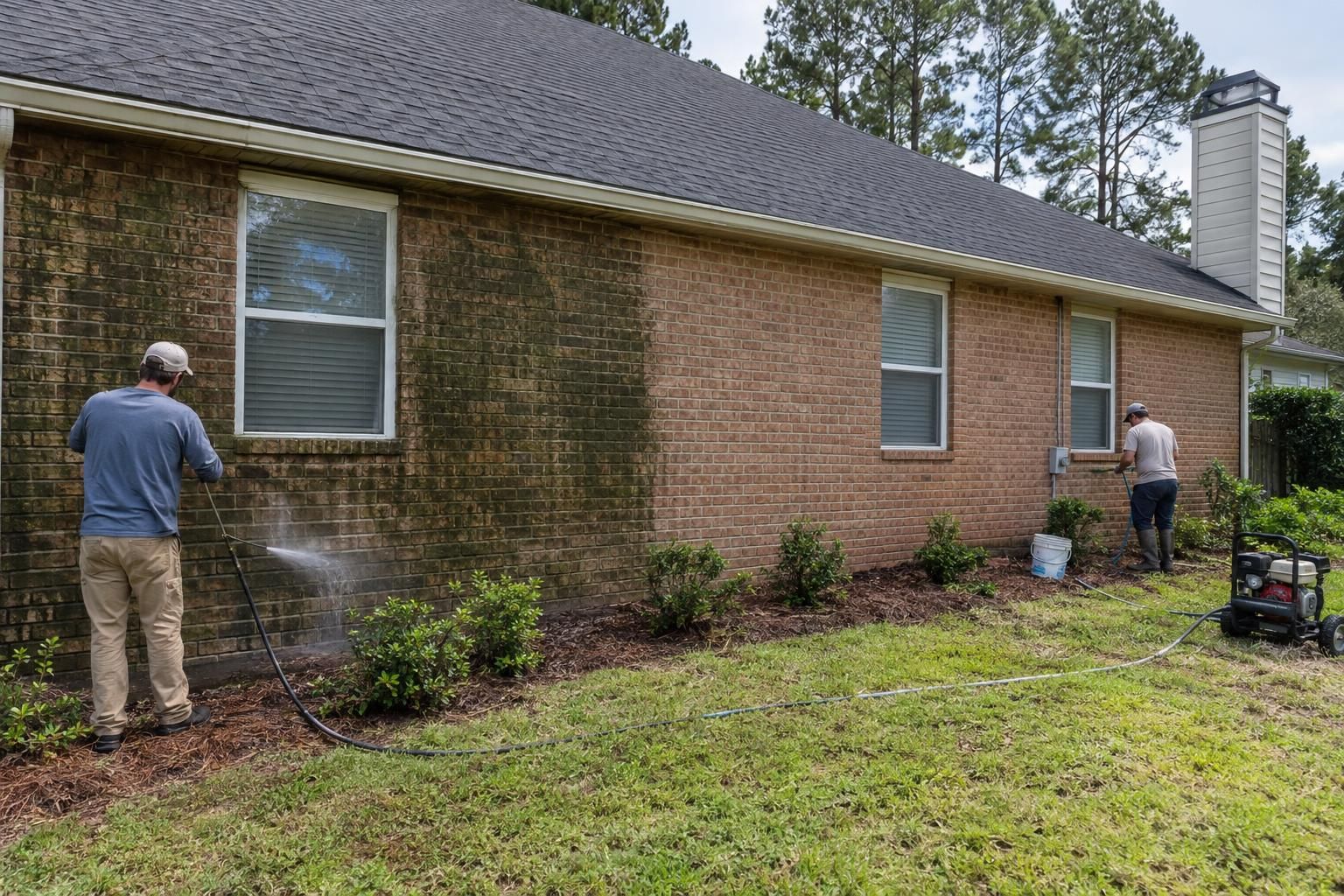
Brick cleaning and stain removal
Dirty brick usually isn't dirty all the way down, and we can clean it without hurting the face or the mortar.
Get a free estimate →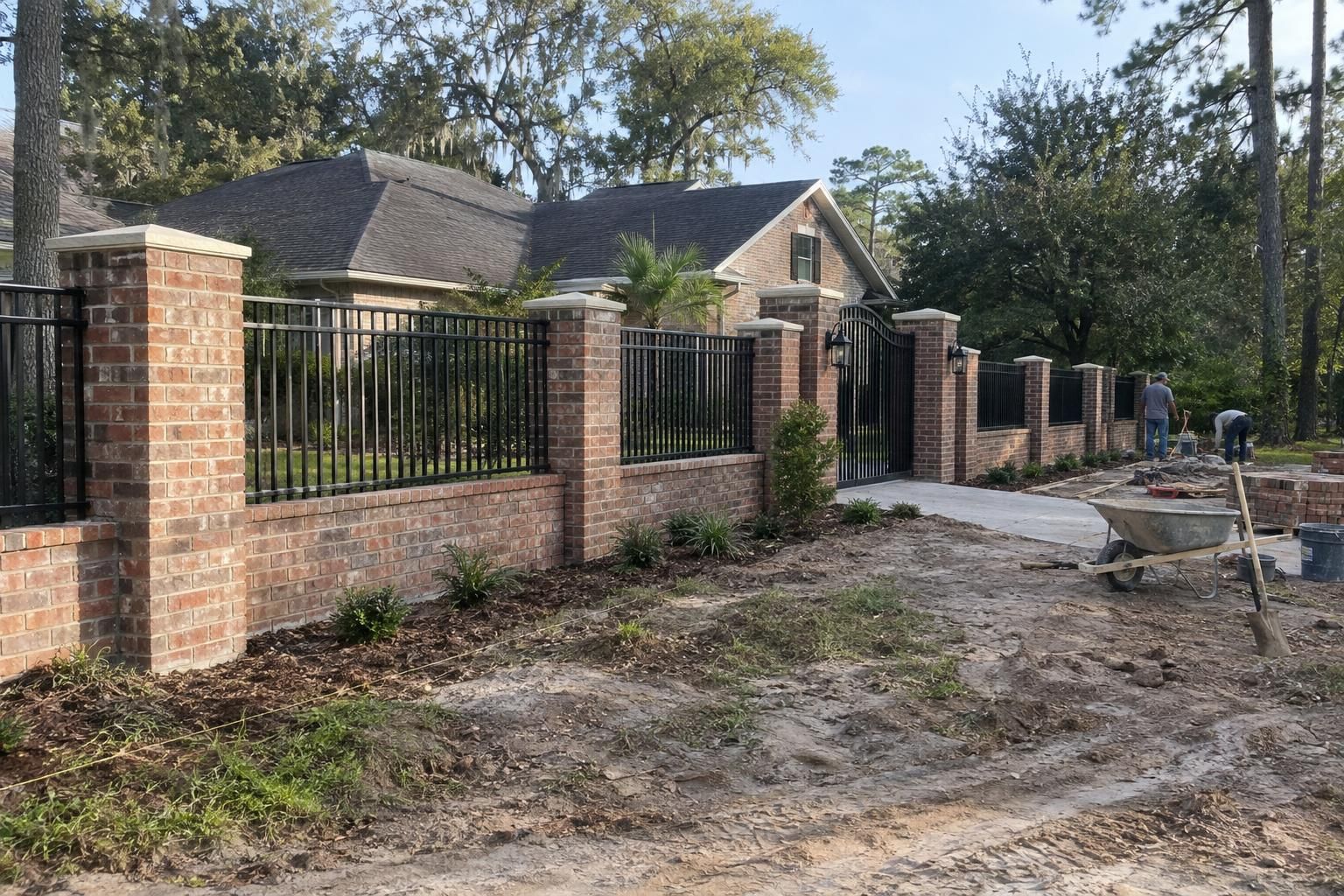
Brick fences and garden walls
A brick fence is the part of your yard that stays put long after the wood has gone gray and soft.
Get a free estimate →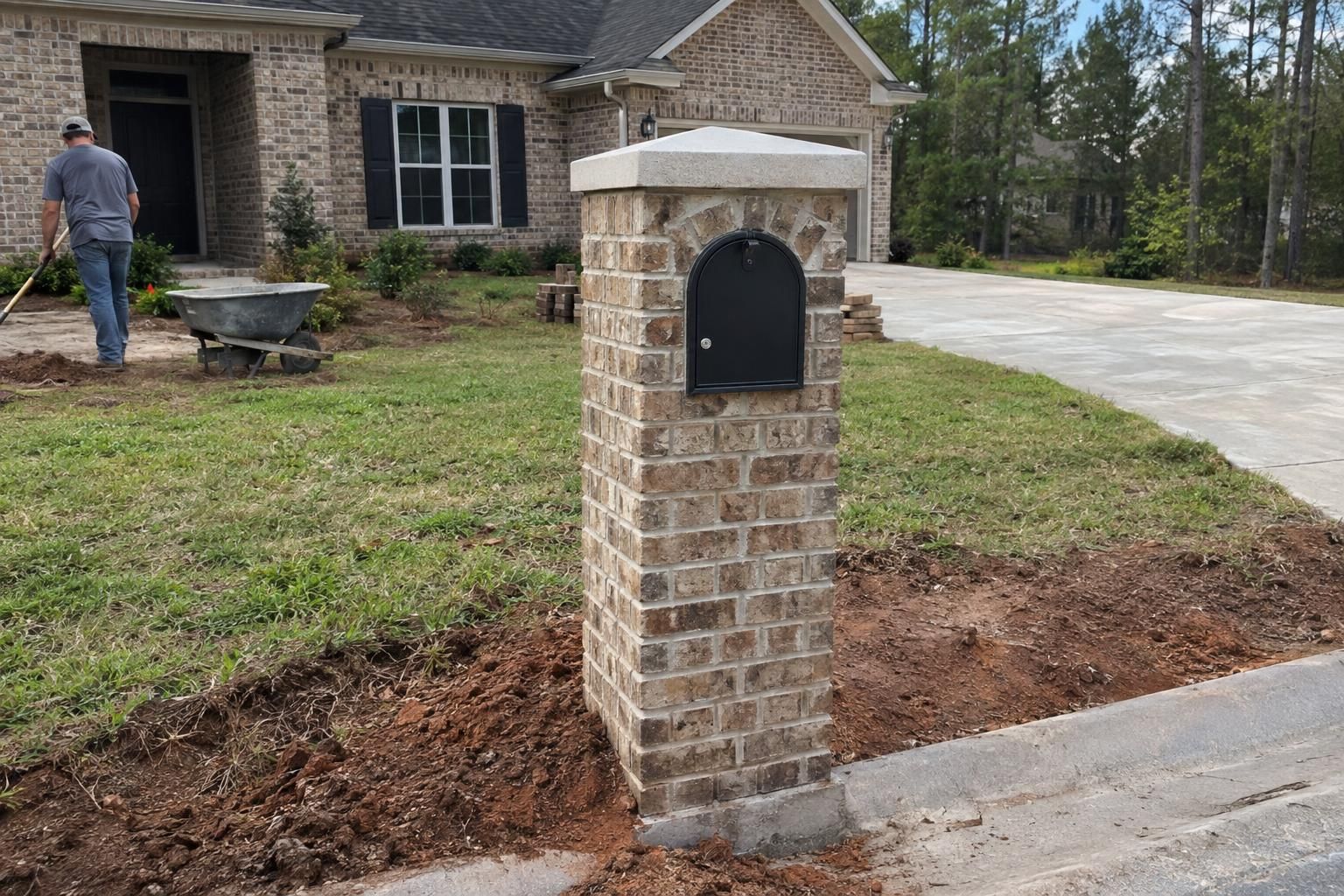
Brick mailboxes
A brick mailbox is the one piece of masonry everybody who visits your place passes on the way in. We build them to last, and we fix them when a bumper gets the better of one.
Get a free estimate →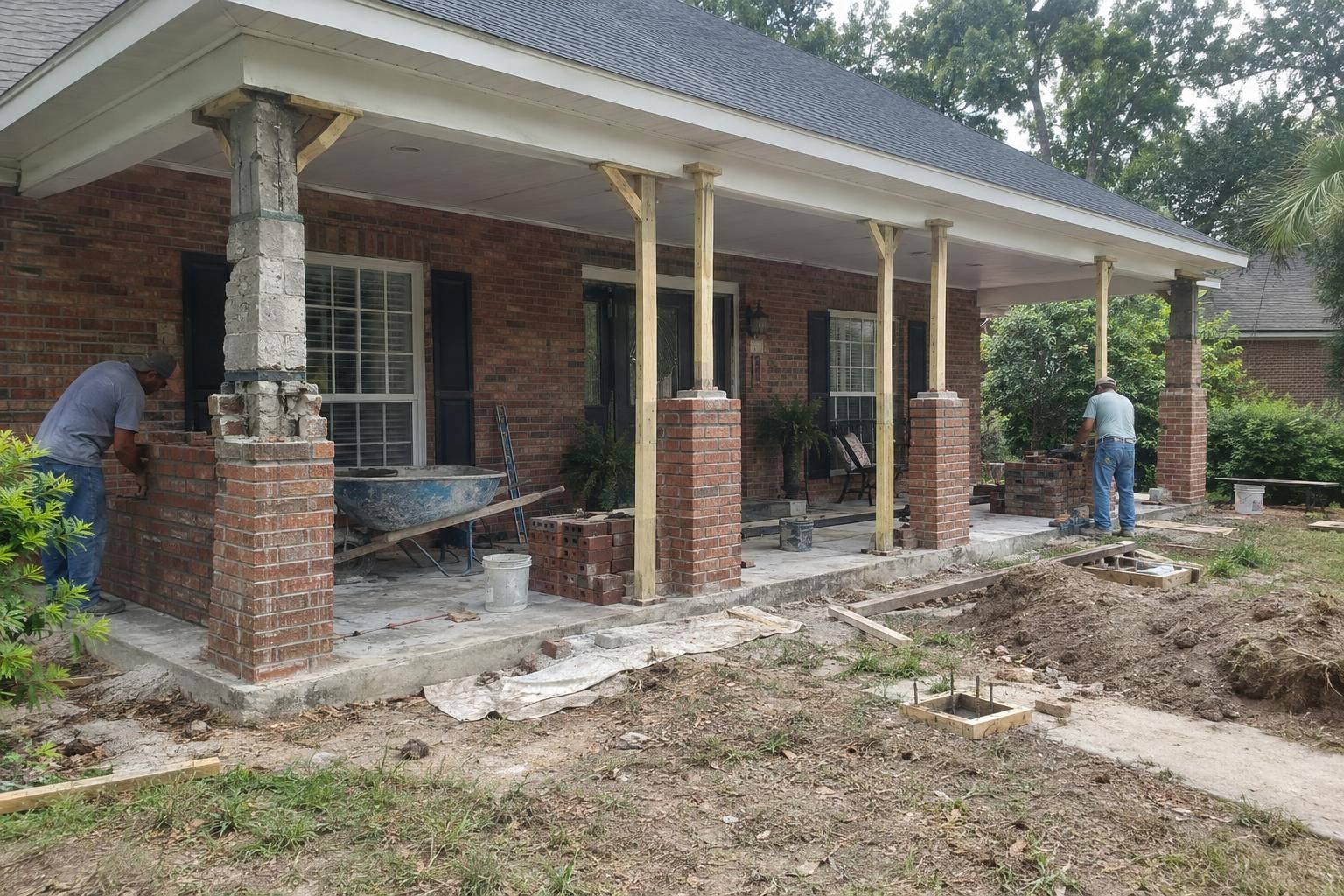
Brick porches and columns
Your porch columns hold up a roof, and the brick around them has been taking weather for a long time. We repair and rebuild them, and we plan every job around keeping that roof held.
Get a free estimate →We're Dalton Brothers, masons out of Atlanta, and downtown Alpharetta is 26 miles north of downtown Atlanta. Here's why that call comes so often. The median construction year for Alpharetta homes is 1996, so a lot of houses are now about thirty years old. That's about when a stoop settles, a joint opens up, or a wall starts to lose its backfill. Downtown is the other Alpharetta. A fire in 1902 destroyed much of the town, and most of the lost buildings were replaced with brick or stone. We work on both kinds of place. Tell us what you're seeing and we'll come look for free.
What Alpharetta does to masonry work
Most of Alpharetta is young as Georgia towns go. The city's own rental study says 30 percent of the housing stock was built since 2000 and 63 percent between 1980 and 1999. The old part is small and tucked downtown. Alpharetta was formed in 1858 and a business district grew up soon after. After the 1902 fire, brick and stone went up where wood had burned. That's a different animal from a 1990s subdivision, and we treat the two differently. Old brick with old mortar needs a gentle hand.
Then there's the ground. Alpharetta sits in Georgia's Piedmont region, where the common soils (Cecil, Appling and Madison) have dense red clay subsoils. The Cecil series is very deep and well drained on ridges and side slopes. Its red subsoil averages 35 to 60 percent clay. That clay is slippery about water in an odd way. It expands when wet and contracts during dry periods. A step or a wall footing sitting on that ground gets pushed and then left hanging, year after year. So the first thing we check is the base. We also look at where the downspouts empty and where the water goes when it rains hard.
The weather finishes the job. We're quoting Atlanta figures here because that's the record we've checked, and Alpharetta is 26 miles up the road. Atlanta gets about 49.7 inches of rain a year. Late winter, early spring and July are the wettest stretches, and fall, October especially, is the driest. A normal July averages 80.9 degrees day and night and brings 4.75 inches of rain. Overnight freezes can be expected on about 40 days a year. Water gets into a joint in the wet months, freezes in the cold ones, and pops the face off a brick. That's why we like to fix things before winter sets in.
The jobs we do most in Alpharetta
- Retaining wall repairRed clay that swells wet and shrinks dry works on any wall holding up a slope. We dig behind the wall first to see where the water's trapped, then rebuild with drainage stone and weep paths behind the face. Permits inside Alpharetta run through the city's Community Development Department, not Fulton County, so we ask the city about your wall before we set a block.
- Steps, stoops and walkwaysA step that drops on one side is telling you where the water's been going. We pull the loose brick or stone, rebuild the base with compacted crusher run, and reset the surface so water runs away from the house. Then we look at the downspout that probably caused it.
- Repointing old brickIf you own one of the brick buildings or older houses near downtown, the mortar matters more than the brick. We rake the failed joints out by hand and test the old mortar. Then we mix a new batch no harder than the brick around it. Hard modern mortar on soft old brick breaks the brick faces, and we won't do that to a building of that era.
- Chimney and crown repairA chimney takes rain from the top and freezes at night, and Atlanta sees about 40 freezing nights a year. A cracked crown or an open joint up there lets water in, and the next freeze pops the brick. We look at the crown first, then the flashing line, then the joints below it, and we rebuild whatever's loose.
Homes and buildings we work on here
Most of what we're called to in Alpharetta is a house from the last few decades. The median Alpharetta home was built in 1996. Newer communities near Avalon and Downtown Alpharetta offer townhomes, condo flats and farmhouse-inspired designs. We won't guess what your place is made of before we've seen it. We'll tell you once we're standing there with a jointing tool in hand. Townhomes and condos bring their own questions about whose wall it is, so we ask that early.
The older stock is downtown, and it's worth a look if you own some of it. The Alpharetta History Walk features 16 officially marked sites within walking distance of City Hall. One is the Skelton-Teasley House of 1856, a Greek Revival home at 61 Roswell Street. Another is the 1914 craftsman Jones House at 50 S. Main Street. The Oliver-Waters-McCollum Warehouses at 20 Milton Avenue date to about 1910, and a brick facade was added in the 1970s. We're not saying we've worked on those. We're saying that's the kind of building we're glad to be asked about. If your place has a few layers of repairs on it, we'll find them.
Getting your estimate in Alpharetta
Call us, tell us what you're looking at, and we'll set a time to come out. Alpharetta is about 26 miles from Atlanta and usually about half an hour by car in normal driving conditions, so it's an easy run for us. The estimate is free.
When we get there, we start at the ground. We look at where the downspouts empty and whether the soil has pulled away from a step or a wall. We check whether the weep holes are open, and we press a jointing tool to the mortar to see what it does. Then we tell you what we see and what we'd do about it, in plain words. If the job needs a permit, we'll say so up front. Building permits, inspections and zoning in Alpharetta all run through the city's Community Development Department at City Hall, 2 Park Plaza. We won't guess at a rule we haven't checked. We'll call the city instead.
For Alpharetta businesses
Do you run a shop, an office, or a building with tenants in it? Then you've probably got a few spots you've been meaning to get to. Downtown, the older storefronts go back to the rebuilding after the 1902 fire, so expect old brick, old mortar, and sometimes a later facade. Out along the newer retail and mixed-use blocks, Avalon is a mixed-use development that shows what Alpharetta has been building lately. A cracked parapet cap or a spalling sill still needs the same attention there. The city publishes separate written permitting procedures for residential and commercial work, and we read the commercial one before we pull anything. The city books inspections by phone from 7:30 to 8:30 a.m. If you manage several properties, send us the addresses and tell us when each place is open. We'll plan the work around your tenants and your customers, and we'll look at each building on its own.
Alpharetta questions we hear
Do I need a permit from Fulton County to rebuild a retaining wall in Alpharetta?
Probably not from the county. Fulton County does not issue permits inside city limits. The county's own rule is that a wall over 4 feet needs its own permit, but that's Fulton's rule, and we haven't verified Alpharetta's threshold. We'd call Alpharetta's Community Development before building. The city lists 678-297-6070 for zoning.
Why did my front steps sink when the house itself looks fine?
Look at the ground first. Red clay expands when wet and contracts during dry periods, and steps sit on a lot less weight than the house does. A poorly built base moves more than a footing does. We dig out the base and see what's under there. Then we rebuild it.
When's the best time of year to get masonry done?
Fall is the best bet. In Atlanta, fall (October especially) is the driest stretch of the year, and mortar likes dry days. Late winter, early spring and July are the wettest. We'd rather not lay new work right before about 40 freezing nights come around, so call us in early fall if you can.
My house is from the 1990s. Is it too young to need repointing?
Not always, but it's old enough to check. A house from the mid-1990s is about thirty years into the weather. We look at the joints, the weep holes and the cap on top of the chimney. If everything's sound, we'll tell you that and leave.
I own an older brick building downtown. Can you match what's there?
We can try. We test the old mortar and make the new one softer than the brick. Old brick from the early 1900s is easy to break with the wrong mix. We can't promise a perfect color match, but we'll show you a test patch before we go on.
Local details checked against: storymaps.arcgis.com, awesomealpharetta.com, awesomealpharetta.com, n-georgia.com, thebonniesmithgroup.com, point2homes.com