Public entry steps have to be right to the fraction of an inch, and we build and repair them that way. We work for businesses, property managers and general contractors who need the entrance safe and still open.
Qualified MasonsVerified ProfessionalsFree EstimatesOn Time
What masonry steps and landings involves
This service covers the steps, landings and ramps people use to get into your building. Riser heights, tread depths, landing sizes and ramp slopes all have to meet building and accessibility rules exactly. A step that's a quarter inch off is one somebody trips on, and it's one an inspector will notice too.
Most calls start with a trip hazard, an insurance inspection or an accessibility complaint. Sometimes it's a general contractor who needs the entry rebuilt before a final sign-off. We measure, build to the drawings, and plan the work so your tenants and customers can still get through the door. Not sure what you've got? Call us and we'll come take a look.
Signs you need masonry steps and landings
Uneven risersOne step taller or shorter than its neighbors is the one people trip on. Settling or an old patch is usually the cause, and inspectors measure for it.
Crumbling nosingsThe front edge of each tread takes the traffic and the deicing salt. When it breaks down, the step gets harder to see and easier to slip on.
Water pooling on a landingStanding water means the pitch is off or the slab has sunk. It ices up, works into cracks and leaves a slick spot right at the door.
A complaint about the rampSlope, width or edge protection can miss the rules even when the ramp looks fine to you. We measure it before anyone argues about it.
What we handle
Entry stair repair and rebuildWe repair cracked and sunken steps where the base is sound, and we tear out and rebuild where it isn't. We tell you which it is after we probe the structure, not before.
Landings and accessible rampsWe build landings to the size on the drawings and ramps to the specified slope. Level landings go where a run turns or stops, and handrail extensions get planned in from the start.
Tread and nosing replacementWhen the stair is sound but the treads are worn, we cut out and replace just those pieces. The new ones get slip-resistant finishes and nosings you can actually see.
Refacing in brick, stone or paversWe reface sound steps so the entrance matches the building. The structure underneath has to pass our inspection first, because a pretty face on a failing stair is a waste of your money.
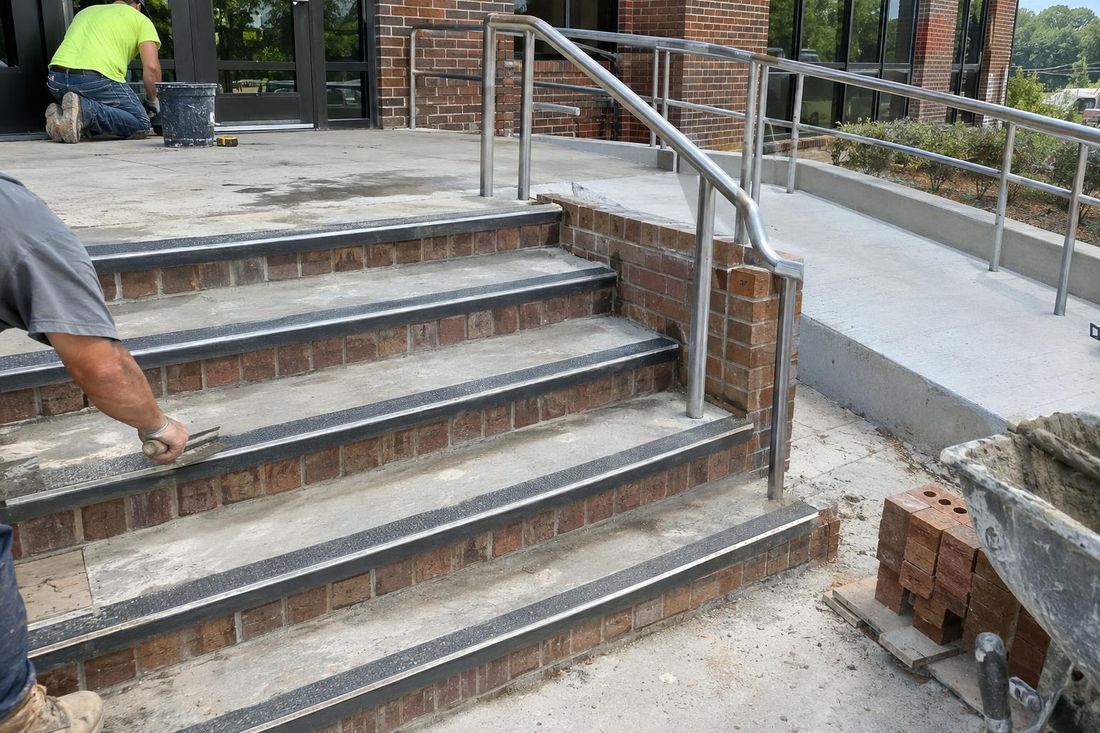
Brick steps under construction at entrance Wide commercial entrance steps with brick risers, bare concrete treads and dark non-slip nosings, flanked by stainless steel handrails and a brick side wall. A worker in the foreground uses a trowel on a step, another kneels near the glass doors, and a wheelbarrow of mortar and a pallet of bricks sit nearby.
How we do it
Everything starts with the drawings or our own site measure. Riser heights, tread depths, landing sizes, ramp slopes and handrail extensions are built to the code dimensions, and we check them with a story pole and a level as the work goes up, not just at the end. Risers in one flight need to match each other closely, because a person's foot learns the first step and expects the rest to be the same.
Treads get slip-resistant finishes and visible nosings. On concrete that's usually a broom finish, and on stone or pavers it's a textured surface with an edge that contrasts. We pitch every tread and landing slightly so water leaves, and we dowel new work into sound existing concrete with epoxy so it doesn't pull away. Railing posts get set into solid masonry, not just the surface.
How a job with us goes
Site measure or drawings
We measure every riser, tread, landing and slope, or we work from your drawings if you have them. Then we compare what's there with what the rules call for, so the scope is clear before anything gets torn out.
Permit where required
If the work needs a permit, we work with you to get it in place before we break anything. Rebuilt steps can raise accessibility questions, so we bring those up early.
Phased demolition and rebuild with an entrance kept open
We demolish and rebuild in sections, one half at a time or with a temporary route. We fence off the work side, so tenants, deliveries and customers keep moving.
Railings
We set posts and rails once the masonry has cured enough to hold them. Then we check handrail height and extensions against the drawings, because a wobbly rail defeats the point.
Inspection
We re-measure risers and slopes first, then walk the finished work with you and with the inspector where one's required. No surprises is the goal.
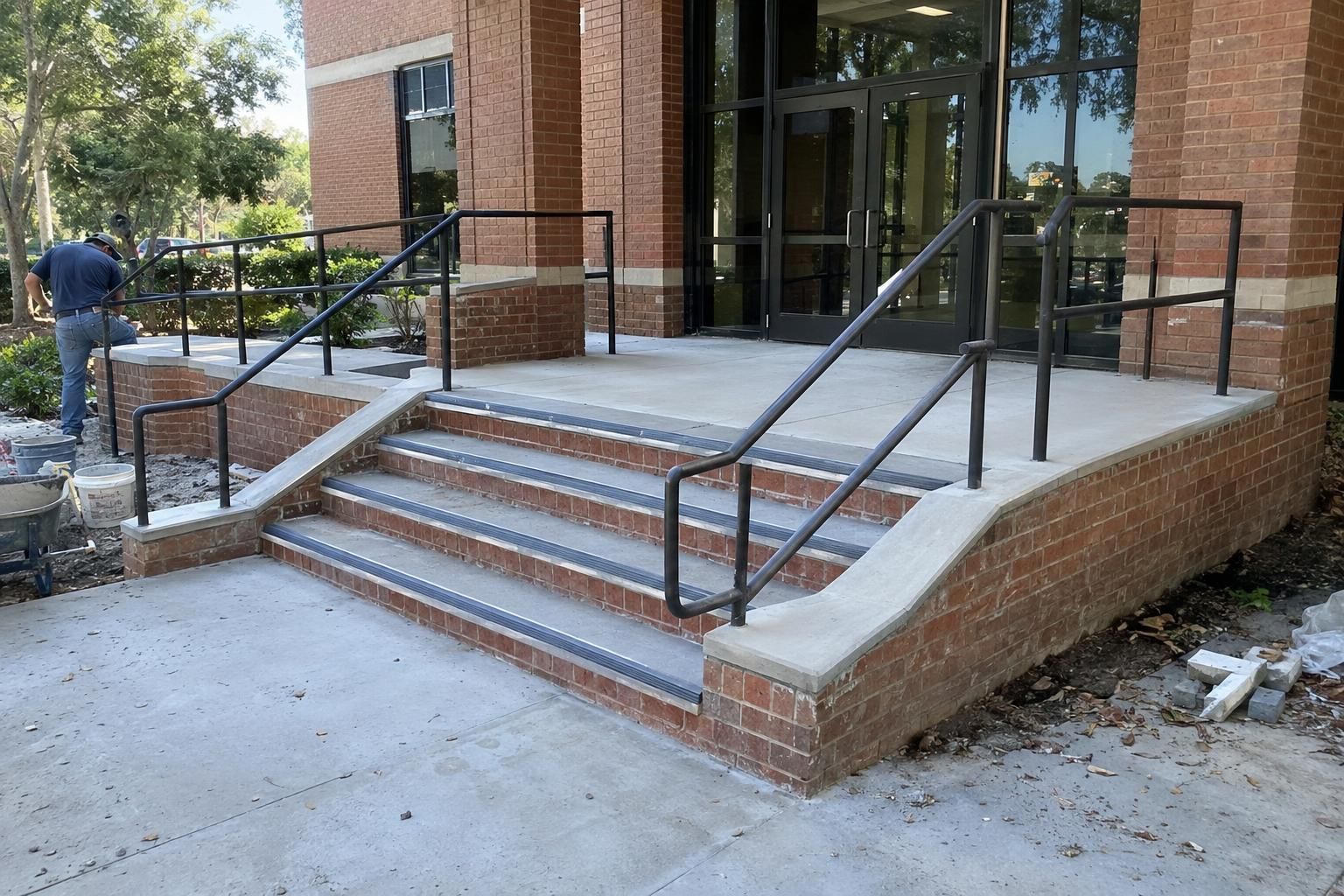
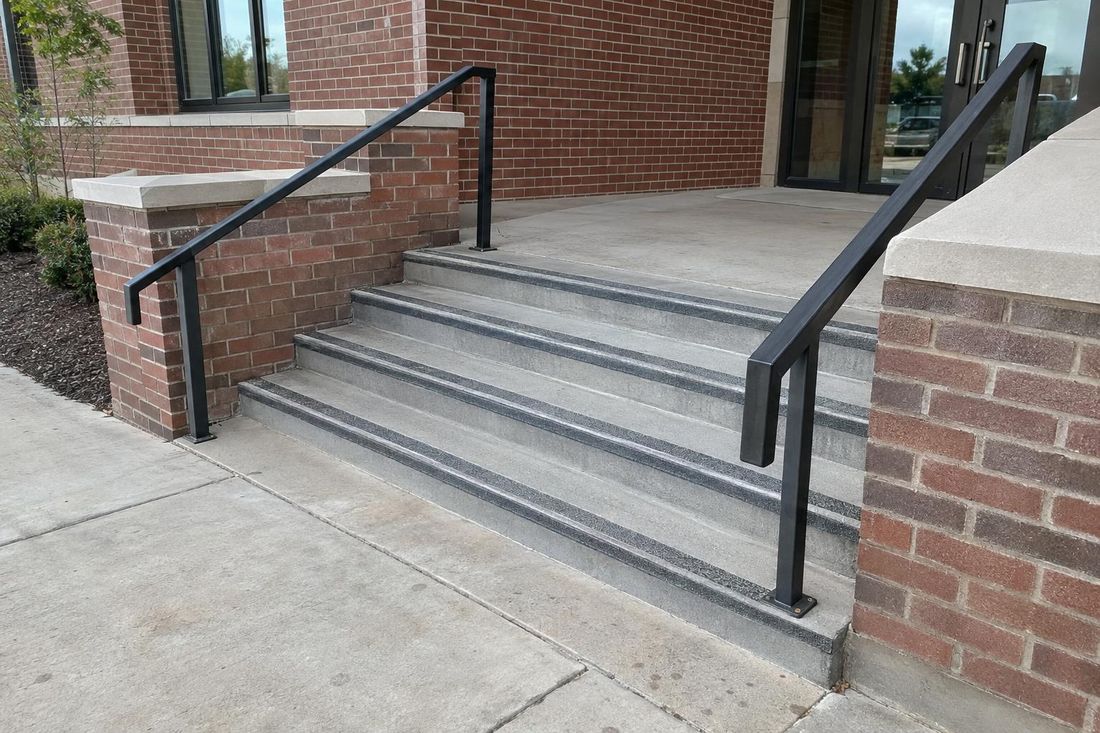
Concrete entry steps with metal handrails Four wide concrete steps with dark non-slip strips on each edge lead up to a landing at a brick commercial building's glass doors. Black square-tube metal handrails are mounted on brick walls capped with pale stone on both sides of the steps.
What drives the cost
Size sets the baseline, since more steps and bigger landings mean more block, concrete and labor. Finish material comes next. Brick, stone and pavers each cost different amounts to buy and to lay, and cut stone takes more time. Railing work adds up fast, especially custom rails set into masonry. Phasing matters too, because working in halves or around your business hours takes longer than closing the door. Permit and design needs vary with what the building department asks for. The easiest way to get a real number is a free estimate, so call us and we'll walk the site.
How long it takes
Most jobs run one to three weeks, phased so an entrance stays open. A treads-only repair sits at the short end. A full rebuild with a ramp and railings takes the long end, and new concrete needs time to cure before it takes traffic or rails. Permits and inspections can add days we don't control. We'll give you a schedule at the estimate, and we'll tell you right away if something moves.
Local expertise: commercial masonry steps and landings in Atlanta
The red clay of the Georgia Piedmont is typified by the Cecil soil series: very deep, well drained soil on ridges and side slopes, with a red subsoil that averages 35 to 60 percent clay.
What it means for your job
Clay holds water against a wall and does not recover well once it is compacted, so drainage behind a retaining wall and a properly built base under pavers and footings matter more here than the surface material.
Atlanta gets about 49.7 inches of rain a year. Late winter, early spring and July are the wettest stretches, and fall, especially October, is the driest.
What it means for your job
Mortar, stucco and sealers need dry time. Fall is the easiest season for repointing and sealing, and summer work is planned around afternoon storms.
Overnight freezes can be expected on about 40 days a year in Atlanta.
What it means for your job
Water that soaks into brick, stone and mortar and then freezes is what pops faces off brick and opens joints. Keeping water out matters more here than in places that rarely freeze, and winter mortar work has to be protected overnight.
Repairs only work where the structure is sound. If the base has failed, we'll say so and quote a rebuild instead. Refacing is the same, and it only goes over steps that pass our look. Rebuilding steps can trigger accessibility upgrades, so confirm scope with the building department in Atlanta before we start. Engineered drawings, where they're required, come from your designer. And cold or wet weather can hold up concrete and mortar work, so we plan around it.