Qualified MasonsVerified ProfessionalsFree EstimatesOn Time
What brick and masonry sealing involves
The sealer lines the pores inside the masonry instead of sitting on top like paint. Rain runs off, but moisture already in the wall can still escape as vapor. That's the whole trick. It's also why we never use a coating that traps water behind it, because trapped water is what pops the faces off brick in a hard freeze.
So who needs it? Usually the homeowner with a chimney crumbling at the top, a wall that takes driving rain, soft old brick, or pavers that stain and turn green. Hard, dense brick on a sheltered wall often does fine without it, and we'll say so. Call us in Atlanta and we'll look it over, run a quick water test, and give you a free estimate.
Signs you need brick and masonry sealing
Water darkens the brick and the spot stays darkSplash a little water on the wall. If it soaks in instead of beading, the face is thirsty and drinking up rain.
Faces flaking or popping offThat's spalling. Water got in, froze, and pushed the surface off. Sealing protects the sound brick around it, but the damaged ones may need replacing.
White powder on the wallThat's efflorescence, which is salt carried out by moisture. It tells us water is moving through the masonry, so we find out why before we seal.
Pavers going dark and blotchyWater, algae and oil settle into open pores. Cleaning and sealing slows the staining and makes the next spill easier to wipe up.
What we handle
House brick and block wallsWe seal the walls that take the weather, usually the side that faces the rain. Block is much thirstier than brick, so it drinks more sealer and often gains the most.
ChimneysThe top of a chimney is the most exposed masonry on your house. We check the crown, cap and flashing first, because a repellent won't stop water that's coming in through those.
Paver patios and drivewaysWe clean the surface, top up the joint sand, and then seal. You choose between a natural look and a wet-look finish, and we steer driveways toward a product that suits the traffic.
Stone and stucco surfacesNatural stone varies a lot, so we test a small spot before we commit. Stucco is a cement finish that soaks up water too, and we use a breathable product on it.
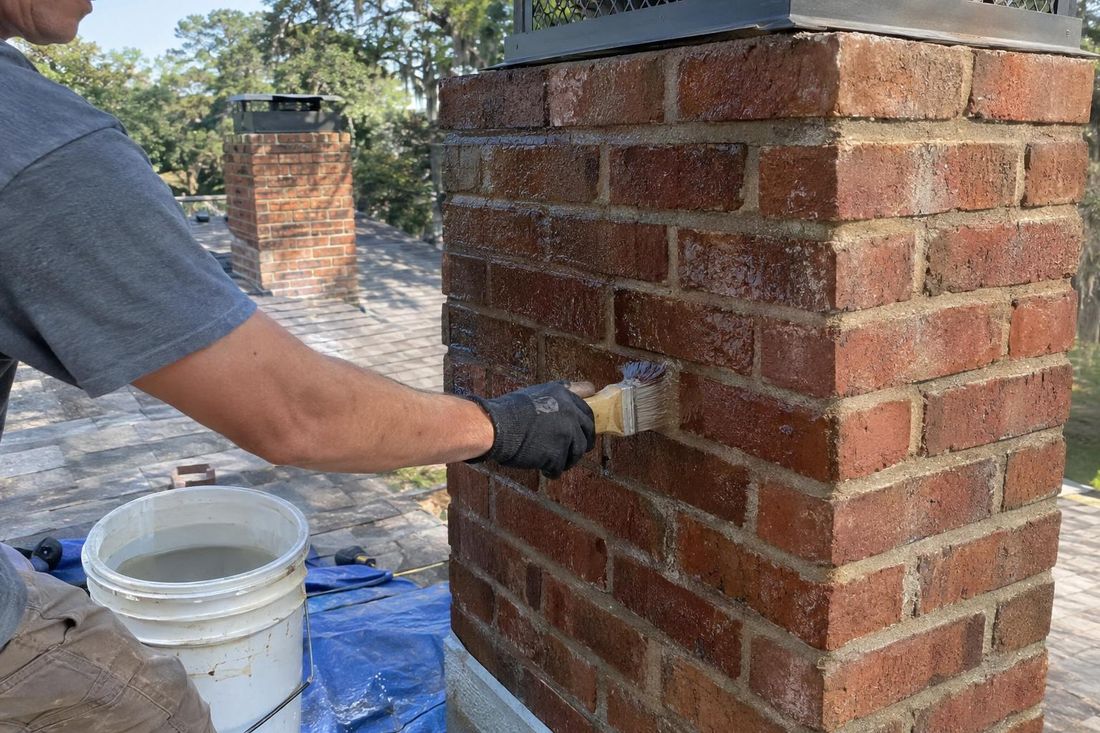
Brushing sealant onto brick chimney A person wearing a gray shirt and black work glove uses a paintbrush to apply a glossy liquid coating to the red brick and mortar of a chimney stack. A white bucket and a blue tarp sit on the roof nearby, and a second brick chimney is visible in the background.
How we do it
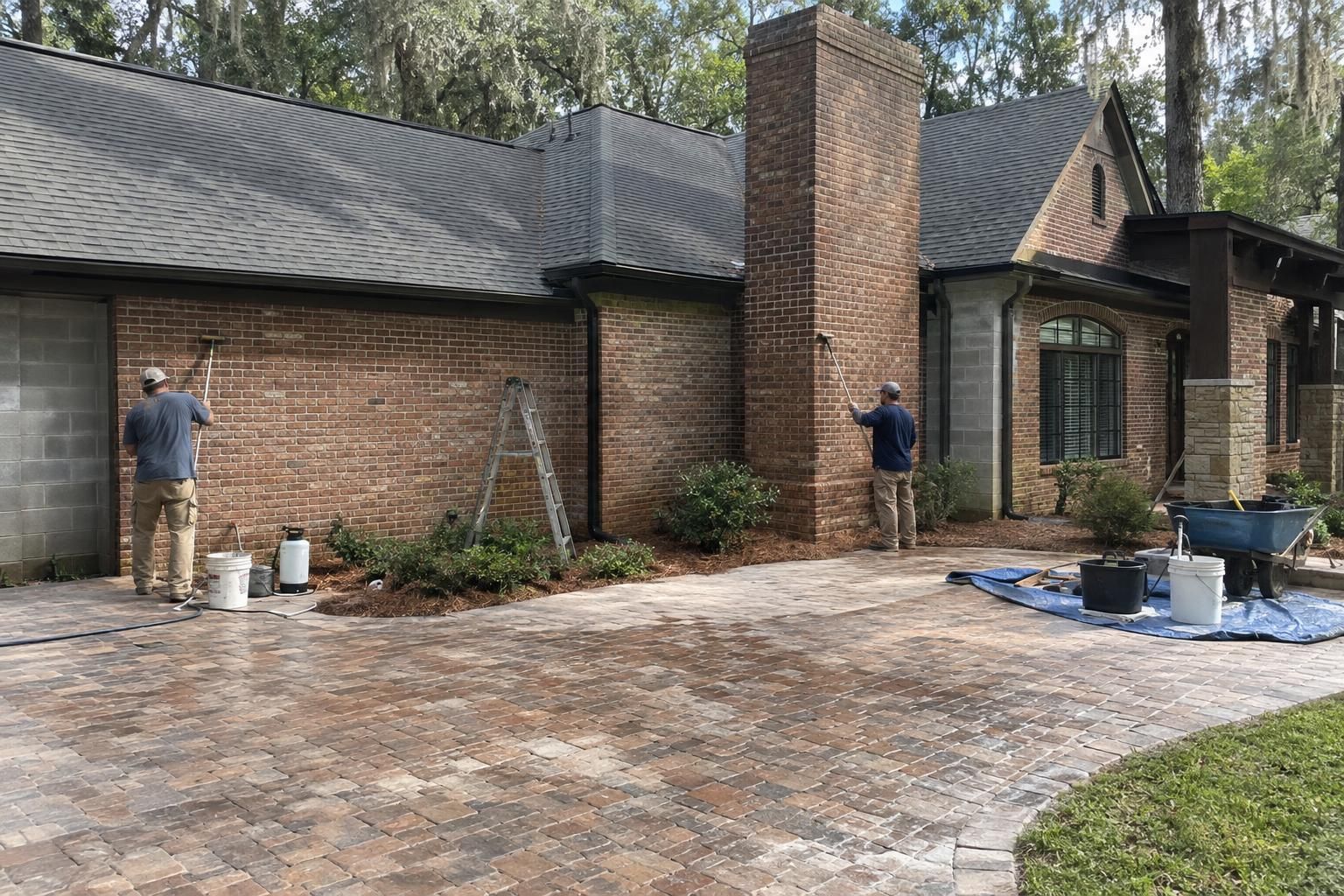
On walls and chimneys we use breathable penetrating sealers, usually a silane or siloxane type, and never a film-forming coating that traps moisture. These products sink in and work inside the pores, so the surface looks the same and vapor still gets out. We apply with a low-pressure pump sprayer, working in sections so the sealer soaks in instead of running down the wall in streaks.
Pavers can take a penetrating sealer or a wet-look one. Wet-look darkens the color and adds sheen, and it can get slick when wet, so we talk it through with you first. Before any of it, we repair cracks and bad joints. We repoint with mortar that suits the wall, because sealer over an open joint just hides a leak for a season. And we always do a test patch so you see the result before we do the whole job.
How a job with us goes
Free estimate
We walk the house and look at the mortar joints, the brick faces and the top of the chimney. We splash-test the walls, then tell you straight whether sealing will help or whether you'd be wasting your money. There's no charge for any of it.
Repairs and cleaning
We rake out and repoint failed joints, patch cracks, and scrub off dirt, algae and efflorescence with a brush and a gentle rinse. Sealer locks in whatever's on the surface, so the surface has to be clean and sound first.
Surface allowed to dry
Masonry holds water for days after a wash or a rainy spell. We wait until it's dry through, because sealer put on damp brick can't soak in the way it should.
Sealer applied to saturation
We flood each section until the surface stops taking sealer, and we keep a wet edge moving so we don't leave lap marks. Saturation is what gives the repellent depth.
Second coat where the product calls for it
Some products want a second coat while the first is still damp, and others don't. We follow the product's directions, then splash-test a spot once it has cured.
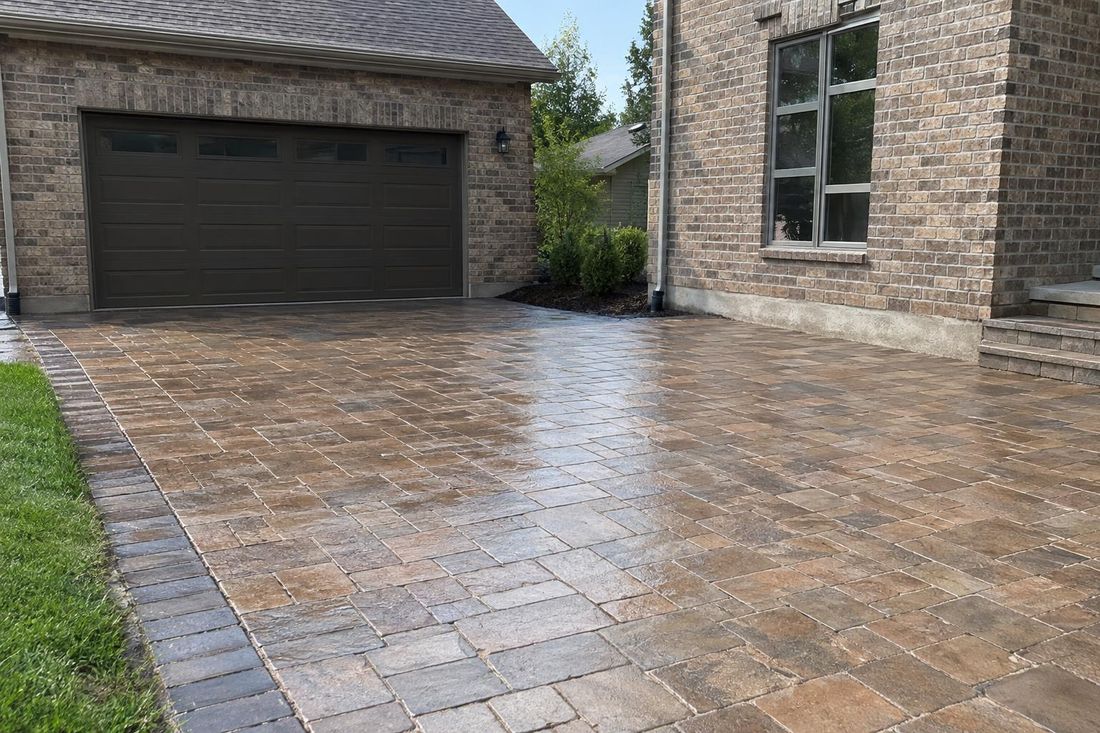
Sealed paver driveway beside brick home A wet-looking interlocking paver driveway in brown and gray tones runs up to a dark garage door and a brick house wall. The glossy, darkened surface of the pavers suggests a sealed finish, and the brick facade is also visible.
What drives the cost
Area comes first, since more wall means more sealer and more time on the ladder. Next is how porous the surface is. Soft brick and block can drink far more sealer than hard, dense brick, and that sets how much product goes on. Prep matters too. A wall that needs repointing, cleaning or efflorescence removal costs more than one we can seal as it stands. Height and access count, like a tall chimney or a wall behind thick shrubs. And the product you choose changes the number, because a wet-look paver sealer isn't priced like a penetrating one. We'll spell it all out in a free estimate.
How long it takes
The sealing itself takes a day or less on most houses. The waiting happens up front. The masonry has to be dry through, and we don't want rain hitting it soon after we spray, so we schedule around the forecast. If repairs or cleaning come first, add that time, plus a few drying days after any wash. A rainy week can push us back, and we'd rather move the date than seal wet brick.
Local expertise: residential brick and masonry sealing in Atlanta
Atlanta gets about 49.7 inches of rain a year. Late winter, early spring and July are the wettest stretches, and fall, especially October, is the driest.
What it means for your job
Mortar, stucco and sealers need dry time. Fall is the easiest season for repointing and sealing, and summer work is planned around afternoon storms.
Overnight freezes can be expected on about 40 days a year in Atlanta.
What it means for your job
Water that soaks into brick, stone and mortar and then freezes is what pops faces off brick and opens joints. Keeping water out matters more here than in places that rarely freeze, and winter mortar work has to be protected overnight.
Sealer doesn't fix cracks, missing mortar or flashing leaks, and it won't stop water coming in from a bad chimney crown or a gutter that dumps onto the wall. We repair those separately. It can't undo damage either, like brick that has already spalled. It wears off, so plan on reapplying every several years, sooner on the weather side of the house or on a driveway. A penetrating sealer also needs open pores, so painted masonry has to be dealt with first. And we can't seal a wall that's wet or too cold for the product to cure.
Sound brick often doesn't. Sealing helps on chimneys, walls that take driving rain, soft or porous brick, and pavers. If yours is hard and dense and sits in a sheltered spot, save your money.
Will it change how my brick looks?
Penetrating sealers dry clear with little or no change. Wet-look sealers darken and add sheen, and they're mostly a paver choice. We'll test a small spot so you can see it first.
How do I know if my wall is thirsty?
Splash water on it on a dry day. If it beads, you're probably fine. If it darkens and soaks in, try a few spots, since the weathered side behaves differently than the shaded one, and call us.
Can you seal over paint or an old coating?
Usually not. A penetrating sealer needs open pores to soak into, so paint or an old film has to come off first. We'll