Qualified MasonsVerified ProfessionalsFree EstimatesOn Time
What masonry demolition and removal involves
Masonry removal is just what it sounds like, but how it's done matters. A chimney you don't use, a crumbling garden wall, cracked front steps, or a solid brick wall you want a doorway through each call for different handling. Near the house, we work by hand so we don't pull on what's staying. Out in the yard, where there's room, we can work faster.
You need us when something has outlived its use, turned into a hazard, or stands in the way of a project. Maybe the chimney leaks, or the patio heaves, or you want a wider opening to the backyard. Homeowners in Atlanta call us for a free estimate, and the first thing we check is what the structure is holding up. Sometimes the answer is nothing. Sometimes it's your roof.
Signs you need masonry demolition and removal
Leaning or stair-step cracks in the chimneyThat's the mortar letting go, and loose brick above the roofline can drop on anyone standing below. Rebuilding a flue you never use rarely makes sense.
Water stains around the chimney insideFlashing and the crown are the usual suspects. Taking the chimney down removes the leak point instead of patching it again.
Steps or patio slabs heaved away from the houseFrost and settled fill push them out of level, and then water runs toward your foundation. Nobody wants that.
A solid wall you keep wishing had a door in itThat's a new opening, and it's a different job from plain demolition because the wall above has to be held up the whole time.
What we handle
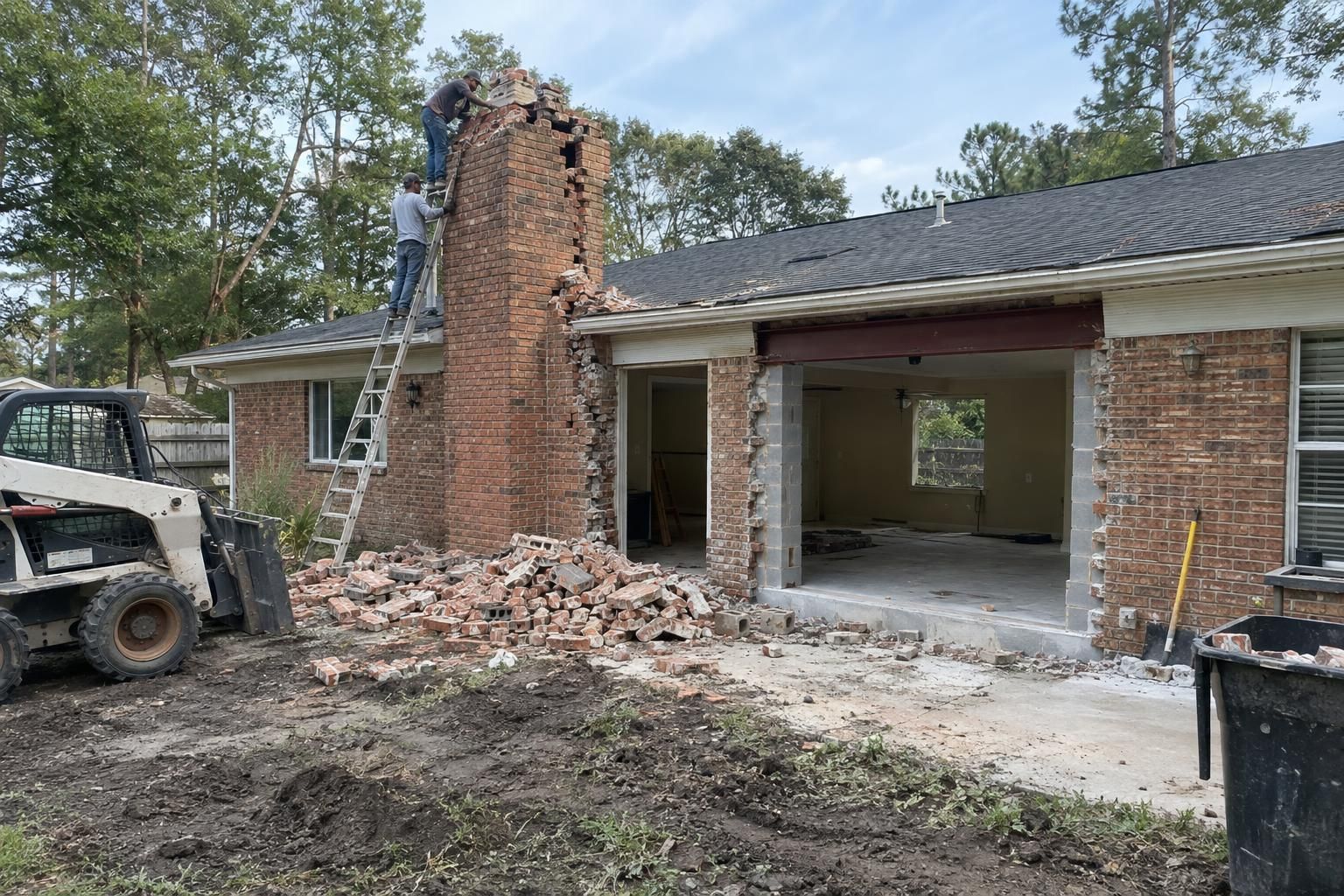
Chimney removalWe take it down by hand from the top, brick by brick. Then we close up the house wall and roof opening where it stood, and a roofer finishes the shingles.
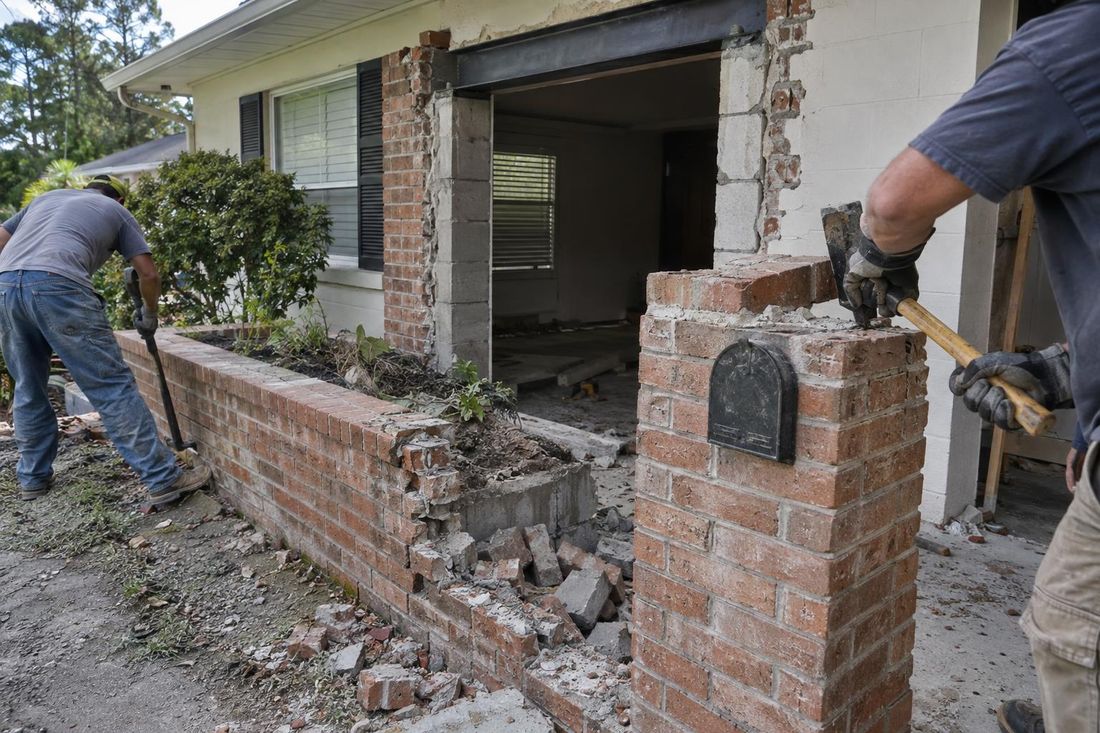
Garden wall, planter and mailbox removalThese often sit on a concrete footing. We can break that out too, so you're not mowing around a buried ridge.
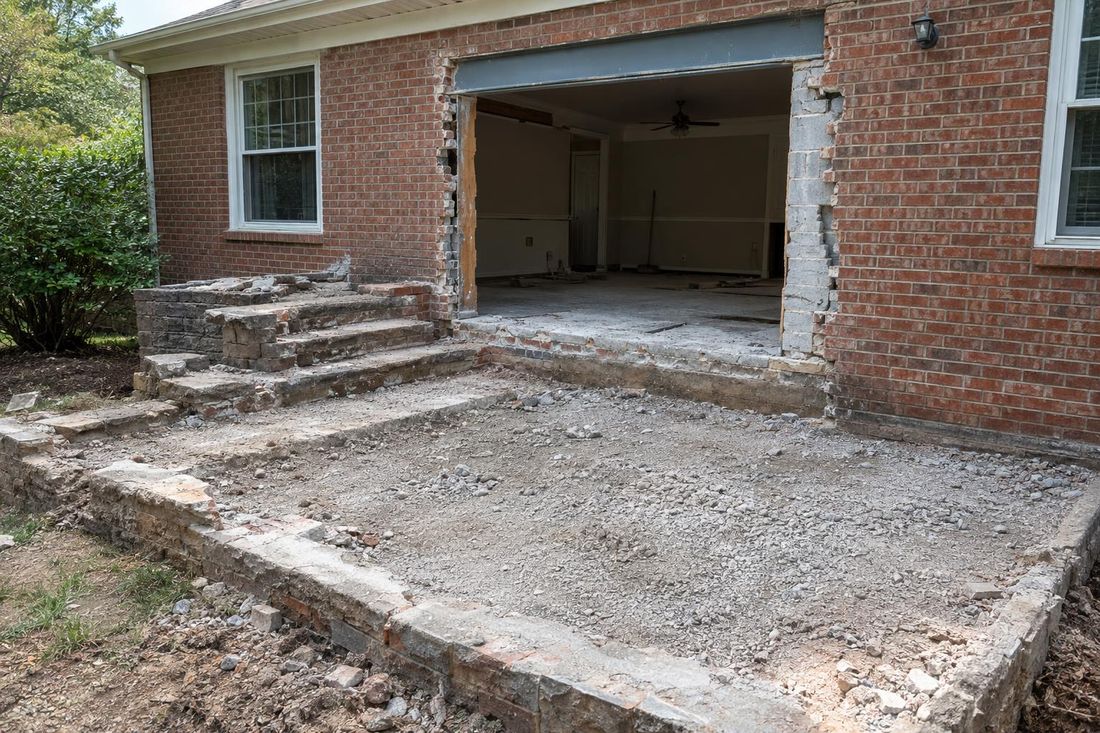
Old steps and patio removalConcrete and brick come out in pieces we can carry or wheel away. We leave the ground graded so water runs away from the house.
Cutting a new door or window opening in brick or blockWe set a lintel first, then remove the wall below it. After that we tooth the edges so the new frame has something solid to tie into.
Brick wall being demolished at house Two workers in gloves break apart a red brick planter wall and pillar at the front of a house, with a pile of broken brick and rubble on the ground. A large opening has been cut into the exterior wall behind them, showing an empty room inside.
How we do it
Anything attached to the house comes down by hand, from the top. We use a hammer, a cold chisel and a masonry bar, one course at a time, so we're not shaking the wall that's staying. Old chimneys often have soft mortar and the brick lets go easily. Newer work with strong mortar takes more persuading. Away from the house, where there's room, a small machine can do the heavy breaking.
New openings go in a different order. We cut a pocket and set a lintel across the top, and we let it take the load before we remove a single brick below it. Then the opening comes out and the edges are toothed, which means we leave alternating brick ends sticking out so the jamb can be built back in cleanly. Last, we finish the edges so they look like they belong.
How a job with us goes
Free estimate
We come out and look at what the structure sits on, what sits on it, and how it ties into the house. That's how we check whether it's load-bearing. It also tells us how to take it down.
Utilities and protection
We locate gas, water, electric and buried lines before we break anything. Then we lay plywood and tarps over lawn, roof and floors so the mess stays where we put it.
Demolition
We work by hand from the top where the masonry meets the house, and by machine only where there's room. On a new opening, the lintel goes in before anything below it comes out.
Hauling
Debris goes into a truck or dumpster as we go, not into a pile that sits in your yard for a week. We sweep up when we're done.
Patching
We close up the house wall, the roof opening or the ground where the structure stood. We leave a chimney opening ready for your roofer.
Demolished brick patio and opened wall A residential brick house shows a removed patio slab, leaving exposed gravel fill, broken brick edges and partly demolished brick steps. A large opening has been cut into the brick wall with a steel lintel above it, giving a view into an empty room.
What drives the cost
Size and height set the baseline. A tall chimney means roof jacks or scaffolding and slow hand work. Hand work versus machine access matters just as much. A patio beside a clear driveway goes faster than a walled-in side yard where every brick leaves in a wheelbarrow. Hauling and disposal count too, since concrete and brick are heavy and dump fees run by weight. And patching afterward, whether that's brick infill, a stretch of siding or fresh grade, is part of the job. We look at all of it during the free estimate, so you hear the number once.
How long it takes
Most removals take one to three days. A garden wall or a set of steps is often done in a day. A chimney takes longer because we work from the top down and then close up the wall and roof. A new opening adds the lintel step, and if it needs a permit, the wait for that comes before we start. Weather matters for anything on the roof. We'd rather wait for a dry day than rush it and leave you with a wet attic.
Local expertise: residential masonry demolition and removal in Atlanta
Atlanta gets about 49.7 inches of rain a year. Late winter, early spring and July are the wettest stretches, and fall, especially October, is the driest.
What it means for your job
Mortar, stucco and sealers need dry time. Fall is the easiest season for repointing and sealing, and summer work is planned around afternoon storms.
Overnight freezes can be expected on about 40 days a year in Atlanta.
What it means for your job
Water that soaks into brick, stone and mortar and then freezes is what pops faces off brick and opens joints. Keeping water out matters more here than in places that rarely freeze, and winter mortar work has to be protected overnight.
Load-bearing walls and new openings need a permit and often an engineer, and we won't start cutting until that's settled. Roof patching after chimney removal is a roofer's job, so you'll want one lined up. We take the masonry down and close up the opening, but shingles and flashing belong to them. And we can't promise old brick will come out whole, since soft mortar and hard brick don't always agree. If a structure is leaning badly or was damaged by fire, we'll tell you at the estimate how we'd handle it.
Can a chimney be removed without affecting the house?
Usually, since most are self-supporting. The roof and wall are then closed up, with a roofer handling the roof side. We check the attic first for anything tied in.
Can the old brick be saved?
Yes, if you ask beforehand. Cleaning brick for reuse means chipping off the old mortar one piece at a time, and that adds labor.
How do you know if a wall is load-bearing?
We look at what sits on top of it, which way the floor joists run, and what's underneath. If there's any doubt, an engineer makes the call.
Will you take out the footing too?
For garden walls and mailbox columns, usually yes if you want the ground clear. Tell us at the estimate if you'd rather leave it in place.
What about dust inside the house?
Chimney work from the attic and new openings both make dust. We hang plastic, cover floors and sweep up as we go.