Call (470) 837-6333Get a free estimate
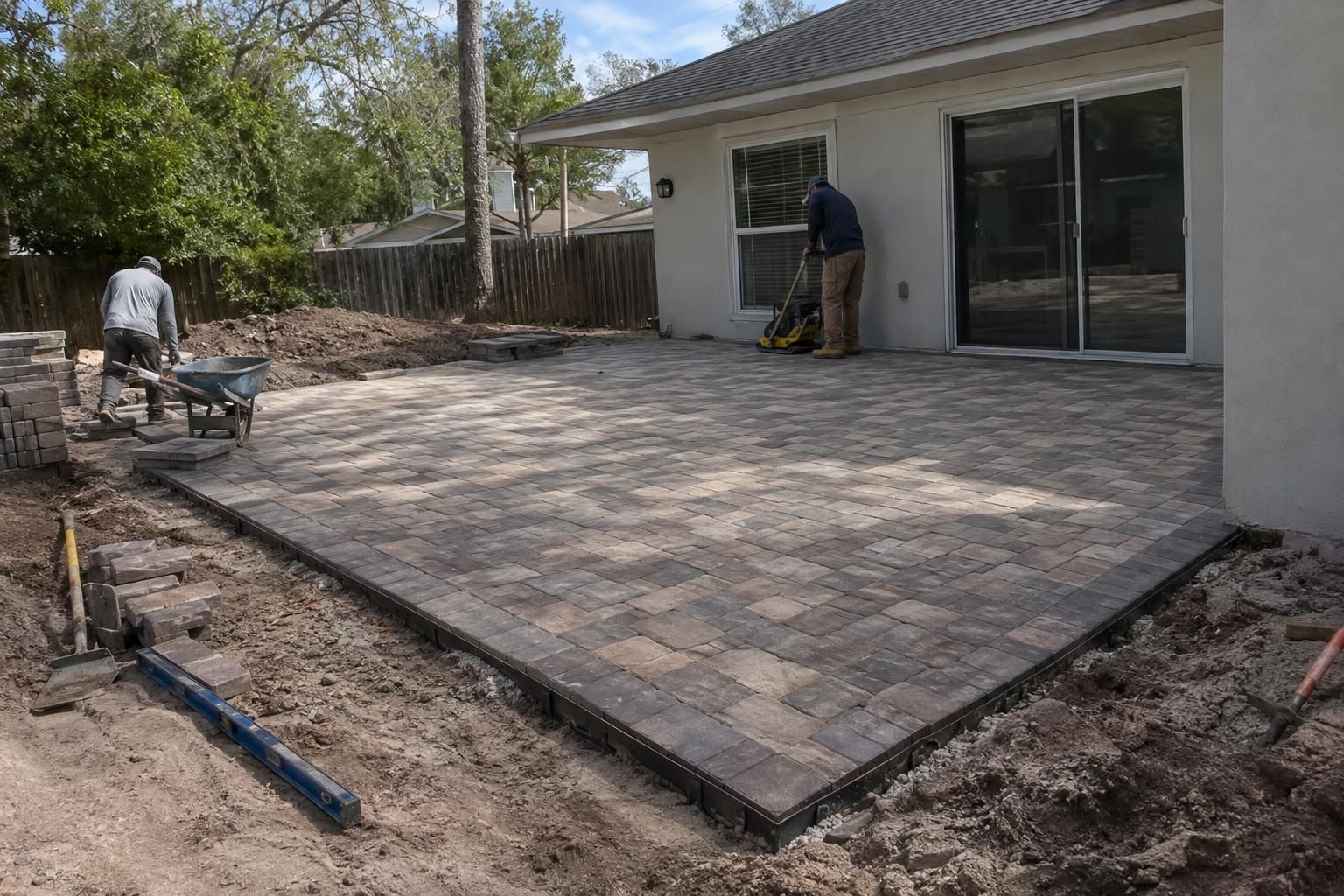
Paver patio installation in progress. Workers are building a residential paver patio behind a stucco house, with a plate compactor on the laid pavers near the sliding door. Stacked pavers, a wheelbarrow, a level, and bare excavated soil surround the edge-restrained paving.

Dalton Brothers Masonry Atlanta

Residential Paver patios in Atlanta

A paver patio is built from individual units laid over a compacted base, so it moves with the ground instead of breaking against it. And if one spot goes wrong, we lift that section and set it back.

Call (470) 837-6333

Request your free estimate

Always free and we get back to you ASAP.

By submitting, you agree to our Terms of Use and Privacy Policy and consent to calls and texts about your project from Dalton Brothers and the local partners matched to your request, including by automated means. Consent is not a condition of any purchase.

Qualified MasonsVerified ProfessionalsFree EstimatesOn Time

What paver patios involves

Here's what we're building. Concrete, brick or stone pavers sit on crushed stone and a thin layer of bedding sand, locked together by joint sand and an edge restraint. There's no single big slab, just hundreds of small pieces sharing the load. Frost, tree roots and settling push on them, and they flex. A slab can only crack.

So who needs one? Maybe you've got bare dirt behind the house and nowhere to set a table. Maybe an old slab has heaved and you're tired of tripping on it. Maybe a wet walkout needs a surface that sheds water. We start every job with a free estimate, so call us and we'll look at your yard in Atlanta.

Signs you need paver patios

What we handle

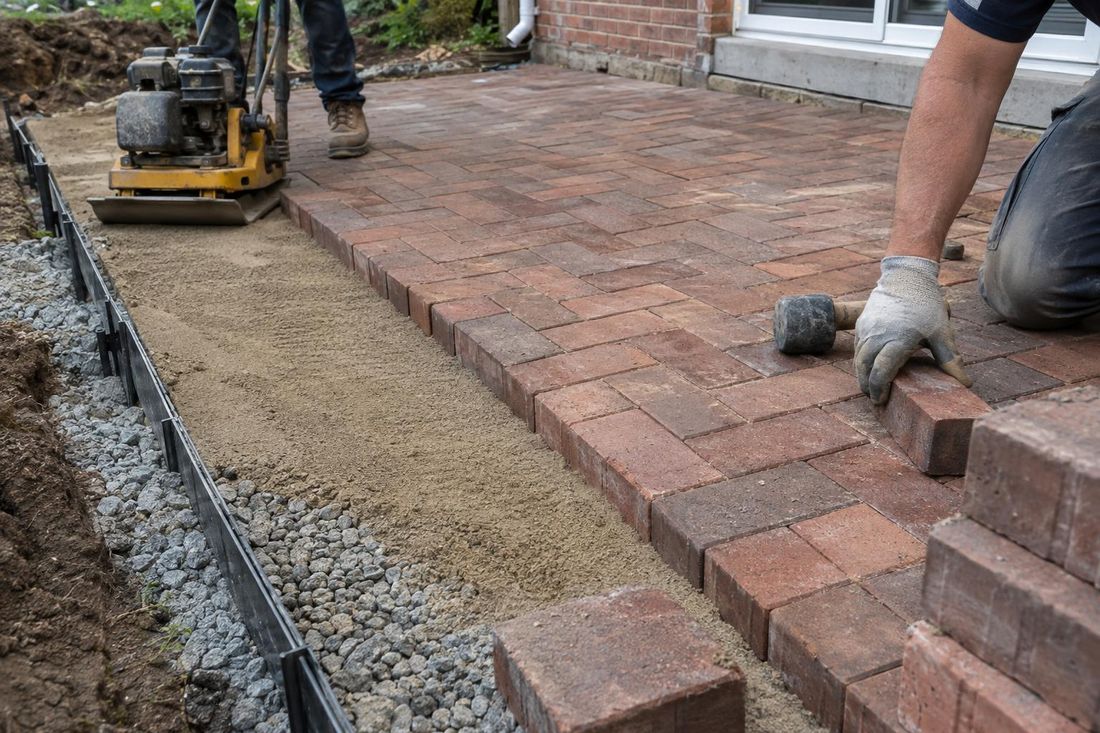
Red brick paver patio being installed. Rectangular red-brown pavers are laid in a pattern next to a brick wall, with a gloved hand placing a paver beside a rubber mallet. A plate compactor sits on the leveled sand bed beside a metal edge restraint and gravel, and stacks of pavers are in the foreground.
Red brick paver patio being installed Rectangular red-brown pavers are laid in a pattern next to a brick wall, with a gloved hand placing a paver beside a rubber mallet. A plate compactor sits on the leveled sand bed beside a metal edge restraint and gravel, and stacks of pavers are in the foreground.

How we do it

We excavate first, then build the base from crushed stone in layers, running a plate compactor over each one before the next goes down. Thin layers pack tight. Thick ones only pack on top and settle later. Over the base we screed an inch of bedding sand along pipe rails, so the surface is flat before a single paver is set.

Pavers go down from a string line, and we cut the edges with a wet saw or a splitter. An edge restraint, spiked into the base, holds the whole field in place. We sweep in joint sand, usually polymeric, and compact again. The surface slopes away from the house, about a quarter inch per foot, because water that can't leave will find the base. You never see the base. But it's the part we spend the most time on.

How a job with us goes

  1. Free estimate, layout and paver choice

    We walk the site, measure, and mark the layout on the ground with paint. Then we put paver samples in your hands outside, because color looks different in daylight than it does on a showroom shelf.

  2. Excavation

    We dig deep enough for the base, the sand and the paver, and we haul the soil away. If we hit a soft spot, we dig it out and fix it now, because left alone it shows up later as a dip.

  3. Base compacted in layers

    Crushed stone goes in thin lifts, and each one gets the plate compactor before the next. Thin layers pack tight all the way down, and that's what keeps the patio flat for years.

  4. Pavers laid, edges cut and restrained

    We screed the bedding sand, lay pavers from a square line, and cut the edges to fit with a wet saw. The edge restraint goes in last so the field can't spread.

  5. Joint sand and final compaction

    We sweep sand into every joint and run the compactor over the surface with a pad. Then we sweep again. That's what locks the pavers together as one surface.

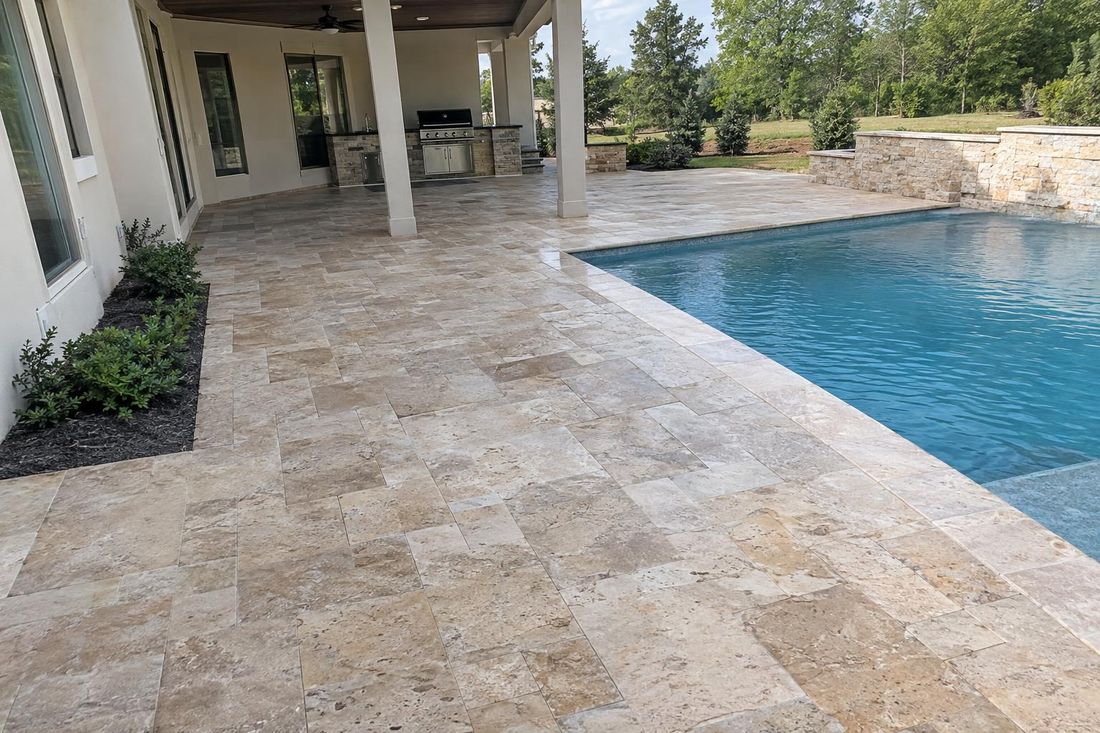
Travertine paver patio beside pool. A covered residential patio is paved with large, irregularly laid tan travertine pavers that continue to the edge of a rectangular swimming pool. An outdoor kitchen with a built-in grill, a stone retaining wall, and landscaped planting beds are visible nearby.
Travertine paver patio beside pool A covered residential patio is paved with large, irregularly laid tan travertine pavers that continue to the edge of a rectangular swimming pool. An outdoor kitchen with a built-in grill, a stone retaining wall, and landscaped planting beds are visible nearby.

What drives the cost

Price follows the work, and most of the work is underground. Square footage matters first, but so does how much base we need to build and how much grading it takes to get the slope right. The paver you pick moves the number, and so do pattern and borders. A herringbone pattern means more cutting than a simple running bond, and a soldier-course border adds cuts and time. Access counts too. If we can't get a skid steer into the yard and have to move stone by wheelbarrow, the job takes longer. We'll walk the site and explain each piece in your free estimate.

How long it takes

A typical patio takes us three to five days. Excavation and base take the biggest share of that, because the layers can't be rushed. Laying goes faster once the base is right. A bigger patio, a lot of cuts, a curved edge or heavy grading will add days, and so will rain, since nobody wants to compact a soaked base. We'll tell you what we expect when we walk the yard, and we'll call if the weather changes the plan.

Local expertise: residential paver patios in Atlanta

The red clay of the Georgia Piedmont is typified by the Cecil soil series: very deep, well drained soil on ridges and side slopes, with a red subsoil that averages 35 to 60 percent clay.

What it means for your job

Clay holds water against a wall and does not recover well once it is compacted, so drainage behind a retaining wall and a properly built base under pavers and footings matter more here than the surface material.

Source: USDA NRCS Official Soil Series Description: Cecil →

Atlanta gets about 49.7 inches of rain a year. Late winter, early spring and July are the wettest stretches, and fall, especially October, is the driest.

What it means for your job

Mortar, stucco and sealers need dry time. Fall is the easiest season for repointing and sealing, and summer work is planned around afternoon storms.

Source: Wikipedia: Climate of Atlanta →

Overnight freezes can be expected on about 40 days a year in Atlanta.

What it means for your job

Water that soaks into brick, stone and mortar and then freezes is what pops faces off brick and opens joints. Keeping water out matters more here than in places that rarely freeze, and winter mortar work has to be protected overnight.

Source: Wikipedia: Climate of Atlanta →

Good to know

A patio is only as good as its base, and the cheapest quote usually has the thinnest base. We'd rather lose that bid than build it. Joint sand needs topping up over time, so plan on a sweep every so often. Pavers won't fix a downspout dumping against your foundation or a yard that floods from next door. And tree roots, soft fill and poor drainage can still move a patio, even a well-built one. We'll point out those spots when we visit.

Paver patios questions

Pavers or poured concrete?

Concrete costs less up front but cracks and is hard to patch. Pavers cost more and can be repaired invisibly.

Will weeds grow between pavers?

Polymeric joint sand greatly reduces it. Seeds can still land and sprout in a little dirt on top, so we pull those early.

Can you lay pavers over my old concrete?

Sometimes, if the slab is sound and sloped the right way. A cracked or heaving slab is a poor base, so we usually pull it out.

Do pavers need sealing?

No, but sealer deepens the color and makes stains easier to sweep off. It wears and needs redoing, so it's your call.

How soon can I use it?

Right away. Once the final compaction is done, you can walk on it and set the furniture out.

Ready for a free estimate on your masonry job?

Free for property owners. No obligation.

Get my free estimateCall (470) 837-6333
Call nowFree estimate