Qualified MasonsVerified ProfessionalsFree EstimatesOn Time
What brick repair involves
On a commercial building, the brick is only part of the job. Access, safety and keeping the business running matter just as much. Our brick repair covers facades, parapets, loading areas, columns and site walls, and each one fails in its own way. A parapet takes weather on three sides. A dock corner gets hit by trucks. A column at the drive-through gets clipped by mirrors.
You need us when brick starts cracking, loosening or shifting, or when a box truck takes a bite out of a corner. You also need us when someone has to answer for the sidewalk below. Our masons plan the scaffolding, the barriers and the hours before we pull a single brick. Property managers and general contractors, send us the address in Atlanta and we'll walk it with you.
Signs you need brick repair
Stair-step cracks in the wallA crack that follows the mortar joints in a stair pattern usually means the wall is moving. We want to know why before we patch it.
Rust stains or bulging near a lintel or shelf angleThe steel behind the brick is rusting and swelling. Rust takes up more room than steel, so it pushes the brick out and cracks it.
Faces popping off the brickThat's spalling. Water is getting in and freezing, or the brick is wrong for where it sits. It spreads if you leave it.
Loose brick at the top of a parapetA parapet has no roof over it, so water gets in from the top and both sides. If you can wiggle a brick or see daylight in a joint, call us.
What we handle
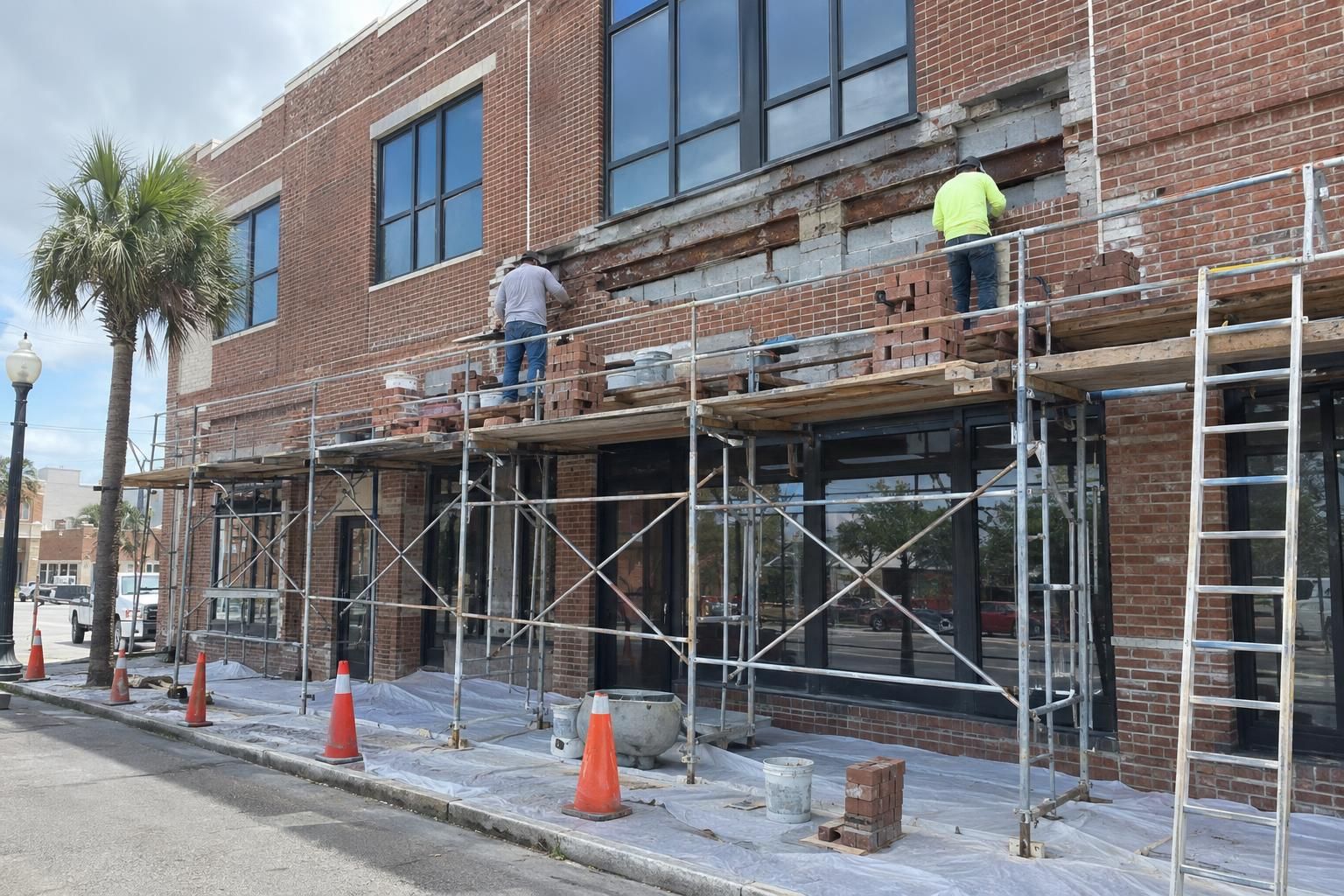
Facade brick replacement at heightWe cut out cracked or spalled brick from scaffolding or a lift. Then we lay in matched brick, each one set in a full bed of mortar.
Impact damage at loading docks, corners and drive-throughsTrucks and carts break outside corners first. We rebuild the corner, and if it keeps happening we'll talk with you about guards or bollards.
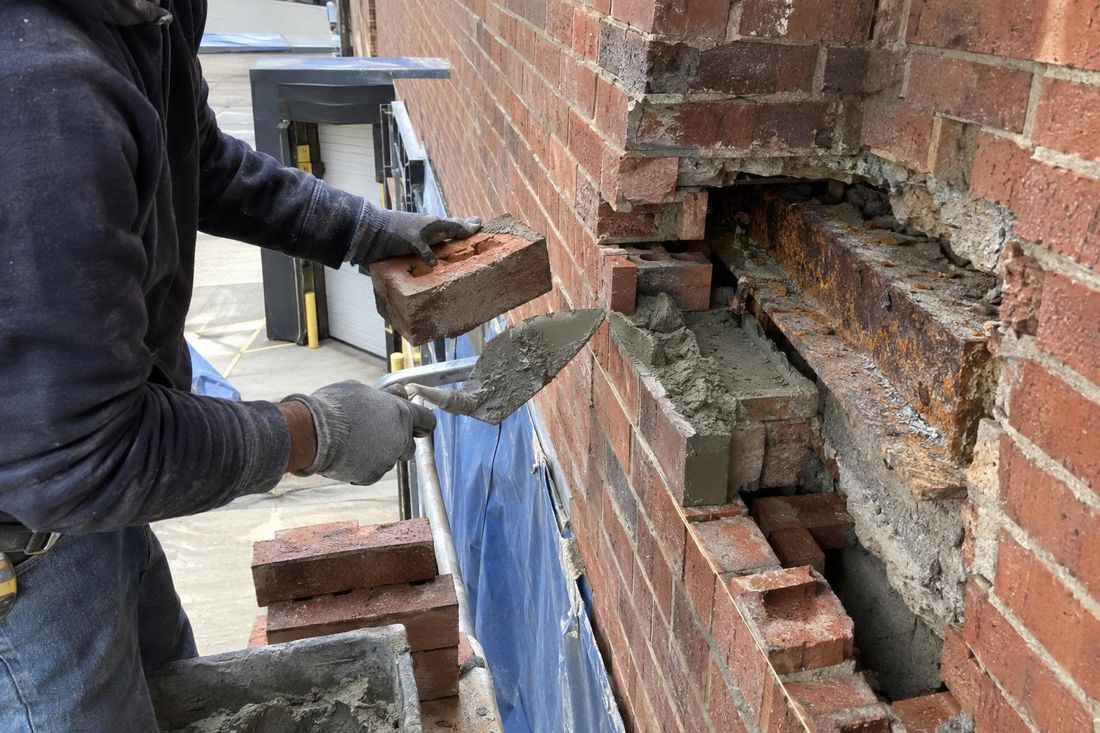
Cracked brick at steel lintels and shelf anglesRusting steel is almost always the reason. We open the wall, treat or replace the steel, and rebuild above it with a soft joint left under the angle.
Section rebuilds on multi-story wallsWhen a whole panel has bulged or gone loose, patching won't hold. We take it down in stages, course by course, and tie the new brick back to the structure.
Mason replacing bricks in damaged wall A worker in gloves holds a brick and a mortar-loaded trowel beside an opened section of a brick wall, where corroded rusty steel and crumbling mortar are exposed. Fresh bricks are stacked nearby with a mortar tub, and blue sheeting hangs along the scaffold.
How we do it
Work above the first floor is done from scaffolding or a lift, and we protect the sidewalk below with barriers and overhead cover. Which one we pick depends on the wall. A lift is quick for a small repair. Scaffolding makes more sense when our masons will be at one spot for days.
Replacement brick is matched to your building for color, size and texture. We hold samples against the wall in daylight before we order. We cut old mortar out with a grinder and mix new mortar to suit the existing wall, never harder than the brick. Rusted steel behind the brick gets treated or replaced before we close up the wall. We wire-brush it, prime it and flash above it. Closing a wall over rust just restarts the clock.
How a job with us goes
Site walk
We walk the building with you or your property manager. We look at the wall from the ground, then get closer with a lift or from the roof. We also note entrances, deliveries and where people walk.
Written scope
You get a written scope with our access plan and proof of insurance. Owners and general contractors usually need both before anyone sets foot on site, and we'd rather settle questions on paper.
Protection and setup
We put up sidewalk protection and set the scaffolding or lift. We do it first so people stay safe and so we're not scrambling when a tenant asks about the front door.
Brick out, brick in
We remove the bad brick, replace it and address the steel wherever it's exposed. If we find more than we expected, we show you before we go further.
Cleanup and walk-through
We clean the area, take down the protection and walk the job with you. Point at anything you don't like while we're still there.
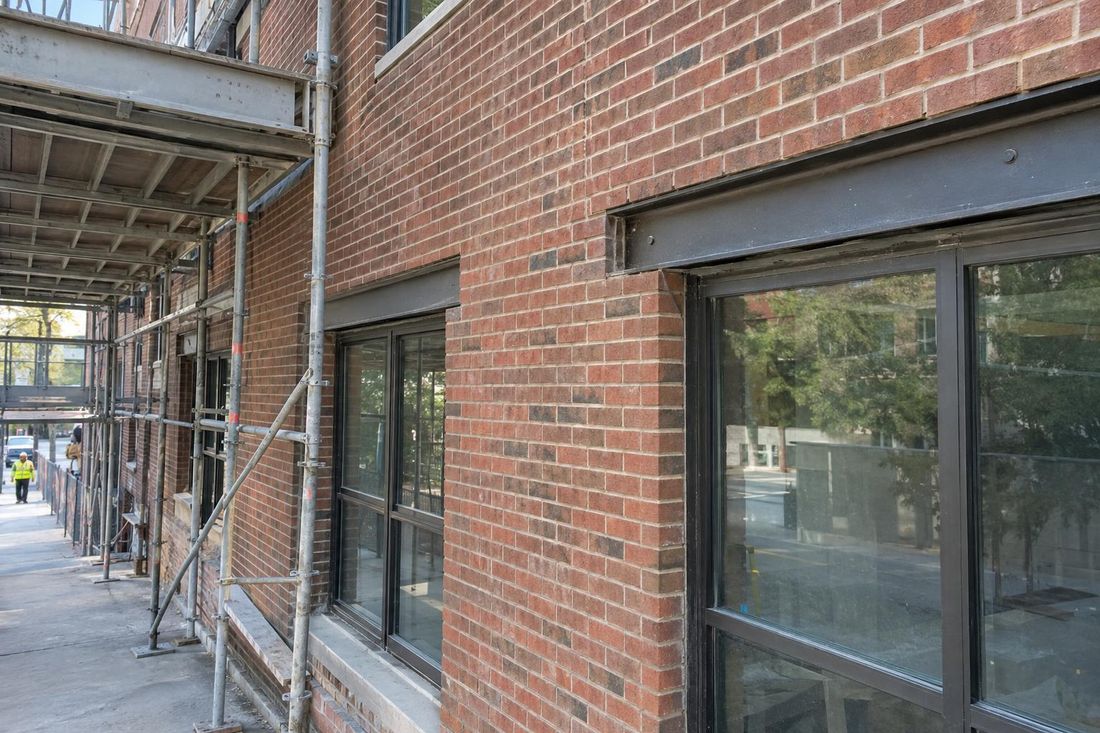
Scaffolding beside red brick building facade A red brick commercial building wall with dark-framed windows and steel lintels stands beside metal scaffolding with a covered walkway. A worker in a high-visibility vest is visible in the distance on the sidewalk.
What drives the cost
Height and access equipment move the price more than the brick does. Scaffolding or a lift, plus the sidewalk or parking closures that come with it, can add up fast on a small repair. Work outside business hours costs more because our masons are on site at odd times. The quantity of brick matters, of course. And so does steel repair found behind the wall, which none of us can see until the wall is open. Our written scope spells out which of these apply to your building. The free estimate is where we start.
How long it takes
Access sets the schedule more than brick count does. Setting up scaffolding and getting permits for a sidewalk closure can take longer than the repair itself, so we start that paperwork early. Once we're up, a small repair moves quickly and a multi-story rebuild goes in stages. We'll give you dates after the site walk. We won't guess from a phone call.
Local expertise: commercial brick repair in Atlanta
Atlanta gets about 49.7 inches of rain a year. Late winter, early spring and July are the wettest stretches, and fall, especially October, is the driest.
What it means for your job
Mortar, stucco and sealers need dry time. Fall is the easiest season for repointing and sealing, and summer work is planned around afternoon storms.
Overnight freezes can be expected on about 40 days a year in Atlanta.
What it means for your job
Water that soaks into brick, stone and mortar and then freezes is what pops faces off brick and opens joints. Keeping water out matters more here than in places that rarely freeze, and winter mortar work has to be protected overnight.
We can't know what's behind a facade until the brick comes off. That's why our scopes often carry an allowance for hidden conditions like rusted steel or loose ties. Structural steel replacement may need an engineer, and we'll tell you when we reach that point instead of guessing. Repairing brick also doesn't fix why water got in. If a roof edge or downspout is dumping onto the wall, that needs attention too. And new brick beside old brick will never be an exact twin.
Usually. We phase the work, protect entrances and can schedule noisy work for early mornings or days you're closed.
Will you provide a certificate of insurance?
Yes. We keep a current general liability certificate on file and can issue one naming your property.
Do we need a permit to close the sidewalk?
Often, and the rules depend on Atlanta. We'll tell you what we think is needed in the scope and help with the paperwork.
How do we know the new brick will match?
We hold sample bricks up to the wall in daylight before we order, because color shifts with the light. A weathered wall never gets a perfect twin, but a good match disappears from the sidewalk.
What if you find rusted steel behind the wall?
We show you what we found and price the repair before we go on. If it's more than a mason should decide alone, we'll say so and tell you to call an engineer.