Qualified MasonsVerified ProfessionalsFree EstimatesOn Time
What brick cleaning and stain removal involves
Brick cleaning is what we do when your brick has picked up algae, mildew, white mineral deposits, rust or old paint. We work out what the stain really is, then use the gentlest cleaner and the lowest water pressure that gets it off. That way the hard outer skin of the brick stays put and the mortar joints stay tight.
Most homeowners call us when a shady wall has gone green, when white powder shows up on a chimney or garden wall, or when a sprinkler has left orange streaks across the front steps. Maybe you bought a house with painted brick and can't stand it. Whatever it is, we'll come look at your place in Atlanta, tell you what we see, and give you a free estimate. Sometimes the answer is a simple wash. Sometimes it's a different problem hiding behind the stain.
Signs you need brick cleaning and stain removal
Green or black film on shady wallsThat's algae or mildew living on damp brick. It's usually worst on the north side and near downspouts, and it keeps the brick wet longer.
White fuzzy or crusty powderSalts left behind as water moves through the wall and dries at the surface. It brushes off dry, and it comes back if the moisture does.
Orange or brown streaksRust from sprinkler water, or from a metal railing, bracket or lintel. Streaks that run down from a fixture point right at the source.
Paint peeling or blotchy over brickThe old paint is failing, and it may be trapping moisture. We check the mortar joints under the flakes first, since that tells us how gentle we need to be.
What we handle
Algae and mildew removalGreen or black growth on shaded walls, steps and garden walls. We soak the wall, apply a mild cleaner, give it time to work and rinse it all off.
White powder (efflorescence) removalCommon on chimneys, retaining walls and foundation brick. We dry-brush first, then use a light cleaner only if we need it. And we'll tell you where we think the water is coming from.
Rust, irrigation and mortar stain removalSprinkler overspray leaves orange marks, and an old repointing job can leave a haze of mortar on the brick face. Rust and mortar haze don't respond to the same product, so we match the remover to the stain.
Paint removal from brickUsually paint from a previous owner. It's the slowest job we do, and we test first to see how that paint lets go.
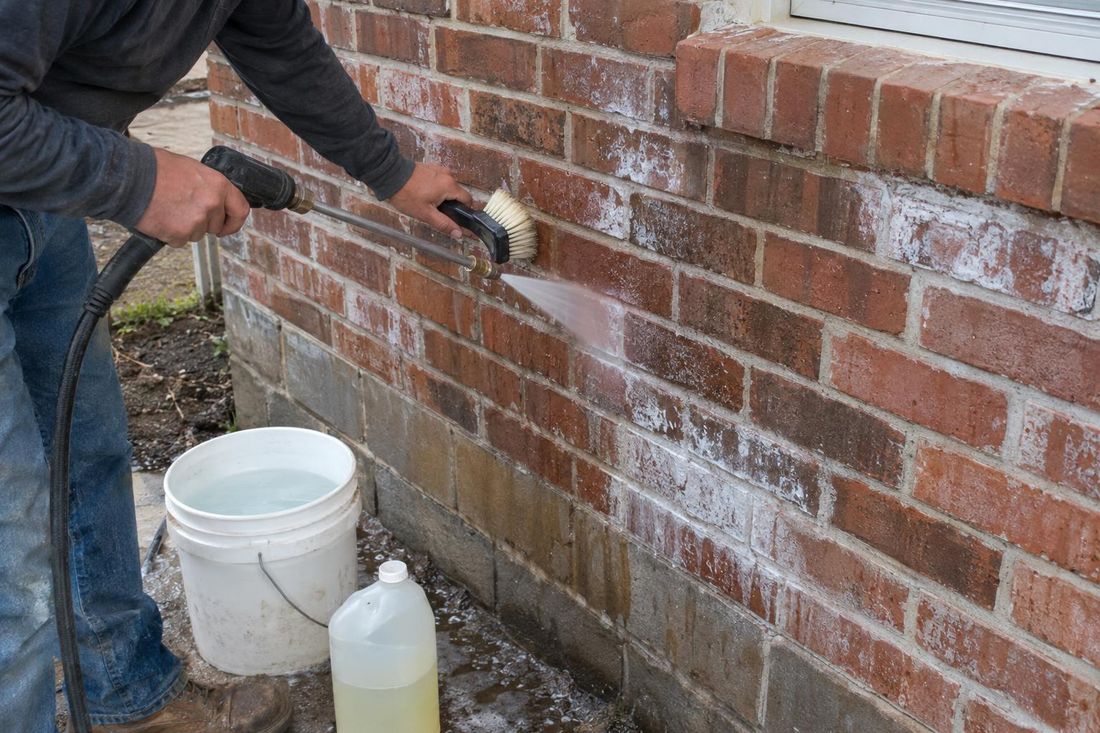
Scrubbing efflorescence off brick wall A person in a gray long-sleeve shirt and jeans uses a spray wand with a scrub brush attachment to wash a red brick wall that has white mineral-like staining. A white bucket of water and a jug of yellowish liquid sit on the ground nearby.
How we do it
Before we clean anything, we figure out what we're looking at. Algae, efflorescence, rust and paint each want a different cleaner, and the wrong one can set a stain instead of lifting it. Then we test a small patch and use the mildest cleaner and lowest water pressure that works. Mostly that means stiff nylon brushes, a pump sprayer and a rinse that's gentler than you'd expect.
Brick is thirsty. Dry brick pulls cleaner deep into its pores, so we soak the wall with water first and keep it wet while we work. Then we rinse fully afterward, because leftover cleaner can leave a haze of its own. We stay away from wire brushes too. They shed bits of steel that rust and leave new orange spots.
How a job with us goes
Free estimate and stain identification
We come out, look at the wall in daylight and work out what the stain is. Is it living growth, salt, iron or paint? That answer decides the cleaner, the price and whether there's a moisture problem we should point out.
Test patch in a hidden spot
We clean a small area behind a shrub or near the meter. It shows us how your brick reacts and how much cleaner it takes. If the patch looks wrong, we change the plan before the front of your house pays for it.
Plants, windows and metal protected
We wet down and cover shrubs, tape plastic over windows and wrap fixtures and railings. Cleaners that are fine on brick can burn leaves and etch glass.
Cleaning and thorough rinse
We soak the wall, apply the cleaner and work in sections so nothing dries on the brick. We rinse from the top down so dirty water doesn't streak clean brick.
Optional sealing once dry
When the brick is fully dry, we can apply a breathable masonry sealer. It slows water soaking in and new growth. We skip it on a damp wall because it would trap the moisture.
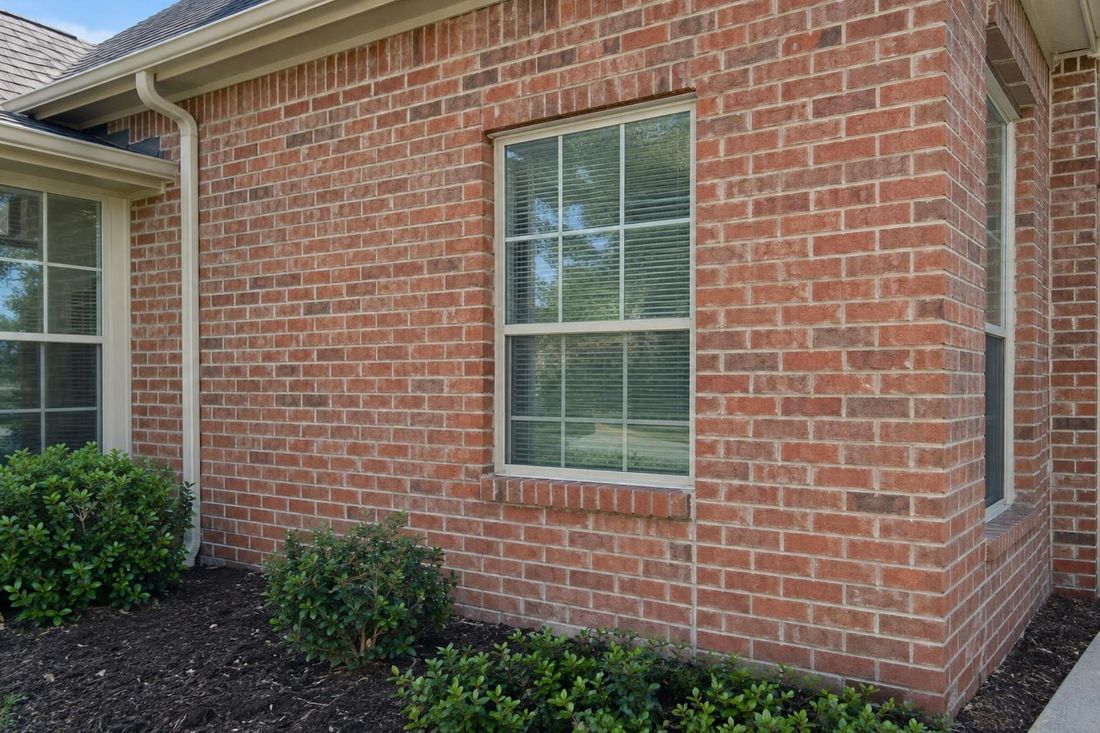
Clean red brick house exterior wall A red brick exterior wall on a house has a double-hung window with a beige frame and interior blinds. The bricks and mortar look uniformly clean, with no visible stains, and landscaped shrubs and dark mulch sit along the base of the wall.
What drives the cost
Price comes down to a few things. The area we're cleaning matters most, and the height of the wall comes next, since ladders and scaffolding slow us down. The kind of stain counts too. Algae is usually quick, rust and mortar haze take more care, and paint removal is the slowest of all. Then there's sealing, which adds materials and time if you want it done after the wall dries. We can't quote well from a photo, so we come look at the brick ourselves. The estimate is free, and we'll explain what's driving the number.
How long it takes
Most houses get cleaned in a day. A small wall or chimney can go faster, and a big two-story with lots of masking might use the whole day. Paint removal is different. It can take several days, because the stripper needs time to work and some brick needs a second pass. If you want sealing, the wall has to dry fully first, so that adds waiting time. Weather matters too. We don't clean in a hard freeze, since water sitting in brick and freezing is the last thing we want.
Local expertise: residential brick cleaning and stain removal in Atlanta
Atlanta gets about 49.7 inches of rain a year. Late winter, early spring and July are the wettest stretches, and fall, especially October, is the driest.
What it means for your job
Mortar, stucco and sealers need dry time. Fall is the easiest season for repointing and sealing, and summer work is planned around afternoon storms.
Overnight freezes can be expected on about 40 days a year in Atlanta.
What it means for your job
Water that soaks into brick, stone and mortar and then freezes is what pops faces off brick and opens joints. Keeping water out matters more here than in places that rarely freeze, and winter mortar work has to be protected overnight.
We won't use high-pressure washing or strong acid on your brick, because both permanently damage it. High pressure strips the hard outer face and erodes mortar, and strong acid eats the surface. If someone else plans either one, ask why. Some stains fade but don't disappear, especially rust that's soaked in for a long time and paint that's gotten into the pores. White powder returns if the water source behind it isn't fixed, and fixing a bad gutter, leaking pipe or failed flashing is a separate job. Cleaning also doesn't repair cracked brick or crumbling mortar. For that we'd talk about repointing.
High pressure strips the hard outer face of brick and erodes the mortar. Low pressure with the right cleaner is the safe method, and it's the one we use.
What is the white powder on my brick?
Salts carried out by water moving through the wall. It cleans off, but it's a sign of moisture we should track down.
Will the green come back?
Probably, if the wall stays damp and shaded. Trimming back shrubs, fixing a dripping downspout and sealing can slow it down.
Should I seal brick after cleaning it?
Not always. A breathable sealer helps on walls that get splashed or stay wet, but it has to go on dry brick. We'll tell you honestly if yours doesn't need it.
Can you use muriatic acid on my brick?
We won't. Strong acid etches the surface and can leave its own stains. We reach for milder cleaners first, and they almost always do the job.