Call (470) 837-6333Get a free estimate
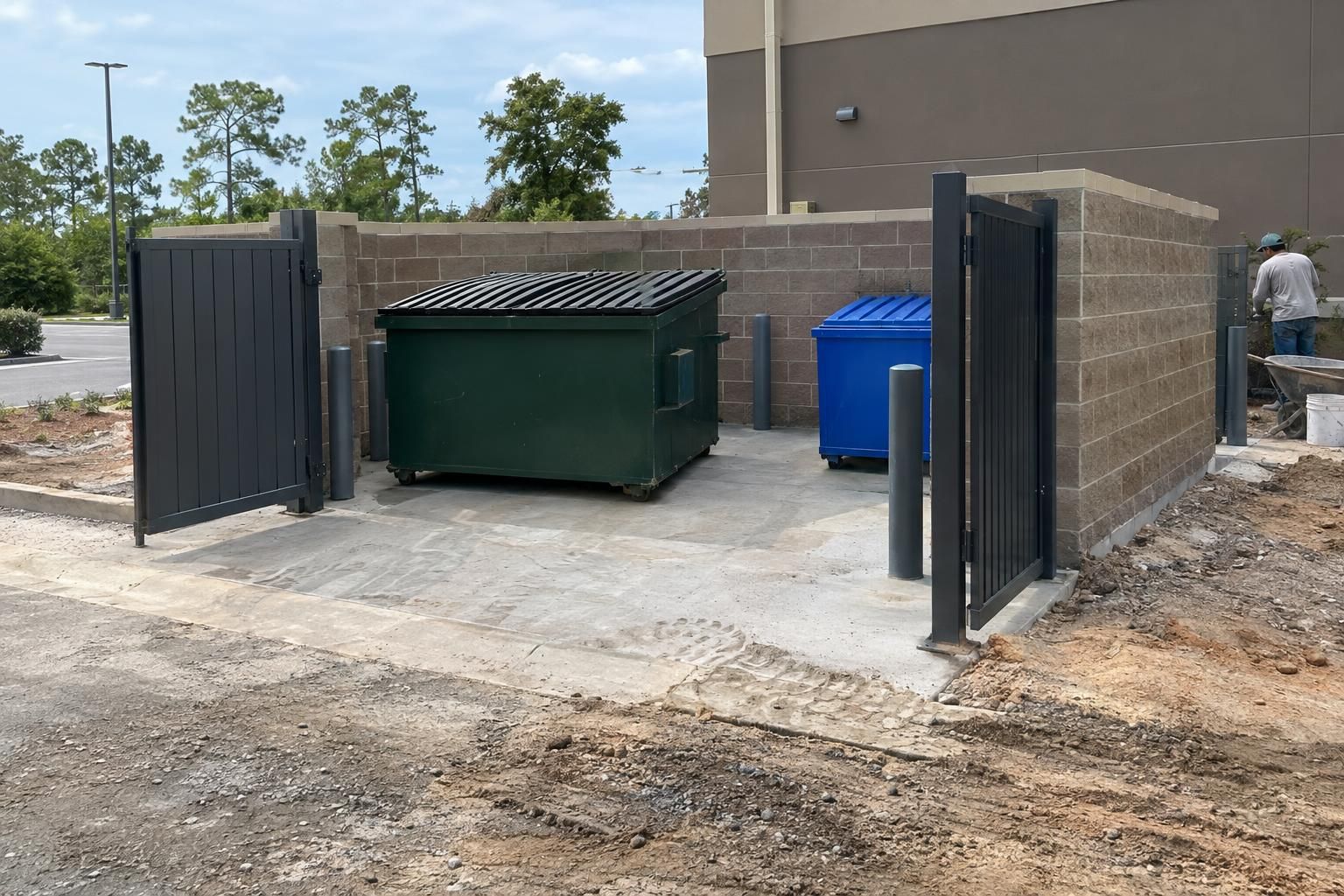
Block dumpster enclosure with steel gates. A concrete block enclosure with dark metal gates standing open surrounds a green and a blue dumpster on a concrete pad, with gray bollards inside. Bare soil and gravel around it suggest construction is still underway next to a commercial building.

Dalton Brothers Masonry Atlanta

Commercial Dumpster and utility enclosures in Atlanta

A dumpster enclosure is a three-sided block wall with gates that hides your trash containers. Most of the ones we repair in Atlanta got hit by a truck first.

Call (470) 837-6333

Request your free estimate

Always free and we get back to you ASAP.

By submitting, you agree to our Terms of Use and Privacy Policy and consent to calls and texts about your project from Dalton Brothers and the local partners matched to your request, including by automated means. Consent is not a condition of any purchase.

Qualified MasonsVerified ProfessionalsFree EstimatesOn Time

What dumpster and utility enclosures involves

Think of it as a small masonry building with no roof. The block walls sit on a poured footing, a concrete pad carries the weight of the container and the hauler's truck, and steel gates close the open side. Most cities require one on commercial property, and your site plan will usually say so.

You need us in one of two situations. Either you're building or adding a site and the permit calls for an enclosure, or the hauler backed into your old one and now a wall is leaning and a gate won't close. Have you looked at the corner nearest the truck's swing? That's where the first crack usually shows. We build new enclosures and rebuild damaged ones, and we add the protection that keeps the next hit off the block.

Signs you need dumpster and utility enclosures

What we handle

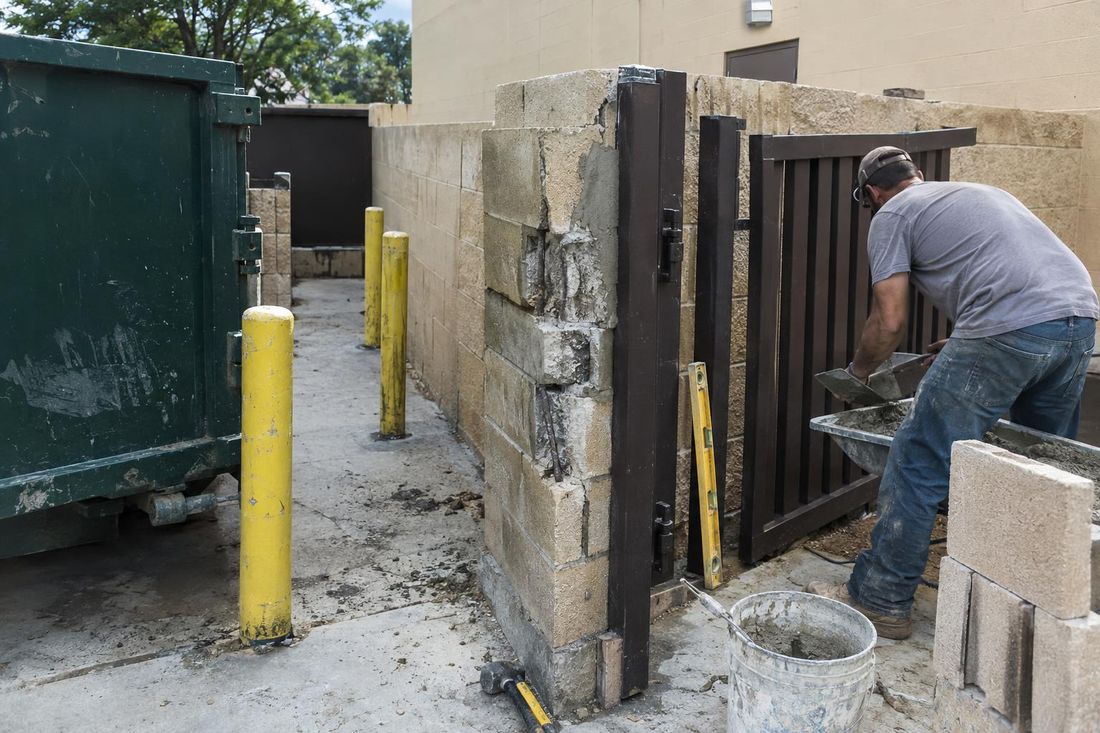
Mason repairing dumpster enclosure wall. A worker in a cap trowels mortar beside a concrete block enclosure wall with a damaged, crumbling section and a brown metal gate. A green dumpster, yellow protective bollards, a mortar bucket, a level, and stacked blocks are nearby.
Mason repairing dumpster enclosure wall A worker in a cap trowels mortar beside a concrete block enclosure wall with a damaged, crumbling section and a brown metal gate. A green dumpster, yellow protective bollards, a mortar bucket, a level, and stacked blocks are nearby.

How we do it

We build with reinforced, grouted block on a poured footing, with a concrete pad inside. Steel rebar runs up through the block cores and we fill them solid with grout. That's what lets a wall shrug off a bump that would topple plain stacked block. We lay the courses to a line so the wall stays straight, and we tie the corners tight because corners take the worst of it.

Inside the walls we set steel bollards so a container can't get shoved into the block. The gate posts are heavy steel set deep in concrete, because a gate swings a lot of weight from a small post. Then we finish the block to match your building, so the enclosure looks like it belongs to the property and not like something added later.

How a job with us goes

  1. Site plan and permit

    We measure the containers and the truck's approach, then draw the plan and file for the permit. Getting size and location right on paper is cheaper than moving a wall later.

  2. Footing and pad

    We dig, form and pour the footing below the walls, then the pad inside. The footing is what keeps the walls from cracking, so we don't rush it.

  3. Block walls and grouting

    Our masons lay the block course by course with rebar in the cores, then fill the cores with grout. Solid grout is what makes the wall strong enough for a truck yard.

  4. Inspection

    We call the inspector before the walls get covered or finished. If something needs a fix, we want to hear it while the wall is still easy to reach.

  5. Finish, bollards and gates

    We set the bollards, hang the gates on the steel posts, and finish the block to match your building. Then we walk the site with you and swing the gates together.

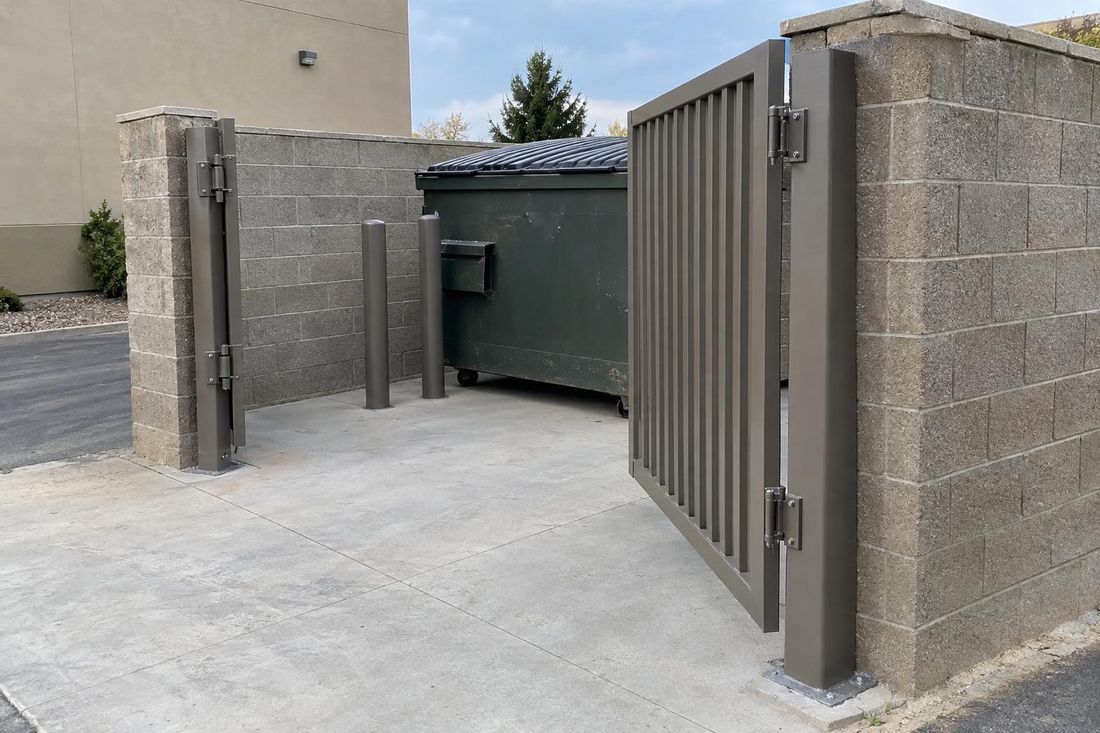
Masonry dumpster enclosure with metal gate. A green dumpster sits inside a concrete block enclosure on a concrete pad. A brown metal picket gate stands open on heavy hinged posts, and two round bollards stand in front of the dumpster.
Masonry dumpster enclosure with metal gate A green dumpster sits inside a concrete block enclosure on a concrete pad. A brown metal picket gate stands open on heavy hinged posts, and two round bollards stand in front of the dumpster.

What drives the cost

Size drives most of it. More wall means more block, more grout and more days on site. After that comes the finish, since plain gray block costs less than a finish that has to match your brick or stucco. Gates and hardware add up, because heavy hinges and latches earn their keep on a dumpster. Bollards, the thickness of the pad and the permit all go on the list too. For repairs, the price depends on how much block came down and whether the footing took damage. We can't always tell that from a photo, so we like to come look. Estimates are free, and we'll show you where each piece of the number comes from.

How long it takes

Most enclosures take us about one to two weeks once we're on site. The permit is the part we don't control, so plan on that time on top, and it varies. The footing has to cure before the walls go up, and the grout needs time to set before gates get hung. Repairs often move faster than new builds, since the footing may already be sound. We'll give you a real schedule once we've walked the site and seen what you've got.

Local expertise: commercial dumpster and utility enclosures in Atlanta

The red clay of the Georgia Piedmont is typified by the Cecil soil series: very deep, well drained soil on ridges and side slopes, with a red subsoil that averages 35 to 60 percent clay.

What it means for your job

Clay holds water against a wall and does not recover well once it is compacted, so drainage behind a retaining wall and a properly built base under pavers and footings matter more here than the surface material.

Source: USDA NRCS Official Soil Series Description: Cecil →

Atlanta gets about 49.7 inches of rain a year. Late winter, early spring and July are the wettest stretches, and fall, especially October, is the driest.

What it means for your job

Mortar, stucco and sealers need dry time. Fall is the easiest season for repointing and sealing, and summer work is planned around afternoon storms.

Source: Wikipedia: Climate of Atlanta →

Overnight freezes can be expected on about 40 days a year in Atlanta.

What it means for your job

Water that soaks into brick, stone and mortar and then freezes is what pops faces off brick and opens joints. Keeping water out matters more here than in places that rarely freeze, and winter mortar work has to be protected overnight.

Source: Wikipedia: Climate of Atlanta →

In Fulton County, a retaining wall over 4 feet high needs its own permit unless it was already shown and permitted on a land disturbance permit, and each wall takes a separate permit form and fee.

What it means for your job

A site with several walls means several permits. Budget the time and fees for each one before the masonry starts.

Source: Fulton County Public Works: Retaining Walls →
Good to know

Size, location and finish are set by local code and by what the hauler needs to reach the containers. So we build to the rules in Atlanta first and to your taste second. We can't put an enclosure where a truck can't get to it. Gates are steel work, and we coordinate with a gate fabricator when that's the better route. On repairs, we won't know the full story until the damaged block is off and we can see the footing. If the footing has failed, a patch on top won't hold, and we'll tell you so. Matching old, weathered block is close work, and a fresh wall may look slightly different at first.

Dumpster and utility enclosures questions

The garbage truck hit our enclosure. Can it be fixed?

Yes. We rebuild the damaged walls and posts and add bollards so the next hit stops at steel and not block. First we check the footing, because a cracked footing means the new wall won't stay put.

Do you supply the gates?

Sometimes we do, and sometimes we work with a gate fabricator. Either way we set the posts, because the gate and the wall have to be planned together.

Do we need a permit?

Usually, yes. Most cities require enclosures, and Atlanta will have its own rules on size and finish. We start with the site plan and permit before we lay any block.

Why do you put steel bollards inside the walls?

A loaded container is heavy, and a truck can push it hard into the back wall. Bollards take that push so the block doesn't have to.

Can the enclosure match our building?

Yes. We finish the block to match the building. Send us a photo or let us come by, and we'll talk through the options on site.

Ready for a free estimate on your masonry job?

Free for property owners. No obligation.

Get my free estimateCall (470) 837-6333
Call nowFree estimate