Qualified MasonsVerified ProfessionalsFree EstimatesOn Time
What brick cleaning and stain removal involves
We wash mortar haze off new brick, bring soiled facades back toward the color the mason laid, and take graffiti off the face of a building. Each job gets its own cleaner, its own pressure and its own plan for the wash water. A cleaner that works fine on one brick can etch the brick next to it. So we start with the manufacturer's guidance and a test panel, never a guess.
You need us when a general contractor is closing out a building and the haze won't come off. You need us when a property manager has a facade that tenants keep complaining about, or when someone tagged your wall over the weekend. And because we're working outside, with glass, sidewalks and neighbors all around, runoff matters as much as the cleaning does. Call us for a free estimate anywhere in Atlanta.
Signs you need brick cleaning and stain removal
Cloudy white film on new brickThat's usually cement residue left from laying, and it hides the brick color. It gets harder to remove the longer it cures, so we'd rather see it early.
Dark streaks below sills and parapetsThat's years of soot and dirt carried down the wall by rainwater. It usually calls for a full restoration wash, not a spot fix.
Fresh tags or faint ghosts of old paintSpray paint soaks into the pores of brick. The sooner we get to it, the less of it we have to chase.
A wall headed for repointing or sealingDirt and old coatings keep new mortar and sealer from bonding. If the face is grimy, the cleaning has to come first.
What we handle
New-construction washdownWe take cured mortar haze and splatter off fresh brick. We soak the wall first, then use a buffered cleaner, because plain acid left to sink in can cause its own stains.
Facade restoration cleaningThis is for older buildings with decades of soot and grime on the face. We pick the gentlest method that works and go one elevation at a time.
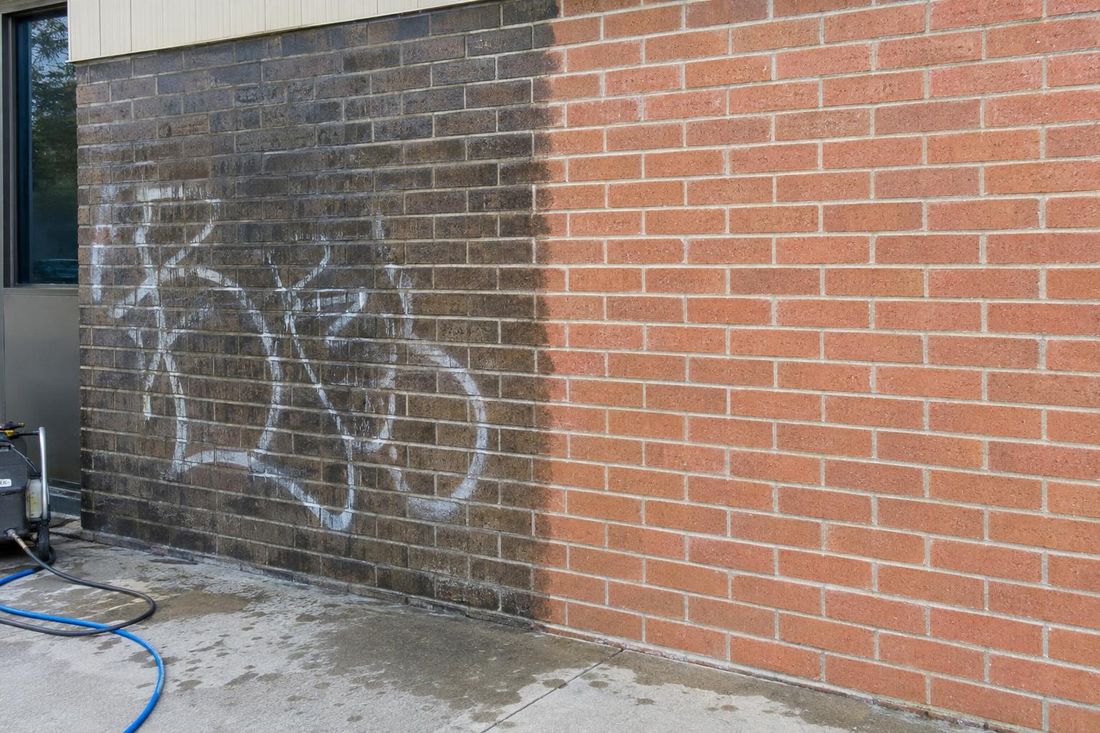
Graffiti removal and anti-graffiti coatingWe match the remover to the paint and the brick. Then we can add a sacrificial or permanent coating, so the next tag comes off without a fight.
Pre-cleaning before repointing or sealingMortar won't grip a dirty joint and sealer won't soak into a dirty face. We clean first so the next trade's work holds.
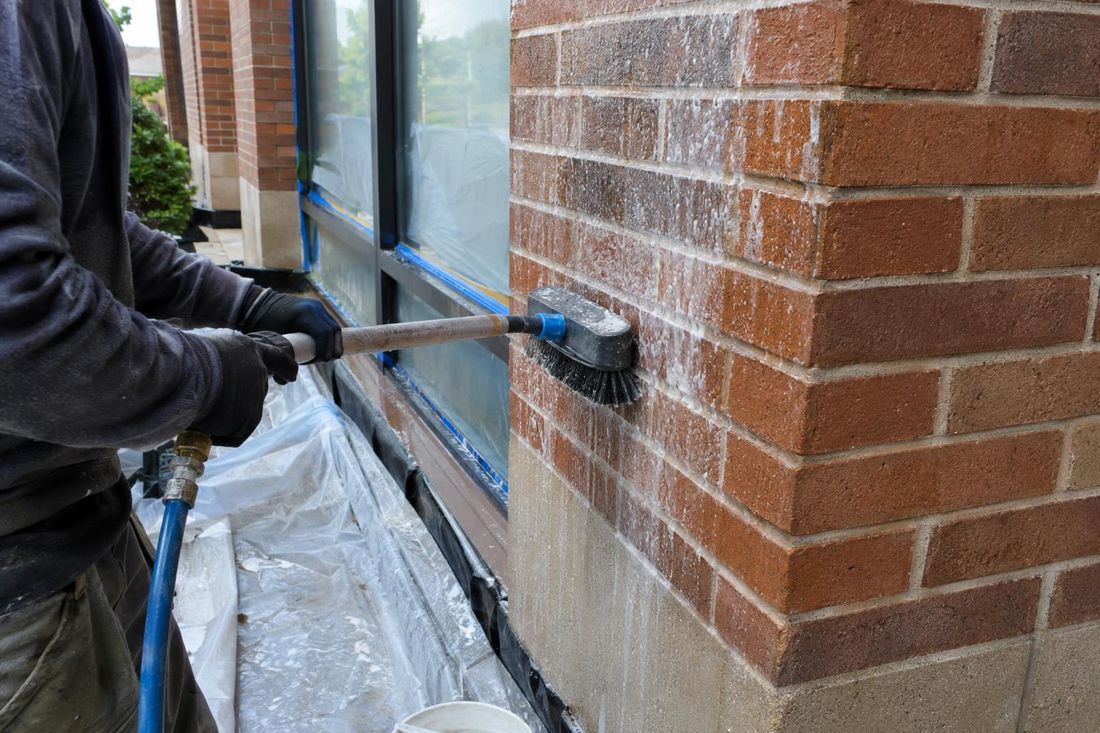
Scrubbing brick wall with brush A gloved worker scrubs a red brick wall with a long-handled brush connected to a blue water hose, leaving foamy cleaning solution on the bricks. Plastic sheeting and blue tape protect the nearby windows and ground.
How we do it
We choose cleaners from the brick manufacturer's guidance, then prove them on a test panel somewhere out of sight before we touch the main wall. Light brick, dark brick, glazed brick and brick with iron flecks all react differently. Where the brick can take it, we use a diluted or buffered cleaner, a stiff nylon brush and a low-pressure rinse. Graffiti gets a remover matched to the paint, worked in and rinsed under controlled pressure. We don't blast the face, because that's how brick loses its skin.
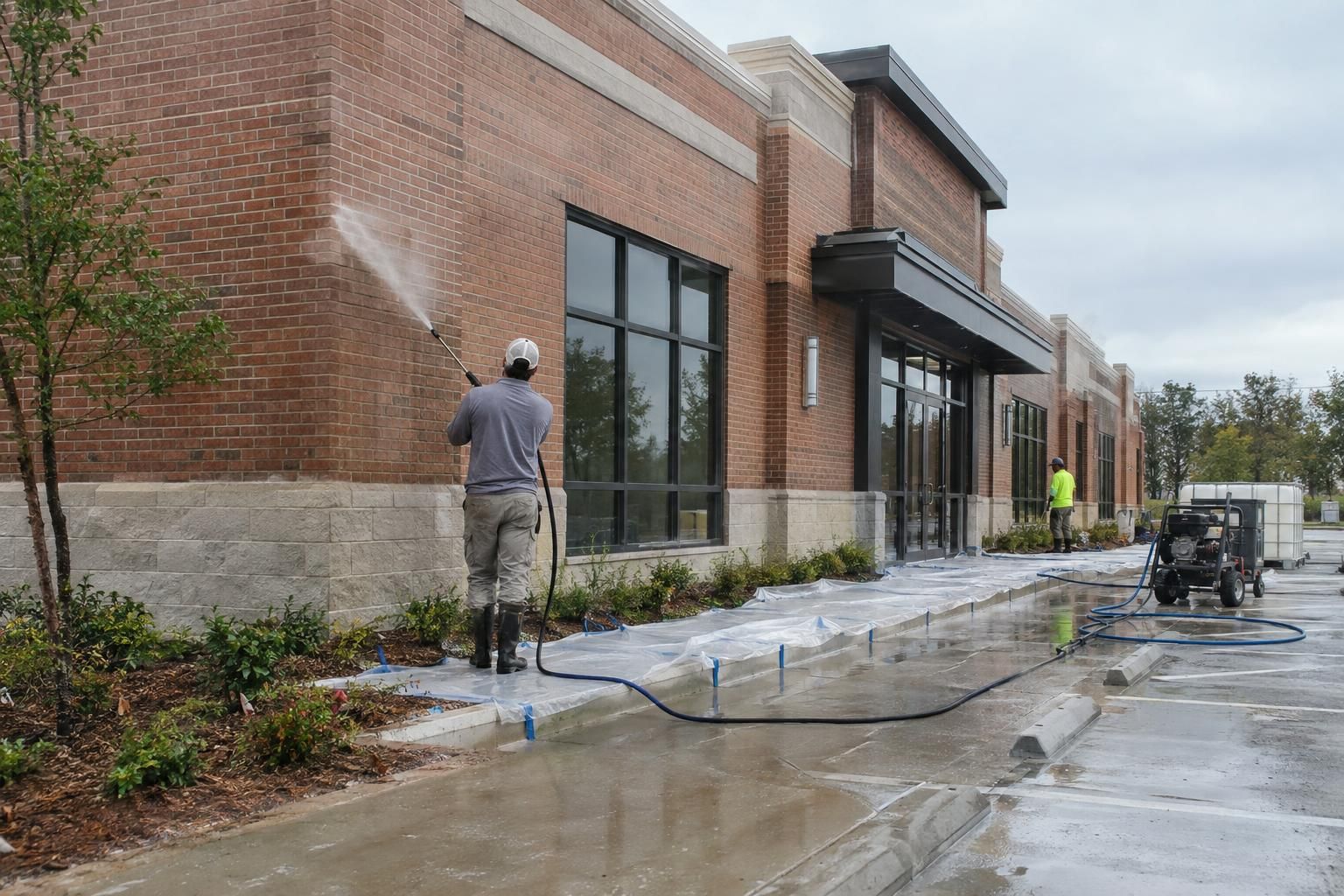
Then we protect what we don't want cleaned. Windows, metal trim, storefront frames, landscaping and the neighbor's property all get covered or masked, since acid and glass don't get along. Wash water is contained and collected rather than sent to storm drains. We wet the wall before the cleaner goes on and rinse it well afterward, so nothing soaks in and leaves a stain of its own.
How a job with us goes
Site walk and test panels
We walk the building with you and look at the brick, the mortar and the kind of soiling. Then we try our chosen cleaner on a test panel, so you can see the result before we commit the whole wall.
Protection of glass, metal and public areas
We mask windows and metal, cover landscaping, and set up barriers where people walk. We'd rather spend the extra hour here than explain a pitted window frame later.
Cleaning by elevation from lifts or scaffolding
We work one elevation at a time, top to bottom, so dirty water never runs over a section we've finished. Working in sections also lets us keep entrances open.
Rinse, runoff control and inspection
We rinse thoroughly and collect the wash water as we go. Then we check the wall in dry daylight, because a wet wall hides leftover haze.
Walkthrough and coating
We walk the finished building with you and point out anything that needs a second pass. If you want an anti-graffiti coating or sealer, this is when we talk about it.
Half-cleaned brick wall with pressure washer A brick wall is divided by a clear vertical line. The left side is dark and grimy with a white scribbled mark, and the right side is clean orange-red brick. A pressure washer and blue hose sit on the damp pavement at the lower left.
What drives the cost
Price follows the wall. Total wall area comes first, then height, because a four-story elevation means lifts or scaffolding and more setup than a one-story storefront. The type of soiling matters too. Light haze is quick work, but heavy soot or paint that's soaked deep takes more passes. Access counts, since tight alleys and busy sidewalks slow everything down. Runoff containment adds time, and it's not something we skip. Work outside business hours, like nights and weekends, changes the schedule and the price. We'll look at the building and give you a free estimate.
How long it takes
A small building takes days. A multi-story facade takes weeks, and we usually phase it by elevation so one side is finished before we start the next. Weather matters, since we don't want cleaner drying on a hot, sunny wall or water freezing in the brick. Night and weekend schedules stretch the calendar but keep your doors open. We'll give you a realistic schedule after the site walk.
Local expertise: commercial brick cleaning and stain removal in Atlanta
Atlanta gets about 49.7 inches of rain a year. Late winter, early spring and July are the wettest stretches, and fall, especially October, is the driest.
What it means for your job
Mortar, stucco and sealers need dry time. Fall is the easiest season for repointing and sealing, and summer work is planned around afternoon storms.
Overnight freezes can be expected on about 40 days a year in Atlanta.
What it means for your job
Water that soaks into brick, stone and mortar and then freezes is what pops faces off brick and opens joints. Keeping water out matters more here than in places that rarely freeze, and winter mortar work has to be protected overnight.
Some brick types are damaged by standard acid cleaners, so the test panel decides the method. Sometimes that means a gentler product and more passes. Deep-set graffiti shadows can remain on porous brick, and we'll tell you so before we start rather than after. We don't repair broken brick or failed mortar as part of cleaning, though we can do that work separately. We also can't clean around conditions we can't control, such as water that has nowhere safe to be collected.
Yes. We protect entrances, phase the work by elevation and keep a clear path for customers. Or we can work nights and weekends if that suits your tenants better.
Should we seal after graffiti removal?
We'd say yes. A sacrificial coating washes off along with the paint, and a permanent one lets the next tag come off with far less effort.
How soon should we wash new brick?
Sooner is easier. Mortar haze that sits through months of weather gets stubborn. If the masons just finished, call us before the scaffold comes down.
What happens to the wash water?
We contain it and collect it. It doesn't go to the storm drain, and it doesn't run across your neighbor's lot.
Will the cleaner hurt our windows and storefront metal?
It can, which is why we mask glass, aluminum and other metal before any cleaner goes on. We rinse as we go, so nothing sits and etches.