Call (470) 837-6333Get a free estimate
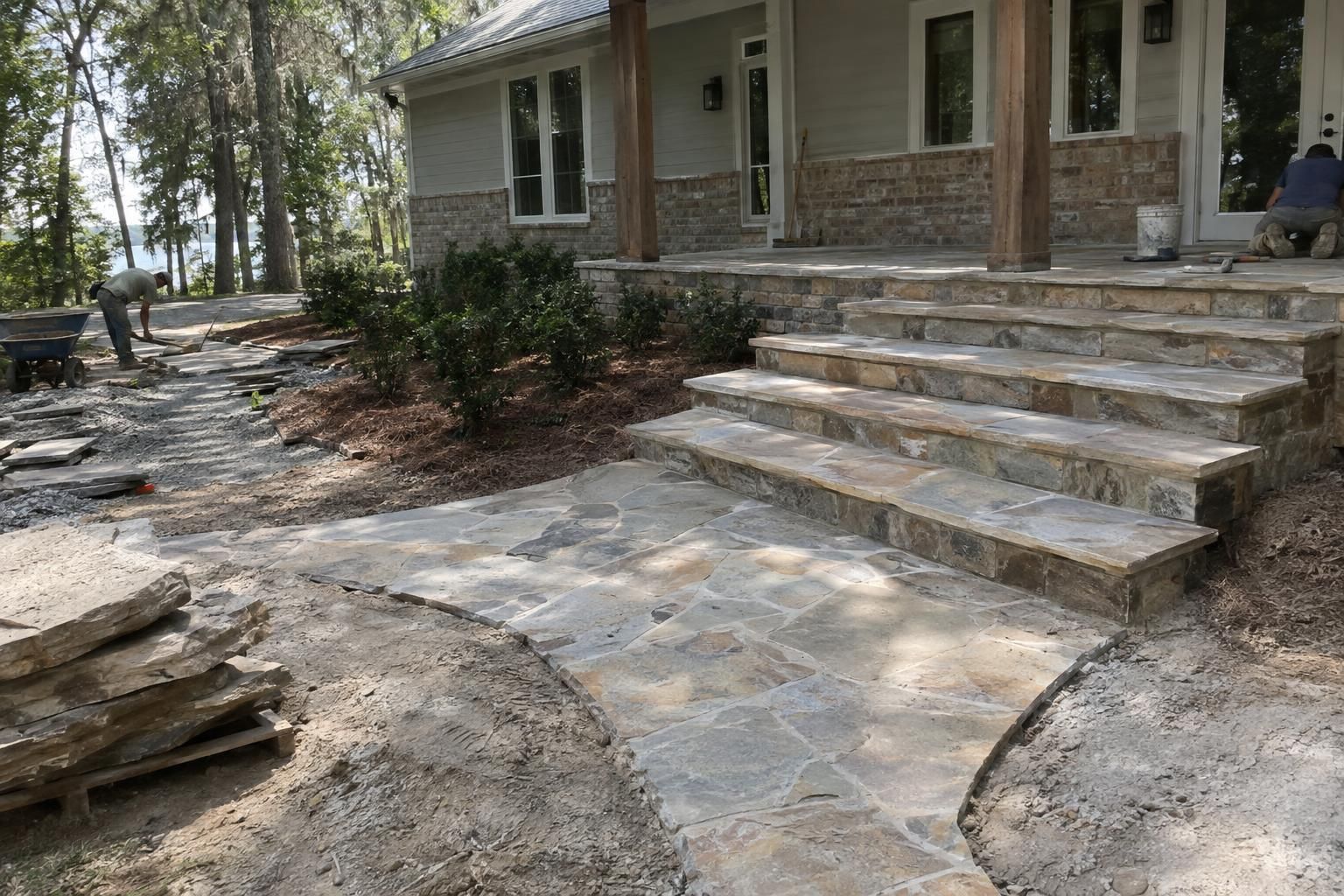
Flagstone steps and walkway under construction. Wide stone steps with stacked-stone risers and flat stone treads lead up to a covered porch, with an irregular flagstone walkway laid at their base. A second stone path is being set in gravel in the background, and a pallet of stone slabs sits in the foreground.

Dalton Brothers Masonry Atlanta

Residential Stone steps and walkways in Atlanta

A good stone walk should feel like it's always been there. We build ours to sit flat and shed water.

Call (470) 837-6333

Request your free estimate

Always free and we get back to you ASAP.

By submitting, you agree to our Terms of Use and Privacy Policy and consent to calls and texts about your project from Dalton Brothers and the local partners matched to your request, including by automated means. Consent is not a condition of any purchase.

Qualified MasonsVerified ProfessionalsFree EstimatesOn Time

What stone steps and walkways involves

Stone steps and walks use slab or flagstone for the walking surface. Slab gives you a thick, solid step. Flagstone gives you that irregular, natural pattern. We build them one of two ways, either dry-laid on a compacted base or mortared onto concrete. Which one depends on the look you want and what the ground is doing underneath.

You probably need us if your steps have started to tilt, your path rocks underfoot, or you're planning a new front walk and want it done right. Maybe the old stone is fine and just needs a reset. We'll tell you straight. Our free estimate starts with the ground, because the ground decides most of what happens next. We take calls from homeowners in Atlanta for new work and repairs. And if you're not sure which problem you have, ask us. We'd rather look than guess.

Signs you need stone steps and walkways

What we handle

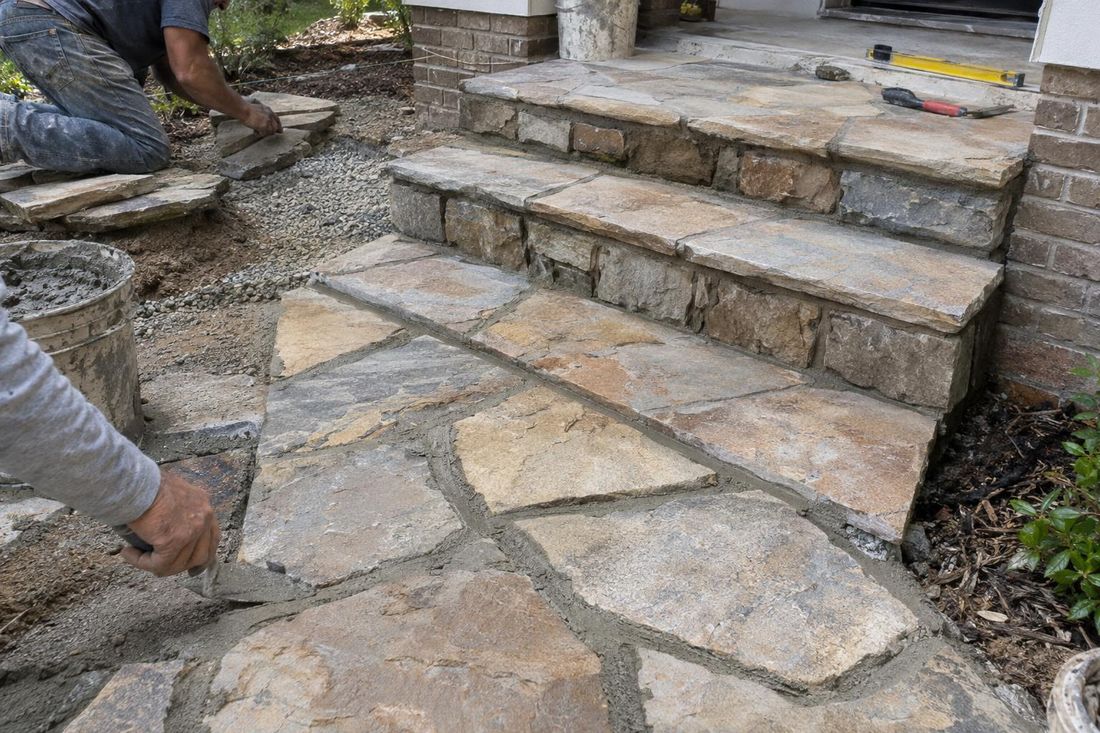
Flagstone steps and walkway under construction. Irregular flagstone pieces are being set in mortar to form a walkway leading to stone-faced steps with flat stone treads beside a brick wall. Two workers are partly visible, one kneeling in the background and one holding a trowel, with a level and tools resting on the upper landing.
Flagstone steps and walkway under construction Irregular flagstone pieces are being set in mortar to form a walkway leading to stone-faced steps with flat stone treads beside a brick wall. Two workers are partly visible, one kneeling in the background and one holding a trowel, with a level and tools resting on the upper landing.

How we do it

Dry-laid stone sits on compacted base and stone dust. We dig out the soft soil, lay crushed stone in layers, and run a plate compactor over each one. Then we screed a bed of stone dust and set the stone into it, tapping each piece down with a rubber mallet until it stops rocking. Stone dust gets swept into the joints last.

Mortared stone is bedded on a concrete slab with joints filled. The slab has to be sound, so we check it for cracks and movement before we set a single piece. We cut flagstone with a diamond blade or chisel it to fit, and we wipe mortar off the faces as we go. Steps are set to even heights with a slight forward pitch for drainage, so water runs off the tread instead of sitting on it.

How a job with us goes

  1. Free estimate and layout

    We come out, look at the slope and the soil, and talk through stone and pattern with you. Then we mark the route with stakes and paint so you can see where the walk will run before we dig.

  2. Excavation and base

    We dig past the topsoil and build the base in compacted layers, or prepare and pour the slab for mortared work. Everything above depends on this step, so we don't rush it.

  3. Stone cut and set

    We dry-fit the stones first, then cut and set them, checking level and pitch as we go. On steps we measure every rise so they match.

  4. Joints filled and edges finished

    We fill joints with mortar or stone dust, depending on the build, and pack soil or gravel along the edges. Tight edges keep the stones from creeping.

  5. Walkthrough and cleanup

    We clean the stone, haul off the spoils, and walk the job with you. We'll tell you how long to stay off new mortar.

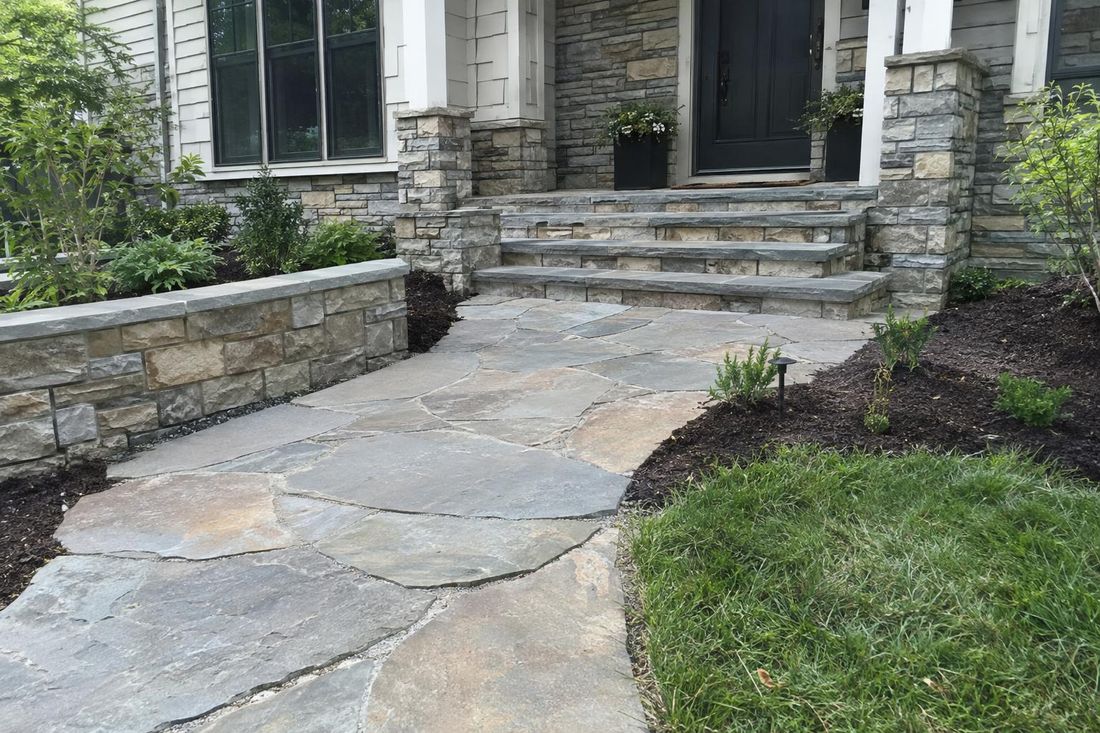
Flagstone walkway leading to stone steps. An irregular flagstone walkway curves up to a short flight of stone steps with a matching stone-clad porch base and pillars. A low stone retaining wall and mulched planting beds with shrubs line the path, and a small landscape light sits beside it.
Flagstone walkway leading to stone steps An irregular flagstone walkway curves up to a short flight of stone steps with a matching stone-clad porch base and pillars. A low stone retaining wall and mulched planting beds with shrubs line the path, and a small landscape light sits beside it.

What drives the cost

Length comes first. More walk means more stone, more base, and more hours. Stone type and thickness matter too, since a thick slab is dearer to buy and harder to move than thin flagstone. The number of steps counts, because each one is its own piece of careful work. Base or slab work can move the price a lot, especially if we have to dig out poor soil or pour new concrete. And slope adds time, since we have to cut in steps or work around grade changes. We'll walk the site and give you a free estimate that spells out what's in it.

How long it takes

A front walk is usually three to five days. That's time on site, and weather can stretch it, because we don't set stone or mortar in a wet bed. Mortared work needs time to cure before anyone walks on it, and we'll tell you how long. Dry-laid paths often move faster since there's no slab to wait on. At the estimate we'll give you a realistic window for your job, not a hopeful one.

Local expertise: residential stone steps and walkways in Atlanta

The red clay of the Georgia Piedmont is typified by the Cecil soil series: very deep, well drained soil on ridges and side slopes, with a red subsoil that averages 35 to 60 percent clay.

What it means for your job

Clay holds water against a wall and does not recover well once it is compacted, so drainage behind a retaining wall and a properly built base under pavers and footings matter more here than the surface material.

Source: USDA NRCS Official Soil Series Description: Cecil →

Atlanta gets about 49.7 inches of rain a year. Late winter, early spring and July are the wettest stretches, and fall, especially October, is the driest.

What it means for your job

Mortar, stucco and sealers need dry time. Fall is the easiest season for repointing and sealing, and summer work is planned around afternoon storms.

Source: Wikipedia: Climate of Atlanta →

Overnight freezes can be expected on about 40 days a year in Atlanta.

What it means for your job

Water that soaks into brick, stone and mortar and then freezes is what pops faces off brick and opens joints. Keeping water out matters more here than in places that rarely freeze, and winter mortar work has to be protected overnight.

Source: Wikipedia: Climate of Atlanta →

Good to know

Some smooth stone is slippery when wet, so we steer people toward a textured finish for steps. Tree roots will lift any walk over time, ours included. Dry-laid work handles that better and is easier to reset. We can't fix a failing slab by laying stone over it. If the concrete under an old walk is cracked and moving, that has to be dealt with first. A walk also can't solve a yard that floods, so wet ground may need its drainage sorted out before we start. And stone is natural, so color and texture vary from piece to piece.

Stone steps and walkways questions

Mortared or dry-laid?

Mortared is flat and formal. Dry-laid is easier to repair and handles roots and movement better. We'll tell you which one fits your yard after we see it.

Can uneven stones be re-leveled?

Yes, dry-laid stones are lifted, the base corrected, and reset. Mortared stones are harder, since we have to break the bond and sometimes redo the slab.

Do you charge for the estimate?

No, the estimate is free. We'll look at the site, measure, and talk through your options.

Can you put stone over my old concrete steps?

Sometimes. If the concrete is sound and level, we can mortar stone over it. If it's cracked or moving, the cracks will come right through, so we'd fix that first.

What stone is best for steps?

Pick one thick enough that it won't crack under foot traffic, with a textured face for grip when it's wet. Ask to see samples in our hands, and we'll show you how each one wears.

Ready for a free estimate on your masonry job?

Free for property owners. No obligation.

Get my free estimateCall (470) 837-6333
Call nowFree estimate