Dalton Brothers Masonry Johns Creek
Masonry in Johns Creek, GA
Johns Creek is building itself a downtown, and the first phase of Medley opened on October 29.
Call (470) 837-6333Our services in Johns Creek
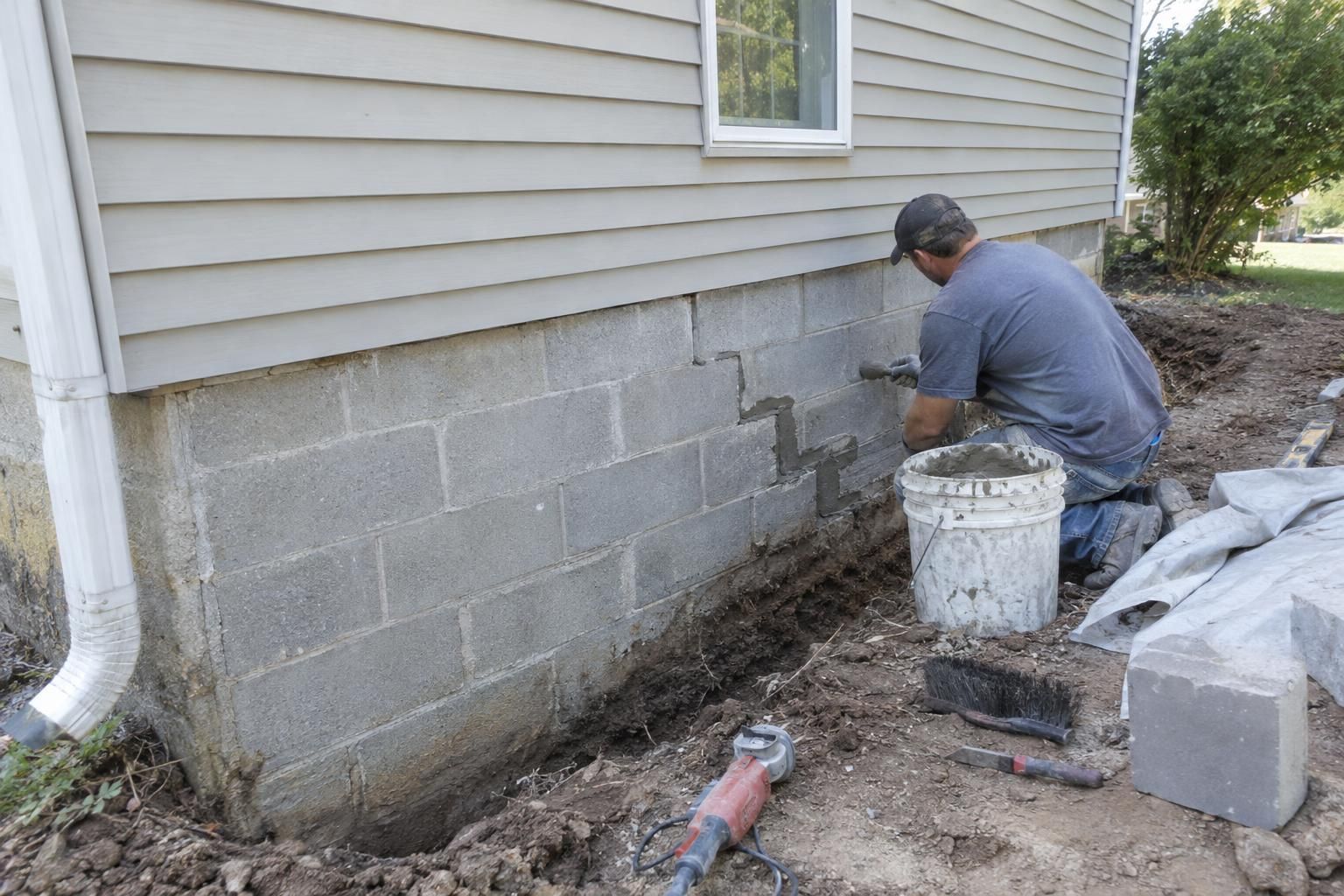
Block foundation repair
Cracked block under your house can usually be fixed without tearing the place apart. We repair stem walls and crawl space walls in Atlanta, and we start by working out why the wall moved.
Get a free estimate →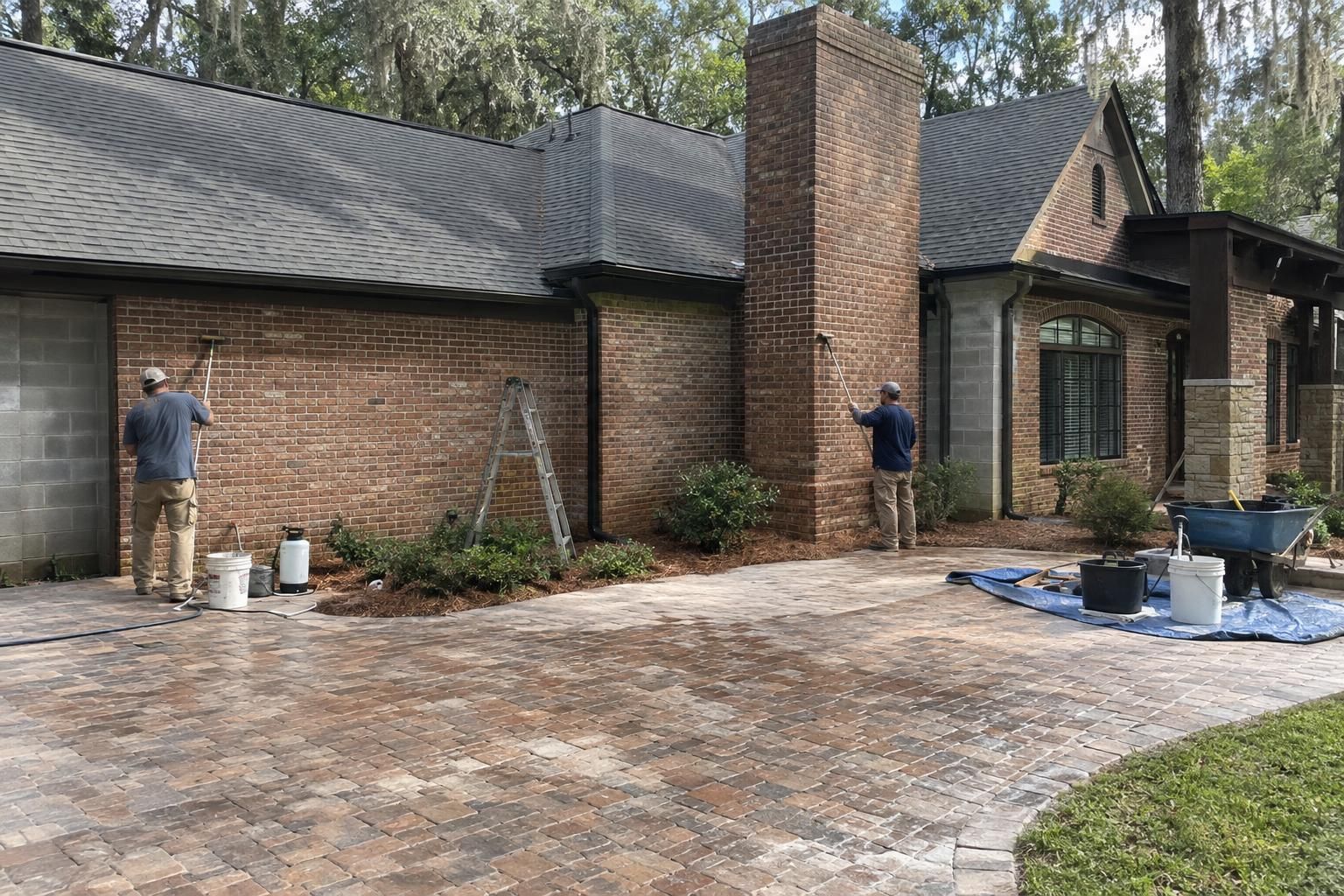
Brick and masonry sealing
Sealing is a clear water repellent that soaks into your brick, block, stone or pavers so rain beads off and the wall can still dry out.
Get a free estimate →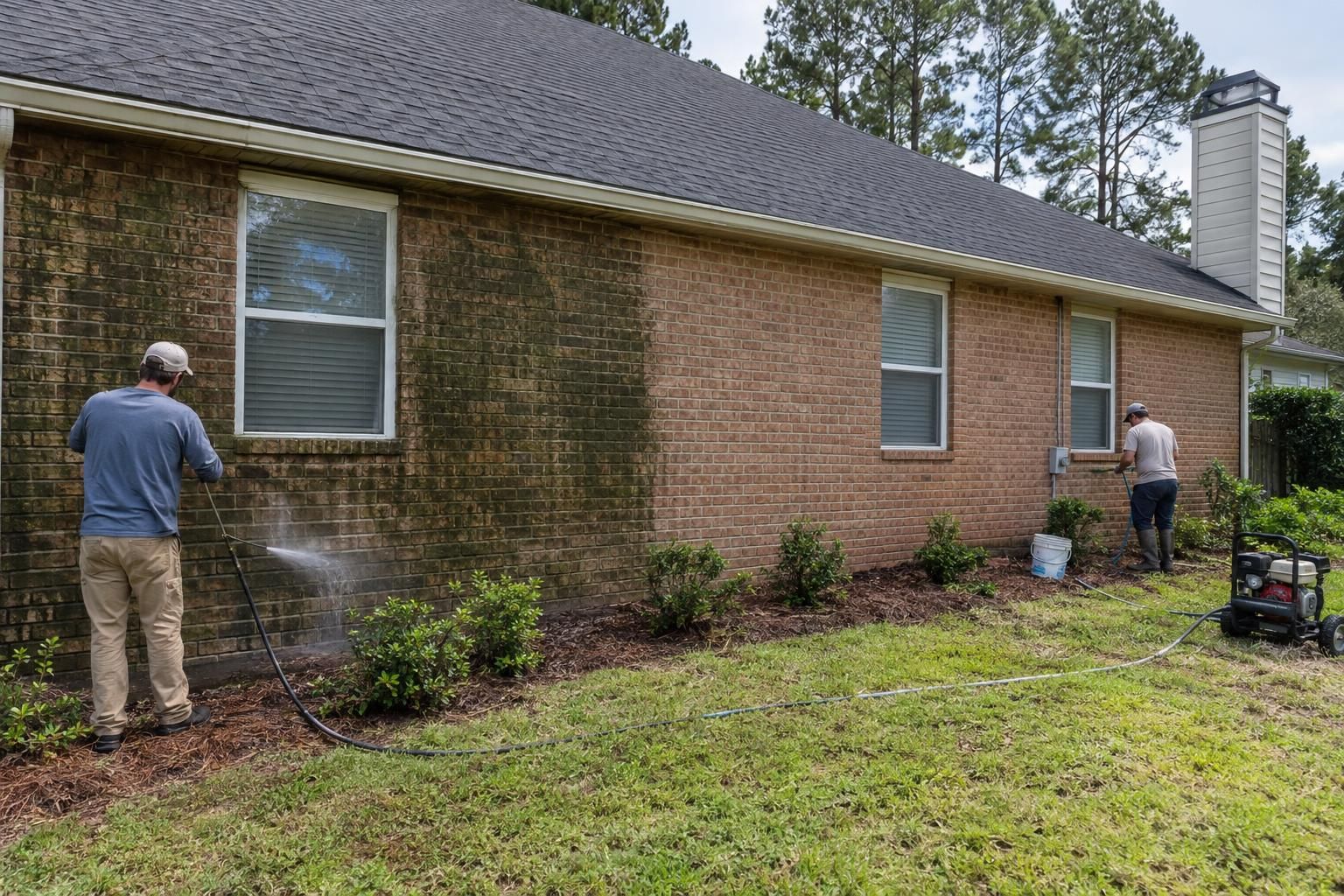
Brick cleaning and stain removal
Dirty brick usually isn't dirty all the way down, and we can clean it without hurting the face or the mortar.
Get a free estimate →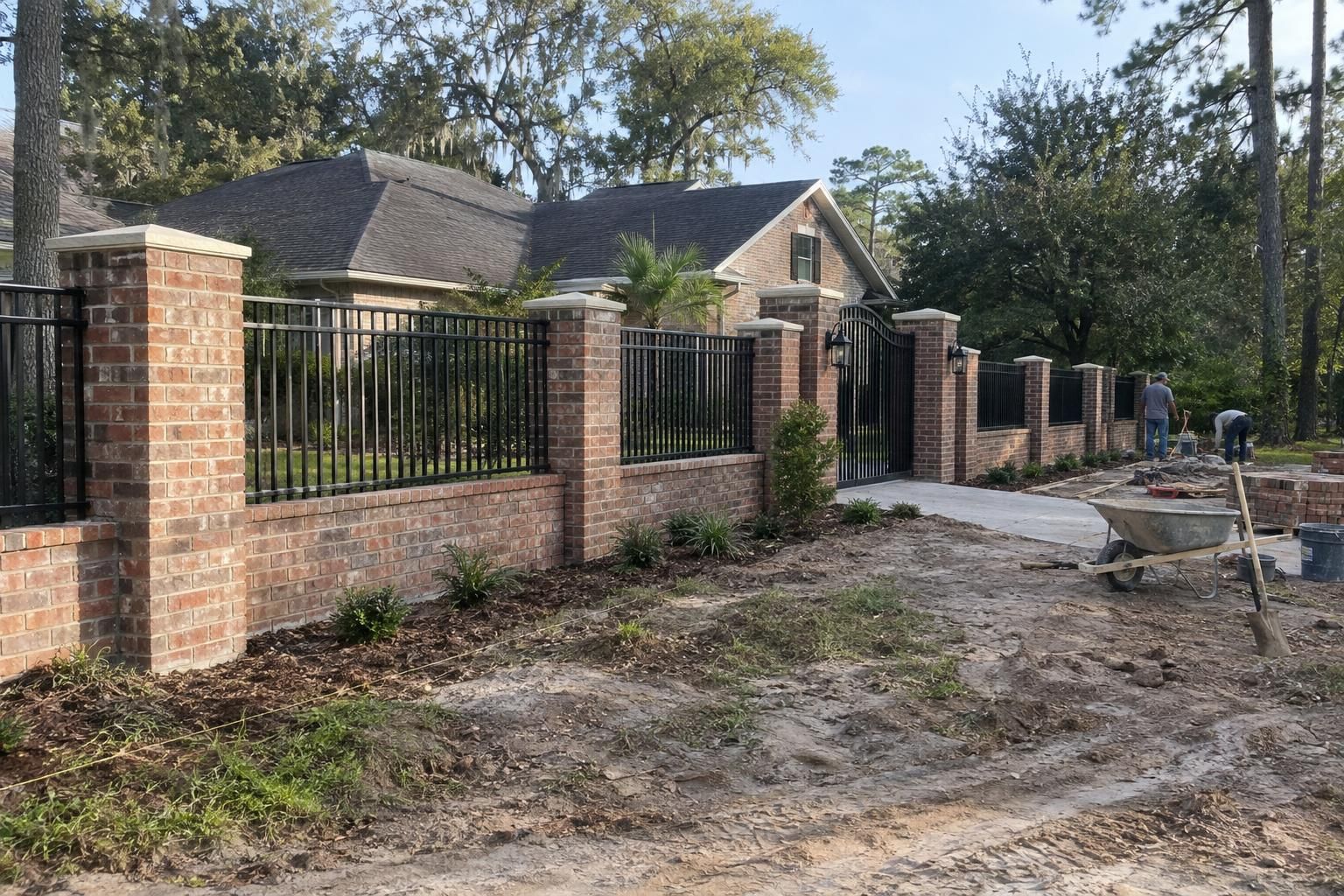
Brick fences and garden walls
A brick fence is the part of your yard that stays put long after the wood has gone gray and soft.
Get a free estimate →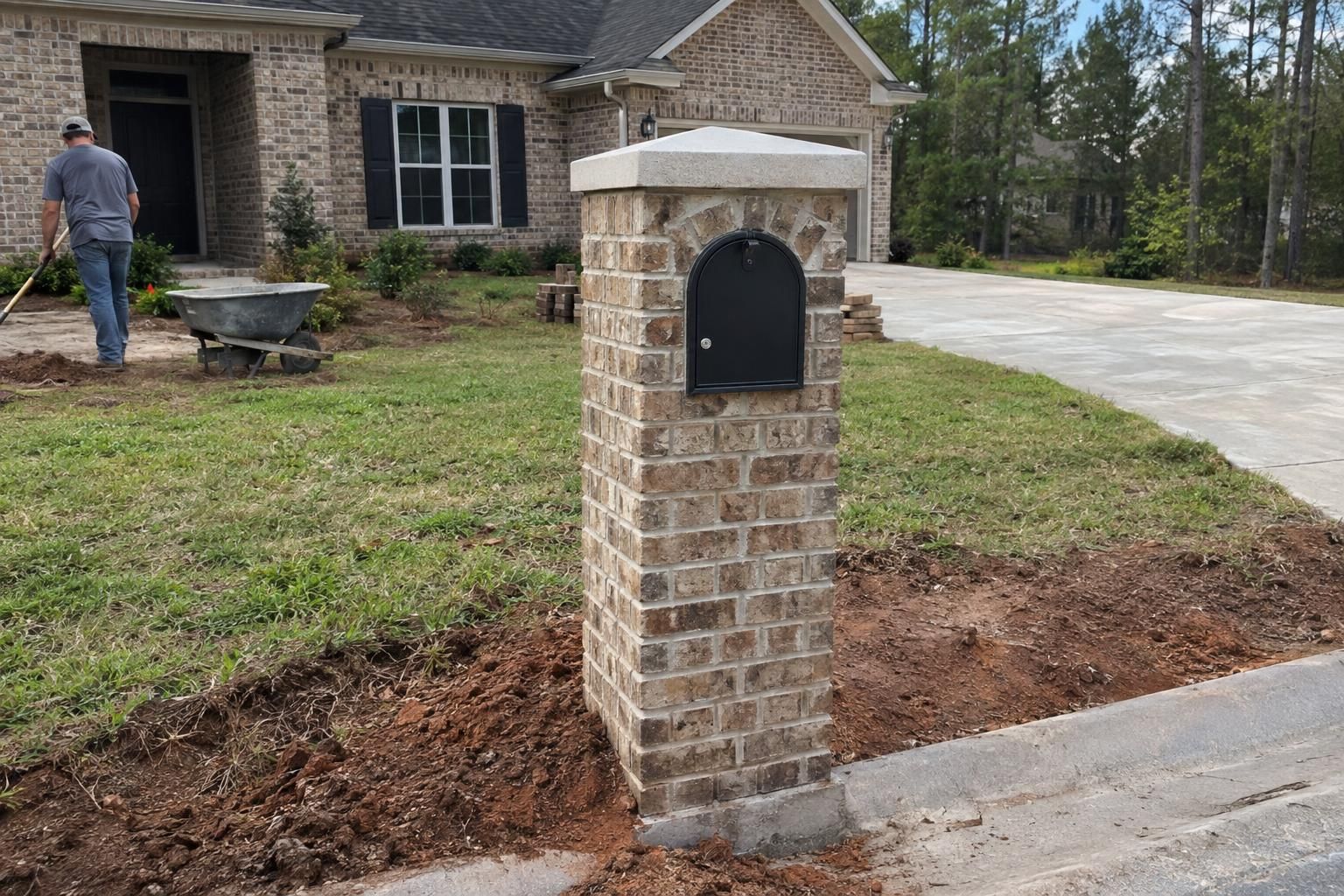
Brick mailboxes
A brick mailbox is the one piece of masonry everybody who visits your place passes on the way in. We build them to last, and we fix them when a bumper gets the better of one.
Get a free estimate →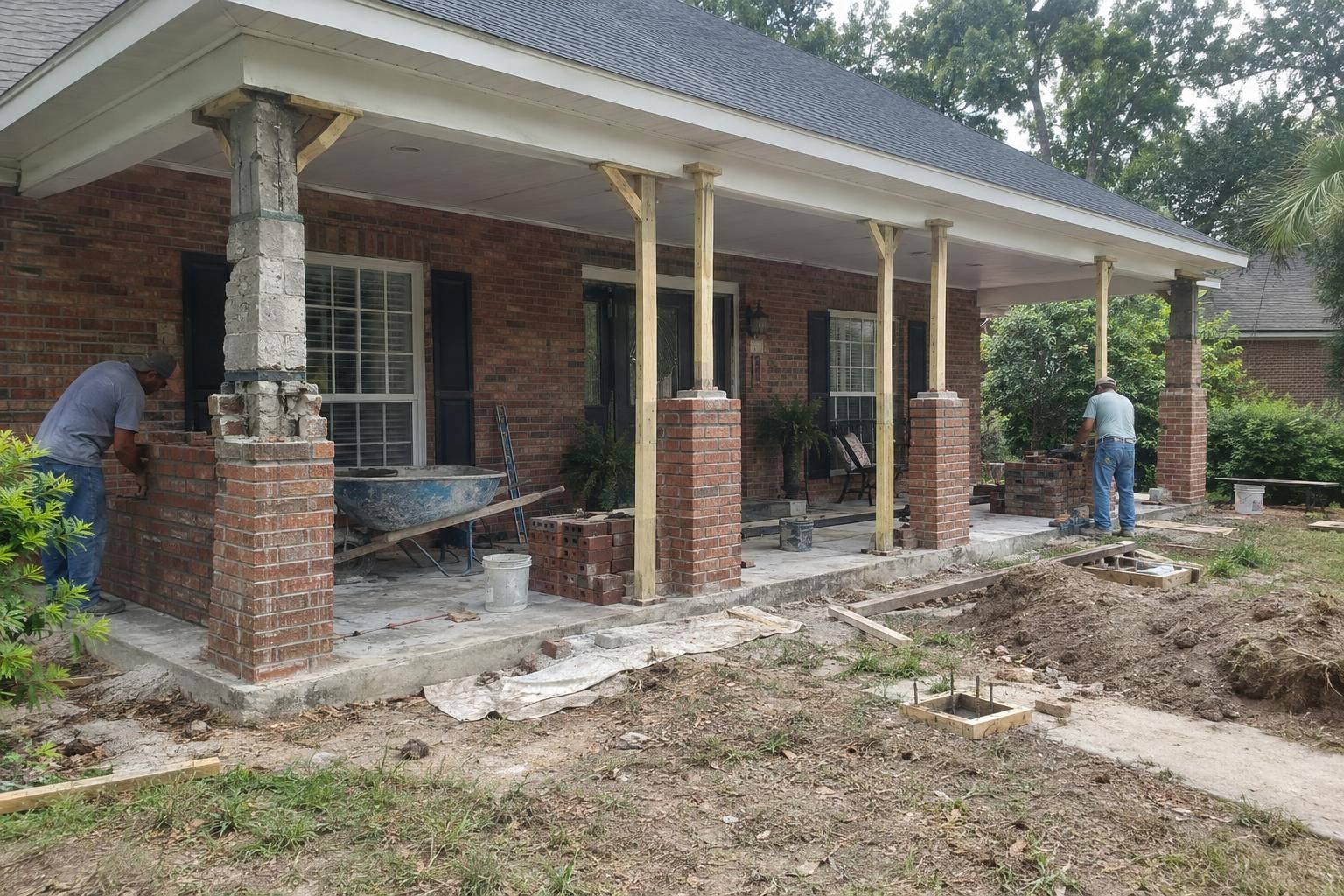
Brick porches and columns
Your porch columns hold up a roof, and the brick around them has been taking weather for a long time. We repair and rebuild them, and we plan every job around keeping that roof held.
Get a free estimate →Medley is a 43-acre project at McGinnis Ferry Road and Johns Creek Parkway. Its second phase, Encore, is set to open in 2027, with the hotel scheduled for 2028. Out on the roads, wall construction is going on at multiple spots along McGinnis Ferry. On Jones Bridge Road, crews are still moving utility lines onto new poles. We're Dalton Brothers, masons based in Atlanta, and Johns Creek sits in northeastern Fulton County, which is ground we cover. None of that new work is ours. What we think about is the older brick and stone standing in the shadow of it. Most Johns Creek houses went up in the 1990s or later, so plenty of that brick has stood for decades without anyone checking the joints. Has yours had a look lately? Call us and we'll come see it for free.
What Johns Creek does to masonry work
Start with the age of the place. Johns Creek incorporated in 2006, but the houses are older than the city. The subdivisions around Autrey Mill, including Doublegate, Farmbrook, Oxford Mill, Falls of Autry Mill and Cameron Crest, were developed in the 1980s and early 1990s. Homes from that stretch are mostly two-story traditionals with brick fronts and hardboard or vinyl siding on the sides and rear. Many St. Ives homes from the 1990s are brick and stucco. So the first thing we do is run a screwdriver along the mortar joints. Mortar that's thirty-odd years old usually gives up before the brick does.
Then there's the ground. Johns Creek lies in the Georgia Piedmont, where the soils are predominantly Cecil and Appling, dense red clay with limited natural drainage. Cecil is very deep and drains well on ridges and side slopes, but its red subsoil averages 35 to 60 percent clay. That clay expands when it's wet and contracts when it's dry, and the movement stresses foundation walls and slabs. The rolling terrain can also steer stormwater toward foundations in a heavy rain. A step or garden wall that looks fine in March can be leaning by August. And there's water all around the place. Johns Creek itself runs through the center of the city, and the Chattahoochee River bounds it on the south and east.
The weather does the rest. We're using Atlanta's numbers here, since that's the record we've checked. Atlanta gets about 49.7 inches of rain a year, and late winter, early spring and July are the wettest stretches. A normal July averages 80.9 degrees across day and night and brings 4.75 inches of rain. Overnight freezes show up on about 40 days a year, and each one makes the water sitting in a cracked joint expand. Fall, especially October, is the driest stretch, which makes it a good time to open up a wall.
The jobs we do most in Johns Creek
- Repointing brick jointsBrick-front houses from the 1980s to 2000s are everywhere in Johns Creek, and their original mortar gets sandy and sunken with age. We cut out the bad mortar to an even depth, brush the joints clean and pack in new mortar that's no harder than the brick. Then we tool it to match.
- Front steps and stoopsRed clay that swells and shrinks is hard on masonry steps, and a stoop that's dropped on one side is a call we expect. We work out why it moved first, usually water, then rebuild on a compacted gravel base so the next wet July has less to work with.
- Retaining and garden wallsRolling lots mean walls, and walls mean water behind them. We build with drainage stone and perforated pipe behind the wall so the water has somewhere to go. The city requires a permit to construct, alter or repair a building or structure, so we check with the Building Division before we start.
- Chimney topsA chimney takes the worst of the July storms and the winter freezes from the top down. We look at the crown, the flashing and the top courses of brick first, because that's where water gets in. Sometimes the fix is a few rebuilt courses and a new crown instead of the whole stack.
- Brick and stone veneer repairPlenty of Johns Creek homes pair brick or stone with other materials, and trouble tends to start where two materials meet. We reset loose stone, replace cracked brick and match what's already on the wall so the repair doesn't stick out.
Homes and buildings we work on here
Most of what we work on here is the big brick traditional house. Most of Johns Creek is large 1990s brick traditional on generous lots. Medlock Bridge was developed in the 1990s, with brick or brick-and-stucco exteriors. The Falls at Autry Mill is mostly brick from the mid to late 1990s. Newer neighborhoods like Bellwyn show brick homes alongside others with white stucco and stone accents. We also see brick-front townhomes. Medlock Bridge, St. Marlo Country Club and Sugar Mill have active HOAs with architectural review of exterior materials. So brick color and mortar match matter, and we'd rather get them right the first time.
Then there are the old ones. The John Rogers home on Bell Road was built in 1803 and has been restored by its current owners. Newtown Elementary, built in 1929, is Johns Creek's only National Register of Historic Places listing. At Autrey Mill, the Summerour House, Warsaw Church, Green Country Store and Tenant Farmhouse were saved from demolition and moved there. Those aren't our jobs, and we won't pretend they are. But if you own a house or outbuilding with real age, tell us on the first call. Old mortar is usually softer than what's sold today. We'd match it with a softer mix, because a hard one can chew up old brick.
Getting your estimate in Johns Creek
Here's how it goes. Call us or send a note with your address and what you've noticed. It might be a leaning wall, a crumbling joint or a step that's dropped. Then we drive up to see it. Johns Creek is about 27 miles from downtown Atlanta, and another guide puts it at about 30 miles northeast. Either way, it's inside Fulton County, so it's on our map. We look at the work itself. We tap the brick, probe the joints and trace where the water is going, because that's usually the real problem. The estimate is free, and so is hearing that a repair can wait.
We'll also sort out the permit side with you. The city's Building Division takes calls at 678-512-3250, Monday through Friday, 8 a.m. to 4:30 p.m. The office is at 11360 Lakefield Drive. Work done without a required permit may draw a stop work order, fines and other penalties. We'll figure out what your job needs before anyone picks up a trowel.
For Johns Creek businesses
If you run a shop, an office, a rental or a whole property portfolio in Johns Creek, brick and block get old on a schedule. Technology Park started in 1981 and had drawn over 200 companies by the early 2000s, so plenty of commercial buildings here have some years on them. Meanwhile Medley is bringing new retail and office space into town. That raises the bar for how the older places look next door. We repair loose brick, failing joints, steps, planters and site walls. We'd like to schedule that around your hours and your tenants, so tell us when you can't have noise or a blocked entrance. On the permit side, the contractor schedules inspections on the city's portal, and business and property owners don't. For commercial projects, any Special Inspections Reports must be submitted and approved by the Building Official. We'll go over those steps with you at the estimate. Property managers, send us the address and a photo of what's bothering you, and we'll take it from there.
Johns Creek questions we hear
Do I need a permit in Johns Creek to repair brick or stone?
It depends on the work, and we won't guess. The city requires a permit to construct, enlarge, alter, repair, move or demolish a building or structure. Some small non-structural repairs can go ahead without one, but only with the Building Official's permission. Call the Building Division at 678-512-3250, or ask us and we'll sort it out at the estimate.
My HOA reviews exterior changes. Should I talk to them first?
Yes, before we start. St. Ives, Country Club of the South and The Standard Club run architectural review committees on exterior changes. Other neighborhoods like Sugar Mill do too. Tell us what your HOA says and we'll match brick, stone and mortar color to what's on the house.
How far away are you?
We're in Atlanta. Johns Creek is about 27 miles from downtown, or about 30 by another count, in Fulton County. That's a drive we make.
When's the best time of year for masonry work there?
Atlanta's driest stretch is fall, especially October, so that's a good time to open up a wall. Late winter, early spring and July are the wettest. We can still work in them, but wet weather can slow us down. Freezes show up about 40 nights a year in Atlanta, so a crack that lets water in is worth fixing before winter.
With all the construction going on, could it be hurting my brick or my wall?
We can't tell that from the road, and we won't guess. We read the cracks. A stair-step crack along the mortar joints, a wall leaning out at the top or water pooling by the foundation each tell us something different. The city's code requires a stormwater management report for development projects, so runoff problems aren't created or made worse. If water behaves differently on your lot than it used to, say so when you call.
Local details checked against: en.wikipedia.org, storymaps.arcgis.com, omegahome.com, thebonniesmithgroup.com, reganmaki.com, ajc.com