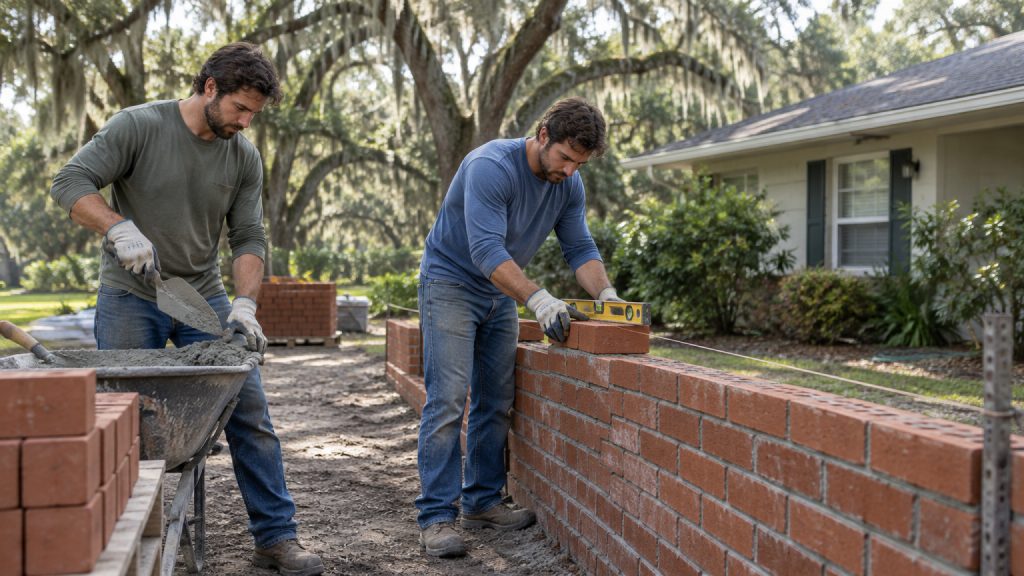
Dalton Brothers Masonry Milton
Masonry in Milton, GA
It's about 32 miles by road from our Atlanta base to Milton, and the first thing we notice when we get there is how much ground sits between the houses.
Call (470) 837-6333Our services in Milton
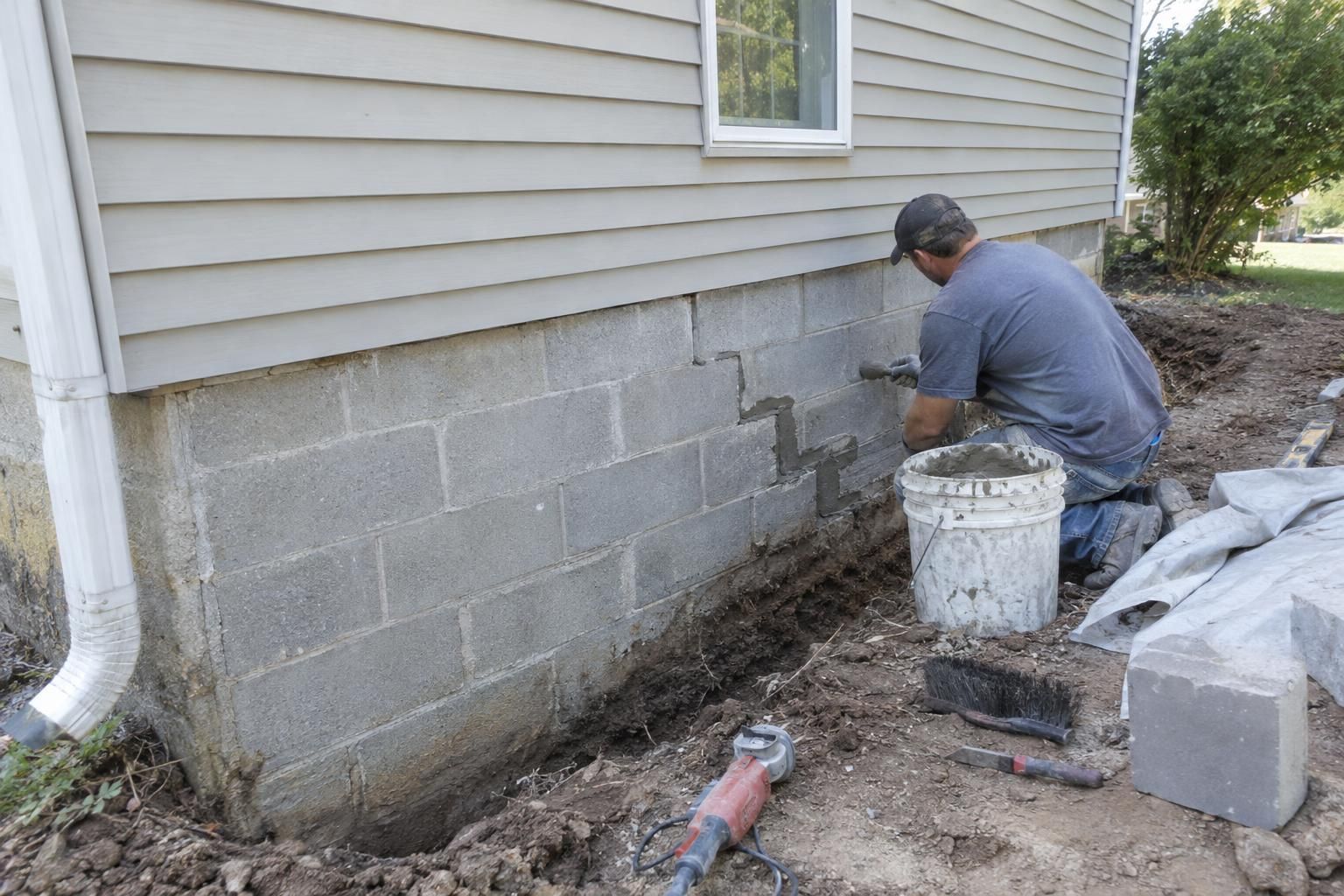
Block foundation repair
Cracked block under your house can usually be fixed without tearing the place apart. We repair stem walls and crawl space walls in Atlanta, and we start by working out why the wall moved.
Get a free estimate →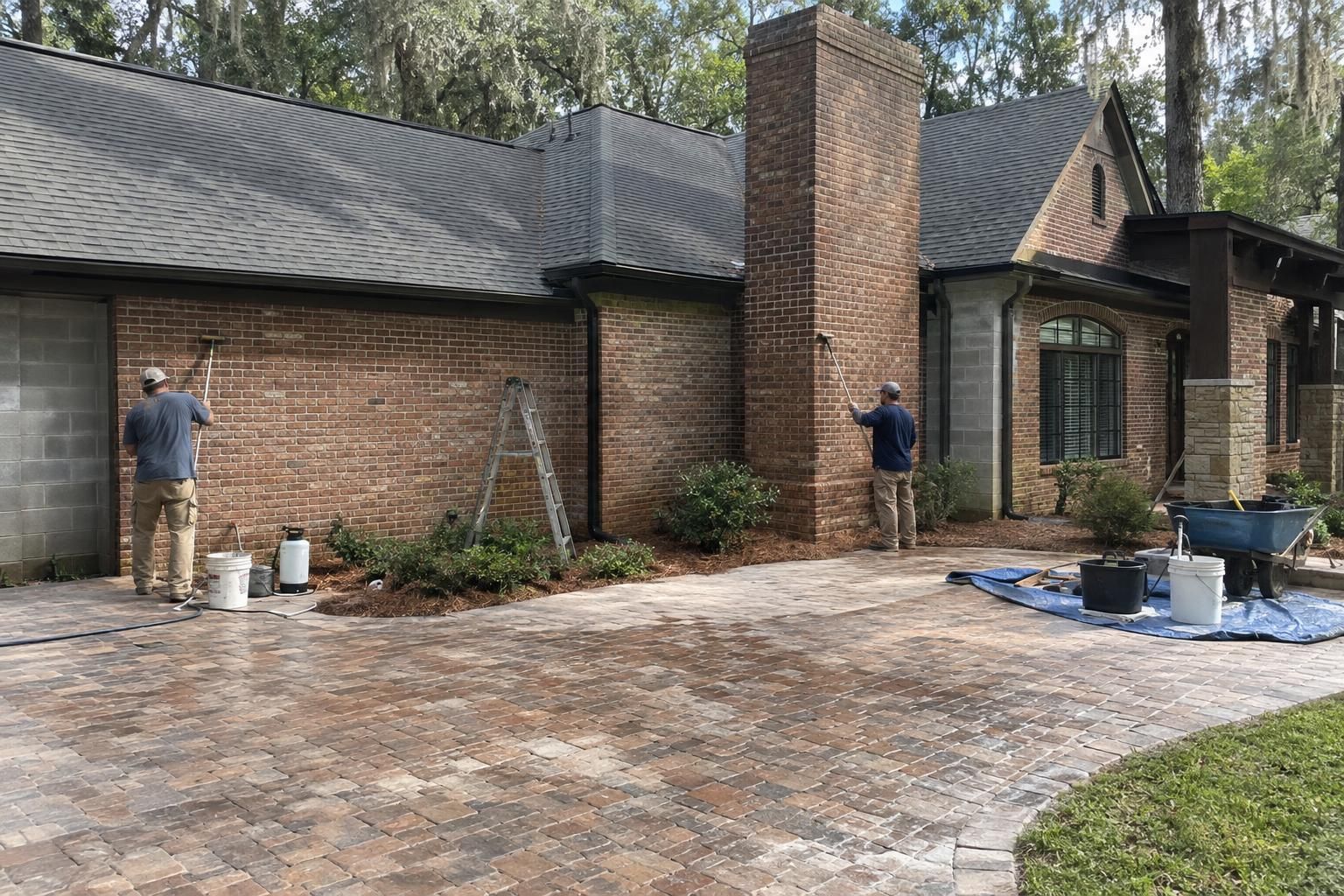
Brick and masonry sealing
Sealing is a clear water repellent that soaks into your brick, block, stone or pavers so rain beads off and the wall can still dry out.
Get a free estimate →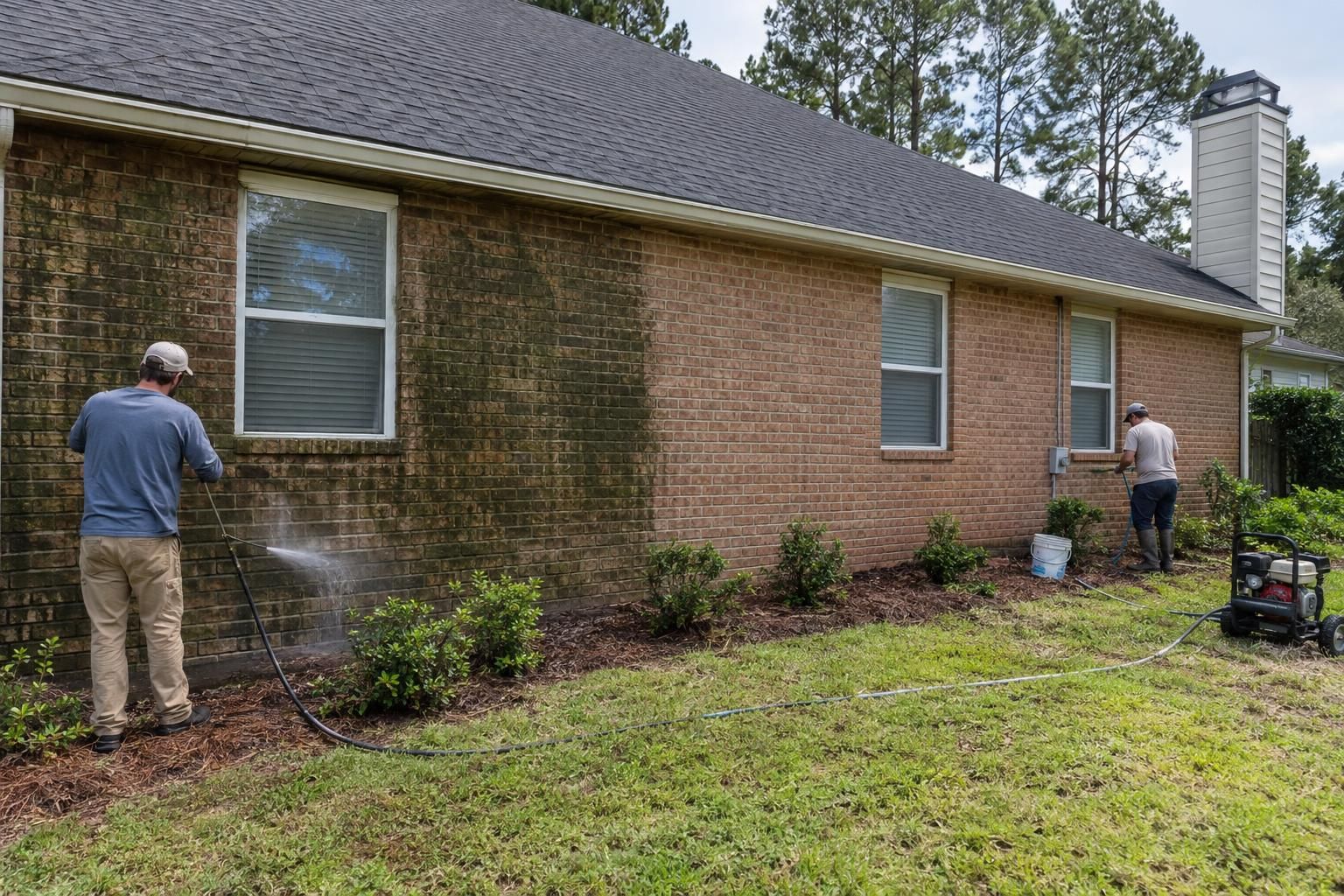
Brick cleaning and stain removal
Dirty brick usually isn't dirty all the way down, and we can clean it without hurting the face or the mortar.
Get a free estimate →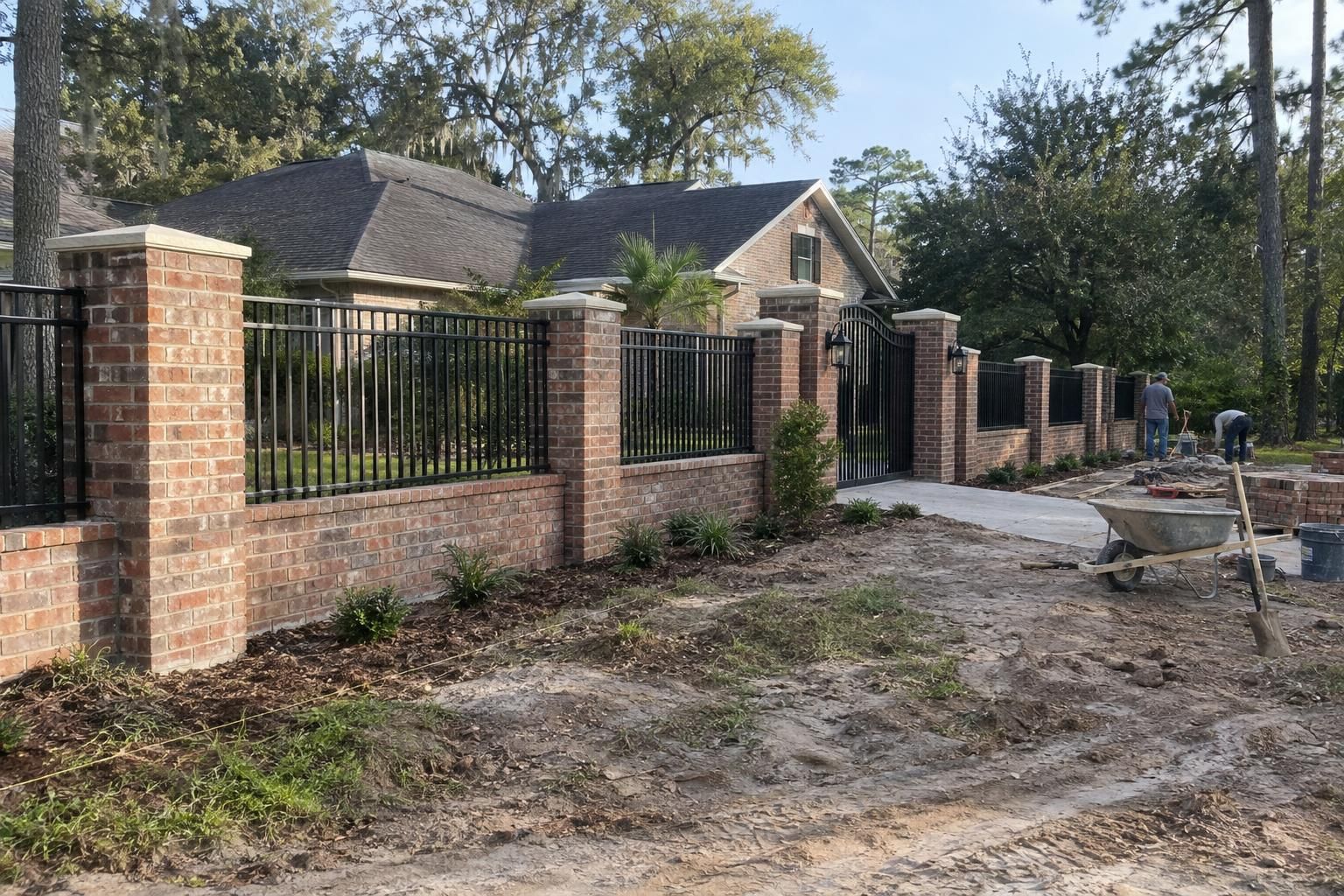
Brick fences and garden walls
A brick fence is the part of your yard that stays put long after the wood has gone gray and soft.
Get a free estimate →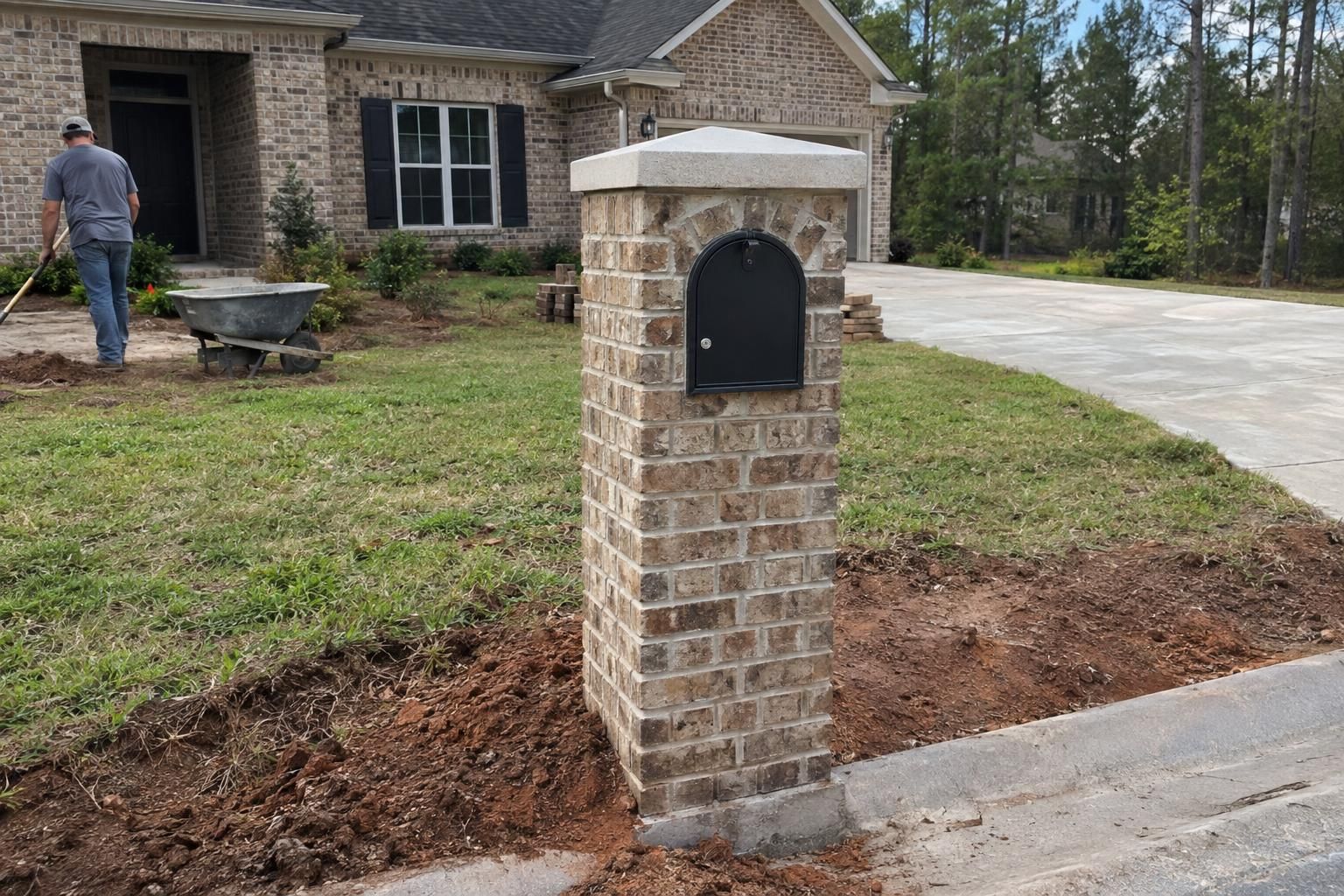
Brick mailboxes
A brick mailbox is the one piece of masonry everybody who visits your place passes on the way in. We build them to last, and we fix them when a bumper gets the better of one.
Get a free estimate →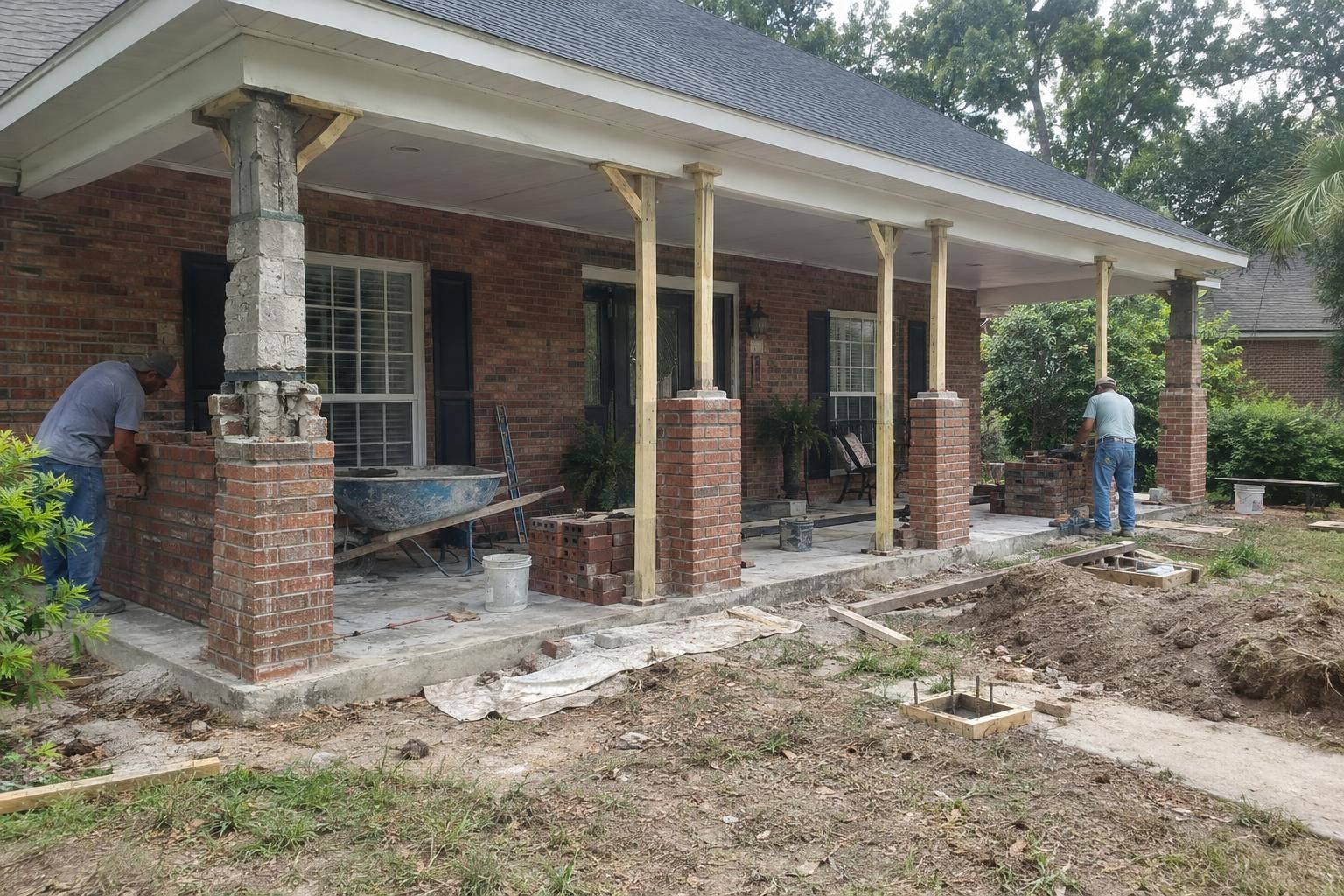
Brick porches and columns
Your porch columns hold up a roof, and the brick around them has been taking weather for a long time. We repair and rebuild them, and we plan every job around keeping that roof held.
Get a free estimate →Zoning explains most of it. When Milton became a city on December 1, 2006, it put agricultural zoning across most of its land, with a one-acre minimum for new houses. So we aren't looking at rows of matching fronts. We're looking at brick estates, colonials and Tudor-influenced two-story homes on wooded lots, with long drives and walls and steps a good way from the road. That distance matters to a mason. A leaning garden wall at the back of your acreage can go a full season before anyone walks out and sees it. We're Dalton Brothers, masons out of Atlanta, and Milton is part of the Fulton County ground we cover. Call us and we'll come look at your brick, block or stone for free. We'll tell you what we see, even when what we see is that it doesn't need us yet.
What Milton does to masonry work
Milton is part of Georgia's Piedmont region, and the Piedmont is red clay country. The Cecil soil series typifies it. It's very deep and well drained on ridges and side slopes, with a red subsoil that averages 35 to 60 percent clay. Well drained sounds like good news, and mostly it is. But clay swells when it's wet and shrinks when it dries, and a footing sitting on it moves a little with the seasons. So when we're called out to a leaning wall or a sunken step, the first thing we check is where the water is going.
Then there's the weather. Atlanta gets about 49.7 inches of rain a year. Late winter, early spring and July are the wettest stretches, and October is the driest. A normal July averages 80.9 degrees across day and night and brings 4.75 inches of rain. Winter is the other half of it, because overnight freezes come on about 40 days a year. Water gets into a hairline crack in a joint on Tuesday and freezes on Wednesday morning. By spring the crack is wider. Those are Atlanta's numbers, and they're the ones we've checked.
Milton adds a few things of its own. Most of the city's land has been on septic, which called for parcels of an acre or more. So before we dig a footing or run a drain behind a wall, we ask you where the septic field is. Wooded lots also mean shade, and shade means brick that stays damp on its north side long after the sun has dried the south.
The jobs we do most in Milton
- Retaining wallsSlopes, clay and heavy rain are hard on a wall that was built without drainage behind it. We look at the base and the weep points first, then rebuild with gravel backfill and drainage behind the wall. A Milton council document we found says a permit is required for retaining walls that retain four or more feet, so we'll sort out whether yours needs one before we start.
- Repointing brickMuch of Milton's brick was built between the late 1980s and mid-1990s, which puts a lot of it past thirty years old. That's about when mortar joints start to go soft and sandy. We rake out the bad joints with a grinder and a hand chisel, then pack in fresh mortar. And we try to match the color, because a patch that stands out is worse than the crack.
- Chimney repairA leaking chimney is usually a crown, flashing or loose-brick problem long before it's a rebuild. We start on the roof with a trowel and a flashlight. Milton's best-known old house, the McConnell-Chadwick House, has a brick chimney, and we'd treat an older chimney with the same patience.
- Steps and entriesFront steps are where we hear "something out by the ground has moved." Water runs under the slab, the clay settles, and one side drops. We lift or rebuild the steps and fix the water problem, or they'll drop again.
- Estate walls and piersMilton has custom-built estate homes on multi-acre parcels and equestrian properties with barns and paddocks. Long drives and pasture edges mean gate piers and freestanding walls, and those take freeze and rain from every side. We rebuild them on a proper footing with the caps sealed.
Homes and buildings we work on here
Around 1900 this area was still mostly forest and farmland, with small villages at the crossroads. The bulk of the masonry we see in Milton isn't that old. One local real estate profile describes housing layered across roughly four decades, starting with brick estates, large colonials and Tudor-influenced homes built from the late 1980s into the mid-1990s. Those are the houses where we do most of our repointing, chimney work, and step and porch repair. Crabapple has a denser cluster of newer homes in traditional neighborhood layouts, and there we're more often looking at veneer, steps and patios than at old mortar.
Then there are the older buildings. The McConnell-Chadwick House on Arnold Mill Road is a one-story Greek Revival cottage with a brick chimney and clapboard siding, built in the late 1830s. Providence, constituted in 1834, is the oldest church in the City of Milton. We don't claim to have worked on either one. But they tell us what old masonry in Milton can look like. Soft old mortar needs a softer repair mortar, because hard modern mix can crack the brick around it. If your house or outbuilding is old, we'll tell you before we touch it.
Getting your estimate in Milton
Call us, tell us what you're seeing, and we'll set a time to come out from Atlanta. It's about 32 miles up the road. The estimate is free. When we get there we walk the wall or the chimney or the steps before we say a word about the job. We press a screwdriver blade into the joints, look at where your downspouts empty, and check whether the cracks run in a line or wander. Then we tell you what we found, what we'd do, and what can wait.
If your job needs a permit, we'll say so at the estimate. Milton's Community Development Department issues permits for all construction activity in the city. Applications go through the CityView web portal, and once a permit is accepted for review, comments come back within 10 business days. That timing is worth knowing before you plan around a wet spring or a dry October.
For Milton businesses
If you run a shop or an office in Milton, or you manage property for a landlord, we can look at storefront brick, a loading-dock wall, a parking-lot retaining wall or a worn entry step. We'll tell you what's cosmetic and what's going to cost you later. Most of what we do for a commercial owner is find where the water is getting in. We schedule around your hours where we can. The city's Community Development Department issues permits for all construction activity, and signs need their own permit, so we'll tell you early which parts of the job need one. If you manage more than one building, send us the worst one first. We'll look at it for free and you can decide what's next.
Milton questions we hear
How far is Milton from your Atlanta base, and do you charge to come out?
It's about 32 miles by road. The estimate is free, and that's the whole reason we come out, to look at your masonry and tell you straight what's wrong.
Do I need a permit to build or rebuild a retaining wall in Milton?
Possibly. A Milton council document we found says a permit is required for retaining walls that retain four or more feet. Rules change, so check with the city's Community Development Department too. The permit desk is at 678-242-2545. We'll tell you at the estimate which way we think your wall falls.
My brick house is thirty-odd years old. Does it need repointing?
Not automatically. We look for joints that are sandy, cracked or recessed, and for brick faces that have started to flake. If the mortar is sound we'll say so and leave it alone.
Can you work on an older house or outbuilding?
Yes, with care. Milton's McConnell-Chadwick House dates to the late 1830s, so we know old masonry exists out here. Old brick usually needs a softer mortar than new brick does, and we'll test before we pick one.
When's the best time of year to have masonry done?
Atlanta's driest stretch is fall, especially October, and mortar likes a dry spell to set. That said, a failing wall doesn't care what month it is. If water is getting in now, call now.
Local details checked against: miltonga.gov, miltonhistoricalsociety-georgia.org, dreamsmithrealty.com, theagency-atlanta.com, miltonga.gov, miltonga.gov