Your floor shouldn't bounce, and the piers under it shouldn't lean. We replace tired brick and block piers, and we build new ones under houses, porches, decks and additions.
Qualified MasonsVerified ProfessionalsFree EstimatesOn Time
What piers and footings involves
Plenty of older homes sit on brick or block piers with a crawl space in between. Over the years the mortar washes out, the bricks go soft, and the footing underneath settles or was never much to begin with. Pier work means we take out the failing ones, put in sound ones, and add piers where the floor needs more help.
So when do you need us? When the floor starts telling you, or when you're adding a porch, deck or room and the new weight needs somewhere solid to land. We'll crawl under there, look at what you've got, and tell you straight how many piers it takes. Homeowners in Atlanta get a free estimate, and we don't charge to look.
Signs you need piers and footings
Bouncy floorsThe floor gives underfoot between the walls. A pier is often sunk, cracked or missing, and the span above it is carrying more than it should.
Sloping floors and sticking doorsA pier that drops pulls the beam down with it, and the door frames above go out of square. A door that rubs or won't latch is often the first thing you notice.
Leaning or cracked piersGrab a flashlight and look. A pier that's out of plumb, or cracked through the mortar joints, has lost its footing or its bond.
Loose bricks and gapsBricks you can wiggle by hand, mortar like sand, or a gap between the pier top and the beam all mean that pier isn't pulling its weight.
What we handle
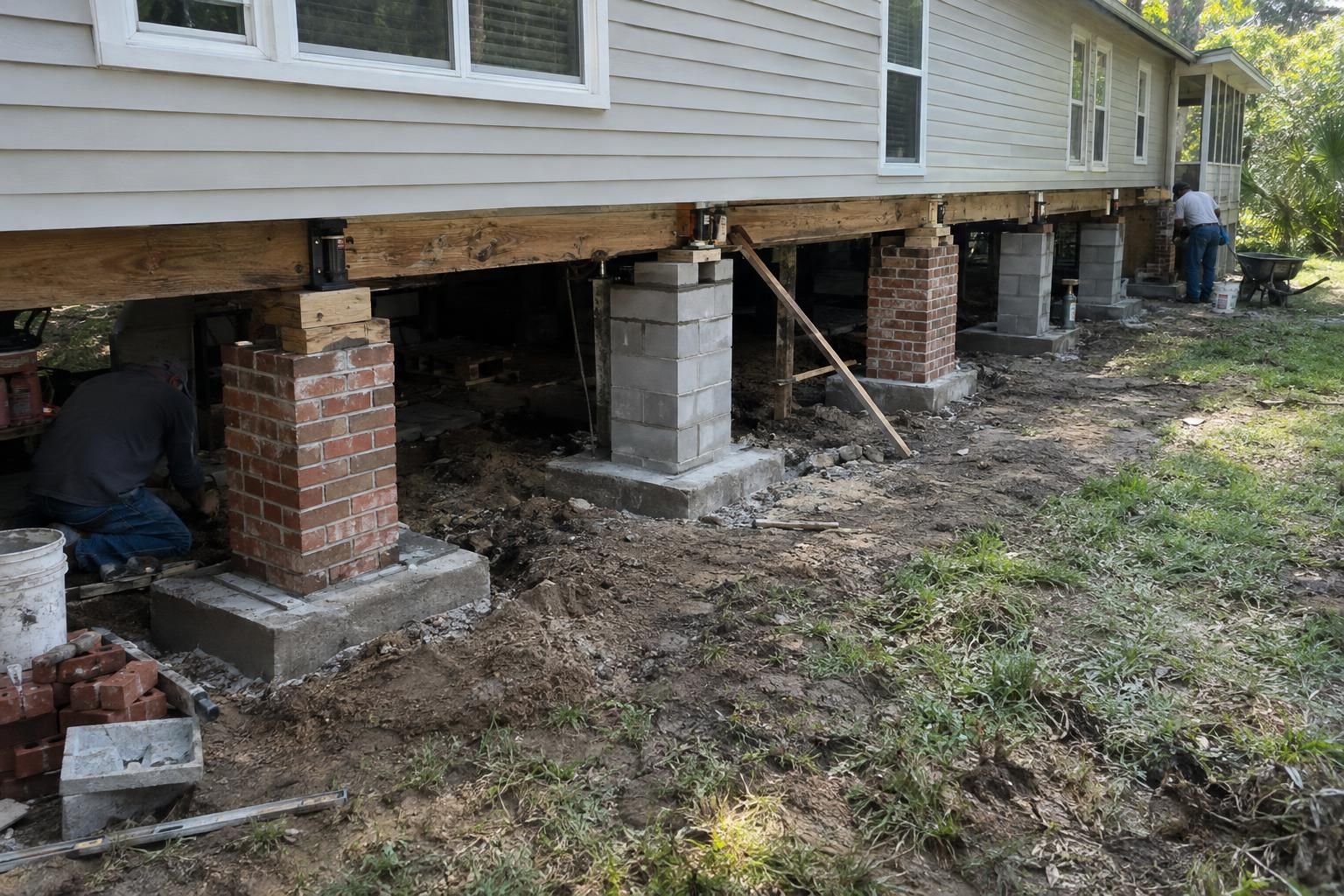
Replacing brick or block piersWe take out the crumbling or leaning pier and build a new one on a fresh footing, right where the old one stood. Where piers show, we'll match the look as closely as we can.
Adding piers to stiffen a floorA long span makes a floor feel like a trampoline. Extra piers shorten that span, and we build them up to the existing beam and shim them tight.
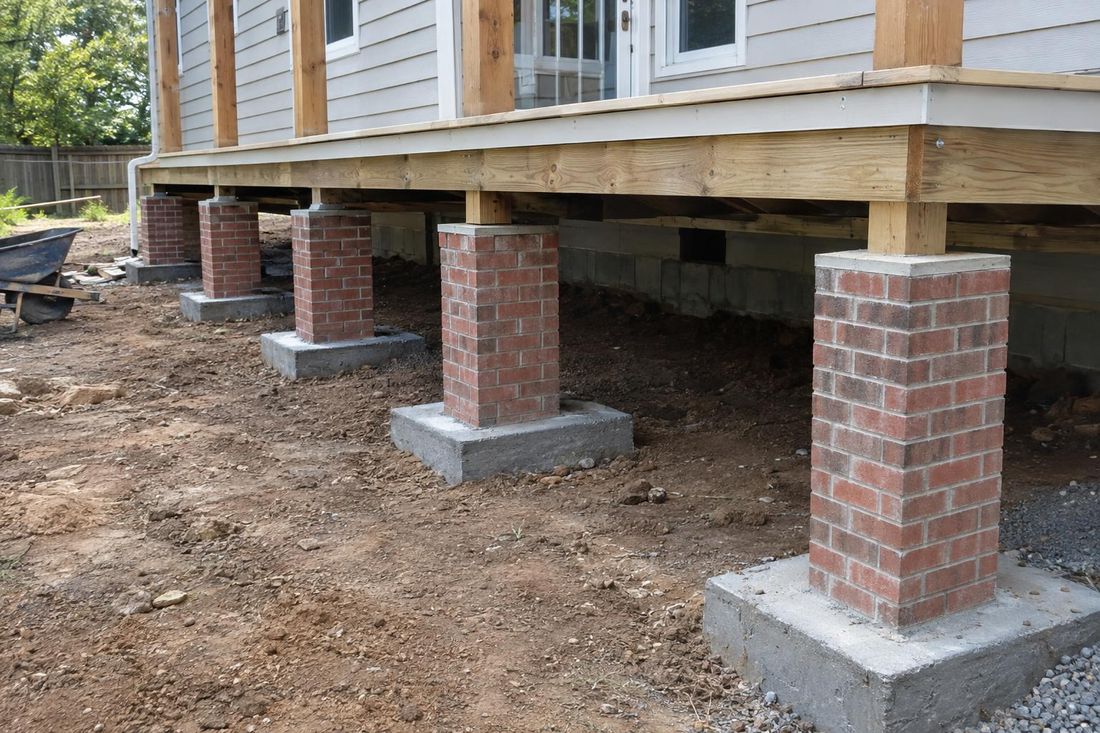
New piers for porches, decks and additionsNew weight needs its own footing. We lay out the piers, dig to firm soil, and build them to carry the beam.
Footings for columns and wallsSometimes the pier is fine and the footing is the trouble. Other times a column or short wall needs one from scratch, so we form and pour it sized for the load.
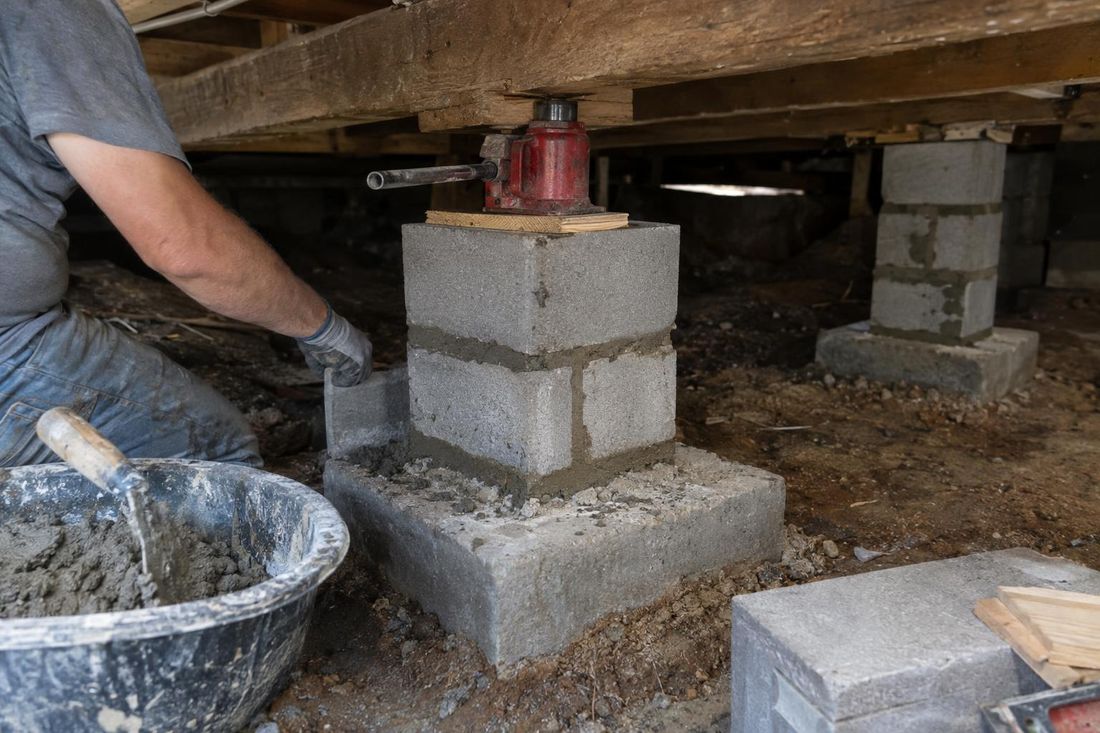
Masonry pier on concrete footing A concrete block pier is stacked on a poured concrete footing in a crawl space, with a red bottle jack on a wood shim holding up a timber beam above it. A worker's gloved hand is placing mortar near the base, and a bucket of mortar with a trowel sits in the foreground.
How we do it
Each pier sits on a concrete footing sized for the load and the soil. Soft clay wants a wider footing than hard ground, and we dig down to firm, undisturbed soil before we form it. Rebar dowels go into the wet concrete so the pier can tie into the footing.
Before an old pier comes out, we jack the beam and hold it on cribbing so nothing drops. The new pier goes up in solid block, or in hollow block with the cores filled with grout and rebar, laid in Type S mortar. A flat cap block on top gives the beam something level to sit on. Then comes the gap to the beam. We drive shims in tight, because a pier that almost touches isn't carrying anything.
How a job with us goes
Free estimate and crawl space check
We crawl in with a flashlight and a level and look at every pier, the beam, and the wood sitting on it. Then we tell you what needs work and what doesn't.
Beam supported
We set screw jacks on cribbing next to the old pier and take up the load slowly. Nothing gets pulled until the beam holds steady, because rushing it can crack plaster upstairs.
Old pier removed, footing poured
We take out the old pier, dig to firm soil, and form and pour the footing. Concrete needs time to cure before it carries weight, so we don't hurry this one.
New pier built and shimmed
We lay up the pier plumb and level, cap it, and drive shims between the cap and the beam until it's snug.
Supports released
We ease the jacks off a little at a time and watch the beam settle onto the new pier. Then we clean up and walk you through what we did.
Brick piers on concrete footings A row of red brick piers stands on poured concrete footings in bare dirt beneath a wood-framed porch or deck. Each pier has a concrete cap supporting a wooden post and beam, and a concrete block foundation wall is visible behind them.
What drives the cost
The biggest driver is how many piers you need. After that it's the crawl space itself. A tall, open one is easier to work in than a tight one where our masons are on their bellies, hauling block by hand. Footing size matters too, since a heavy load or soft soil means more digging and more concrete. And then there's the wood. If we find rot in a beam or joist once we're under there, repairing it adds to the job. We'd rather tell you that at the estimate than surprise you later, so we look hard at the wood before we talk numbers.
How long it takes
A few piers take two to three days including footing cure. Usually the first day is jacking, digging and pouring, then the footings set up before we come back to build the piers and shim them. More piers stretch that out, and so does a tight crawl space. Rain in the holes can slow us down too. We'll give you a realistic window when we do the estimate, and we'll call if anything changes.
Local expertise: residential piers and footings in Atlanta
The red clay of the Georgia Piedmont is typified by the Cecil soil series: very deep, well drained soil on ridges and side slopes, with a red subsoil that averages 35 to 60 percent clay.
What it means for your job
Clay holds water against a wall and does not recover well once it is compacted, so drainage behind a retaining wall and a properly built base under pavers and footings matter more here than the surface material.
Atlanta gets about 49.7 inches of rain a year. Late winter, early spring and July are the wettest stretches, and fall, especially October, is the driest.
What it means for your job
Mortar, stucco and sealers need dry time. Fall is the easiest season for repointing and sealing, and summer work is planned around afternoon storms.
Overnight freezes can be expected on about 40 days a year in Atlanta.
What it means for your job
Water that soaks into brick, stone and mortar and then freezes is what pops faces off brick and opens joints. Keeping water out matters more here than in places that rarely freeze, and winter mortar work has to be protected overnight.
Rotten beams and joists are a carpentry repair. We'll point them out, but we don't rebuild framing. Leveling a whole house is a foundation contractor's job. Piers also won't fix a wet crawl space. If water stands under there, the drainage has to be handled first, or new footings will sit in mud. And if the soil looks poor or the load is unusual, we may suggest you have an engineer take a look before we build. We'd rather say so than guess.
Bouncy or sloping floors, sticking doors, and piers that lean, crack or have loose bricks. The easy check is a flashlight and a screwdriver. If the screwdriver sinks into the mortar, that pier is tired.
Can piers be added without lifting the house?
Yes, new piers are built up to the existing beam and shimmed. We only jack if the beam has sagged and needs to come back up.
Do I need to be home?
Not the whole time, but we need a clear way into the crawl space. Move the stored boxes away from the hatch, and we'll talk before we start.
Can you reuse my old bricks?
Sometimes, if they're hard and not flaking. Soft, crumbling brick is what failed, so it doesn't go back in. Where piers show, we'll try to match the look.
Will new piers stop my floor from moving?
They fix the support, and that's usually the cause. But if the floor still moves, the trouble may be in the framing or the soil, and we'll tell you so.