Qualified MasonsVerified ProfessionalsFree EstimatesOn Time
What paver repair and releveling involves
Paver repair means we lift the pavers that have sunk or heaved, rebuild the base underneath, and set them back flush so the joints line up. On walks, entries, pool decks and drive lanes, that removes the trip hazards and brings back the slope that moves water off the surface.
You call us when a tenant trips, when an insurance inspector flags a walkway, or when puddles show up where there never were any. We work for property managers, owners and general contractors in Atlanta. Many of them put us on a recurring maintenance visit, because small settled spots are easy to fix and big ones aren't. Either way, we leave you a written record of what we found and what we fixed.
Signs you need paver repair and releveling
Lips at the jointsWhen one paver sits higher than its neighbor, a toe or a cart wheel catches it, especially at night. That's a trip hazard, and it tells us the base under the low side has let go.
Birdbaths after rainWater standing on a walk or pool deck means the surface has lost its pitch. We check whether it's a few sunken pavers or a wider base problem.
Wheel ruts in drive lanesTwo shallow troughs where trucks and vans run mean the bedding sand has squeezed out and the base has compressed.
Sunken strips over trenchesA straight line of dips where a utility crew once dug usually means the backfill wasn't compacted in layers. It'll keep settling until someone fixes it right.
What we handle
Trip-hazard removal on walks and entriesWe lift the offending pavers, correct the base and reset them flush. Doorways, ramps and curb cuts come first, since that's where the foot traffic is heaviest.
Rut repair in drive lanesWe pull the pavers in the wheel paths, rebuild and recompact the base, and relay them to a true grade. A lane that carries delivery trucks sometimes needs a firmer base than the original.
Utility cut restorationAfter a water, gas or electric crew has been in, we reopen the patch, backfill in compacted layers and relay the pavers so the cut stops showing.
Pool deck and plaza levelingWe schedule around guest hours and keep the deck pitched away from the water, because standing water and wet feet are a bad mix.
Re-sanding, cleaning and sealingOnce everything is level, we sweep in fresh joint sand, wash the surface and seal it if you want that. The joints lock up and stay put.
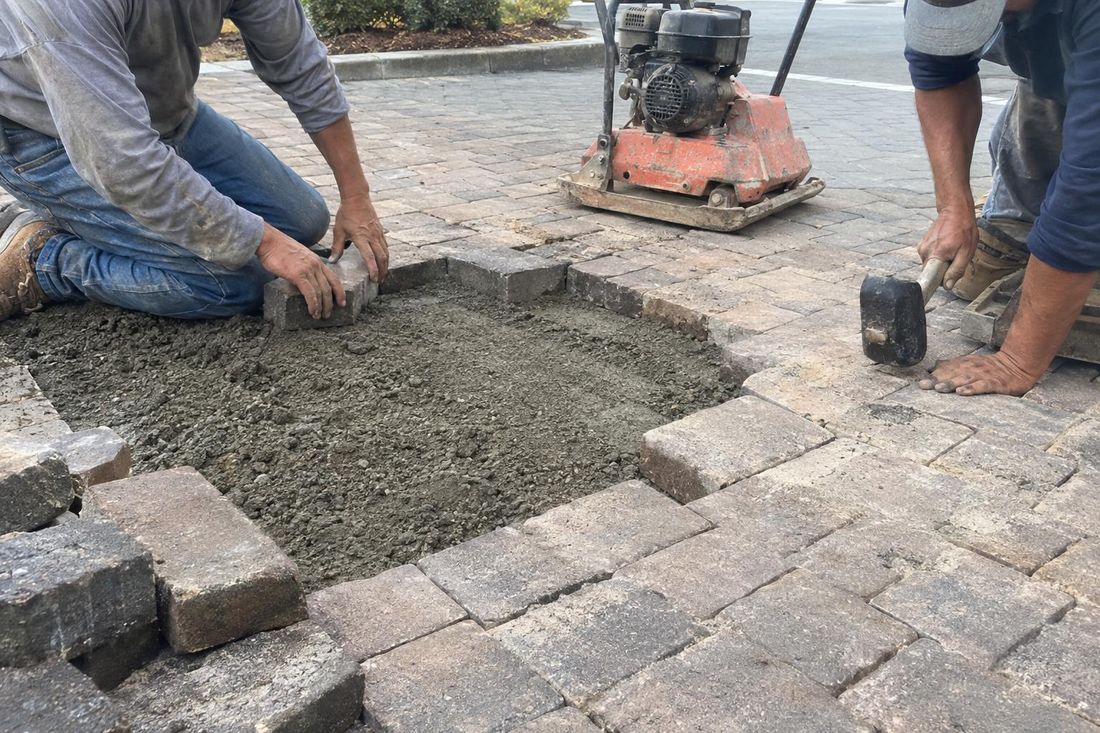
Workers relaying pavers in excavated section Two workers kneel at an opened patch of a brick paver surface, placing pavers onto a bed of compacted gray base material. A rubber mallet is in one worker's hand, and an orange plate compactor sits on the surrounding pavers.
How we do it
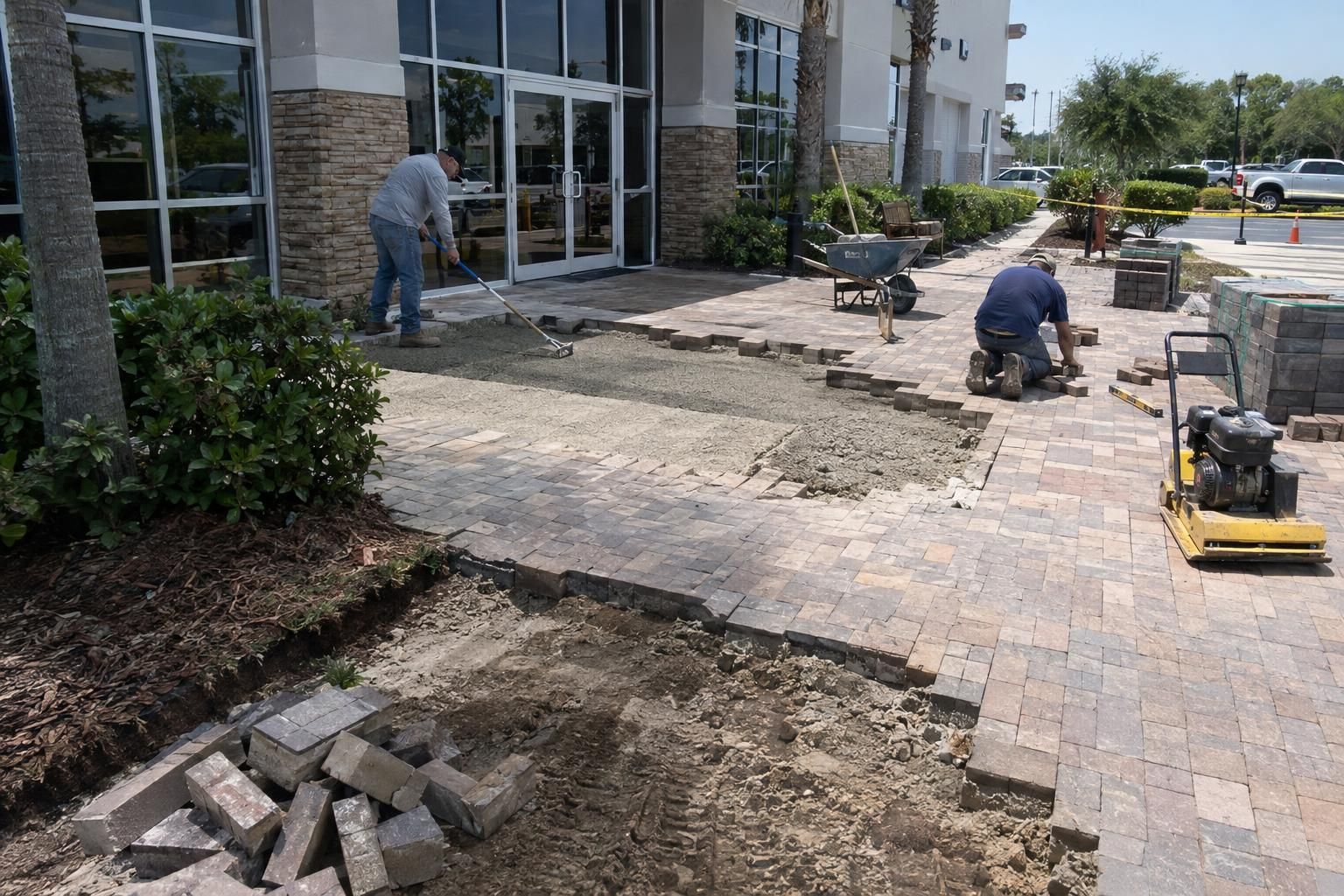
We chalk-mark the pavers and photograph the layout so the pattern goes back exactly as it was. Then we lift the area by hand with paver pullers, stack the pavers on pallets and dig out the bad base down to firm ground. We rebuild with compacted crushed stone, run a plate compactor over each lift, and screed a thin bed of bedding sand to the right pitch. Areas are lifted and reset on corrected base, and that's what removes the height differences at the joints.
Utility trenches get different treatment. We backfill and compact in thin layers before a single paver goes back, so the patch doesn't settle again. Once the pavers are set, we run the plate over them, sweep in jointing sand and check every joint with a straightedge. If a paver is cracked or stained past cleaning, we swap it for a matching one when we can find it.
How a job with us goes
Property walk and hazard list
We walk the site with you or your manager, straightedge in hand, and mark every lip, dip and rut with paint. Then we write it all down so nothing depends on anyone's memory.
Prioritized scope and schedule
Entries and busy walks go first and cosmetic spots go last. We plan the work around your tenants, deliveries and hours.
Repairs by area with barricades
We work one section at a time, set barricades and keep a clear path open. Each section is finished and swept before we move on, so the property never looks like a job site for long.
Report with before and after photos
You get a written list of what we fixed, with photos of each spot. It's handy for your files, your insurer and your board.
Return visit
If you're on a maintenance schedule, we come back when we said we would and check our earlier repairs first. That's where trouble shows up if it's going to.
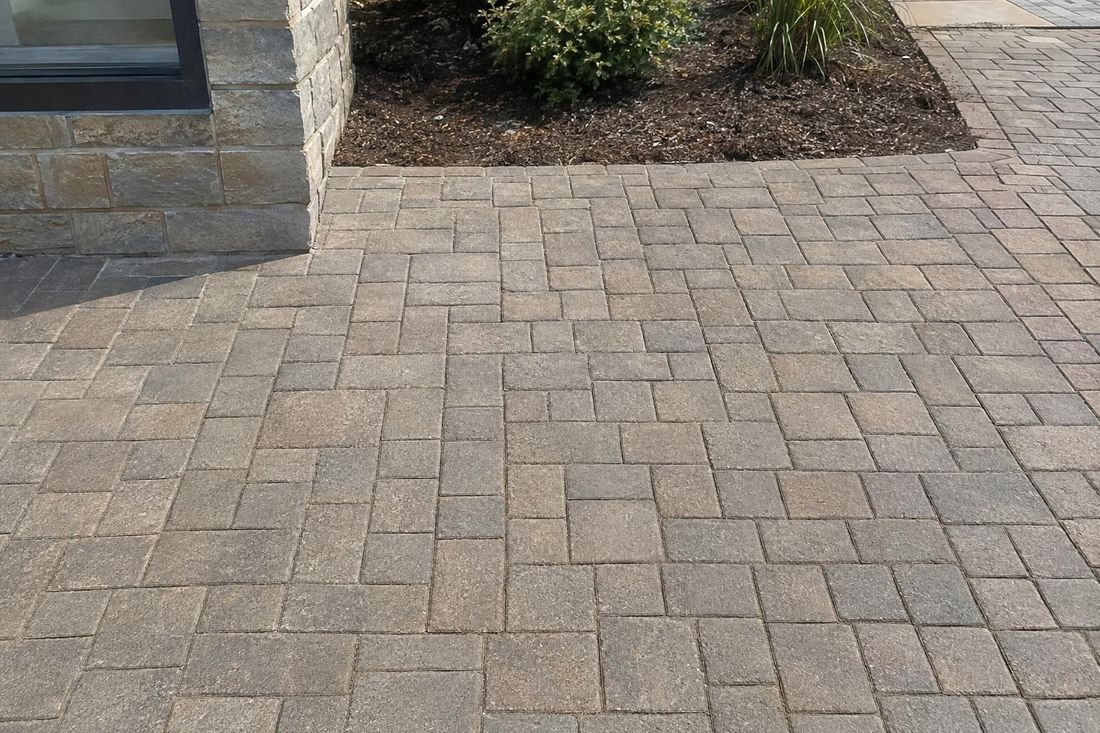
Level interlocking paver surface beside planting bed A patio or walkway of interlocking concrete pavers in gray-brown tones, laid in a multi-size pattern, meets a stone-clad wall and a mulched planting bed. The surface looks even and flat with consistent joints and no visible sinking, gaps, or raised stones.
What drives the cost
The number and size of the repair areas drive the price more than anything else. Twenty small spots scattered across a property take more time per paver than one big patch, because we spend our day setting up and moving. Traffic control counts too, since barricades and keeping a path open slow the work. After-hours work costs more because it means a different schedule for our masons. Replacement pavers matter when the original color or pattern is hard to find. And how deep the base failure goes changes how much stone we haul in. We give free estimates, and we'd rather walk the site than guess from a photo.
How long it takes
Most commercial repairs take days, not weeks. A handful of entry fixes can be done in a day, and a large property goes section by section so your walks stay open. Many of our clients set us up on a recurring visit once or twice a year, which keeps the list short. Pavers can take foot traffic as soon as they're set, but sealer needs time to cure, so we plan that last and keep people off it.
Local expertise: commercial paver repair and releveling in Atlanta
The red clay of the Georgia Piedmont is typified by the Cecil soil series: very deep, well drained soil on ridges and side slopes, with a red subsoil that averages 35 to 60 percent clay.
What it means for your job
Clay holds water against a wall and does not recover well once it is compacted, so drainage behind a retaining wall and a properly built base under pavers and footings matter more here than the surface material.
Atlanta gets about 49.7 inches of rain a year. Late winter, early spring and July are the wettest stretches, and fall, especially October, is the driest.
What it means for your job
Mortar, stucco and sealers need dry time. Fall is the easiest season for repointing and sealing, and summer work is planned around afternoon storms.
Overnight freezes can be expected on about 40 days a year in Atlanta.
What it means for your job
Water that soaks into brick, stone and mortar and then freezes is what pops faces off brick and opens joints. Keeping water out matters more here than in places that rarely freeze, and winter mortar work has to be protected overnight.
We repair the pavers and the base right beneath them. If the same spot keeps sinking over a utility or drainage line, the trouble is deeper down, and resetting pavers will only buy time. A leaking pipe or washed-out trench has to be fixed by the right trade first. Then we'll come back and finish the surface. We also can't promise a perfect color match when the original pavers are discontinued or badly weathered. And a lot where the whole base has failed needs replacement, not repair. We'll tell you plainly which one you have.
Yes. We work in sections with barricades and keep a clear path open. Some entries need an alternate door for a few hours, and we'll plan that with you ahead of time.
Do you offer maintenance plans?
We do. HOAs, shopping centers and property managers often have us out once or twice a year to walk the property, fix what we find and send a report.
Can you work after hours?
Yes, and it's common for lobbies and busy entries. It costs more than daytime work, and a plate compactor isn't quiet, so tell us about neighbors or guests who sleep nearby.
Will you give us paperwork for our insurer?
You get a written list of every repair with before and after photos. We can't say what your insurer will accept, but the record is there.
Why does the same spot keep sinking?
Usually water or a poorly filled trench is working underneath. We'll look for the cause before we reset anything, and we'll tell you if the fix belongs to someone else.