A damaged wall at a business is a public safety problem first and a scheduling problem second. We handle the first one fast so you can get on with the second.
Qualified MasonsVerified ProfessionalsFree EstimatesOn Time
What emergency masonry repair involves
Emergency masonry repair is what we do when a storefront, facade or parapet has been hit, shaken loose or condemned and can't just be left standing. On the first visit we barricade the area, take down what's loose, shore the wall and board the opening. That visit is about making the site safe, not rebuilding it. The rebuild comes after, planned around your hours, your tenants and your insurance claim.
You need us when a truck takes out a corner of the building, when brick drops onto the walkway, when a windstorm leaves a parapet leaning, or when the city posts an unsafe-structure notice on your door. Property managers and general contractors call us in Atlanta for this. If you aren't sure how bad it is, call anyway. Estimates are free, and we'd rather look than have someone get hurt.
Signs you need emergency masonry repair
Stepped cracks in the brickA crack that climbs in a stair-step through the mortar joints usually means the wall is moving. Often a lintel has failed or a footing has settled. Don't wait on it.
Bulge or bow in the wallSight down the wall from the corner. Does the face push out? Then the brick may have lost its ties to the backup and could let go in sheets.
Rust stains or bent steel above openingsLintels and shelf angles rust and swell, and the growing steel pushes the brick off. Rusty streaks mean water has been getting in for a while.
Brick or stone on the groundDebris on the sidewalk means something above let go, and more is likely to follow. Keep people clear and call us.
What we handle
Vehicle into a storefront or wallImpact can break the lintel and push the wall above it out of line. We shore above the opening before anyone pulls out damaged brick, because the weight doesn't stop just because the wall did.
Falling brick or stone from a facadeWe check for failed ties, rusted shelf angles and loose stone anchors before we fix the one spot that fell. The piece on the ground is rarely the only loose one.
Storm damage to parapets and wallsA parapet stands alone in the wind with no roof behind it. We take down loose coping and leaning courses, then look at the flashing where the wall meets the roof.
Unsafe-structure notices from the cityThe notice lists what the inspector saw, so we work from that. We secure the problem area, document it and prepare the repair the building official will want to review.
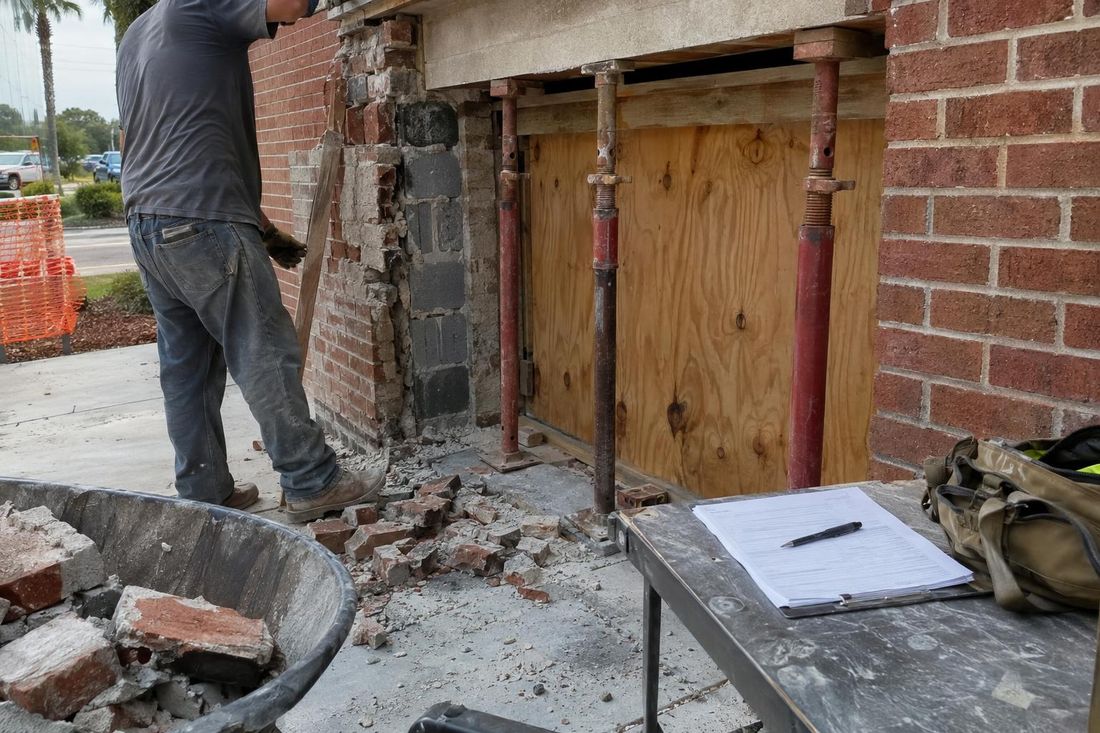
Brick wall shored with temporary supports A worker removes damaged brick and block from a red brick commercial wall, with red adjustable steel posts and plywood sheeting holding up the opening beneath the beam above. Brick debris lies on the ground and fills a wheelbarrow, and a clipboard with papers sits on a table in the foreground.
How we do it
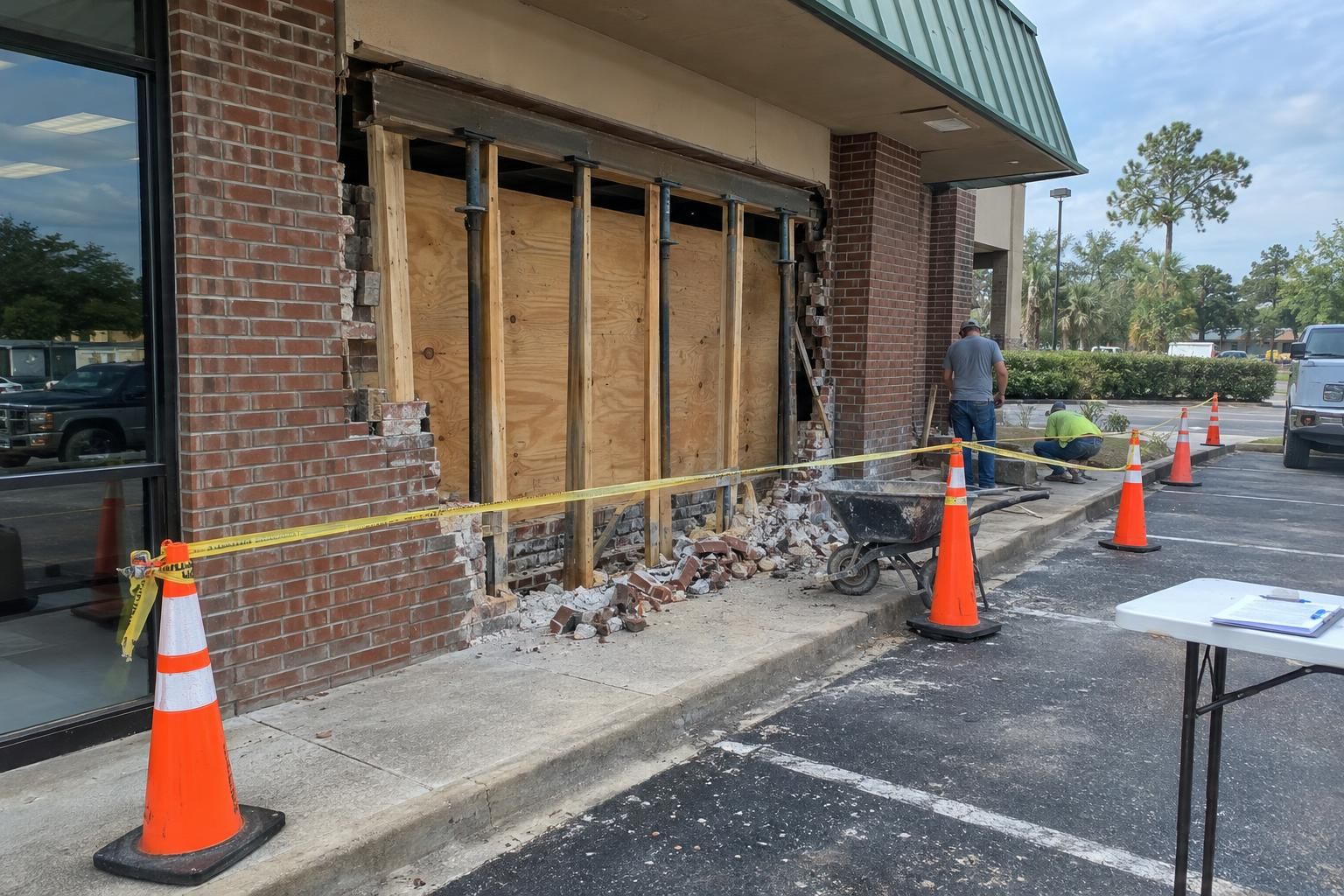
First we barricade beyond the fall zone and keep people out from under the wall. Then we take off loose brick and stone with bars and hand tools, working from the top down so nothing drops on us or the sidewalk. We shore the wall with timber or steel posts and braces and board the opening, so the building is closed up when we leave.
Where the city or your insurer requires an engineer's letter before you reopen, we arrange it. For the rebuild we match the brick, the bond pattern and the mortar to what's there. We tie new work back to the structure with anchors. And we keep the mortar no harder than the old brick, so the joints take the wear and the brick doesn't.
How a job with us goes
Urgent response and barricades
We come out and walk the site before we touch anything. Then we set barricades past the fall zone and take down what's loose, because falling brick doesn't care that you're closed.
Shoring and board-up
We brace the wall with posts and braces where it needs them, then close the opening with plywood. That holds the wall up and keeps weather and strangers out.
Documentation for insurer and city
We photograph and measure the damage before anything is hauled off, then write a detailed scope. Your adjuster and the building department both want to see it.
Engineer and permit
If an engineer's letter is required, we arrange it. We also line up the permit, since permanent work usually can't start without one.
Permanent rebuild
Once approvals and materials are in, we rebuild the wall and tie it back to the structure. We plan the work around your business hours where we can.
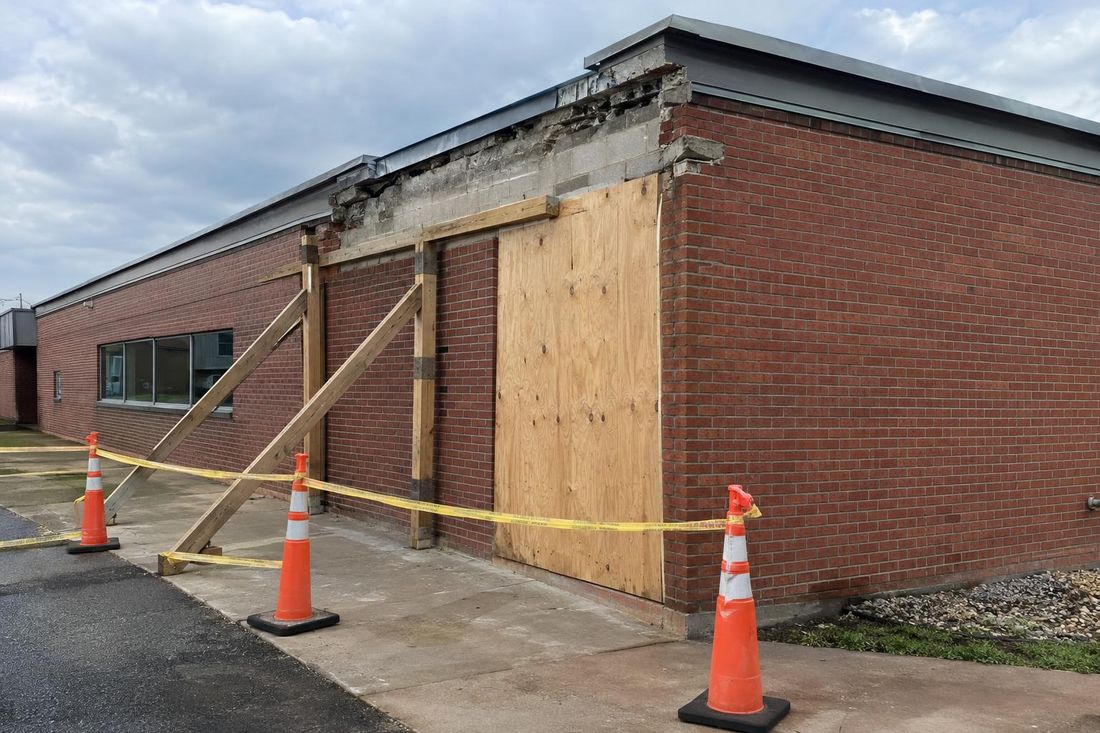
Damaged brick wall with temporary bracing A commercial brick building has a damaged section of masonry near the roofline, with exposed concrete block, plywood covering an opening, and angled wooden braces supporting the wall. Orange traffic cones and yellow caution tape cordon off the area along the sidewalk.
What drives the cost
A few things move the price. Coming out after hours costs more than a weekday visit. Shoring takes lumber, steel and labor, and a bigger opening takes more of each. Protecting the public, with barricades and sidewalk protection, adds to it. Engineering is its own line when a letter is required. And the extent of the rebuild matters most, because a few courses of brick is one job and a whole corner with a new lintel is another. We look at it in person and give you a free estimate. We'll split the secure-it work from the rebuild so you can see what each piece costs.
How long it takes
Securing the building is immediate. We barricade, shore and board up so the site is safe. The rebuild runs on a different clock, and it depends on permits, engineering and materials. Brick that matches an older building can take time to find. We can't promise a reopening date before the building official has weighed in. But we'll tell you what we're waiting on and who we're waiting for.
Local expertise: commercial emergency masonry repair in Atlanta
Atlanta gets about 49.7 inches of rain a year. Late winter, early spring and July are the wettest stretches, and fall, especially October, is the driest.
What it means for your job
Mortar, stucco and sealers need dry time. Fall is the easiest season for repointing and sealing, and summer work is planned around afternoon storms.
Overnight freezes can be expected on about 40 days a year in Atlanta.
What it means for your job
Water that soaks into brick, stone and mortar and then freezes is what pops faces off brick and opens joints. Keeping water out matters more here than in places that rarely freeze, and winter mortar work has to be protected overnight.
Reopening may require the building official's approval, and that's their call, not ours. If the city or your insurer wants an engineer's letter, we arrange it, but the engineer decides what it says. Storefront glass and framing are a separate trade. We'll board the opening, and you'll need a glazier for the rest. Our photos and scope support your claim, but we don't decide what your insurer covers. And if the damage reaches the structural frame behind the masonry, the repair may need an engineer's design before we can build.
Get people away from the wall and call your insurer. Then call us for an urgent visit to shore and secure it. Please don't pull out damaged brick yourselves.
Can you work with our insurance adjuster?
Yes. We photograph and measure the damage and write a detailed scope your adjuster can check line by line.
Can we stay open while you work?
Sometimes. If the damage is away from the entrance and our barricade keeps the public clear, it can work. We'll tell you straight after we've looked at it.
Why does the city want an engineer's letter?
The wall carries load, and the city wants a licensed engineer to say it's sound before people go back in. We arrange the letter when it's required.
Will the new brick match the old?
We match color, size and bond as closely as we can. But older brick has weathered for years and new brick won't look identical on day one. We'll show you samples before we lay anything.