Call (470) 837-6333Get a free estimate
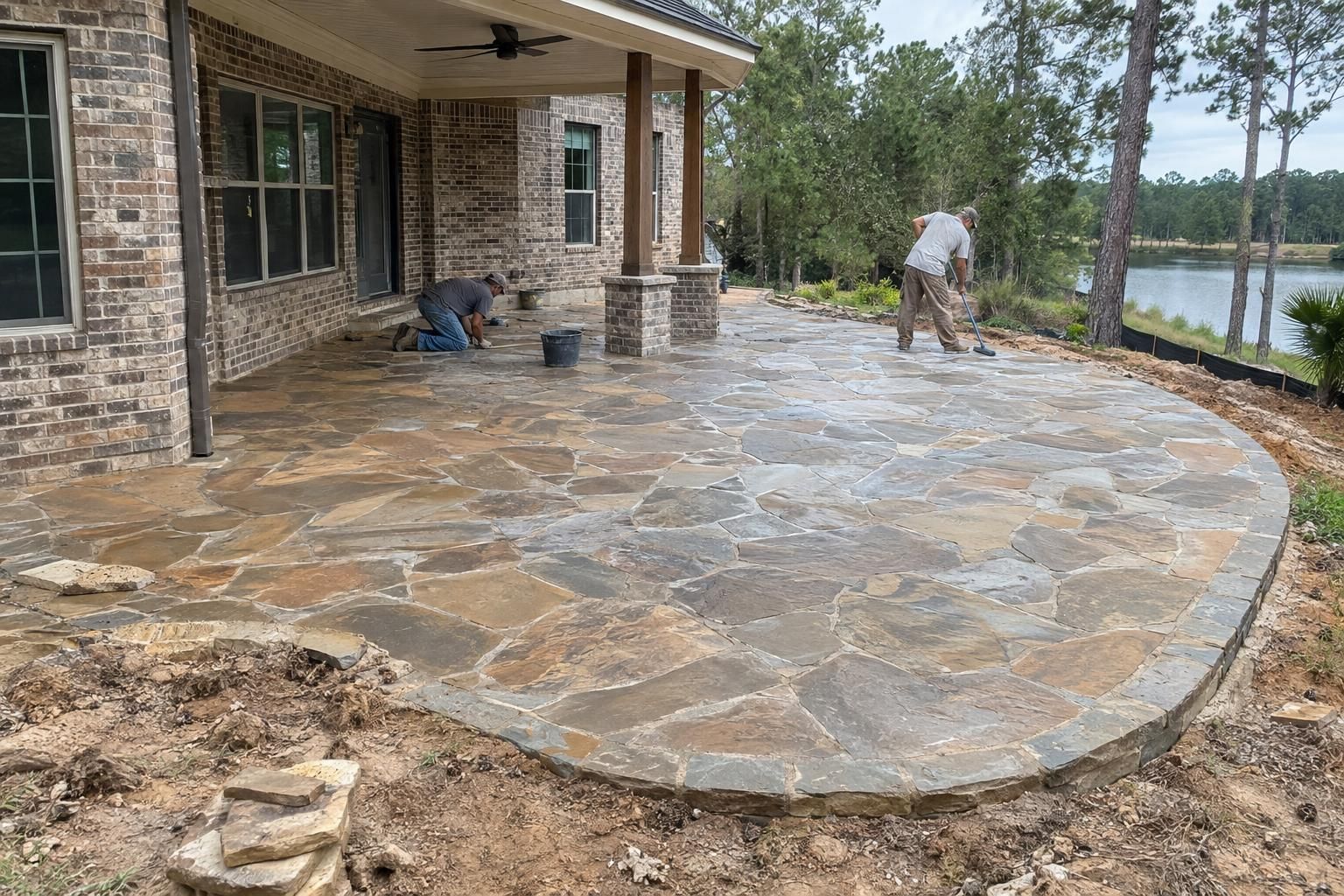
Flagstone patio under construction beside lake. Two workers install and finish an irregular flagstone patio with a curved stone edge behind a brick house with a covered porch. Bare soil, stacked spare stones and a lake with pine trees surround the unfinished area.

Dalton Brothers Masonry Atlanta

Residential Flagstone patios in Atlanta

A flagstone patio is flat natural stone fitted together by hand, and no two ever come out the same. It's the most natural-looking surface you can put behind a house.

Call (470) 837-6333

Request your free estimate

Always free and we get back to you ASAP.

By submitting, you agree to our Terms of Use and Privacy Policy and consent to calls and texts about your project from Dalton Brothers and the local partners matched to your request, including by automated means. Consent is not a condition of any purchase.

Qualified MasonsVerified ProfessionalsFree EstimatesOn Time

What flagstone patios involves

Flagstone is flat stone split from layers of rock, usually sandstone, limestone, or bluestone. We lay it in irregular shapes that look like a dry creek bed, or we cut it into squares and rectangles for a tidier pattern. Every piece gets picked and fitted on purpose, which is why it's also one of the most labor-intensive patios we build.

You need one when your concrete slab has cracked past saving, or when the spot where the grill and chairs sit is just mud and worn grass. Maybe you're building new. Maybe you're replacing something that failed. Either way, we'll walk the yard with you, watch how the water moves, and tell you straight what the stone and the labor look like. Homeowners in Atlanta call us before they've picked a single stone, and that's fine by us.

Signs you need flagstone patios

What we handle

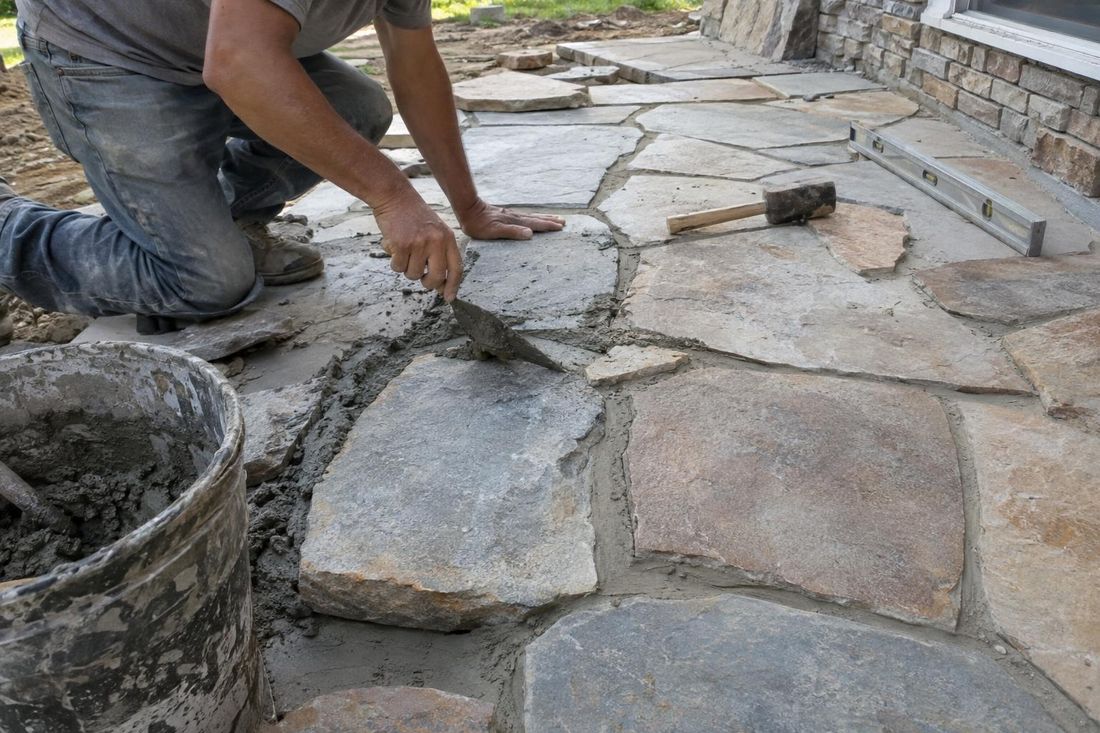
Setting irregular flagstones in mortar. A kneeling worker uses a trowel to spread mortar beside a large irregular flagstone on a patio that is partly laid. A rubber mallet, a level, and a mortar-stained bucket sit nearby, and a stone-veneer wall is in the background.
Setting irregular flagstones in mortar A kneeling worker uses a trowel to spread mortar beside a large irregular flagstone on a patio that is partly laid. A rubber mallet, a level, and a mortar-stained bucket sit nearby, and a stone-veneer wall is in the background.

How we do it

Each stone is shaped to fit its neighbors. We lay the stone out dry first, move pieces around until the gaps look right, then trim edges with a hammer and chisel or a diamond blade on a grinder. It's slow work. But a tight fit is what makes a patio look like it grew there. On a slab, the stone is bedded in mortar and the joints are grouted.

Dry-laid patios use thicker stone on compacted base with stone dust or gravel joints. We build that base in layers and run a plate compactor over each one, because a soft base is where most failures start. The surface is pitched away from the house, and we check the slope with a level and a string line before the first stone goes down and again once it's set.

How a job with us goes

  1. Free estimate, size and stone choice

    We come out, measure, and look at where your water goes. Then we talk through size, stone, and whether mortared or dry-laid fits your yard. You get a straight answer, not a pitch.

  2. Excavation and base or slab

    We dig out the sod and soft soil, then build a compacted base or pour a slab. Everything after this depends on it, so we don't rush it.

  3. Dry layout

    We spread the stone out and fit it without mortar first. That lets us mix colors and thicknesses so no heavy patch stands out, and it lets us check the pitch.

  4. Stone fitted and set

    We shape each piece, then bed it in mortar or set it on the base, checking level as we go. A stone that rocks today will rock worse next spring.

  5. Joints filled, optional sealing

    We grout the joints or sweep in stone dust or gravel, then clean the stone off. Sealing is optional. We'll tell you what it does and you decide.

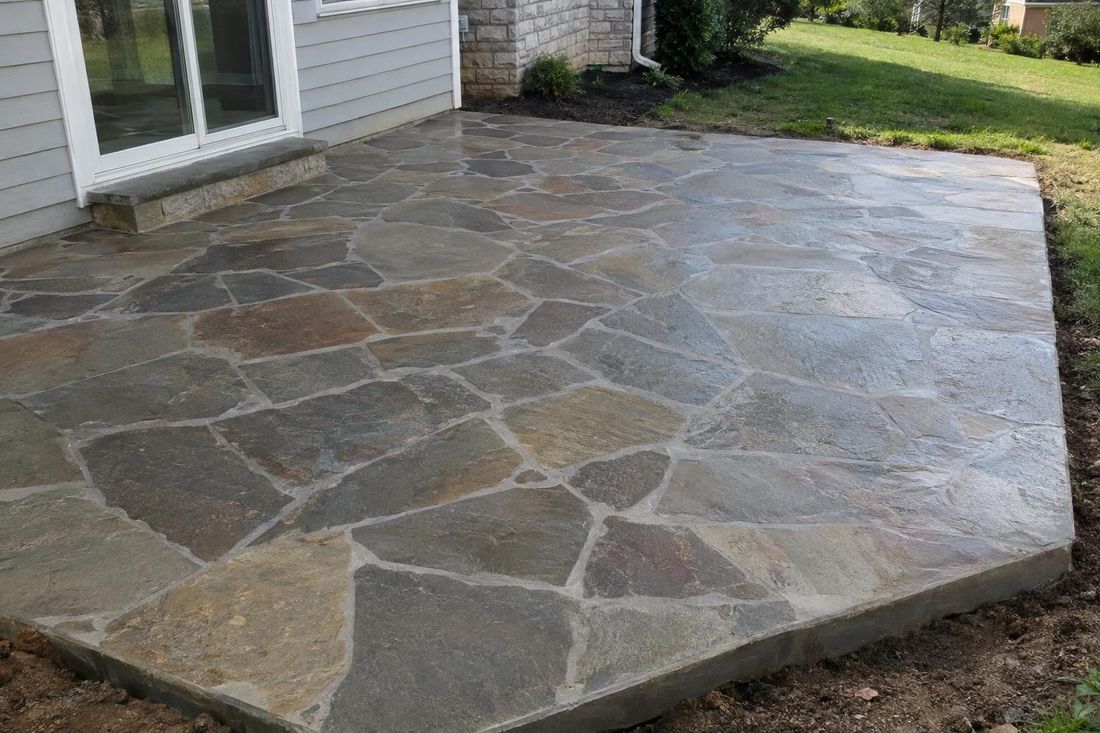
Irregular flagstone patio beside house. A newly built patio made of irregular, multicolored flagstone pieces fitted together with narrow mortar joints, laid on a concrete edge next to a gray-sided house with a sliding glass door and a stone step. Bare soil and a lawn surround the patio.
Irregular flagstone patio beside house A newly built patio made of irregular, multicolored flagstone pieces fitted together with narrow mortar joints, laid on a concrete edge next to a gray-sided house with a sliding glass door and a stone step. Bare soil and a lawn surround the patio.

What drives the cost

Size comes first, because more patio means more stone and more hours of fitting. Stone type and thickness come next. Some stone simply costs more, and thick pieces are heavy to haul and place. Mortared on a slab and dry-laid on a base are different jobs with different materials and labor, so they price differently. Joint tightness matters too, since tight joints mean more shaping of every stone. Last is access. If we can't get materials close to the work and have to move them by wheelbarrow, the labor goes up. We price it after we've seen your yard, which is why the estimate is free.

How long it takes

A typical patio takes about one to two weeks. Bigger patios, tight joints, and hard access add days. Mortared work needs time to set before we grout and before anyone walks on it, so we plan around that. And weather has a say, because we don't set mortar in the rain. We'll give you a realistic schedule at the estimate, and we'll tell you if something changes once the digging starts.

Local expertise: residential flagstone patios in Atlanta

The red clay of the Georgia Piedmont is typified by the Cecil soil series: very deep, well drained soil on ridges and side slopes, with a red subsoil that averages 35 to 60 percent clay.

What it means for your job

Clay holds water against a wall and does not recover well once it is compacted, so drainage behind a retaining wall and a properly built base under pavers and footings matter more here than the surface material.

Source: USDA NRCS Official Soil Series Description: Cecil →

Atlanta gets about 49.7 inches of rain a year. Late winter, early spring and July are the wettest stretches, and fall, especially October, is the driest.

What it means for your job

Mortar, stucco and sealers need dry time. Fall is the easiest season for repointing and sealing, and summer work is planned around afternoon storms.

Source: Wikipedia: Climate of Atlanta →

Overnight freezes can be expected on about 40 days a year in Atlanta.

What it means for your job

Water that soaks into brick, stone and mortar and then freezes is what pops faces off brick and opens joints. Keeping water out matters more here than in places that rarely freeze, and winter mortar work has to be protected overnight.

Source: Wikipedia: Climate of Atlanta →

Good to know

Dark stone gets hot in full sun. If your patio bakes all afternoon, choose a lighter stone or plan some shade. Thin flagstone must be mortared to a slab or it will crack, so we won't dry-lay it no matter how much you'd like to save. Flagstone is uneven by nature, so a table may need a shim now and then. Dry-laid joints can grow weeds and need topping up with stone dust or gravel. And flagstone won't fix a heaving slab or a yard that floods. Those problems need solving first, and we'll tell you when we see them.

Flagstone patios questions

Flagstone or pavers?

Pavers cost less and are uniform. Flagstone is natural and one of a kind. If you want every piece identical, pavers are your answer. If you want it to look like it's always been there, we'd go flagstone.

Does flagstone need sealing?

Optional. A sealer reduces staining and deepens color. We usually suggest it near a grill or under a tree that drops things.

Mortared or dry-laid?

Thin stone has to be mortared to a slab. Thicker stone can be dry-laid on compacted base. Dry-laid drains easily and can be reset, while mortar gives a flatter surface.

Will weeds grow in the joints?

They can in dry-laid joints. You'll need to top up the stone dust or gravel once in a while, and tight joints leave weeds less room.

Can you lay flagstone over my old concrete?

If the slab is sound, often yes. We check for cracks and movement first, because stone on a moving slab will move with it.

Ready for a free estimate on your masonry job?

Free for property owners. No obligation.

Get my free estimateCall (470) 837-6333
Call nowFree estimate