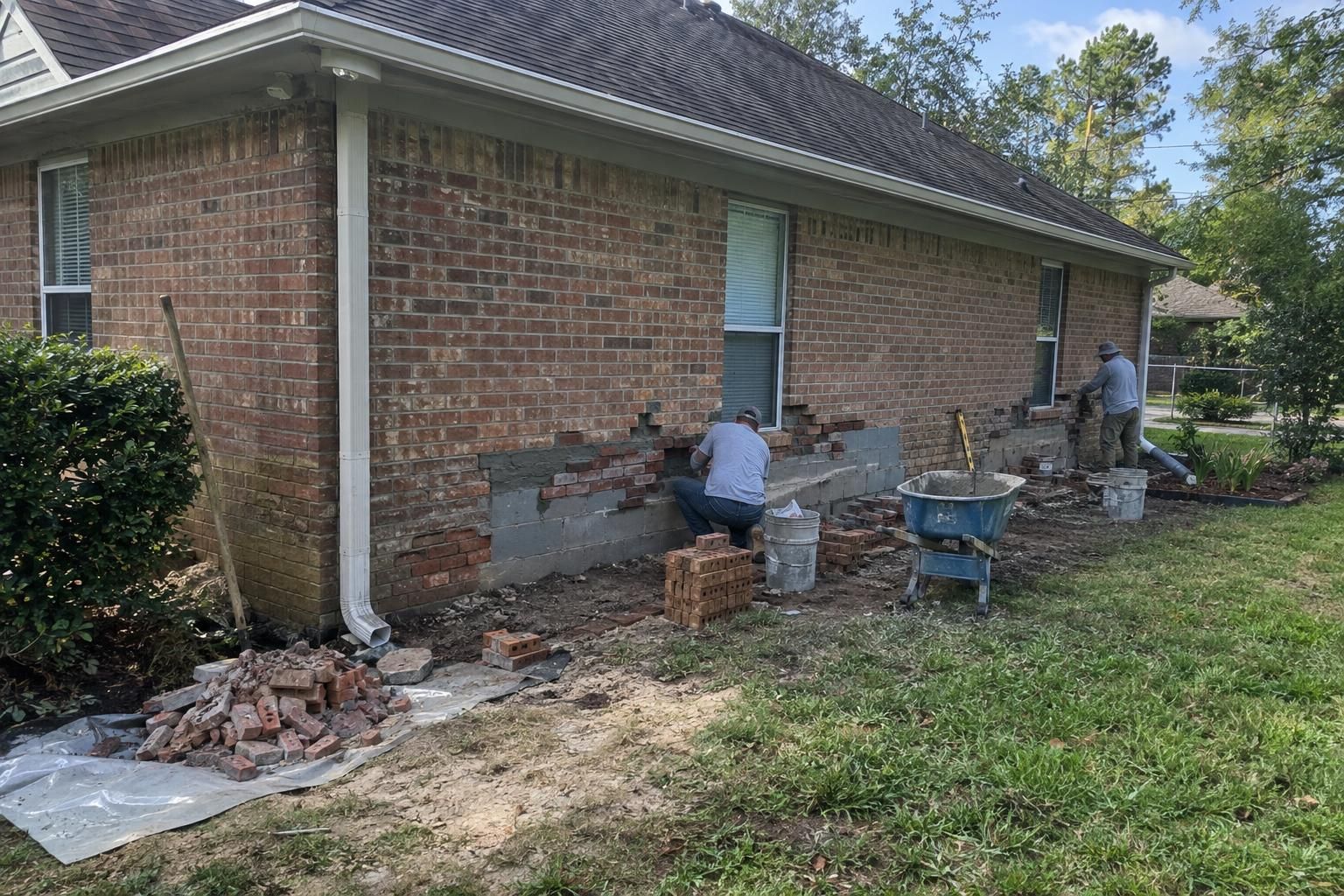
Residential Water damage and spalling repair in Atlanta
Brick that's flaking or losing its face is telling you water is stuck inside it. We cut out the damaged brick, lay in matching brick, and track down where the water came from.
Qualified MasonsVerified ProfessionalsFree EstimatesOn Time
What water damage and spalling repair involves
Spalling is when the hard outer face of a brick pops off in flakes or chunks and leaves soft, crumbly brick underneath. Water gets in and stays there. Then it freezes or carries salts to the surface, and the face gives up. Repair means replacing the damaged brick and stopping the water. Patching the face doesn't hold, so we don't do it.
You need this when brick faces are coming off beside a sprinkler head, under a downspout, behind a flower bed or around the chimney. Our masons will look at the wall and the yard around it, then give you a free estimate in Atlanta. We'd rather find the leak than just swap bricks.
Signs you need water damage and spalling repair
Flakes or grit at the base of the wallCheck the ground and the window sills. Pieces of brick face down there mean the brick has been wet for a long time.
Pitted, dished-out facesThe hard skin is gone and the soft body is showing. Soft brick drinks even more water, so it gets worse faster.
Damage in one patch near waterA bad spot beside a sprinkler head, under a downspout or low where soil is piled up points straight at the source. Ask yourself what keeps that wall wet.
White powder or peeling paintSalts or trapped moisture are pushing out through the brick. Blistering paint or sealer means the wall can't breathe.
What we handle
Replacing spalled bricksWe cut out each bad brick, clean out the opening and lay in a matching brick with fresh mortar. It works for a handful of bricks or a whole section.
Repair near sprinklers, downspouts and gradeHere the bricks are only the symptom. We redirect the spray, fix the downspout and point out where soil or mulch is piled too high against the wall.
Chimney spalling repairChimneys get rain from above and wind from every side, so the brick above the roofline often goes first. We replace the damaged brick and check the joints and the top of the stack for the way the water got in.
Removing paint or sealer that trapped moistureFilm coatings hold water inside the wall. We take off what we can and let the brick dry out before we judge what needs replacing.
Low walls, steps and plantersBrick that touches soil or standing water wicks moisture all the time. We replace the worst bricks and sort out the drainage next to them.
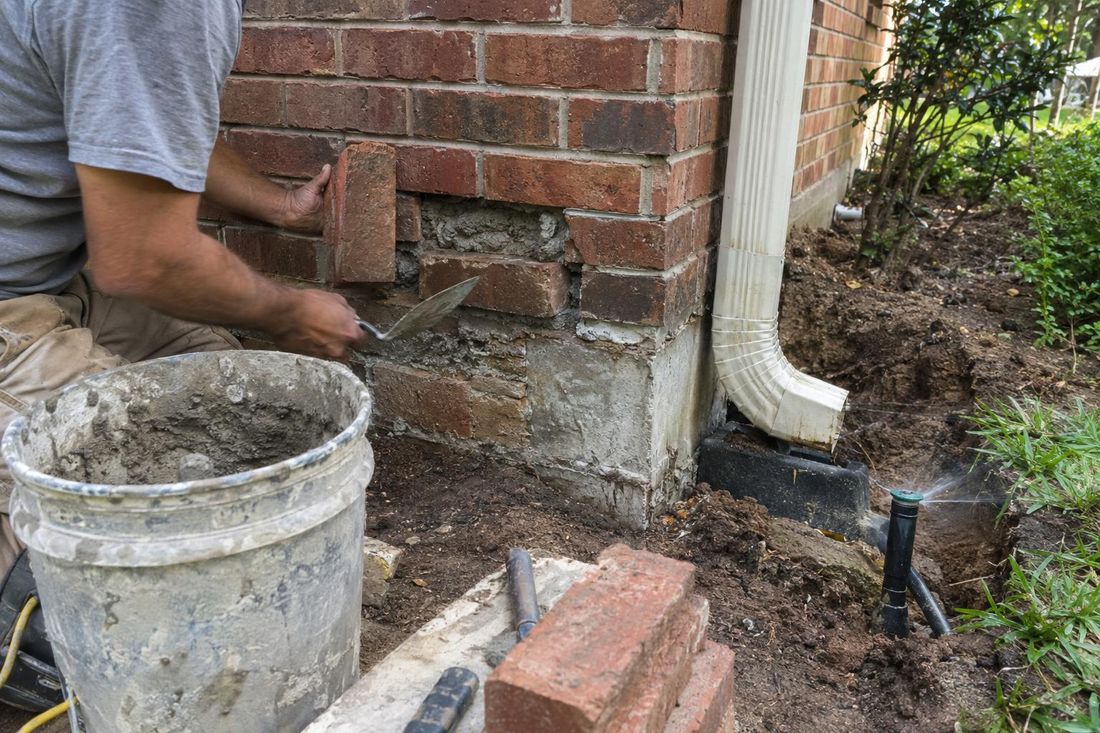
Mason replacing damaged brick near downspout A worker in a gray shirt uses a trowel to set a brick into a gap in a red brick wall base, where mortar and concrete patching are exposed. A mortar bucket, spare bricks, and a downspout are nearby, and a sprinkler head sprays water from a dug-out trench in the soil.
How we do it
Spalled bricks get cut out and replaced. They can't be patched durably, because a coating over a crumbling face just sheds again. We cut the mortar around each brick with a grinder and finish with a hand chisel so the neighbors stay put. Then we lay a matching brick in new mortar. We pick a mortar that's softer than the brick, so moisture leaves through the joint and not through the brick face.
Then we fix the water source. Sprinklers get redirected, gutters and grading get corrected, and hard mortar or non-breathable coatings come off. If an earlier repair used a stiff, hard mortar, we grind it out and repoint with one that breathes. Skip that step and you'll be paying for the same repair again.
How a job with us goes
Free estimate and water source check
We walk the wall and the yard. We look at sprinkler heads, downspouts, soil height and any paint or sealer, because the damage tells us where the water is coming from.
Marking the damage
We tap the brick with a hammer handle and mark anything that sounds dull or crumbles. Some bricks look fine and are soft right behind the surface.
Damaged brick replaced
We cut out the marked bricks and clean the openings. New brick goes in with fresh mortar, matched as close as we can for color and size.
Mortar repaired
We repoint around the new brick and any joints that are hard or cracked. The joints should be softer than the brick so water has a way out that doesn't hurt it.
Recommendations to keep the wall dry
We show you what we changed and what's left to do, like trimming a spray pattern or lowering a bed. And we tell you what to watch after the next big rain.
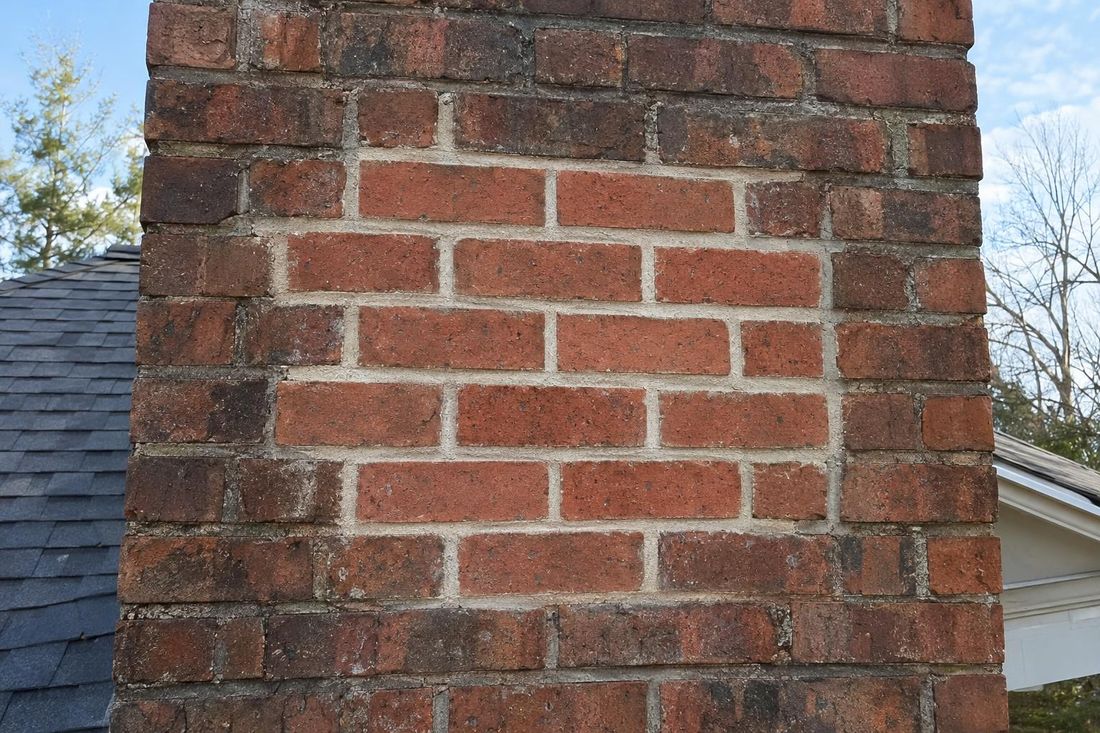
Newer brick patch in weathered chimney A close view of a brick masonry column with a central patch of cleaner, more orange-red bricks set in fresh light-colored mortar. Older, darker, weathered bricks with duller mortar surround the patch, and a shingled roof and trees are visible at the edges.
What drives the cost
Four things move the price. First is how many bricks are bad, since we cut out each one by hand. Second is matching. Older or unusual brick takes more hunting, and a close match takes more time. Third is height. Anything beyond a comfortable ladder reach needs staging, and that adds work. Fourth is the water fix. Moving a sprinkler head is quick, but regrading a bed along the wall or stripping paint from a whole side of the house is not. We see all of it at the free estimate, so you know the full picture before we start.
How long it takes
Most spalling repairs take one to three days. A few bricks on one wall are often finished in a day. More bricks, a chimney or a tall wall push the job toward three. Mortar needs time to cure, and a soaked wall dries when it dries, not when we'd like it to. Sprinkler and gutter fixes can happen during the same visit unless another trade is involved. Rain can shift the schedule, and we'll tell you when it does.
Local expertise: residential water damage and spalling repair in Atlanta
Atlanta gets about 49.7 inches of rain a year. Late winter, early spring and July are the wettest stretches, and fall, especially October, is the driest.
What it means for your job
Mortar, stucco and sealers need dry time. Fall is the easiest season for repointing and sealing, and summer work is planned around afternoon storms.
Overnight freezes can be expected on about 40 days a year in Atlanta.
What it means for your job
Water that soaks into brick, stone and mortar and then freezes is what pops faces off brick and opens joints. Keeping water out matters more here than in places that rarely freeze, and winter mortar work has to be protected overnight.
If the water source isn't fixed, neighboring bricks will spall next. That's the big one. We can redirect sprinklers and correct downspouts and grading, but a leaking roof, a broken irrigation line or a plumbing leak inside the wall belongs to the right trade, and we'll tell you when we spot one. We don't patch faces or coat over damage, because it won't last. Our match is close, but new brick never looks exactly like brick that has weathered for decades. And a wall that's unsound may need rebuilding, which is a different job with its own estimate.
Water trapped in the brick. The usual suspects are sprinklers soaking the wall, leaking gutters, mortar that's too hard, and paint or sealer that doesn't breathe.
Can spalled brick be patched?
Patches rarely last or match. A coating over a crumbling face peels off with the next wet spell. Replacing the brick is the durable fix.
Do you have to replace the whole wall?
Usually not. We replace the bricks that are failing and leave sound brick alone. Once the water is dealt with, the rest of the wall can keep doing its job.
Should I seal the wall afterward?
Be careful. Paint or a film-forming sealer can trap water inside, and that's how a lot of spalling starts. Ask us before you buy anything.
What can I do before you come out?
Turn off the sprinkler zone that hits the wall and notice where water pools after rain. A few phone photos of the damage help too.