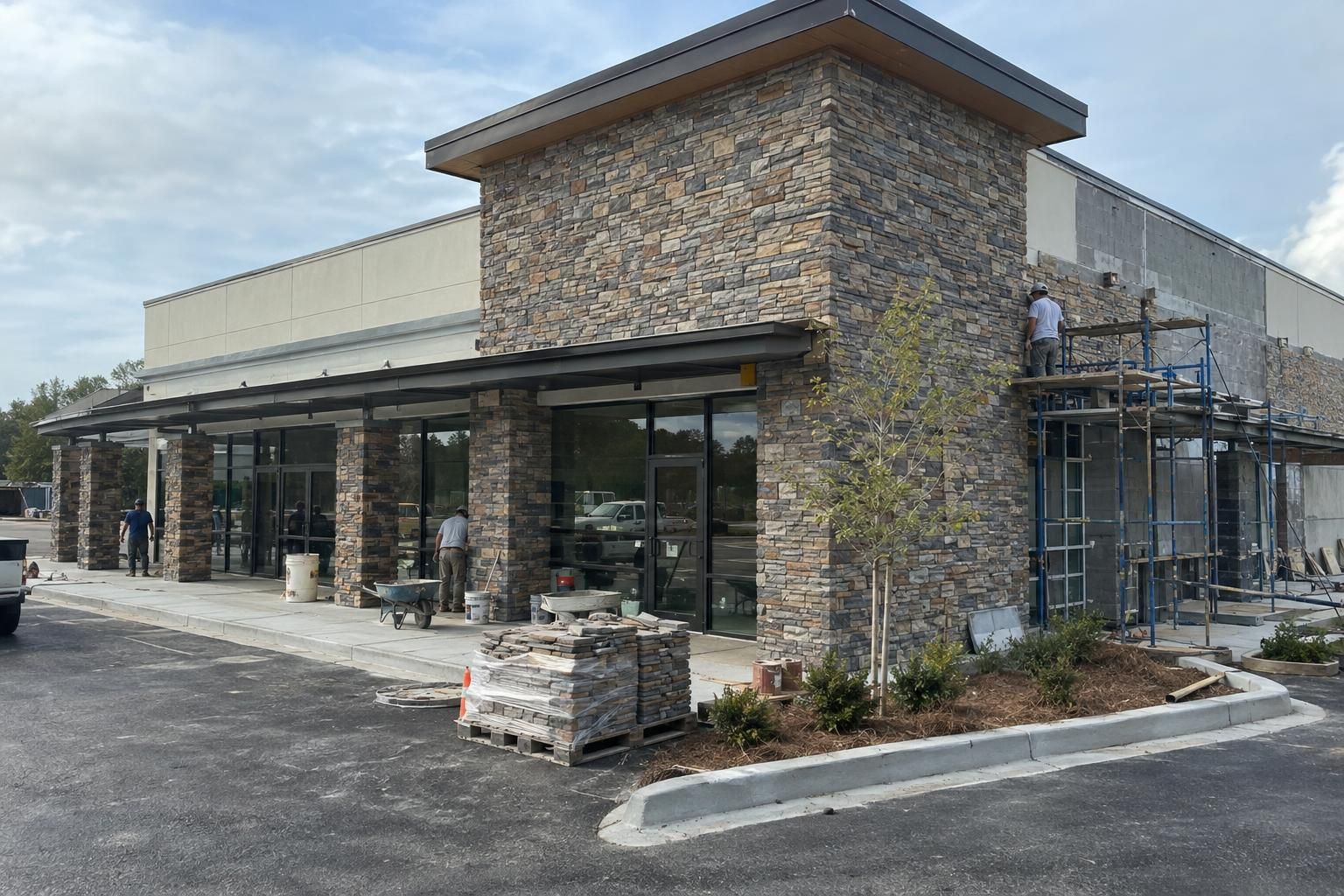
On a commercial job, stone veneer is a wall system with a spec behind it, and we install it that way. Our masons build to the architect's drawings and the manufacturer's assembly.
Qualified MasonsVerified ProfessionalsFree EstimatesOn Time
What stone veneer installation involves
Here's what this service is. Stone goes on storefront bases, entry features, lobby walls, columns and sign bases. Thin stone is bonded to a prepared wall. Heavier natural stone is anchored back to the structure with hardware. Either way, we do submittals, a mock-up and an inspection before we set the first piece.
When do you need us? When an architect or general contractor has specified stone and needs a mason who reads drawings. When a property manager wants to reface a tired entry. When a tenant wants a lobby wall that looks like it was always there. We give free estimates, and we'll bid from your drawings or walk the site with you in Atlanta.
Signs you need stone veneer installation
SignStone has cracked, shifted or dropped off a storefront base. That usually means water got behind it or the bond failed, so we look at the wall before we look at the stone.
SignThe drawings call out stone veneer and nobody has priced it. We bid from the drawings and flag anything that doesn't add up, like a missing drainage layer.
SignA lobby or tenant space is getting a feature wall. Stone there needs a flat, approved wall behind it and a place in the schedule.
SignYour monument sign base or site columns look stained or loose. They take weather from every side, so they're worth doing right.
What we handle
Adhered stone veneer on storefronts and columnsThin stone bonded over steel studs or block, with a drainage layer behind it. It's the usual choice for bases, pilasters and entry surrounds where weight matters.
Anchored natural stone panelsHeavier stone held to the structure with mechanical anchors, not just mortar. We use it on taller walls and wherever the spec calls for it.
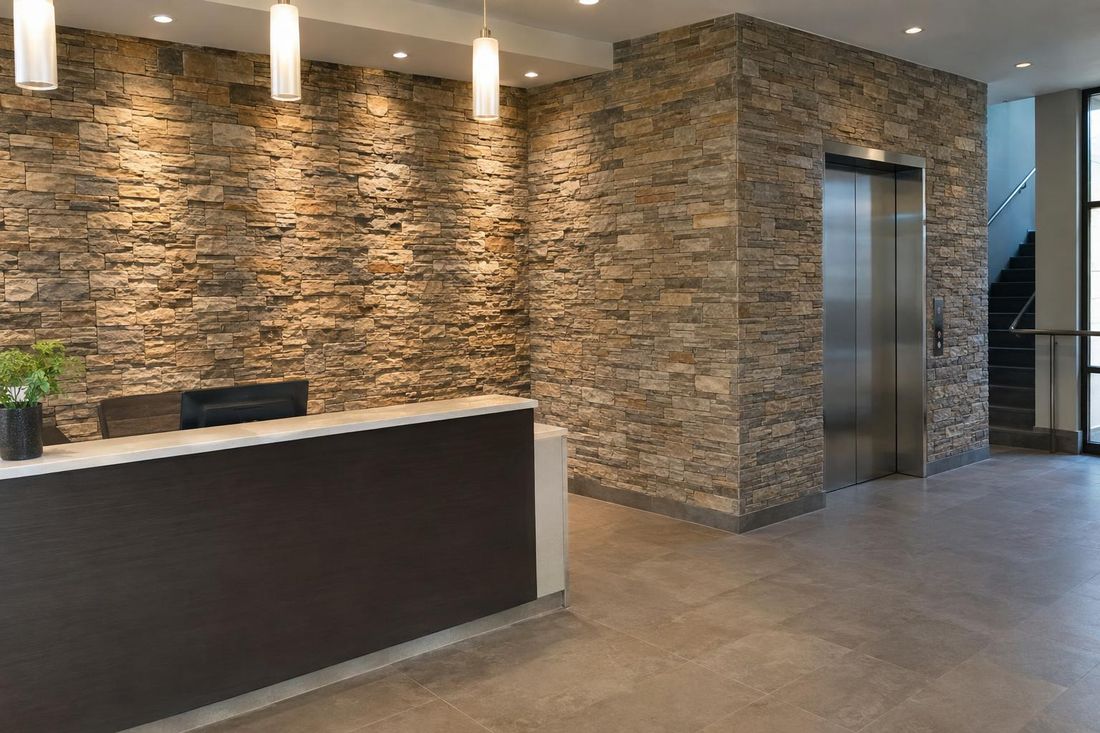
Interior lobby and feature wallsStone behind a reception desk, along an elevator core or up a stairwell. Lighting rakes across these walls, so joint width and color blending show up fast.
Monument sign and site column claddingStone over a block or concrete core, finished with a cap that sheds water. That cap detail does more for the life of the piece than the stone does.
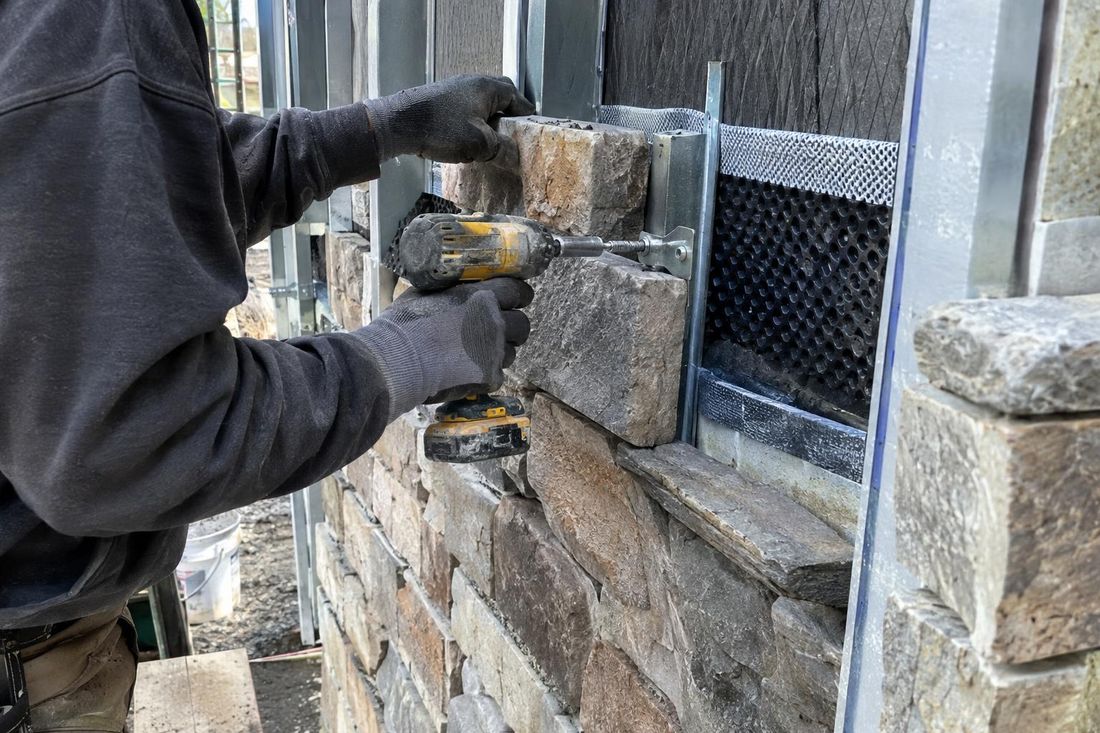
Worker fastening stone veneer to wall A gloved worker uses a cordless impact driver to screw a metal clip into steel framing beside courses of stacked natural stone. Above the stone, a dark dimpled drainage membrane and metal lath are visible on the wall.
How we do it
Adhered veneer follows the manufacturer's assembly, and we don't improvise on it. Over steel studs we install a water-resistive barrier, lath and a scratch coat, then a drainage layer so any water that gets in can get out. Over block, we check that the face is clean and flat before we bond to it. We set stone with a notched trowel and back-butter each piece. We leave movement joints where the wall changes plane or meets another material, and we fill them with sealant, not mortar.
Heavier natural stone is mechanically anchored. Anchors, shelf angles and relief joints come from the shop drawings, and we set to them. Before any of that, we bring samples and build a mock-up. The architect approves color, texture and joint width, and that panel is what we match for the rest of the wall.
How a job with us goes
Bid from drawings
We read the drawings and the spec section before we price anything. We note the stone, the assembly, the heights and the access, and we list our questions so the number holds up.
Submittals and mock-up
We send samples, product data and shop drawings, then build a mock-up. Nobody wants to learn the color is wrong after the whole wall is up.
Substrate and barrier inspection
Before stone, we check the wall behind it. Is it complete, flat and approved, and is the barrier lapped and flashed right? If not, we say so in writing and wait for the fix.
Installation and sealant joints
We set stone to the approved mock-up and keep the joints consistent. Movement joints go where the drawings put them, and the sealant goes in last because that's the joint that has to move.
Cleaning and closeout
We clean the stone with a method the manufacturer allows, since the wrong acid can stain it. Then we walk the job with you, finish the punch list and hand over closeout documents.
Stacked stone veneer lobby walls A commercial lobby has walls clad in stacked ledge-stone veneer in tan, brown and gray tones, wrapping around an elevator with stainless steel doors. A dark reception desk with a light countertop, pendant lights and a tiled floor are in front of the stone.
What drives the cost
Area sets the base, but stone type moves the price most. Natural stone usually costs more than manufactured, and heavy pieces take longer to handle. Whether the wall is adhered or anchored matters too, because anchored work brings hardware, shop drawings and more labor. Height adds scaffold or lift time. And working in an open business changes the math. Night or phased work means protecting the entrance, moving our crew and sometimes shorter shifts. Tell us about access and hours up front, and we'll build it into the free estimate.
How long it takes
Stone lead time usually runs the show, then the construction schedule. We can't set a date until samples are approved and the stone is ordered. Interior walls are often done in one to two weeks once the wall behind is ready and the stone is on site. Exterior and storefront work depends on weather, phasing and what the other trades are doing around us. Call us early and we'll tell you what to order first.
Local expertise: commercial stone veneer installation in Atlanta
Atlanta gets about 49.7 inches of rain a year. Late winter, early spring and July are the wettest stretches, and fall, especially October, is the driest.
What it means for your job
Mortar, stucco and sealers need dry time. Fall is the easiest season for repointing and sealing, and summer work is planned around afternoon storms.
Overnight freezes can be expected on about 40 days a year in Atlanta.
What it means for your job
Water that soaks into brick, stone and mortar and then freezes is what pops faces off brick and opens joints. Keeping water out matters more here than in places that rarely freeze, and winter mortar work has to be protected overnight.
Adhered veneer has height and weight limits, and we stay inside the manufacturer's. Past those limits the job becomes anchored stone, and the price changes with it. The wall behind must be complete and approved before stone starts. That means sheathing, barrier and flashing are done and signed off. We don't set stone over a wall that hasn't passed. We also don't design the structure or the engineering. That stays with the architect or engineer, and we build to it.