Call (470) 837-6333Get a free estimate
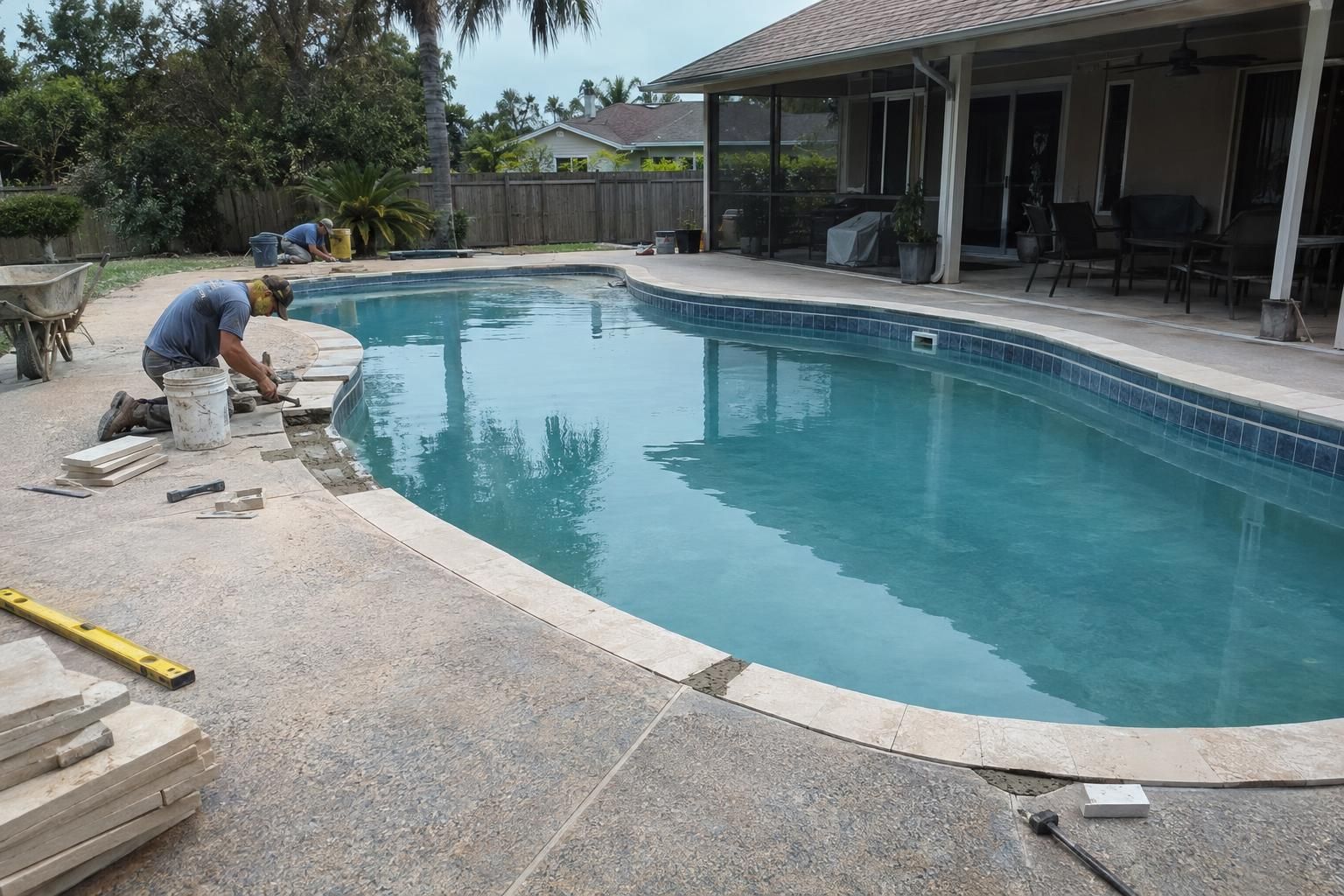
Workers installing travertine pool coping. Two workers kneel along the edge of a kidney-shaped residential pool, setting cream stone coping tiles into mortar above a blue waterline tile band. Stacks of coping pieces, a level, a bucket, a wheelbarrow and a textured concrete deck surround the pool.

Dalton Brothers Masonry Atlanta

Residential Pool coping and pool decks in Atlanta

Loose coping and a tired deck are easy to ignore until someone trips on one. We reset and replace pool coping and build new decks around it, and the estimate is free.

Call (470) 837-6333

Request your free estimate

Always free and we get back to you ASAP.

By submitting, you agree to our Terms of Use and Privacy Policy and consent to calls and texts about your project from Dalton Brothers and the local partners matched to your request, including by automated means. Consent is not a condition of any purchase.

Qualified MasonsVerified ProfessionalsFree EstimatesOn Time

What pool coping and pool decks involves

Coping is the cap that sits around the pool edge, and the deck is the surface you walk on around it. Our masonry work here means resetting or replacing coping and laying pavers or stone for the deck. We mortar coping to the bond beam, the concrete band at the top of the pool wall. And we build the deck so water runs away from the pool instead of toward it.

So when do you need us? Usually when a coping stone rocks under your hand, when the deck has cracked or heaved, or when the surface is too hot or too slick for bare feet. We work with homeowners in Atlanta, and we'll look at it with you before anyone picks up a tool. Some fixes are small. Some are a whole new deck. We'll tell you which one you've got.

Signs you need pool coping and pool decks

What we handle

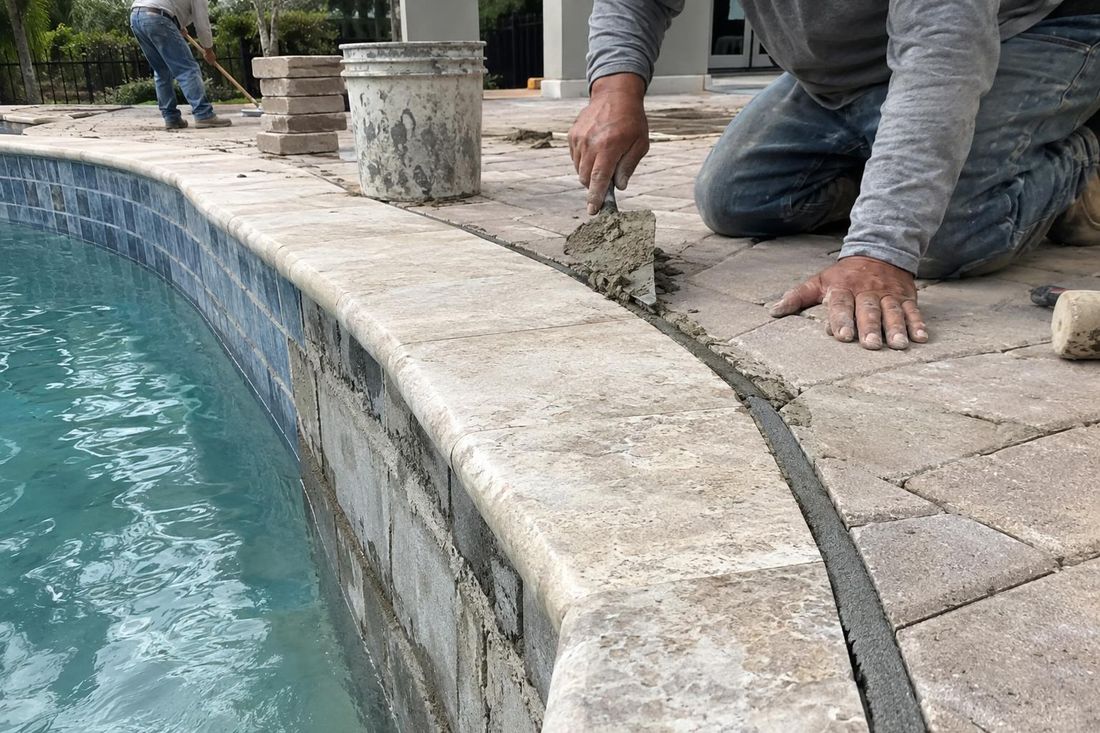
Mortar work along pool coping edge. A worker kneeling on a paver deck uses a trowel to fill the gap between curved stone pool coping and the surrounding pavers with mortar. The pool's blue waterline tile and block wall are visible beside it, with a mortar bucket and stacked pavers in the background.
Mortar work along pool coping edge A worker kneeling on a paver deck uses a trowel to fill the gap between curved stone pool coping and the surrounding pavers with mortar. The pool's blue waterline tile and block wall are visible beside it, with a mortar bucket and stacked pavers in the background.

How we do it

We mortar coping to the pool's bond beam with a full bed under every piece. No hollow spots, because a hollow spot is where a stone will start to rock. Between the coping and the deck we leave a flexible joint filled with sealant, not mortar. The two move separately, and a rigid joint between them just cracks.

We choose deck surfaces for grip and for staying cool underfoot. Light-colored travertine and light concrete pavers run coolest, and a textured face holds better when wet than a polished one. Then we slope the deck away from the pool so rain and splash head for the drains. Under the pavers goes a compacted base, and we check the pitch with a level as we go, not after.

How a job with us goes

  1. Free estimate

    We come out, press on the coping, sight along the deck and look at the joint between them. Then we tell you what we found and what it takes to fix it, at no charge for the visit.

  2. Old coping or deck removed

    We pull the loose coping or break out the old deck, working by hand and with a breaker where we need one. Once it's open we can see the real condition of the bond beam and the base, and that settles the plan.

  3. Coping set, expansion joint formed

    We bed each piece in a full mortar bed and keep the lines straight with a string. Then we form the flexible joint where coping meets deck so the two can move on their own.

  4. Deck base and pavers

    We build a compacted base, set the pitch away from the pool and lay the pavers or stone to it. Getting the slope right matters more than anything you'll see on top.

  5. Joint sealant

    Last, we fill the coping-to-deck joint with flexible sealant and clean up. It's the piece that keeps water from getting under the coping again.

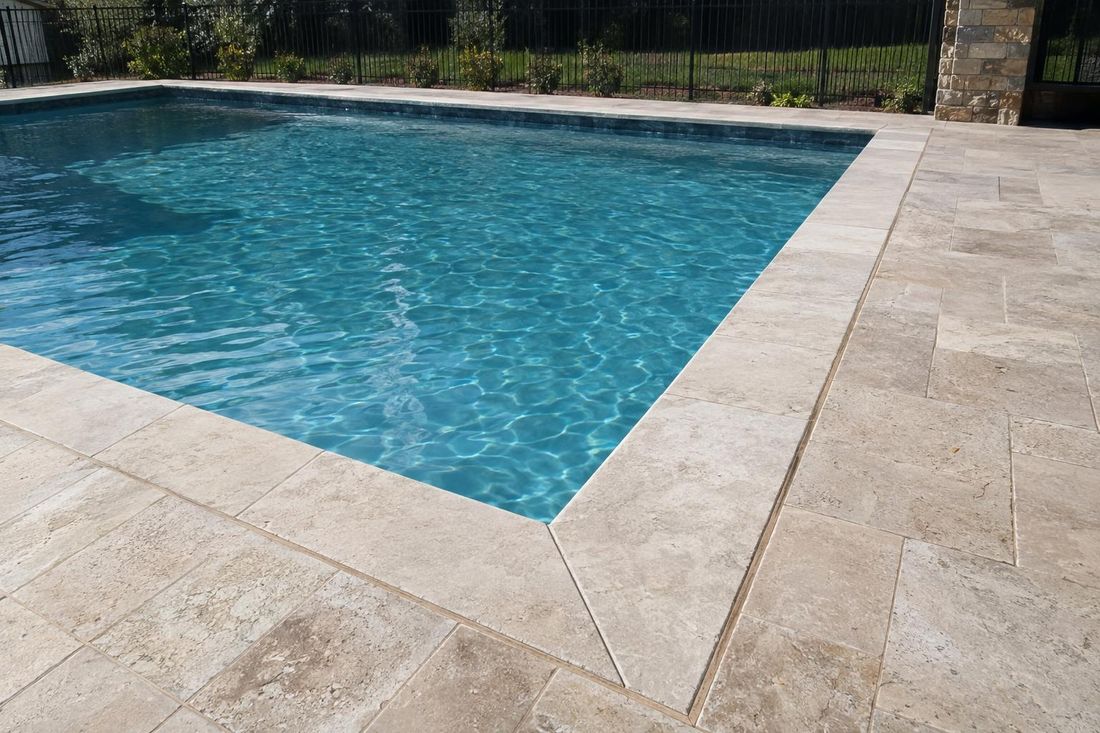
Travertine pool coping and deck. A rectangular swimming pool with clear blue water is edged by pale beige travertine coping stones that sit flush with a matching tiled pool deck. A black metal fence, plantings, and a stone column appear in the background.
Travertine pool coping and deck A rectangular swimming pool with clear blue water is edged by pale beige travertine coping stones that sit flush with a matching tiled pool deck. A black metal fence, plantings, and a stone column appear in the background.

What drives the cost

The price follows the work, and we'd rather you see where the number comes from. Pool perimeter sets how much coping we need, and the coping material matters because stone, brick and pavers all cost and set differently. Deck area is the next big piece. Removing old concrete adds labor and hauling. Drains can add work if they need fixing or moving so water keeps heading away from the pool. Resetting coping you already own is a smaller job than replacing it. Our free estimate walks through each of these one at a time.

How long it takes

Coping usually takes us two to four days. A full deck takes one to two weeks. Tearing out old concrete, a large deck or extra drain work can stretch that, and so can weather, since base and mortar work don't get along with standing water. We'll give you a realistic window at the estimate, and we'll tell you straight if something changes once the old work is open.

Local expertise: residential pool coping and pool decks in Atlanta

The red clay of the Georgia Piedmont is typified by the Cecil soil series: very deep, well drained soil on ridges and side slopes, with a red subsoil that averages 35 to 60 percent clay.

What it means for your job

Clay holds water against a wall and does not recover well once it is compacted, so drainage behind a retaining wall and a properly built base under pavers and footings matter more here than the surface material.

Source: USDA NRCS Official Soil Series Description: Cecil →

Atlanta gets about 49.7 inches of rain a year. Late winter, early spring and July are the wettest stretches, and fall, especially October, is the driest.

What it means for your job

Mortar, stucco and sealers need dry time. Fall is the easiest season for repointing and sealing, and summer work is planned around afternoon storms.

Source: Wikipedia: Climate of Atlanta →

Overnight freezes can be expected on about 40 days a year in Atlanta.

What it means for your job

Water that soaks into brick, stone and mortar and then freezes is what pops faces off brick and opens joints. Keeping water out matters more here than in places that rarely freeze, and winter mortar work has to be protected overnight.

Source: Wikipedia: Climate of Atlanta →

Good to know

Cracks in the pool shell, tile and plaster are pool contractor work, and we don't patch them. If we spot one, we'll tell you so you can call the right person. The pool barrier has to stay in place or be restored, so if a fence or gate is in our way, we plan around it and put it back. And if the bond beam under the coping turns out to be broken or crumbling, we'll stop and talk with you before we set anything on it.

Pool coping and pool decks questions

Why is my coping loose?

Usually a failed joint between coping and deck letting water under it. That water softens and washes out the mortar bed over time, and then the stone starts to rock.

What stays coolest in the sun?

Light-colored travertine and light concrete pavers. Dark surfaces soak up heat, so we'd steer you away from them if bare feet are involved.

Can you reset my coping instead of replacing it?

Often, yes. If the stone is sound and the bond beam under it is solid, we clean off the old mortar and bed it again. We decide that once we've seen it up close.

Why does the joint between coping and deck stay flexible?

Because the two move separately. A rigid joint makes one push on the other, and something cracks. Flexible sealant gives them room.

Can you replace my cracked concrete deck with pavers?

Yes. We break out the slab, haul it off, rebuild the base and set pavers sloped away from the pool. And if a pipe ever needs work underneath, pavers can be lifted and relaid.

Ready for a free estimate on your masonry job?

Free for property owners. No obligation.

Get my free estimateCall (470) 837-6333
Call nowFree estimate