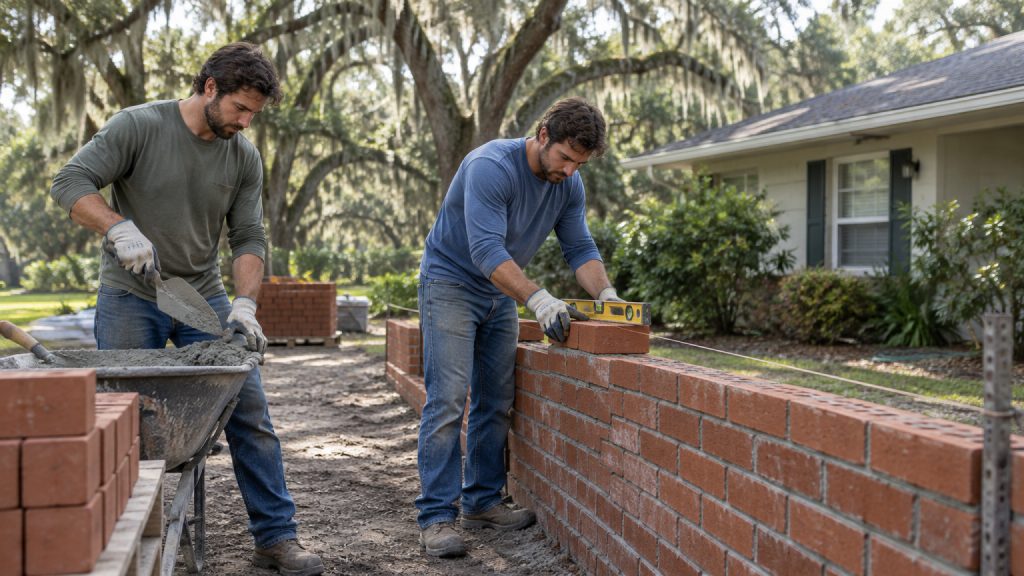
Dalton Brothers Masonry College Park
Masonry in College Park, GA
Main Street in College Park is a mile-long historic business corridor, and old brick along a mile of storefronts doesn't forgive a hurried repair.
Call (470) 837-6333Our services in College Park
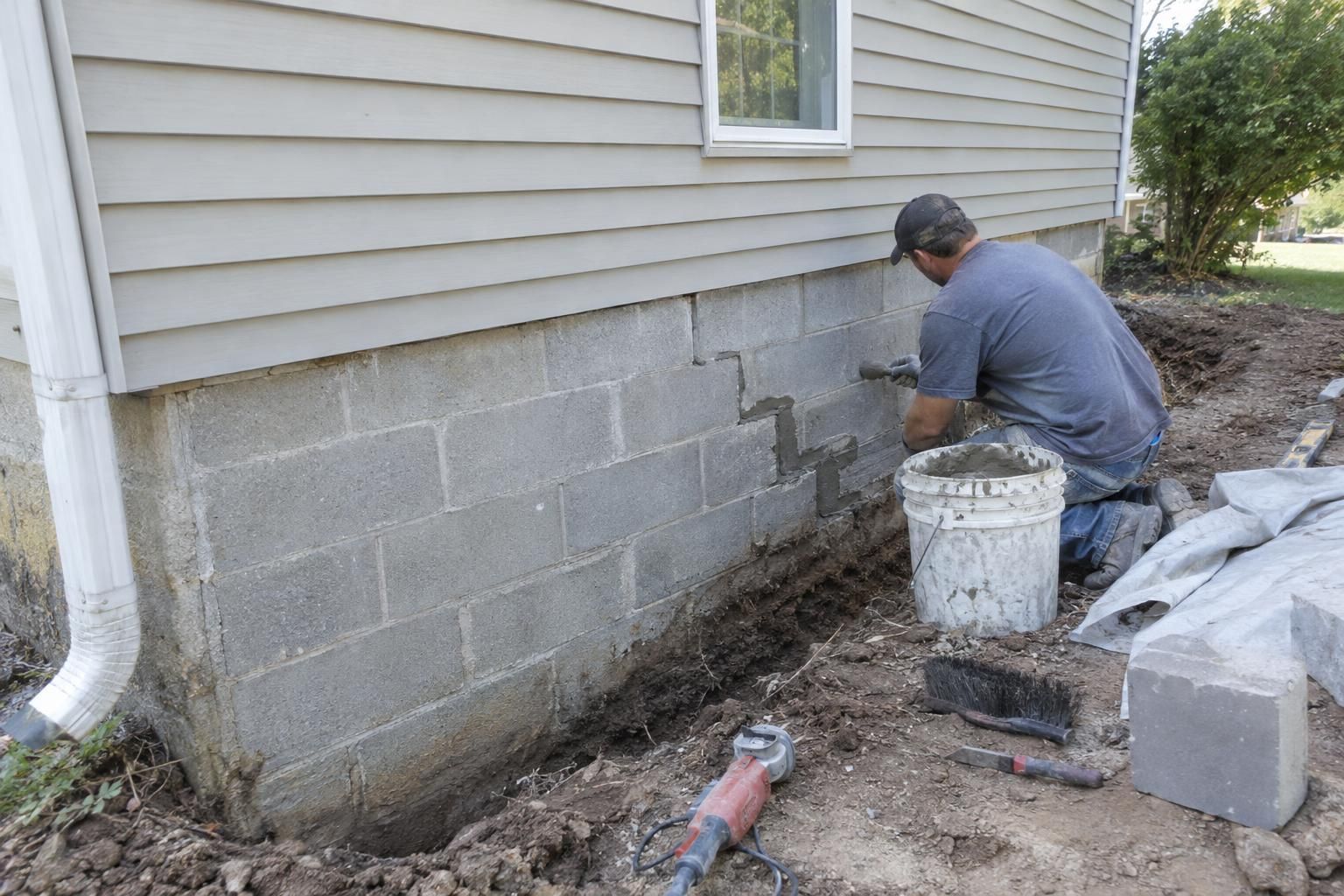
Block foundation repair
Cracked block under your house can usually be fixed without tearing the place apart. We repair stem walls and crawl space walls in Atlanta, and we start by working out why the wall moved.
Get a free estimate →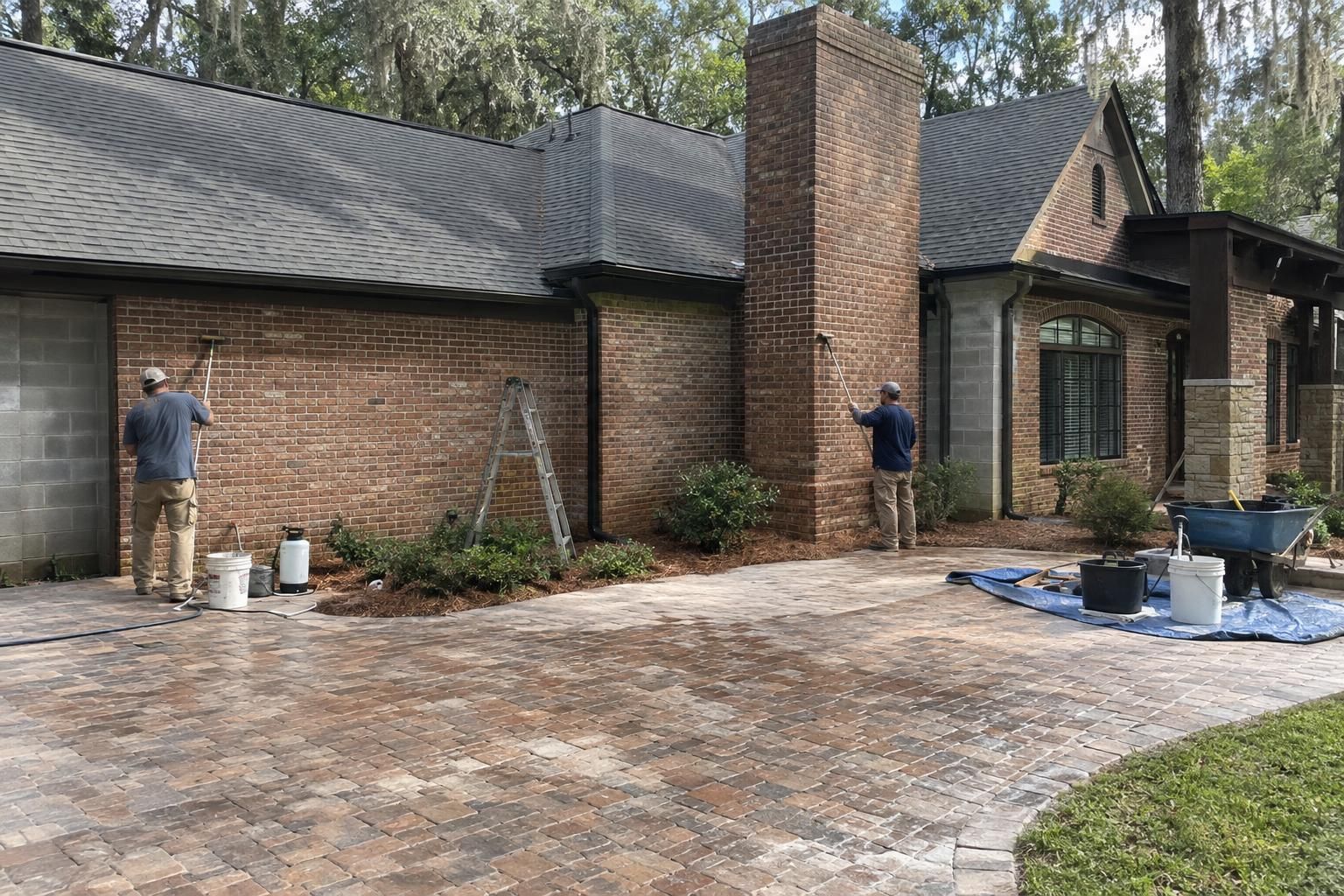
Brick and masonry sealing
Sealing is a clear water repellent that soaks into your brick, block, stone or pavers so rain beads off and the wall can still dry out.
Get a free estimate →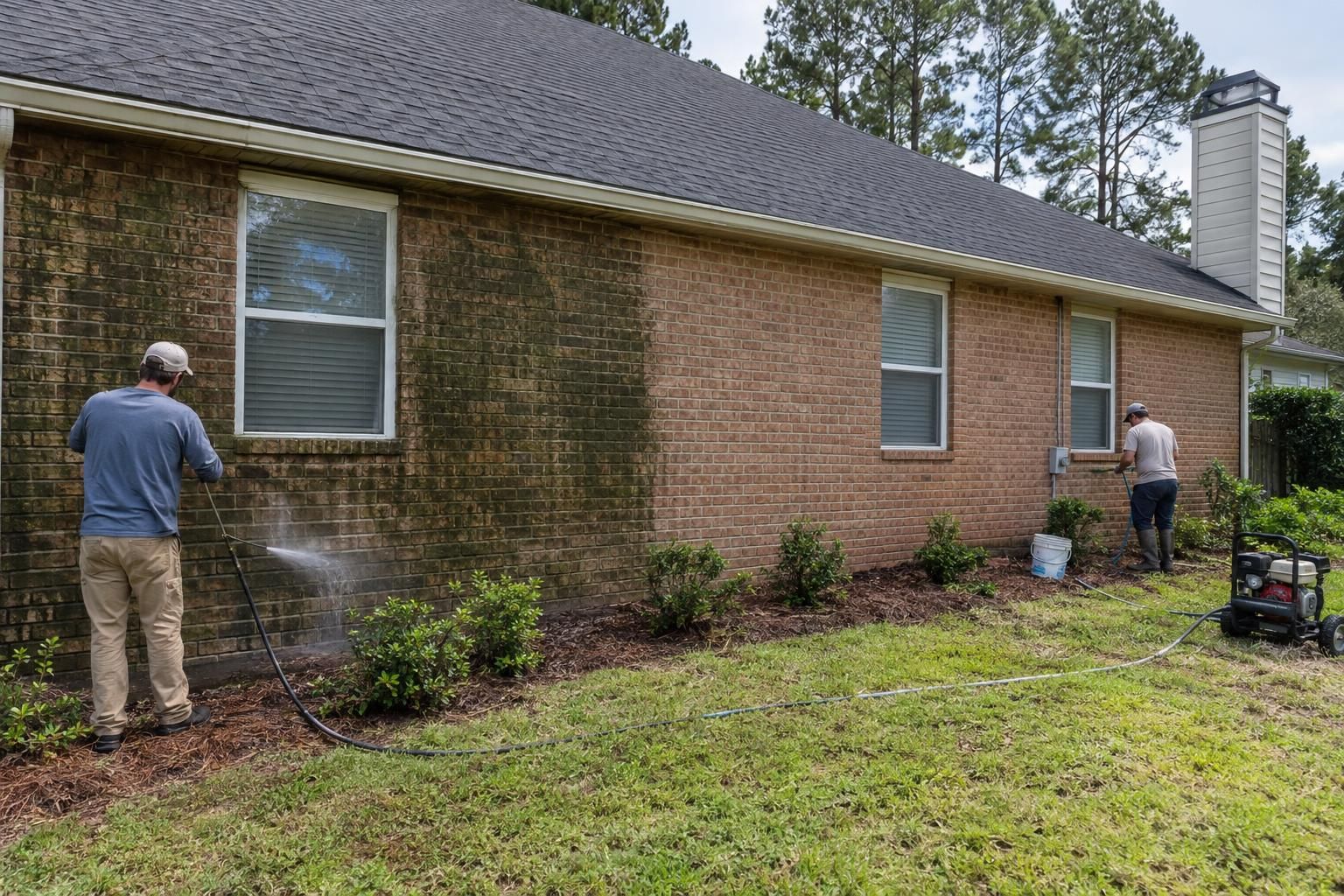
Brick cleaning and stain removal
Dirty brick usually isn't dirty all the way down, and we can clean it without hurting the face or the mortar.
Get a free estimate →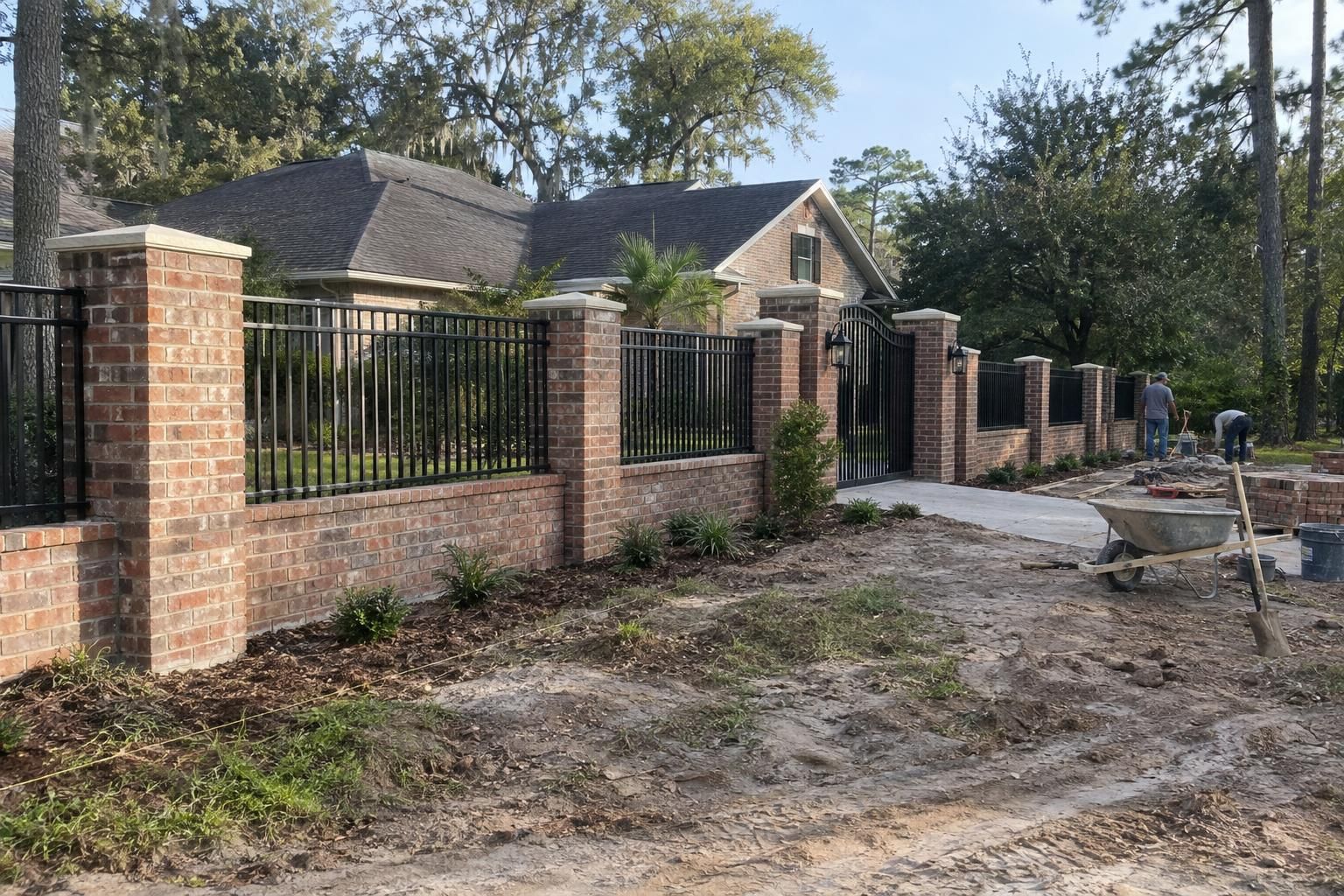
Brick fences and garden walls
A brick fence is the part of your yard that stays put long after the wood has gone gray and soft.
Get a free estimate →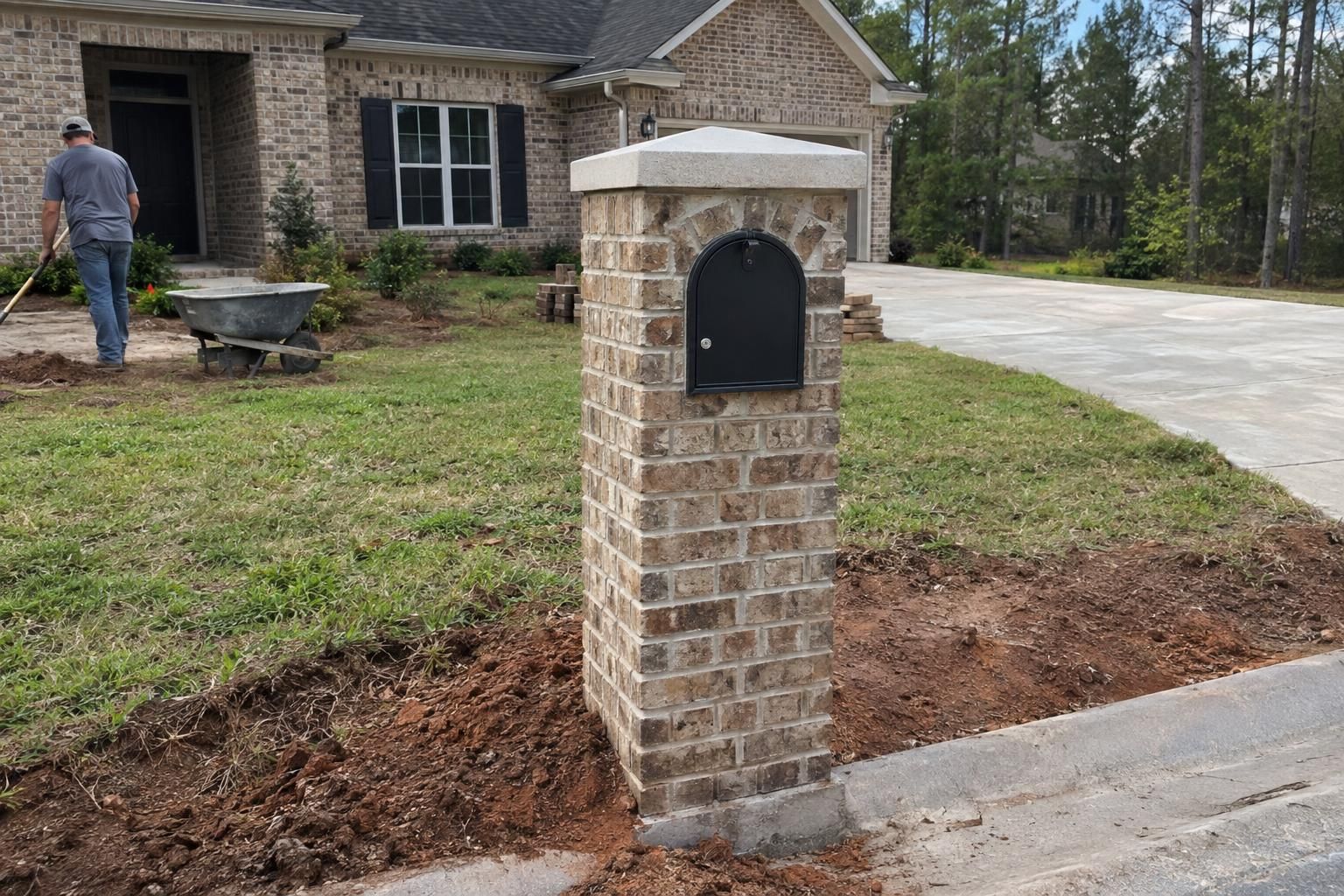
Brick mailboxes
A brick mailbox is the one piece of masonry everybody who visits your place passes on the way in. We build them to last, and we fix them when a bumper gets the better of one.
Get a free estimate →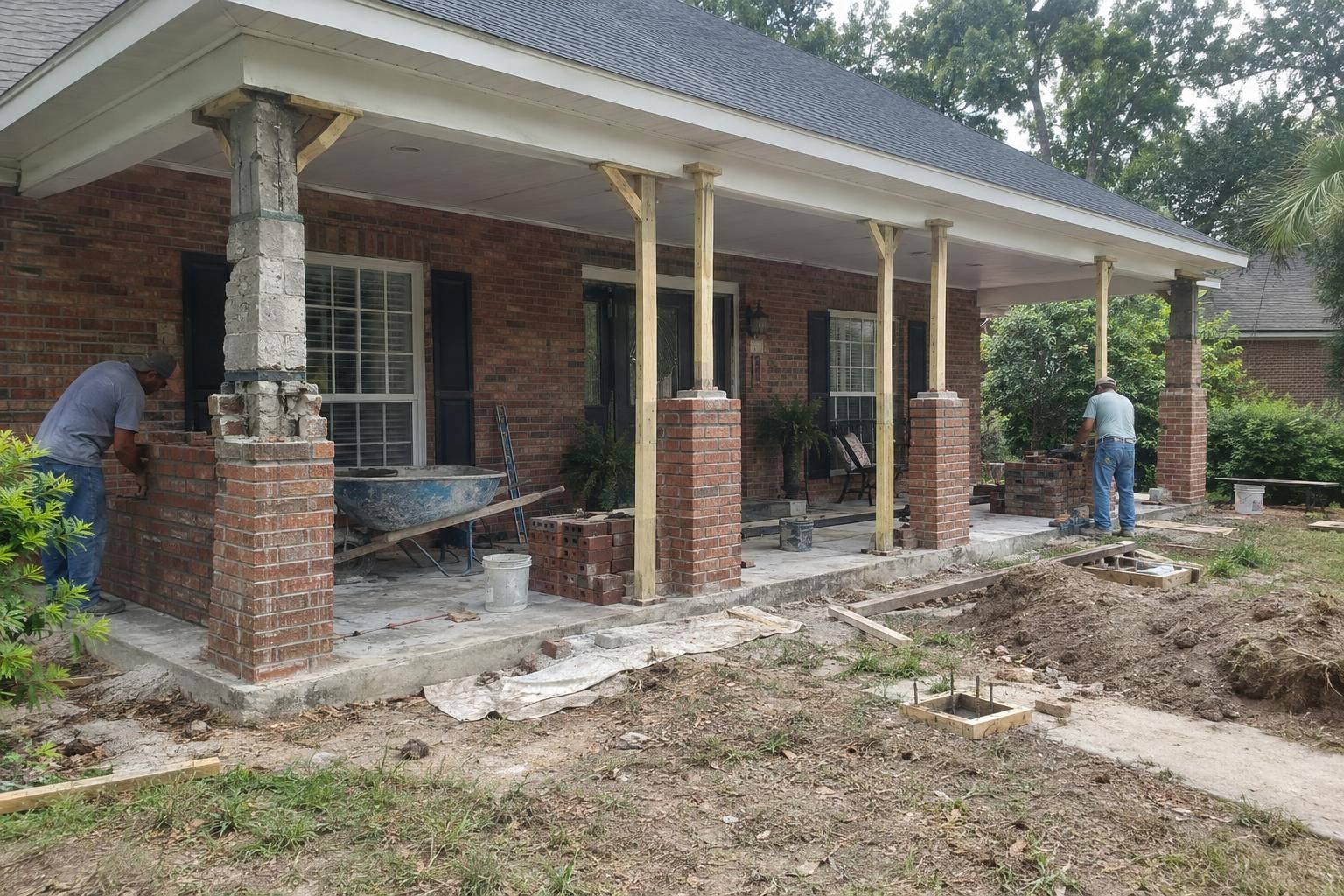
Brick porches and columns
Your porch columns hold up a roof, and the brick around them has been taking weather for a long time. We repair and rebuild them, and we plan every job around keeping that roof held.
Get a free estimate →We're Dalton Brothers, masons out of Atlanta. College Park is nine miles southwest of downtown Atlanta, in both Fulton and Clayton Counties. That makes it a short drive for us. We cover Fulton County ground, so the first thing we'll ask on the phone is which county your address falls in. Behind the storefronts, Craftsman bungalows and Queen Anne homes line Walker, Harvard, and Princeton Avenues. Maybe the mortar has gone sandy on your storefront. Maybe a porch step has dropped. Either way, we'll come out, look at it, and tell you straight what it needs. The estimate is free.
What College Park does to masonry work
Start with what's standing. Historic College Park is Georgia's fourth largest urban historic district, at 606 acres. It holds more than 850 structures built between 1882 and 1946. That's a lot of old masonry. The Palmour House is a good example of where it came from. Construction began around 1892, and the bricks were molded from red clay dug out for the basement. The ground itself made the wall. We think about that when we match brick on a house this age. We look at the mortar first, because a mix harder than the old brick will crack the brick's face before it cracks itself.
Now the ground. The red clay of the Georgia Piedmont is typified by the Cecil soil series. It's very deep and well drained on ridges and side slopes, and its red subsoil averages 35 to 60 percent clay. But clay moves. It swells when it's wet and shrinks and hardens when it's dry. A step, a porch pier or a garden wall sitting on it gets pushed around a little every season. And College Park has water in its history. Old maps show small streams around "Manchester," now College Park, that come together to form the Flint River. Residential areas that used to flood badly have been replaced by detention ponds. So we always ask where your roof water goes.
Weather finishes the job. Atlanta's record is the nearest one we have, and College Park is only nine miles from it. Atlanta gets about 49.7 inches of rain a year. Late winter, early spring and July are the wettest stretches. A normal July averages 80.9 degrees across day and night and brings 4.75 inches of rain. Overnight freezes can be expected on about 40 days a year. Rain gets into a bad joint, and then a freeze does the rest.
The jobs we do most in College Park
- Storefront repointingDowntown College Park anchors the city with its historic Main Street business district, and new shops are replacing once vacant storefronts. A new tenant often finds joints that nobody has touched in a long time. We rake out the failed mortar with a grinder and hand tools, then repack with a mortar matched to the brick.
- Chimney repairBungalow-era houses often have a brick fireplace, and the chimney above the roofline takes every storm. We check the crown, the flashing line and the top courses first, because that's where water gets in. Then we rebuild only what has to come down.
- Porch and step rebuildingPorches here face wide sidewalks. A front step that has dropped on one side usually means clay moved under it or a downspout dumps beside it. We take it apart, rebuild the base and relay the brick or stone. Then we talk to you about the downspout.
- Retaining wallsSlopes and clay mean walls get asked to hold a lot of wet ground. We build with block or stone, and we plan the drainage behind the wall before we stack anything. If a wall is tall enough to need a permit, we'll say so up front.
- Brick walks and patiosMature hardwoods shade these blocks and cast long shadows across original brick pathways. Roots lift brick and clay settles under it. We lift the pavers, rework the base and set them back, keeping the old brick wherever it's sound.
Homes and buildings we work on here
The older homes are what most people picture. The housing stock is anchored by the Historic College Park district, with early twentieth-century bungalows, Craftsman-style houses and period revivals. One house on a local tour is a one-story Craftsman bungalow clad with red brick, in a subdivision platted in 1925. And at the grander end, the Palmour House is a three-storey Queen Anne Victorian. We work on this kind of house: brick veneers, chimneys, porch bases, foundation piers and garden walls.
Around the historic core, mid-century subdivisions and brick ranches are common. Those get a different set of repairs: brick steps, carport columns, planter walls and stoops where the mortar has worn thin. Then there's the commercial side. The College Park Women's Club is in a historical structure built in 1897 on Main Street. We repair buildings like that, and the plain one-story storefronts beside them. If you're not sure which type your building is, that's fine. We'll work it out when we get there.
Getting your estimate in College Park
Call us and tell us your address and what you're seeing. Tell us which county the property is in too, since College Park straddles two. We'll set a time and come to you. It's a short run from our Atlanta base, and the estimate costs you nothing.
When we get there, we walk the outside first. We look at the joints, the base of the wall and the steps. Then we check where the gutters empty and where the ground slopes. We'll poke at the mortar with a trowel point to see how deep the damage goes. Then we'll tell you what needs doing now and what can wait a season. If your job needs a permit, we'll say so. College Park runs its own Building and Inspections Department at City Hall, 3667 Main Street, and its number for building permit and inspection questions is 404-669-3762.
For College Park businesses
If you own a shop, run an office or manage rental property in College Park, your building's front is your sign. Design standards and zoning ordinances guide current and future projects on the Main Street corridor. So a face-brick repair there isn't just a patch job. The city's own notice says changes to an existing building's exterior may need a permit, and permits are required before work begins. We'll tell you what we think the work involves, and you can confirm with the city before we start. Landlords and property managers can send us a list of addresses. We'll look at each one for free and tell you which ones can wait and which ones can't. Call us before a tenant calls you about a loose brick.
College Park questions we hear
Do I need a permit to repoint or rebuild brick in College Park?
Maybe. College Park has its own Building and Inspections Department at 3667 Main Street. Its notice says changes to an existing building's exterior may require a permit, and permits are needed before work begins. We'll tell you what we think, and then call the city's office at 404-669-3762 to confirm.
How tall can I build a retaining wall without a permit?
In Fulton County, a retaining wall over 4 feet high needs its own permit unless it was already shown and permitted on a land disturbance permit. Each wall takes a separate permit form and fee. But College Park has its own permit office, and the city sits in two counties. So we haven't confirmed how the city applies that rule. Call the city first, and we'll plan around the answer.
When's the best time of year to have brick work done?
Fall is the driest stretch in Atlanta's record, especially October. Late winter, early spring and July are the wettest. And overnight freezes come about 40 days a year. So fall is often easiest, but we don't wait on a leak. We'll tell you what can wait and what can't.
My brick step is sinking on one side. Why?
Usually it's clay and water. Clay swells and shrinks with the seasons, and a downspout emptying beside the step makes it worse. We rebuild the base and relay the brick. We also point the downspout somewhere better.
Do you come to College Park, or just Atlanta?
We come to College Park. It's about nine miles southwest of downtown Atlanta. We work across Fulton County, so tell us which county your address is in when you call. Then we'll set up a free estimate.
Local details checked against: collegeparkga.gov, myhcpna.org, theagency-atlanta.com, mycpna.org, blog.drewprops.com, dahlhouserealty.com