Qualified MasonsVerified ProfessionalsFree EstimatesOn Time
What commercial masonry contractor involves
This page is for general contractors, owners and property managers in Atlanta who need a masonry subcontractor. That could be new block and brick, tenant work inside an existing space, site masonry like trash enclosures and screen walls, or a repair on a wall that has started to let go.
You need us when the masonry scope is real and nobody on your team wants to carry it. We bid from your drawings, send submittals and certificates of insurance, and work to your schedule and your safety requirements. Is yours a small repair instead of a big package? That's fine. Tell us what the wall looks like and we'll match the job to the right crew. We'd rather read the plans than guess.
Signs you need commercial masonry contractor
Stair-step cracks in block or brickCracks that follow the mortar joints usually mean movement, often from settling or a failed lintel. We look at where they start and whether they're still opening.
White crust and soft mortarEfflorescence tells us water is moving through the wall. Mortar you can rake out with a key needs repointing before the brick behind it starts to spall.
Masonry on the drawings and no one to build itBlock walls, brick veneer and CMU enclosures take a sub who bids clean and sticks to your schedule. That's the gap we fill.
A tenant plan that cuts into an existing wallNew openings, infill and matched brick take a mason who knows how to tooth in and keep the bond pattern. Guessing shows.
What we handle
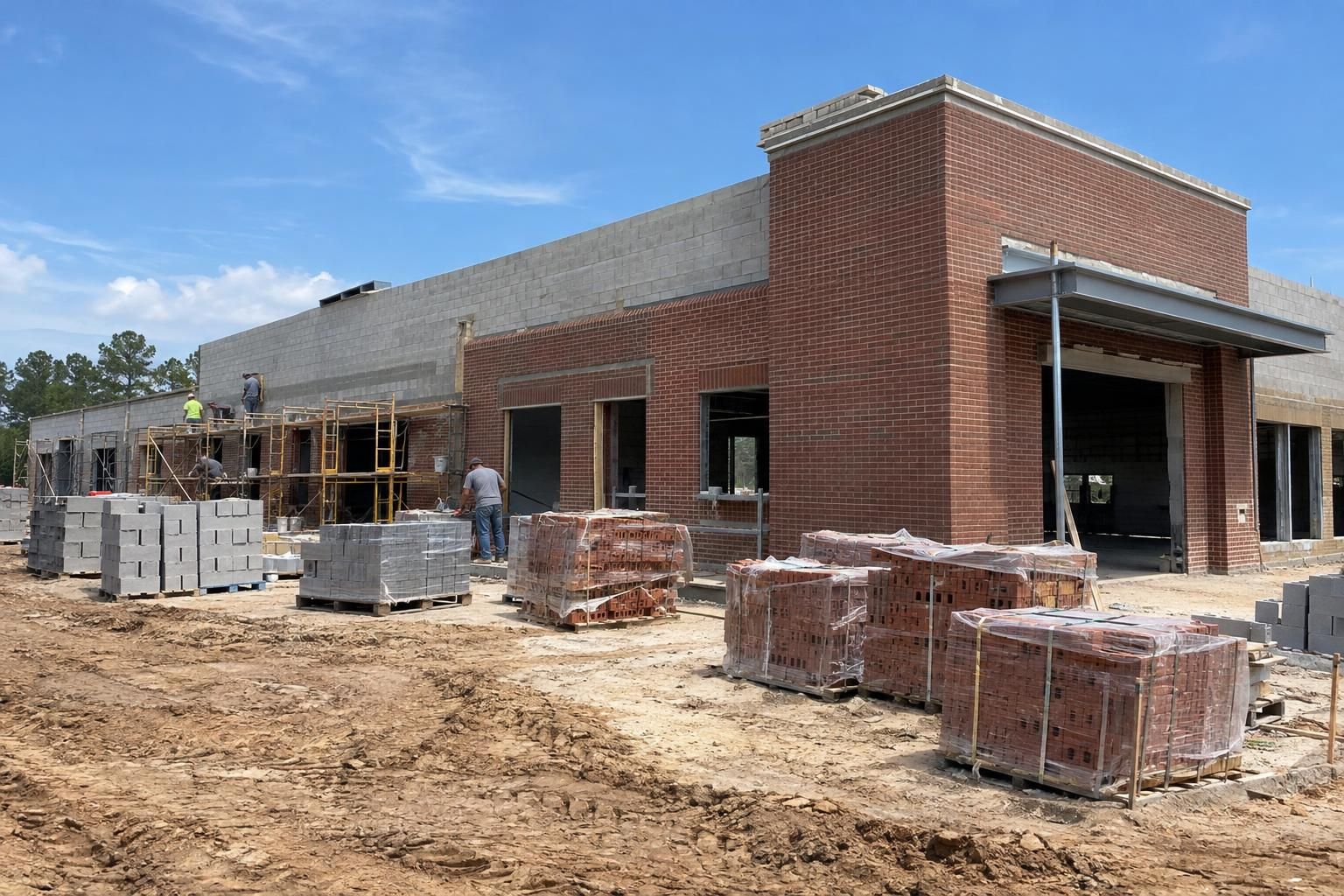
New construction block and brick packagesBlock backup, brick veneer and the lintels, flashing and weeps that go with them. Block goes up first and brick follows, so we plan the sequence with your superintendent.
Tenant improvement and renovation masonryWe cut new openings, infill old ones and match existing brick in size, color and joint profile. We work around occupied space and your hours.
Site masonryenclosures, walls, columns: Dumpster enclosures, screen walls, freestanding walls and entry columns. These sit out in the weather, so cap and base details matter as much as the face.
Repair and maintenance for property managersRepointing, replacing cracked or spalled brick, and fixing loose coping or lintels. We can walk the property with you so you know what's urgent and what can wait.
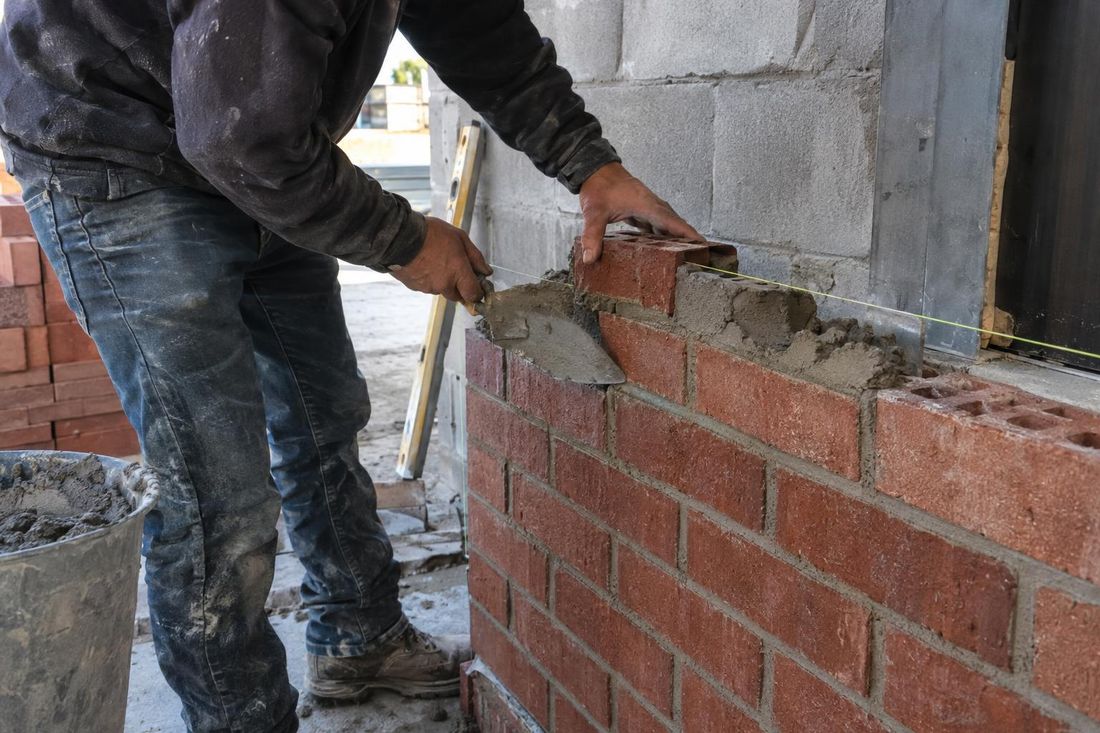
Mason laying red brick wall A worker in dusty jeans and a dark sweatshirt uses a trowel to spread mortar on a red brick wall under construction. A string line guides the course, a bucket of mortar sits at left, and gray concrete blocks form the backing wall behind the bricks.
How we do it
We bid from your drawings, provide submittals and certificates of insurance, and work to the general contractor's schedule and safety requirements. Before we price anything we read the wall sections, the lintel schedule and the specs for mortar and brick. On block, we lay to the line, check courses against a level and story pole, and fill cells with grout and rebar where the structural drawings call for it. On brick veneer we keep the cavity clean, set the flashing and leave the weeps open so water has a way out.
Mortar choice matters. Type N and Type S aren't interchangeable, and on repairs we match the old mortar to the brick instead of going harder than the unit, because hard mortar makes soft brick spall. We tool joints once the mortar is thumbprint hard. And we put control joints where the drawings call for them, not where it's convenient.
How a job with us goes
Send drawings or describe the scope
Email us the drawings, or just tell us what you've got. Complete plans get you a tighter bid, but we'll work from a description on a repair.
We review and visit the site if needed
We read the masonry scope and look at access, scaffold needs and what's already standing. On repairs we tap the wall and probe the joints before we say what it needs.
Written bid with inclusions and exclusions
You get it on paper, with what's in, what's out and what we assumed. Surprises on a masonry job usually come from a vague exclusion, so we spell ours out.
Submittals, scheduling and work
We send submittals and certificates of insurance, then set start dates with your superintendent. Our masons follow your site safety rules and your schedule.
Closeout documents
We hand over the paperwork you need to close the job and walk the wall with you for punch items. Nobody likes chasing paperwork after the crew is gone.
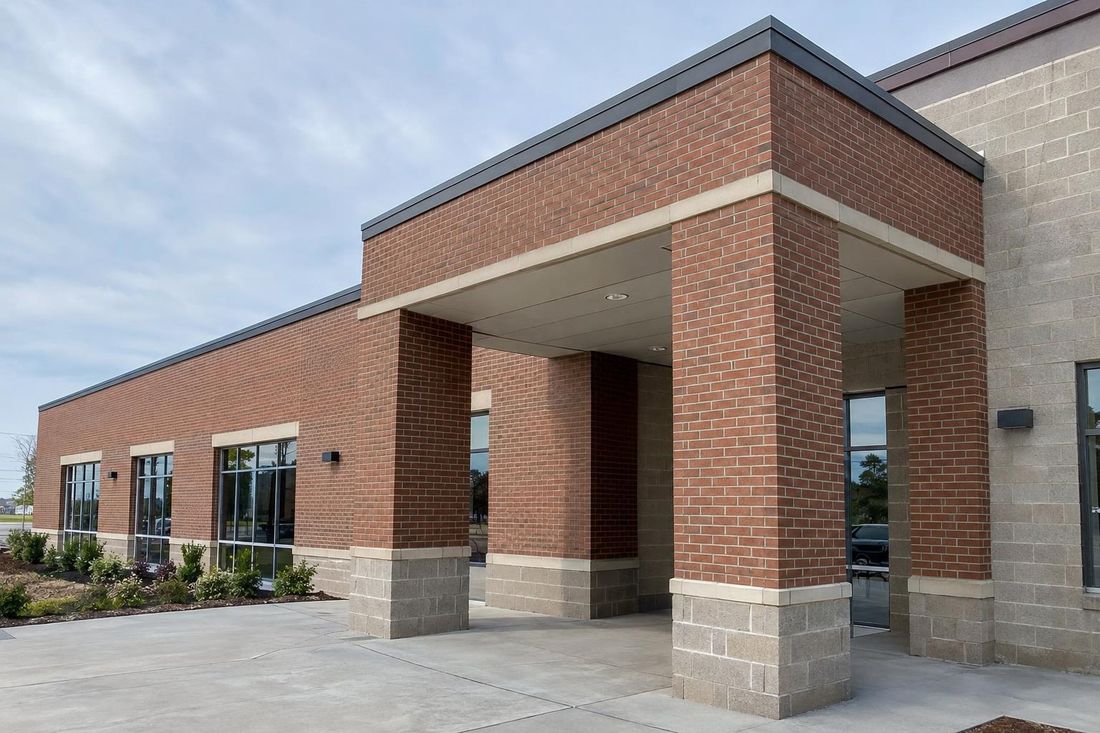
Brick and block commercial building entrance A single-story commercial building with red brick walls, large brick columns on concrete block bases, and a flat covered entry canopy. Light-colored cast stone bands trim the brick, and the adjoining wall is gray concrete block, with a landscaped bed and concrete pavement in front.
What drives the cost
Scope and quantities come first. The square footage of wall, the number of openings and how much grout and rebar goes in all move the price. Schedule counts too, because a tight one puts more masons on the wall at once. Site access matters. Can we get a mixer and pallets close, or are we carrying material by hand? Scaffolding is its own cost on tall walls. And insurance or bonding requirements can change which crew takes the job and what it costs, so tell us early. Matching old brick can add time too, since a good match takes some hunting.
How long it takes
Bids typically follow within days of receiving complete drawings. Missing sheets or an unclear scope slow that down, and we'll tell you exactly what we need. Start dates depend on your schedule and ours, plus how long submittals take to get approved. Special brick colors can take a while to arrive, so ask us about lead times early instead of finding out when the pallets are late.
Local expertise: commercial commercial masonry contractor in Atlanta
Atlanta gets about 49.7 inches of rain a year. Late winter, early spring and July are the wettest stretches, and fall, especially October, is the driest.
What it means for your job
Mortar, stucco and sealers need dry time. Fall is the easiest season for repointing and sealing, and summer work is planned around afternoon storms.
Overnight freezes can be expected on about 40 days a year in Atlanta.
What it means for your job
Water that soaks into brick, stone and mortar and then freezes is what pops faces off brick and opens joints. Keeping water out matters more here than in places that rarely freeze, and winter mortar work has to be protected overnight.
In Fulton County, a retaining wall over 4 feet high needs its own permit unless it was already shown and permitted on a land disturbance permit, and each wall takes a separate permit form and fee.
What it means for your job
A site with several walls means several permits. Budget the time and fees for each one before the masonry starts.
We connect you with a masonry business, and the contract is between you and that business. We aren't your general contractor, and we don't run your schedule or the other trades. Tell us about bonding or prevailing wage requirements up front, because those requirements decide which crew can take the job. We can't price from a phone call alone when the drawings are missing key details. And we don't do structural engineering. If a wall looks like it's failing, get an engineer to look at it first.
Commercial masonry contractor questions
Are your partners insured?
Yes. We only partner with pros who have a current general liability certificate on file, and we send certificates of insurance with your submittals.
Can you handle small repair jobs as well as large projects?
Yes. We match requests to crews by size and type of work, so a few cracked bricks and a full block package don't go to the same crew.
Do you need full drawings to give a bid?
Complete drawings give you the tightest bid. For repairs, photos and a short description of the wall help a lot, and we'll visit the site if needed.
Can you match existing brick?
Often close, rarely perfect. Color, size, texture and joint profile all have to line up, so we compare samples against the wall in daylight before anything gets ordered.