Dalton Brothers Masonry Sandy Springs
Masonry in Sandy Springs, GA
The oldest house in Sandy Springs went up in 1842, and any brick or stone that's stood as long as that house has earned slow, careful repair. We're Dalton Brothers, masons out of Atlanta, and we'll look at yours for free.
Call (470) 837-6333Our services in Sandy Springs
Block foundation repair
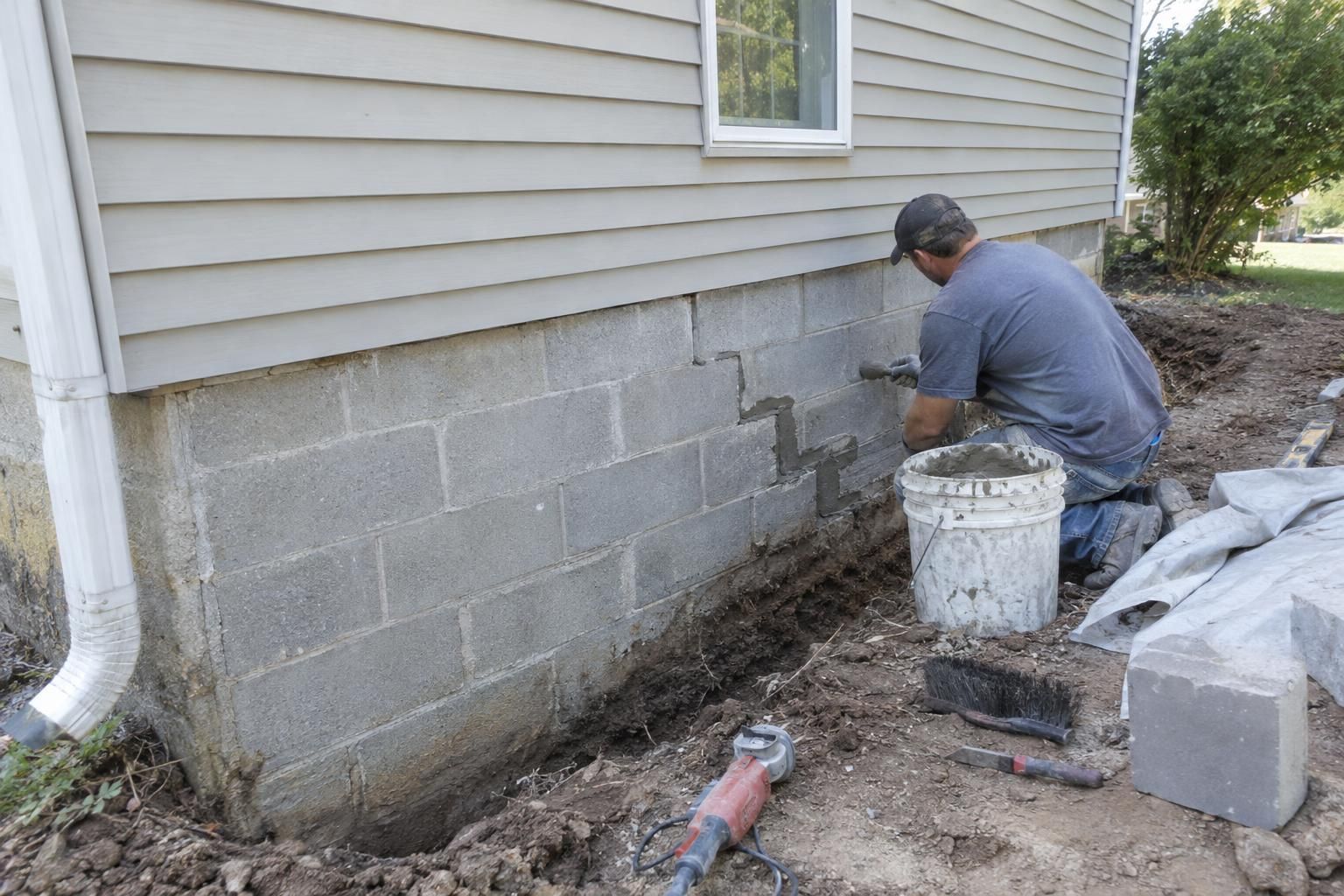
Cracked block under your house can usually be fixed without tearing the place apart. We repair stem walls and crawl space walls in Atlanta, and we start by working out why the wall moved.
Get a free estimate →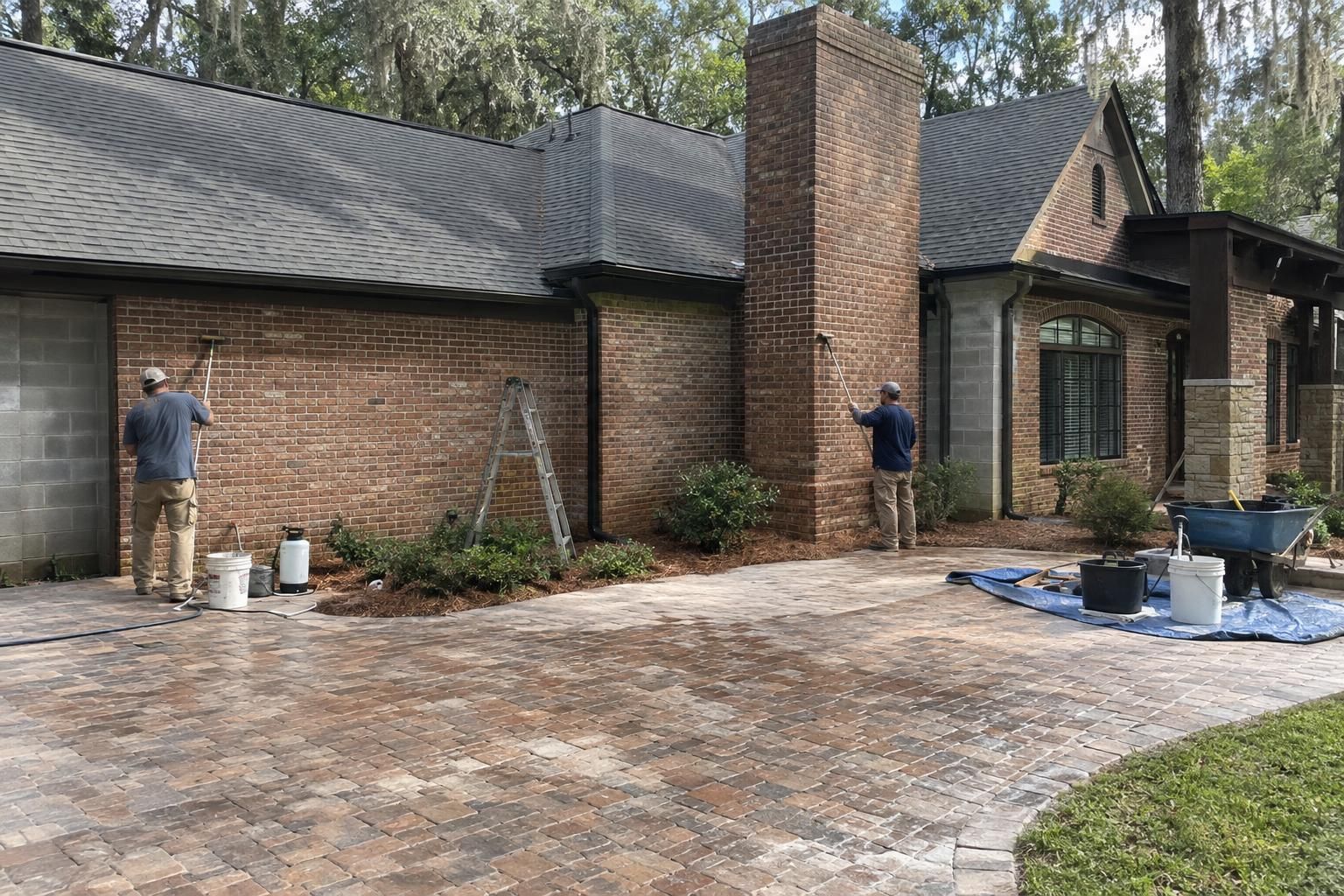
Brick and masonry sealing
Sealing is a clear water repellent that soaks into your brick, block, stone or pavers so rain beads off and the wall can still dry out.
Get a free estimate →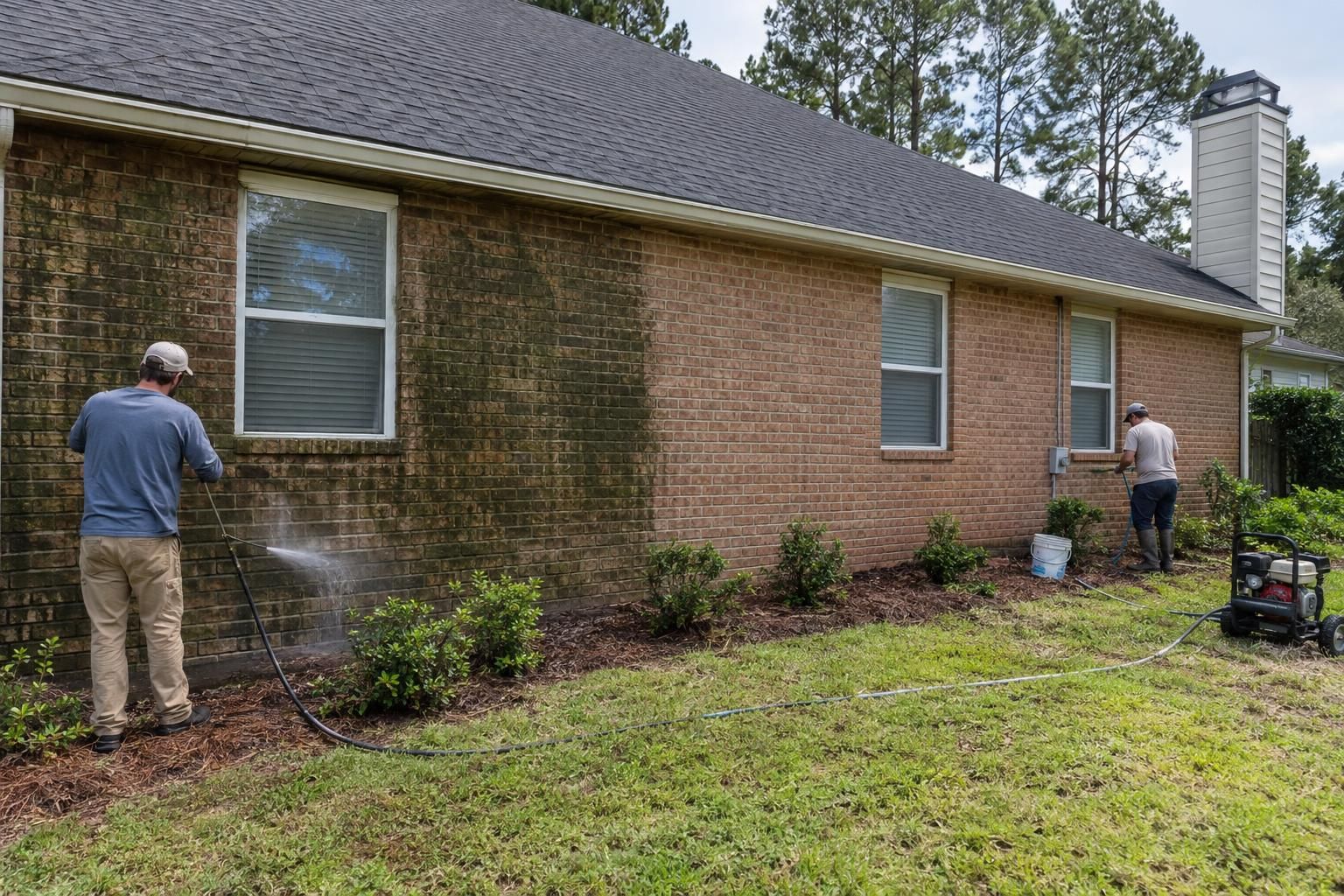
Brick cleaning and stain removal
Dirty brick usually isn't dirty all the way down, and we can clean it without hurting the face or the mortar.
Get a free estimate →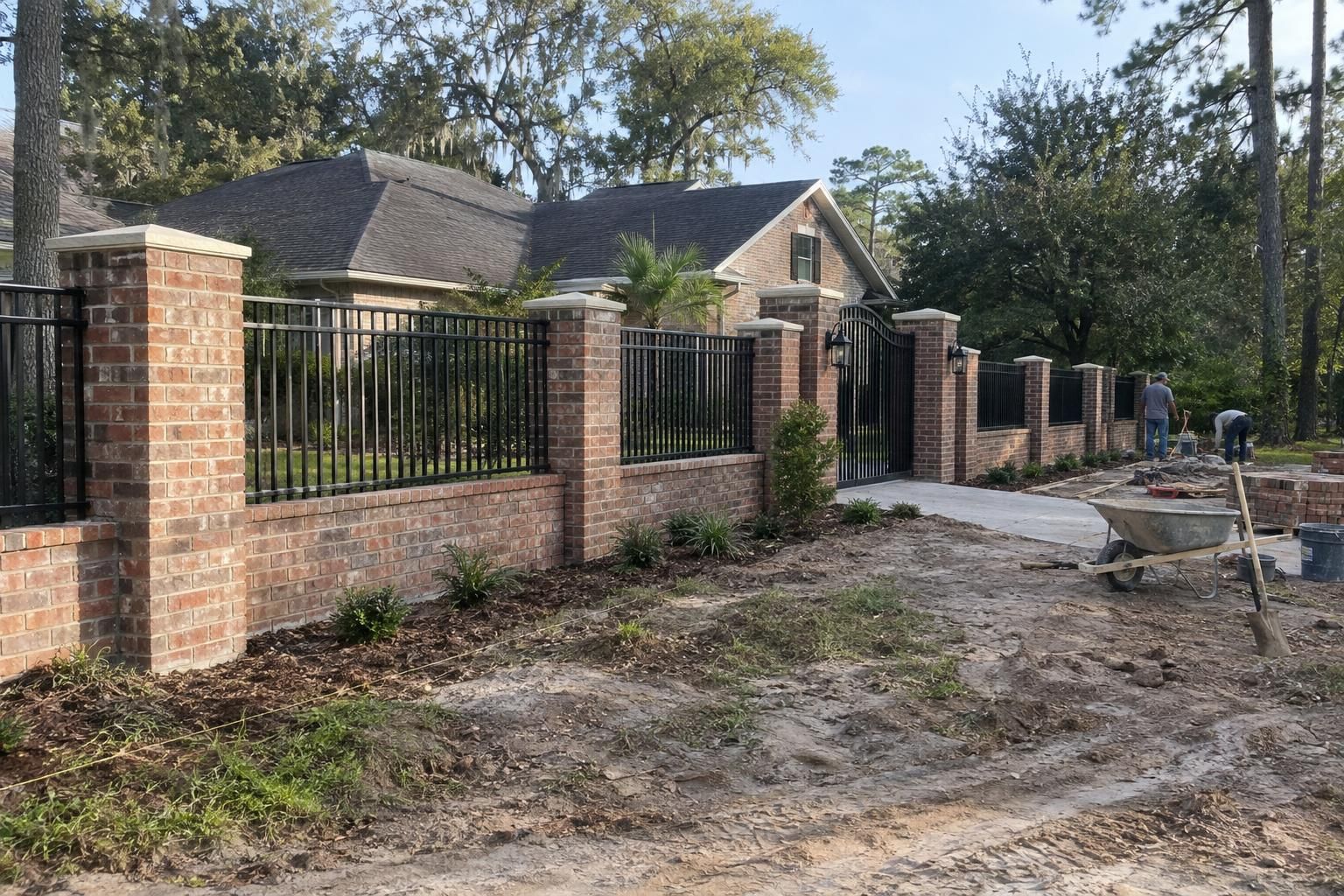
Brick fences and garden walls
A brick fence is the part of your yard that stays put long after the wood has gone gray and soft.
Get a free estimate →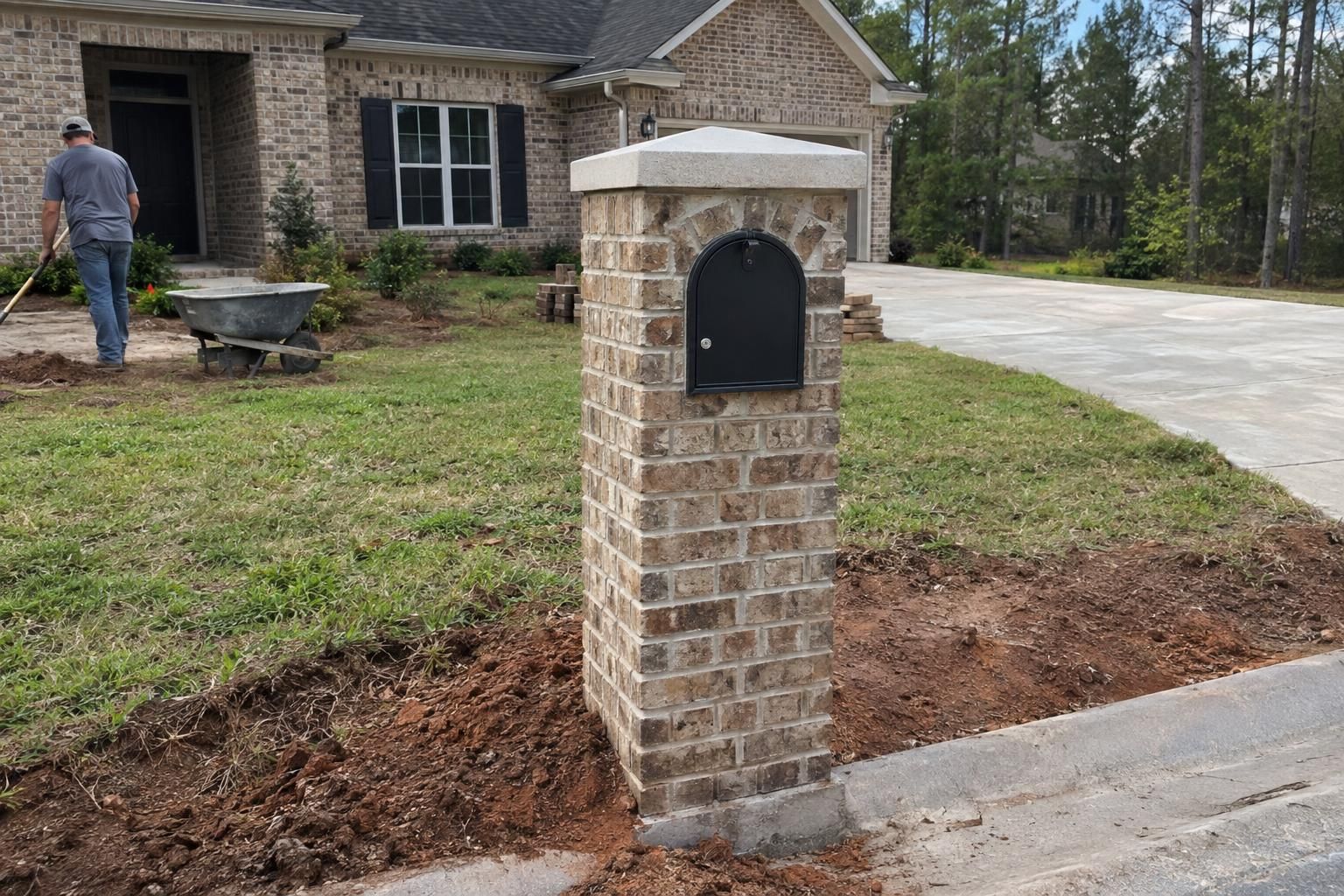
Brick mailboxes
A brick mailbox is the one piece of masonry everybody who visits your place passes on the way in. We build them to last, and we fix them when a bumper gets the better of one.
Get a free estimate →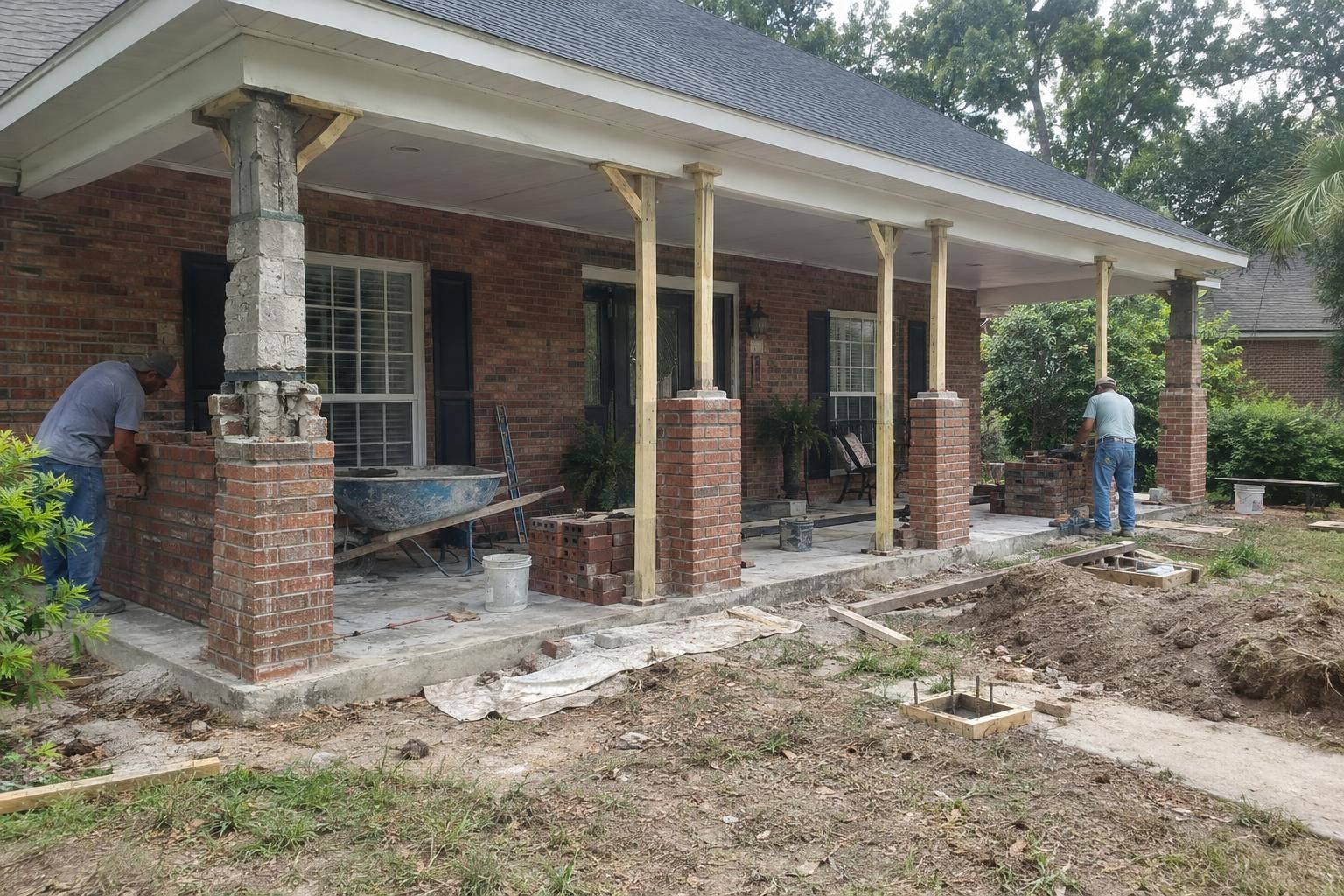
Brick porches and columns
Your porch columns hold up a roof, and the brick around them has been taking weather for a long time. We repair and rebuild them, and we plan every job around keeping that roof held.
Get a free estimate →That house is the Austin-Johnson House on Johnson Ferry Road. Over at Heritage Green, the Williams-Payne House dates to about 1869 and was moved to the park in 1985. Then there's Island Ford Lodge, which was built around 1935 by a stonemason named John Epps. It went on the National Register of Historic Places in 2016. We can't tell you what's inside those walls from the street, and we won't guess. But we know what old masonry in Georgia clay asks for. It wants mortar softer than the brick around it, joints raked out with care, and nobody in a hurry. Most buildings in town are far younger, but they've had decades to weather too. We work out of Atlanta, and the road distance to Sandy Springs is about 15 miles.
What Sandy Springs does to masonry work
Sandy Springs stayed rural until the mid-1950s. Then I-285 and the first phase of GA 400 opened in the 1960s and set off a housing boom. Listings show what that boom built, like a four-sided brick ranch from 1964 in North Springs and a brick home from 1958 in High Point. Only a sliver of homes here went up before 1950, so the truly old masonry is rare and mid-century brick is the bulk of what's out there. Brick that's seen six decades of weather usually shows it in the mortar first. We look for open joints, sanded-down faces and cracks that step up the wall.
Then there's the ground. Sandy Springs sits in the Georgia Piedmont, where red clay dominates much of the yard soil. The Cecil series that typifies that clay is very deep and well drained on ridges and side slopes, with a red subsoil that averages 35 to 60 percent clay. Well drained doesn't mean dry, though, and water still has to go somewhere behind a wall. The clay holds water and can leave standing pools after heavy summer thunderstorms. Moderately expansive Piedmont clay can also move footings and slabs. In sloped subdivisions built from the 1950s on, a builder often cut a pad into the hillside and used the dug soil as fill on the downhill side. That's how two corners of one house can sit on very different material. The Chattahoochee runs 22 miles around the city limits, and the elevation changes are real near it.
Weather finishes the job. Rain here averages around 50 inches a year. The Atlanta record says 49.7 inches, with late winter, early spring and July the wettest stretches and fall, especially October, the driest. Overnight freezes show up on about 40 days a year. An open joint drinks water, and that water freezes and pries the joint wider. A normal July averages 80.9 degrees and 4.75 inches of rain, by National Weather Service normals. So we plan mortar work around the forecast and shade fresh joints from the afternoon sun.
The jobs we do most in Sandy Springs
- RepointingMid-century brick has had a long run of weather, and the joints give out before the brick does. We rake the old mortar out with a plugging chisel or a grinder, pack in new mortar that's softer than the brick, and tool it to match what was there. We press a key into the joints first to see how deep the damage goes.
- Retaining wallsLots here slope, and Piedmont clay keeps water behind a wall until the wall loses the argument. We backfill with gravel and run drain pipe behind the wall, and we go over the city's rules before we dig. Sandy Springs requires a permit for a new or replacement wall, though generally not for one 4 feet or less from the bottom of the footing to the top. A signed and sealed engineered design is required at 6 feet or taller.
- Chimney repairRain finds a cracked crown or a tired flashing line, and then a freeze splits the brick. We look at the crown, the flashing and the top courses first, rebuild whatever's loose, and tell you straight if the chimney needs more than a repair.
- Foundation wall repairWhen clay moves a footing, the cracks show up in the block or brick below the house. We repair the joints, rebuild failed sections and deal with the water that's pushing on them. If a crack looks like movement and not just age, we'll say so and suggest an engineer see it before we lay a brick.
- Steps, walkways and patiosThe city requires permits for deck or patio replacements, so we tell you what to expect before we start tearing out. We set brick, block and stone on a compacted base and pitch it away from the house, because wet clay will push a step out of level.
Homes and buildings we work on here
Mid-century brick is the heart of it. Sandy Springs mixes mid-century ranches, wooded hillside homes, townhouse communities and newer construction, and each wants something different from a mason. A listing in Spalding Woods describes a four-sided brick ranch originally built in 1966. Ranches like that want their joints looked at, their chimneys checked and their steps kept level. Hillside homes bring retaining walls and foundation walls into the picture. Brick townhomes, like the one listed in Glenridge Pointe, need the same eye on joints, sills and steps as a house does, with a few more neighbors to coordinate.
Then come the older and odder buildings. The Burdette Milk House at Heritage Green is one of the oldest standing structures in Sandy Springs, and Island Ford Lodge is a stonemason's work from the 1930s. If you own something with age on it, tell us the year if you know it. It changes how we mix the mortar. On the newer side, multifamily buildings made up most of the housing built since 2010. Those buildings are young, but grade, drainage and steps still find the weak spots.
Getting your estimate in Sandy Springs
Call us or send a message and tell us what you're seeing. Then we come out and start where the water starts, which means gutters, downspouts, the grade against the wall and the top of the chimney. We push a key or a screwdriver into your joints to see how deep the softness goes. We tap brick to listen for hollow spots. And we walk the whole job with you and tell you what needs doing now and what can wait.
The estimate costs you nothing, and you get it in writing. If your job involves a retaining wall, we'll tell you what the city is going to want. Permitting runs through the City of Sandy Springs Community Development Department at City Hall, 1 Galambos Way, and their number is 770-730-5600. We're based in Atlanta, so coming up to see your place is a drive up the road and not an expedition.
For Sandy Springs businesses
If you run a shop, an office or a building full of tenants in Sandy Springs, you've probably got masonry nobody's looked at in a while. Storefront brick, a loading-dock wall, a planter that's leaning and a stair that's shed its edges all count. We'll walk the property with you or your manager and write up each building separately, so you can plan the work instead of reacting to it. Tell us when you're open and we'll plan around it. We'll also tell you what permits the city may want. Sandy Springs says commercial permits are required for constructing, altering, enlarging, repairing or demolishing buildings or tenant spaces. Retaining walls on commercial property need a permit too, and the city has a separate commercial retaining wall type. We'd rather sort that out before the first brick comes off the pallet.
Sandy Springs questions we hear
Do I need a permit to rebuild a retaining wall in Sandy Springs?
Most likely, yes. Sandy Springs requires a permit for a new or replacement wall, though generally not for one that's 4 feet or less from the bottom of the footing to the top. At 6 feet or taller, the city wants a signed and sealed engineered design. Permitting runs through the Community Development Department at City Hall, 1 Galambos Way, and the number is 770-730-5600. We'll look at your wall, tell you which side of those lines it falls on, and go over what the city will want before we dig.
How can I tell if my brick needs repointing?
Start with the joints. Look for mortar that's recessed well behind the brick face, joints that have gone sandy, or cracks that step up the wall in a staircase. When we come out, we push a key or a screwdriver into the mortar. If it sinks in easily, the joint has gone soft. Does your house date from the 1950s or 1960s? Then it's worth a look.
Is the crack in my foundation wall serious?
It depends on what made it. Piedmont clay can move a footing, and a crack from that movement is a different animal than one from age. We'll tell you which one we think it is. If it looks like movement, we'll suggest an engineer see it before we lay a brick. And we'll check where the water's going, because that's often the first thing to fix.
When's the best time of year for mortar work?
Fall is the driest stretch, October especially, so that's a friendly time for fresh joints. But we don't put work off for the calendar alone. Mortar doesn't care for a hard freeze or for hot afternoon sun, and Atlanta sees about 40 freezing nights a year. So we watch the forecast and plan around it. Call us any time of year and we'll tell you honestly whether to wait.
Does the estimate really cost nothing, and do you come all the way to Sandy Springs?
It costs nothing, and you get it in writing. We're based in Atlanta, and the road distance to Sandy Springs is about 15 miles. That's a short drive for us. Call or send a message, tell us what you're seeing, and we'll set a time to walk the job with you.