Qualified MasonsVerified ProfessionalsFree EstimatesOn Time
What parapet wall repair involves
A parapet is the wall that rises above a flat roof. It's exposed on both faces and across the top, so it fails before the rest of the building does. Water finds the coping joints, works down into the brick, and shows up as a leak at the roof edge. That's why so many roof-edge leaks start here.
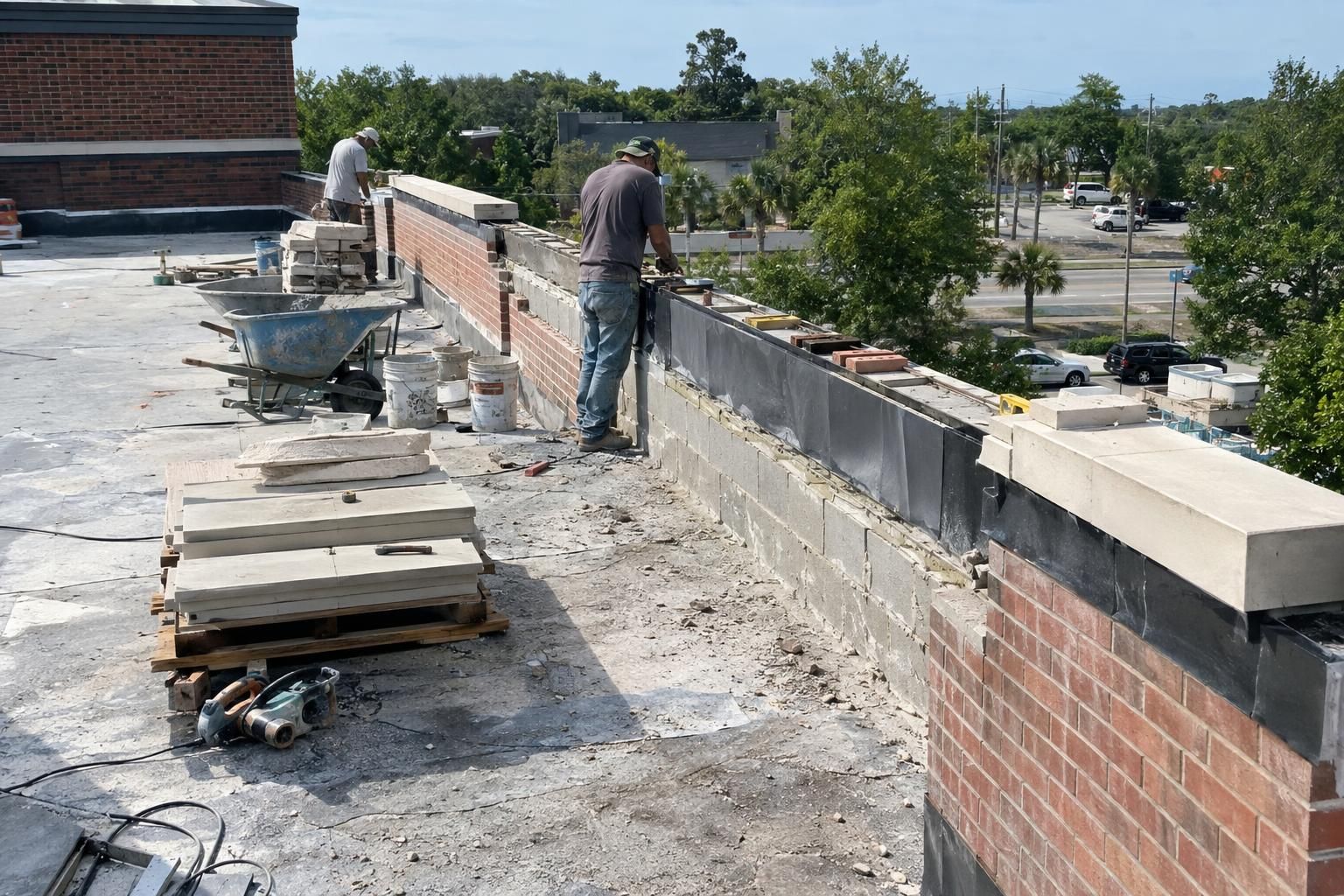
We repair parapets for businesses, property managers and general contractors in Atlanta. Maybe you've got open joints, a coping stone that rocks, or a wall with a lean to it. We go up on the roof, look it over, and tell you whether it needs a reset, repointing or a rebuild. Estimates are free. And if the roof was just redone and the edge still leaks, call us before you pay for another roofer.
Signs you need parapet wall repair
Open or crumbling mortar jointsWater is getting into the wall face. The joints need repointing before the brick behind them starts to soften.
Coping that rocks or has gapsOpen coping joints let water drop straight into the wall. A stone that moves under your hand is on its way off.
White powder or dark streaks below the roof lineThat's water moving through the masonry and carrying salts with it. Check the inside face of the parapet and the ceiling below, too.
A lean or a crack along a bed jointThe parapet is moving. Keep people away from that edge and call us.
What we handle
Coping reset or replacementWe lift the coping, fix what's underneath, and set it back with sealed joints. If the stone or precast is cracked or worn out, we replace it.
Parapet repointing and brick replacementWe grind out failed mortar, cut out spalled brick, and lay new brick in with mortar matched to the old. It's the right job for a wall that's sound but tired.
Partial or full parapet rebuildWhen the wall leans or the brick is too far gone, we take it down to sound masonry and build it back. Sometimes that's one corner. Sometimes it's the whole roof edge.
Through-wall flashing under the copingFlashing gives water somewhere to go besides into the wall. We add it during a coping reset or a rebuild, since the wall is already open and it's the cheapest time to do it.
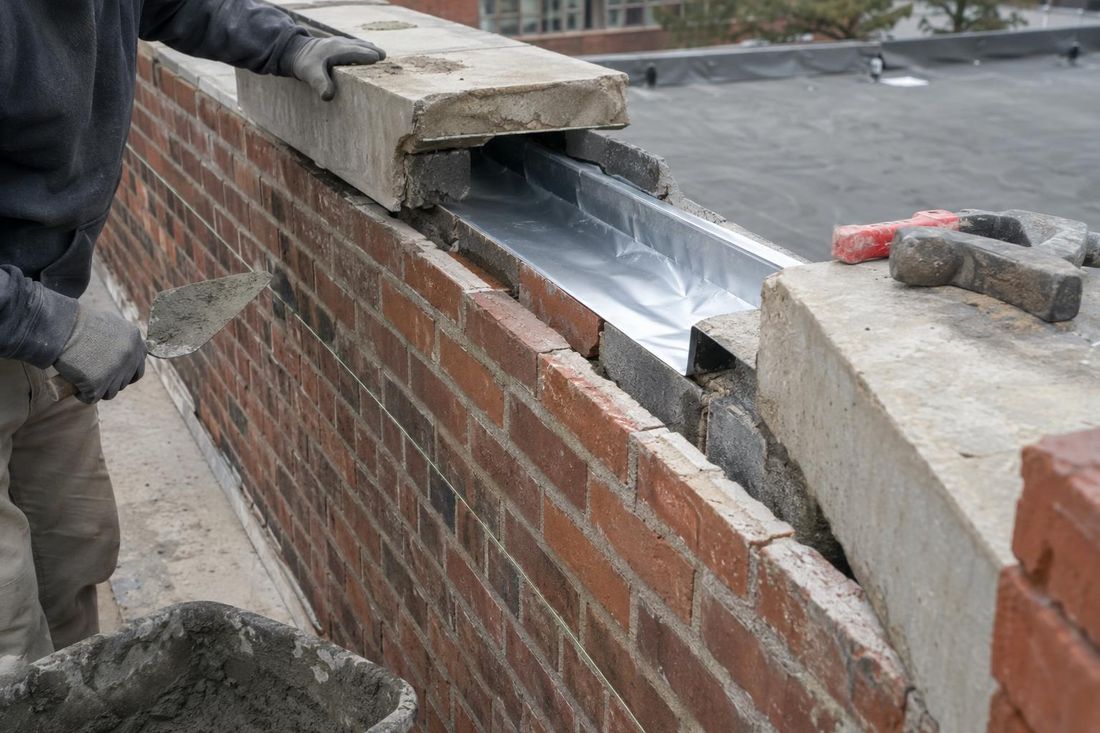
Mason installing parapet wall coping stones A worker in gloves holds a trowel and positions a concrete coping stone on a red brick parapet wall. A metal flashing channel is exposed along the top of the wall, with a mortar tub and a brick hammer nearby, and a flat roof is visible behind the wall.
How we do it
On coping jobs we lift the copings and set them aside in order so they go back where they came from. We clean the bed, lay through-wall flashing across the full thickness of the wall, and lap the seams. Then we reset the coping with sealed joints. The coping should overhang the wall face so water drips clear instead of running down the brick.
Leaning or cracked parapets are taken down to sound masonry and rebuilt. We take the wall apart by hand, course by course, and clean the brick we can reuse. New work goes up with mortar matched to the old brick, because a mortar harder than the brick will chew up the faces. Where the wall needs it, we add reinforcement, such as rebar in grouted cells or anchors back to the roof structure. What goes in depends on what we find when the wall comes apart.
How a job with us goes
Roof-level survey
We go up and look at the wall from the roof, not just from the ground. We sound the coping, probe the joints with a pick, and check the inside face, because that's where the real story usually is.
Coordination with the roofer
The roof membrane runs up the back of the parapet, so we talk to the roofer before we touch anything. We agree on who does what and in what order, so nobody tears out the other's work.
Setup and protection
We rope off the ground below and stage materials well back from the edge. Brick going over the side is the first thing we plan around, so we do it before any work starts.
Coping, flashing and masonry repair
We lift the coping, repair or rebuild the wall, and install through-wall flashing before the coping goes back down. The order matters. Flashing set after the coping is just decoration.
Sealants and roof tie-in
We seal the coping joints and tie our work into the roofer's membrane and edge metal. That's where leaks come back if it's rushed, so we take our time on it.
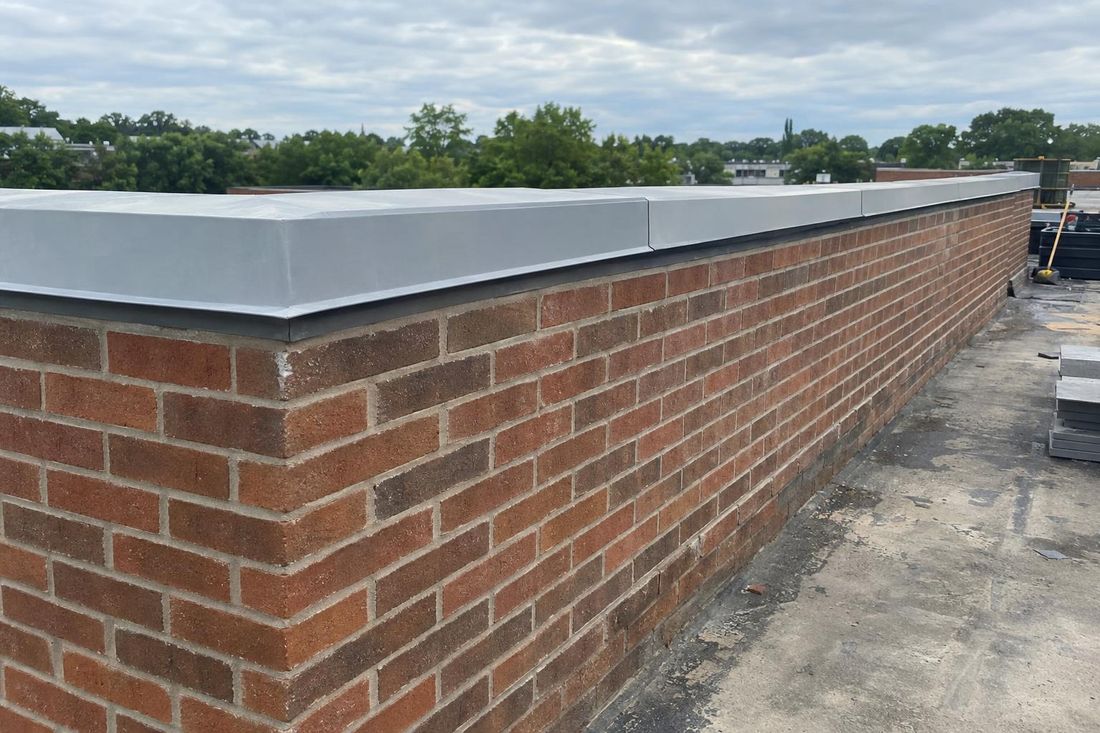
Brick parapet wall with metal coping A red-brown brick parapet wall on a flat commercial roof is topped with a gray metal coping cap that overhangs the brick edge. The roof surface beside it is weathered and shows some stacked materials in the background.
What drives the cost
Price follows the work, and a few things move it most. Linear feet is the big one, since every foot of wall means more brick, mortar and coping. Then comes repair versus rebuild, because taking a wall down and laying it back takes far more labor than repointing it. The coping material matters too, whether it's cut stone, precast concrete or clay, since each one costs and sets differently. Access counts as well. Carrying material up to a roof with no hoist or lift takes time. And roofing coordination can add visits when we have to work around a roofer's schedule. We price it after we've been on the roof, and the estimate is free.
How long it takes
Most coping resets and repointing jobs take days, and a long rebuild can stretch to a few weeks. The length of the wall is the main factor, then how much of it has to come down. Weather has a say, too, because mortar and sealant want dry conditions. If a roofer is working the same edge, we line up our days with theirs, and that can shift the calendar. We'll give you a realistic window once we've seen the roof, and we'll tell you early if something we find changes it.
Local expertise: commercial parapet wall repair in Atlanta
Atlanta gets about 49.7 inches of rain a year. Late winter, early spring and July are the wettest stretches, and fall, especially October, is the driest.
What it means for your job
Mortar, stucco and sealers need dry time. Fall is the easiest season for repointing and sealing, and summer work is planned around afternoon storms.
Overnight freezes can be expected on about 40 days a year in Atlanta.
What it means for your job
Water that soaks into brick, stone and mortar and then freezes is what pops faces off brick and opens joints. Keeping water out matters more here than in places that rarely freeze, and winter mortar work has to be protected overnight.
We don't install or repair roof membrane or metal flashing. Those are the roofer's scope, and we work alongside them. Because the parapet and the roof edge are tied together, parapet work is best scheduled with a reroof, so nobody has to open up new roofing to get at the wall. We also need dry weather and temperatures where mortar and sealant can cure. If we open a wall and find rotted framing or a failed structure behind the brick, we'll stop, show you, and tell you who needs to look at it. And masonry alone won't fix a leak if the roof has other problems.
Parapet wall repair questions
Our roof was replaced and the edge still leaks. Why?
Water often gets in through the top of the parapet or cracked coping joints, not the roofing. A new membrane can't help if the wall above it is open.
Is a leaning parapet dangerous?
Yes. It can come down onto a sidewalk or a parking lot. It should be assessed and rebuilt, and until then keep people away from that edge.
Can't you just caulk the coping joints?
Sealant is part of the fix, but caulk over a bad joint just hides it. We reset the coping and flash under it so the wall is actually protected.
Do we have to rebuild the whole parapet?
Not always. If the brick is sound, repointing and a coping reset may be all it needs. We take down only what's failed, and we show you what we found.
Should we schedule this with a reroof?
If a reroof is coming, yes. We can work with your roofer so the wall and the membrane are done in the right order.