Call (470) 837-6333Get a free estimate
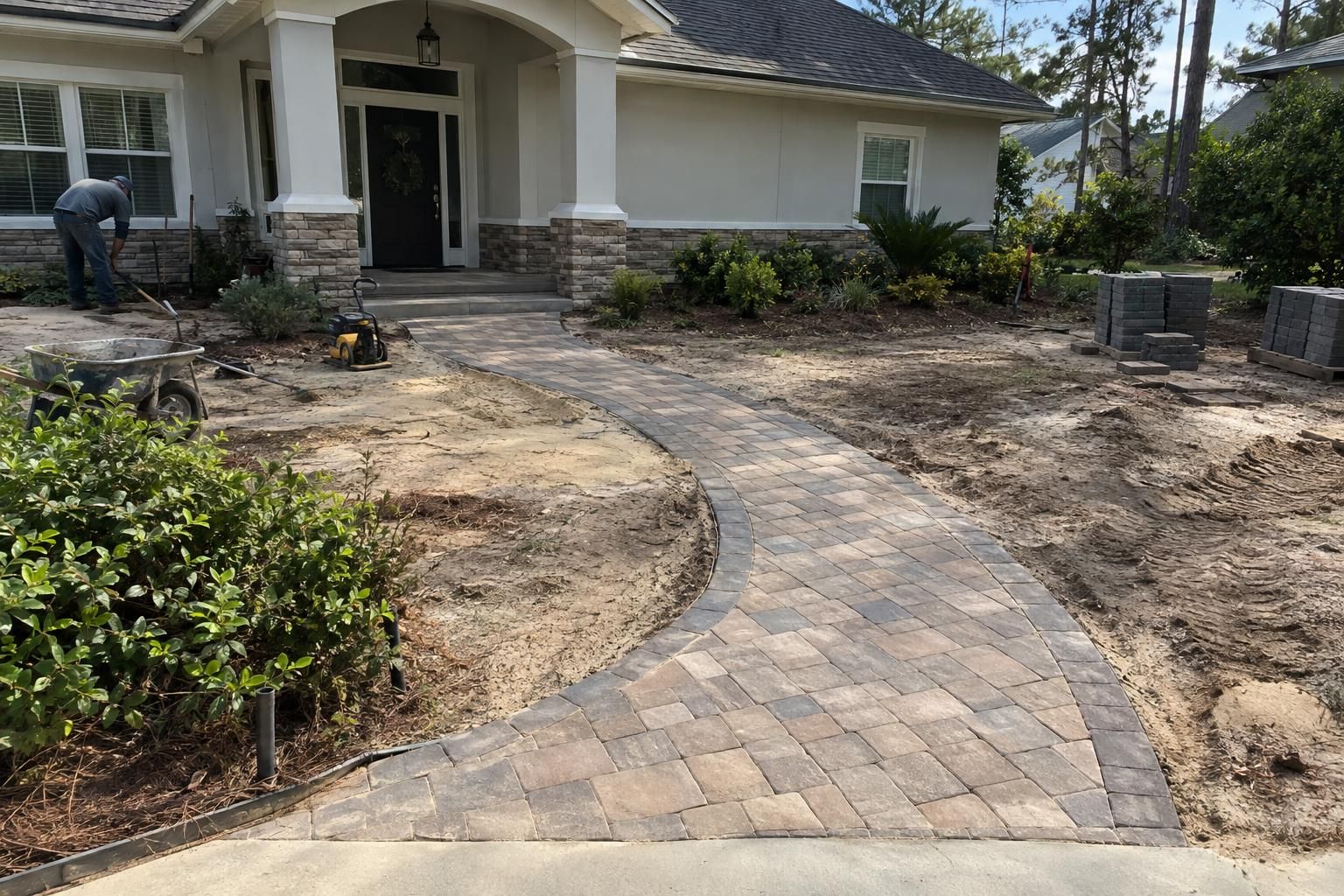
Curved paver walkway under construction. A curving walkway of brown and gray interlocking concrete pavers leads from a driveway to the covered front entry of a house, with a darker border course along its edges. Bare sand, stacked pavers, a plate compactor, a wheelbarrow, and a worker with a shovel show the surrounding installation is still in progress.

Dalton Brothers Masonry Atlanta

Residential Paver walkways in Atlanta

A paver walkway gives you a path that feels solid underfoot and looks good from the street. We build them to replace cracked concrete or to run a new route to the door, the driveway or the backyard.

Call (470) 837-6333

Request your free estimate

Always free and we get back to you ASAP.

By submitting, you agree to our Terms of Use and Privacy Policy and consent to calls and texts about your project from Dalton Brothers and the local partners matched to your request, including by automated means. Consent is not a condition of any purchase.

Qualified MasonsVerified ProfessionalsFree EstimatesOn Time

What paver walkways involves

So what is it, plainly? It's a walk made of individual pavers set on a compacted stone base and a layer of sand. Each paver is its own piece, so the walk can flex with the ground instead of splitting in one long crack the way a poured slab does. We cut in the curves, set the pitch so water leaves, and lock the edges so nothing wanders.

When do you need one? Usually when the old concrete has heaved, split or gone slick. Or when you've worn a path across the lawn because there's no good way to get from the driveway to the gate. Maybe you're a homeowner in Atlanta who's tired of tripping on the same raised corner. Call us and we'll come take a look.

Signs you need paver walkways

What we handle

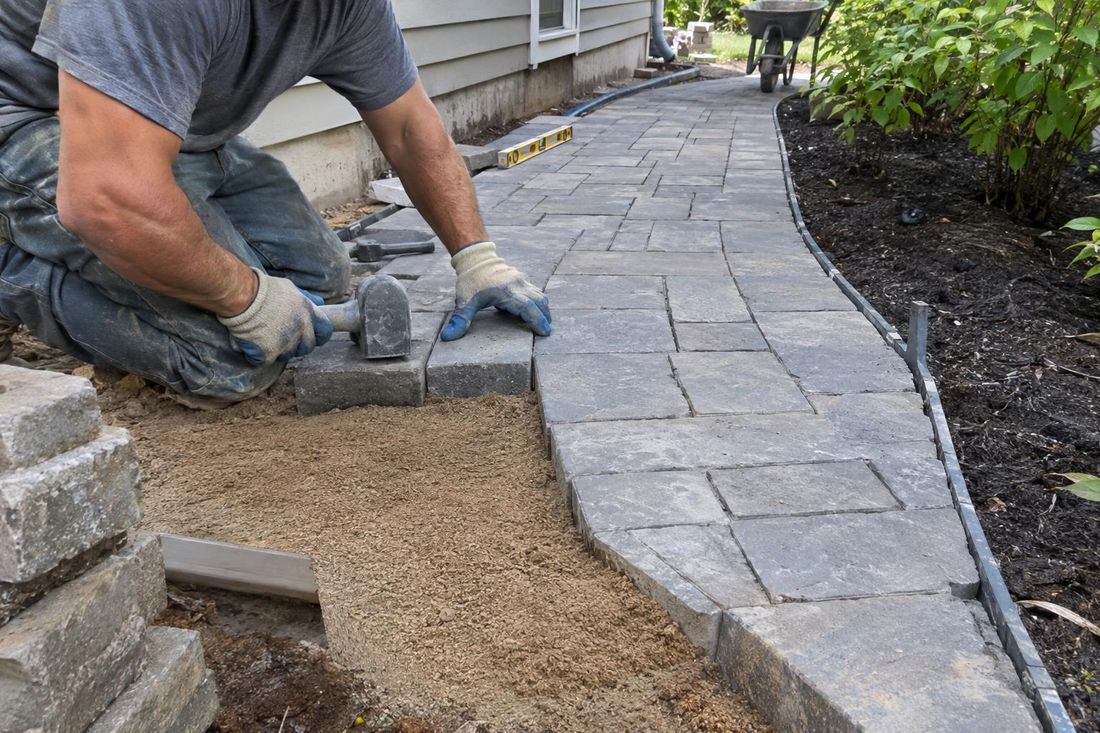
Installing a gray paver walkway. A worker in gloves kneels on a bed of leveled sand and taps a gray paver into place with a rubber mallet, next to a finished curved section of interlocking pavers. A plastic edge restraint runs along the mulch bed, a level lies on the pavers, and a wheelbarrow sits in the background.
Installing a gray paver walkway A worker in gloves kneels on a bed of leveled sand and taps a gray paver into place with a rubber mallet, next to a finished curved section of interlocking pavers. A plastic edge restraint runs along the mulch bed, a level lies on the pavers, and a wheelbarrow sits in the background.

How we do it

We build a walk the same way we build a patio. First we dig out the old surface and soft soil, then lay a compacted stone base, usually four to six inches deep, in thin layers run over with a plate compactor. The base carries the load, so we don't rush it. On top goes about an inch of bedding sand, screeded flat over guide pipes so the pavers sit at one even height.

Then the pavers go down. We cut curves in with a wet saw or a splitter rather than forcing a pattern to bend. Edge restraint gets spiked in along both sides so the walk can't spread. Last, we sweep joint sand into the gaps and compact again. And we pitch the walk about a quarter inch per foot, so water runs off to one side, away from the house wherever we can.

How a job with us goes

  1. Free estimate and layout

    We measure, talk through where the walk should go, and mark the edges with paint and string. You see the real width and curve before we dig. Moving paint is cheaper than moving pavers.

  2. Old walk removed

    We break out the old concrete and haul it off, then dig down to firm ground. If we hit soft spots, we dig those deeper so they don't settle later.

  3. Base prepared and compacted

    Crushed stone goes in thin layers and gets run over with a plate compactor each time. We set the pitch here, because the base decides whether water leaves the walk.

  4. Pavers laid and edged

    We screed the bedding sand, lay the pavers from a straight starting line, and cut the curves and ends. Then we spike in the edge restraint so the walk holds its shape.

  5. Joints filled and final check

    We sweep joint sand into every gap, compact again, and sweep once more. Then we walk it with you, look at the pitch, and clean up.

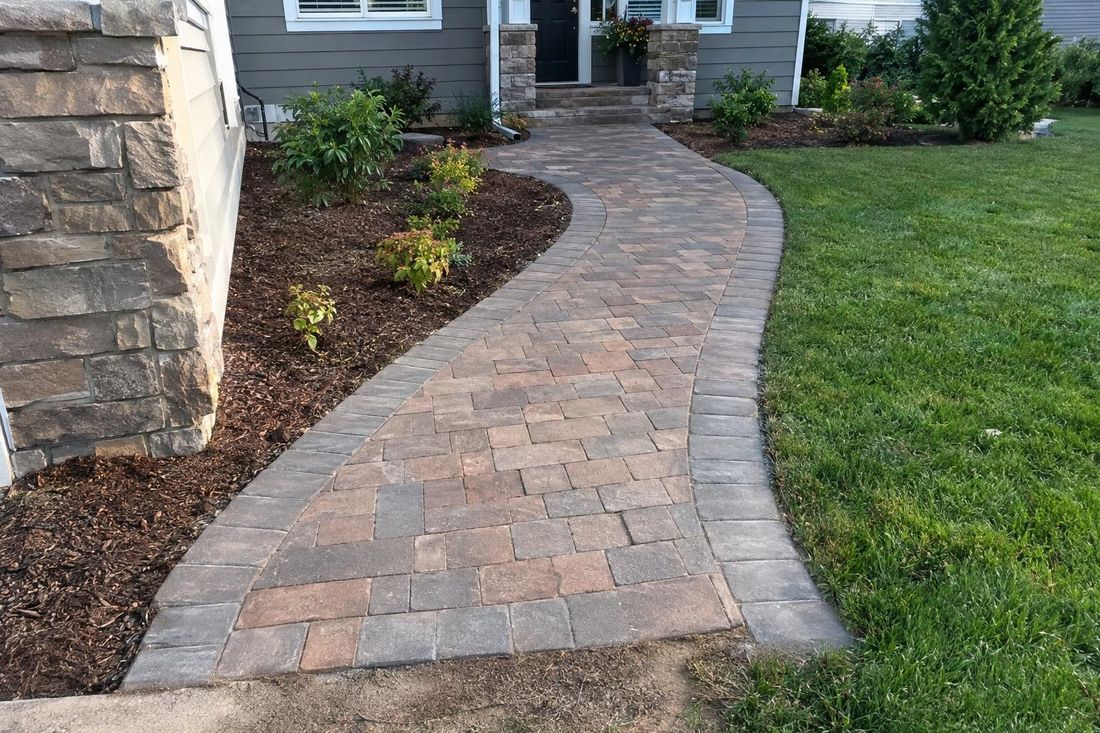
Curved paver walkway to front entry. A curving walkway of interlocking pavers in blended gray, tan and rust tones leads from the foreground to a front door with stone steps. Dark mulch beds with shrubs lie on the left, a stone-veneer column sits at the far left, and a lawn borders the right side.
Curved paver walkway to front entry A curving walkway of interlocking pavers in blended gray, tan and rust tones leads from the foreground to a front door with stone steps. Dark mulch beds with shrubs lie on the left, a stone-veneer column sits at the far left, and a lawn borders the right side.

What drives the cost

Price follows the amount of work, and a few things move it most. Length and width set how much stone, sand and paver we need. The paver you pick matters too, since brick pavers and thicker concrete ones don't cost the same. Curves and cuts take longer than straight runs because each cut is made by hand at the saw. Taking out the old walk adds labor and hauling, especially if it's thick or has steel in it. And steps add real work, since each one has to be laid out and built to match. We look at all of it on site, and the estimate is free.

How long it takes

Most walks take us two to three days. The first day is usually tear-out and base, and the pavers and joint sand follow. A short front walk can finish sooner, and a long one with curves or steps will run to the top of that range. Rain slows digging and compacting, so a day may shift. We'll go over the plan when we give you the estimate, and we'll call you if it changes.

Local expertise: residential paver walkways in Atlanta

The red clay of the Georgia Piedmont is typified by the Cecil soil series: very deep, well drained soil on ridges and side slopes, with a red subsoil that averages 35 to 60 percent clay.

What it means for your job

Clay holds water against a wall and does not recover well once it is compacted, so drainage behind a retaining wall and a properly built base under pavers and footings matter more here than the surface material.

Source: USDA NRCS Official Soil Series Description: Cecil →

Atlanta gets about 49.7 inches of rain a year. Late winter, early spring and July are the wettest stretches, and fall, especially October, is the driest.

What it means for your job

Mortar, stucco and sealers need dry time. Fall is the easiest season for repointing and sealing, and summer work is planned around afternoon storms.

Source: Wikipedia: Climate of Atlanta →

Overnight freezes can be expected on about 40 days a year in Atlanta.

What it means for your job

Water that soaks into brick, stone and mortar and then freezes is what pops faces off brick and opens joints. Keeping water out matters more here than in places that rarely freeze, and winter mortar work has to be protected overnight.

Source: Wikipedia: Climate of Atlanta →

Good to know

Walks near large trees will need re-leveling over time as roots grow. Roots push up the base and the pavers ride along with it. The good news is that pavers lift out and go back down, so that fix is a repair and not a new walk. We also don't solve drainage problems beyond the walk itself, like a downspout that dumps onto it, unless we've agreed to that up front. And if the soil under your old walk turns out soft or wet, we'll tell you what it needs before we go further.

Paver walkways questions

How wide should a front walk be?

Four feet lets two people walk side by side. If you carry groceries or push a stroller, you'll be glad of every inch. Side paths can be narrower.

Can pavers go over my old concrete walk?

Sometimes, if it is sound and height allows, but a proper base is better. We check for rocking slabs and for how high the finished walk would sit against your door and siding.

Can I walk on it right after you finish?

Usually, yes. Sand-set pavers don't cure the way concrete does, so once the joints are swept and compacted, foot traffic is fine. We'll tell you if anything heavy needs to wait.

Will weeds grow in the joints?

A little seed lands in any joint, so a few weeds may try. Joints packed full of sand and a quick sweep now and then keep them down.

Ready for a free estimate on your masonry job?

Free for property owners. No obligation.

Get my free estimateCall (470) 837-6333
Call nowFree estimate