Cracked firebrick and crumbling joints are easy to put off, but a fireplace tells you when it needs help. We repair the firebox, hearth, damper and face so the fire stays where it belongs.
Qualified MasonsVerified ProfessionalsFree EstimatesOn Time
What fireplace repair involves
Fireplace repair covers the firebox where the fire burns, the hearth in front, the damper and the brick or stone face. Each part takes heat or wear in its own way. The firebox lining of firebrick and refractory mortar protects the structure behind it. The hearth catches sparks and stray embers. The damper opens and closes the flue.
You need us when firebrick is cracked or loose, when joints have washed out and left gaps, when the damper sticks, or when the hearth or surround has chipped and shifted. Not sure which? We give free estimates in Atlanta, and we'll look over the firebox with a flashlight and a pick before we tell you anything.
Signs you need fireplace repair
Gaps between the firebricksThe mortar joints have eroded, and heat can now reach the structure behind the firebox. We press a pick into them, and if it sinks in, the joint is done.
Cracked or loose firebrickA hairline crack can be watched. A brick that wiggles or has fallen out can't, and it needs replacing before the next fire.
A damper that sticks or won't sealRust, warped metal or built-up debris is usually the cause. If it won't open all the way, smoke has nowhere to go but your living room.
Sandy grit on the firebox floorThat's mortar breaking down. Sweep it up, and if more shows up next week, the joints are failing.
What we handle
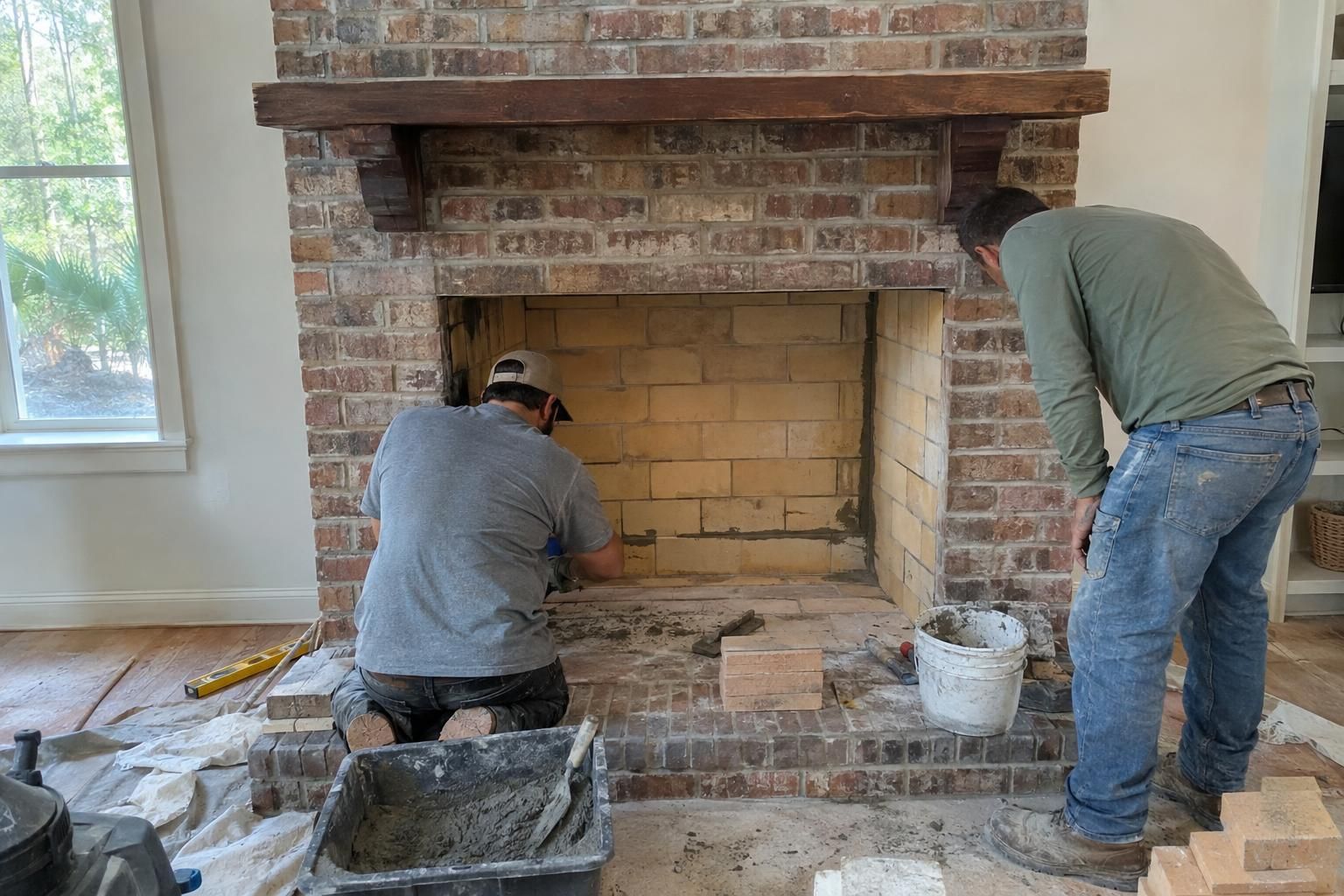
Firebrick and firebox joint repairWe grind out failed joints and repack them with refractory mortar, and we swap any cracked brick. It's the most common fireplace job we do, and catching it early can save you a rebuild.
Firebox rebuildWhen the brick is flaking, shifted or the back wall has opened up, we take the lining out and lay a new one, course by course. It's more work, but it's the right fix when patching won't hold.
Hearth and surround repairWe reset loose hearth pieces, replace cracked ones, and repoint the surround and face. Matching the color of existing brick or stone takes some hunting, and we take that part seriously.
Damper replacementWe remove the old damper, which is often rusted in place, and fit a new one that opens fully and closes tight. We test it before we pack up.
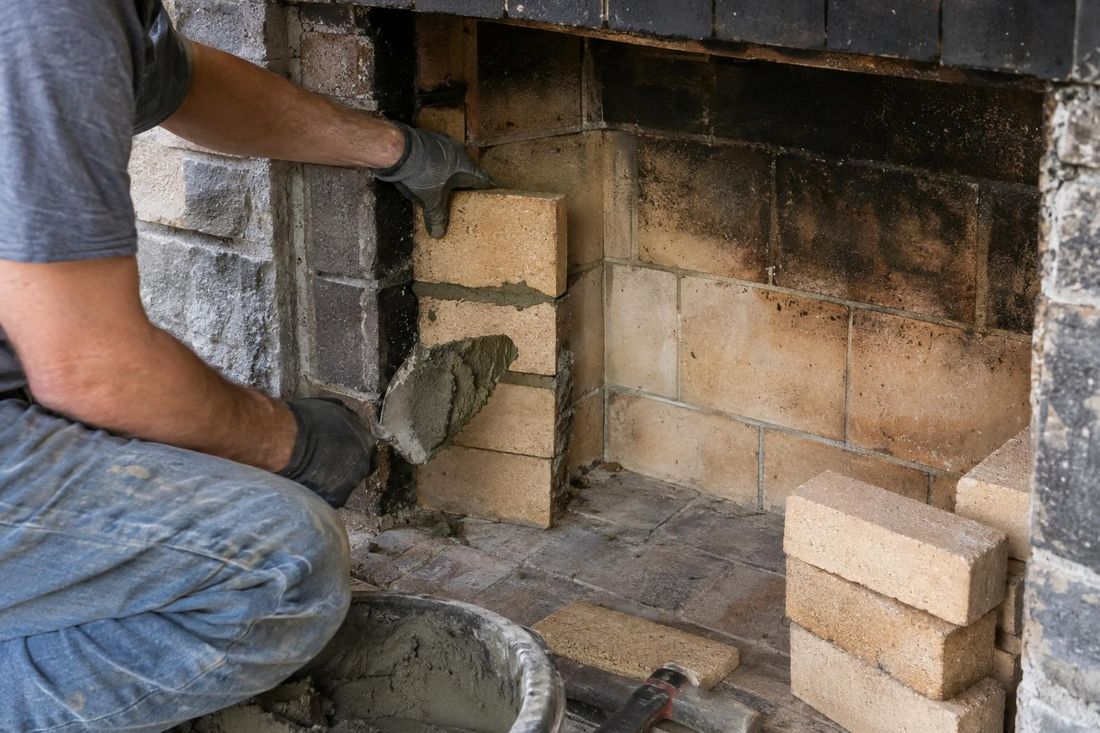
Relaying firebricks inside a fireplace A gloved person kneels at a fireplace firebox, holding a trowel with mortar beside a stack of tan firebricks along the side wall. A bucket of mortar, a hammer, and more bricks sit on the hearth floor.
How we do it
Fireboxes are built from firebrick and heat-rated refractory mortar. Firebrick is denser than common brick and made to handle the heating and cooling a fire puts it through. Ordinary mortar crumbles under heat, so it never goes inside the firebox. Refractory mortar goes in thin, tight joints, which is how firebox walls are laid.
For repair, we rake out the loose mortar with a joint raker or grinder and vacuum the dust. Loose or cracked firebrick is replaced, and joints are repointed with refractory mortar, pressed in and tooled flush. Outside the fire zone, on the hearth and face, we use mortar matched to the existing masonry. Damper work means removing the old frame and setting the new one so it seats square.
How a job with us goes
Free estimate and firebox inspection
We come out, look at the firebox with a flashlight, and press a pick into the joints to find the soft ones. We check the damper and hearth too, then tell you what we found and what it takes to fix.
Damaged brick and joints removed
We cut out cracked brick and rake out failed joints until we hit solid mortar. Leaving crumbly stuff behind just means the new work fails sooner. We cover your floor first, because this part is dusty.
Repair or rebuild with refractory materials
We set new firebrick and fill the joints with refractory mortar, tooled flush so ash doesn't catch. A rebuild goes one course at a time so the walls stay plumb.
Hearth, face and damper
We reset loose hearth pieces and repoint the surround. If a new damper is going in, it goes in now, and we work it open and shut before moving on.
Cure time before the first fire
Refractory mortar has to cure before it sees heat. We tell you how long to wait, and we mean it. A fire too early can crack fresh joints.
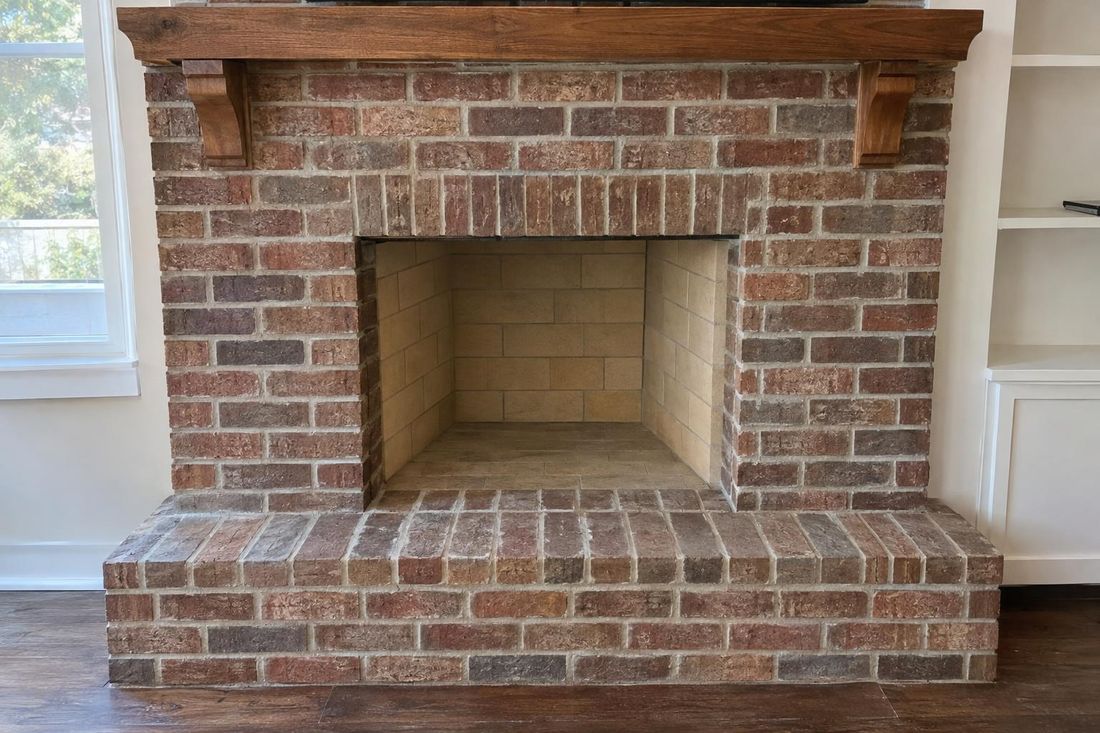
Clean red brick fireplace with mantel A red and brown brick fireplace with a raised brick hearth, a light firebrick-lined firebox, and a wooden mantel supported by two wooden corbels. The brick and mortar look clean and intact, and the firebox shows no soot.
What drives the cost
The biggest swing in price is repointing versus a full firebox rebuild. Repointing a few failed joints is a small job. Taking out the whole lining and laying new firebrick takes more days and more material. After that comes the damper, since a rusted-in one means more demolition than a clean swap. Hearth work adds time, especially if the stone has to be lifted and reset. And surround material matters, because common brick is easy to match while old or natural stone can take longer to source. We'll walk through it with you at the free estimate, so you can see what each piece adds.
How long it takes
Most fireplace repairs take us one to three days. Repointing and a damper swap sit at the short end, and a firebox rebuild or hearth reset runs longer. Then comes cure time before you light a fire, and we'll tell you how long when we finish. It's tempting to test the new work the first cold night. Hold off, and let the mortar do its job.
Local expertise: residential fireplace repair in Atlanta
Atlanta gets about 49.7 inches of rain a year. Late winter, early spring and July are the wettest stretches, and fall, especially October, is the driest.
What it means for your job
Mortar, stucco and sealers need dry time. Fall is the easiest season for repointing and sealing, and summer work is planned around afternoon storms.
Overnight freezes can be expected on about 40 days a year in Atlanta.
What it means for your job
Water that soaks into brick, stone and mortar and then freezes is what pops faces off brick and opens joints. Keeping water out matters more here than in places that rarely freeze, and winter mortar work has to be protected overnight.
Before you use the fireplace again, have a chimney sweep inspect the flue above. We repair the firebox, hearth, damper and face, but a good firebox under a bad flue still isn't safe to use. Gas appliance work is a separate trade, so we don't touch gas logs, lines or burners. Fresh mortar has to cure before any fire, so the first fire waits. And if we open the firebox and find more damage than we could see, we'll stop and talk with you before going further.
Fireplace repair questions
Is it safe to use a fireplace with cracked firebrick?
No. Gaps let heat reach the structure behind the firebox. Repair it first.
Why does my fireplace smoke into the room?
Common causes are a stuck damper, a blocked flue, or a firebox opening too large for the flue. We can fix the damper. A sweep can check the flue.
Can I patch firebox joints with regular mortar?
Please don't. Ordinary mortar crumbles under heat, and you'll be patching again soon. Firebox joints need refractory mortar.
How long before I can light a fire after the repair?
Not until the mortar has cured. We'll give you a number when we finish, and it's worth waiting for.
Do I need a chimney sweep too?
Yes, have the flue inspected before the fireplace is used again. We work on the firebox, and the sweep looks at what's above it.