A stone that's come loose on your house won't fix itself, and it usually means water is getting in somewhere. We reset it, repoint around it, and track down why it moved.
Qualified MasonsVerified ProfessionalsFree EstimatesOn Time
What stone repair involves
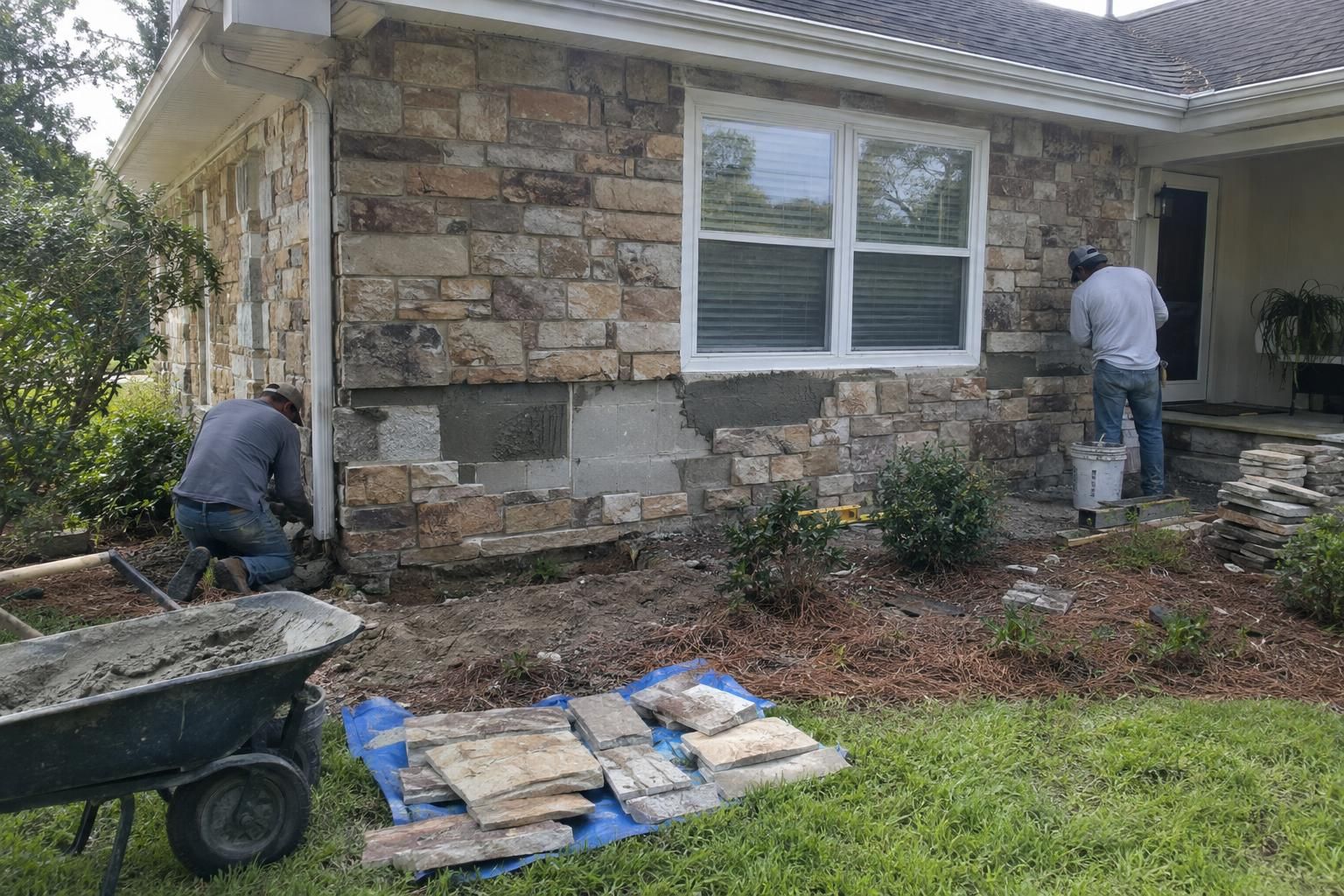
Stone repair is what we do when stones on your veneer, wall, steps, fireplace or porch column have gone loose, fallen off or cracked. We take out the failed mortar down to sound material, clean the stone and the bed behind it, and set everything back in fresh mortar matched to the old color. If a stone is too far gone, we fit one that suits the rest.
You need it when you find a stone in the flower bed, when a step rocks under your foot, or when joints are crumbling enough that a key sinks into them. Small fixes cost less than big ones, and one loose stone lets water in behind its neighbors. We give free estimates to homeowners in Atlanta.
Signs you need stone repair
Stone on the groundLook at the wall where it sat. A dark, damp bed or a stone back that's clean of mortar tells us the bond let go, often because of water behind it.
A step or cap that rocksThe mortar bed under it has crumbled or washed out. Every footstep loosens it a little more.
Joints you can scratch outIf a house key digs in and sand comes out, the mortar has gone soft. Water gets past it and into the wall.
A hollow knockTap the stone with your knuckles. A dull, hollow sound means it's lost its grip on the mortar, even if it hasn't moved yet.
What we handle
Re-attaching fallen veneer stonesWe clean the back of the stone and the wall, then set it in a fresh bed so it bonds. It's often a one-stone fix, as long as the wall behind is sound.
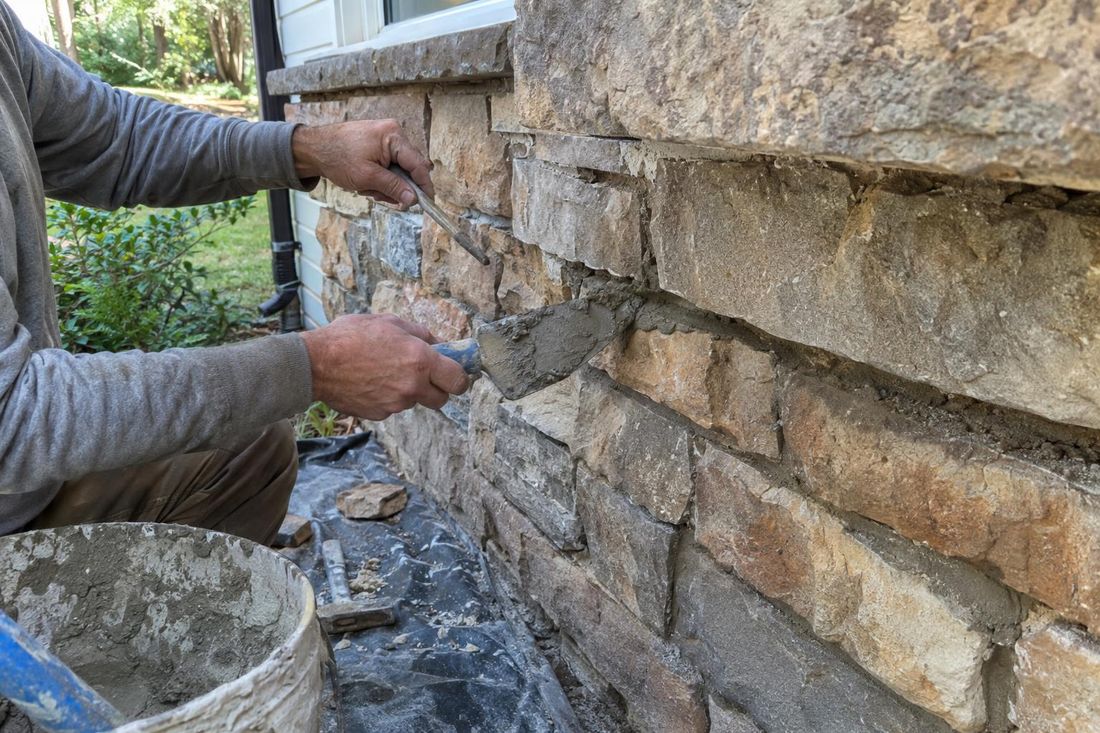
Repointing stone jointsWe rake out the old mortar with a grinder or hand chisel, about twice as deep as the joint is wide. Then we pack in new mortar matched to the color.
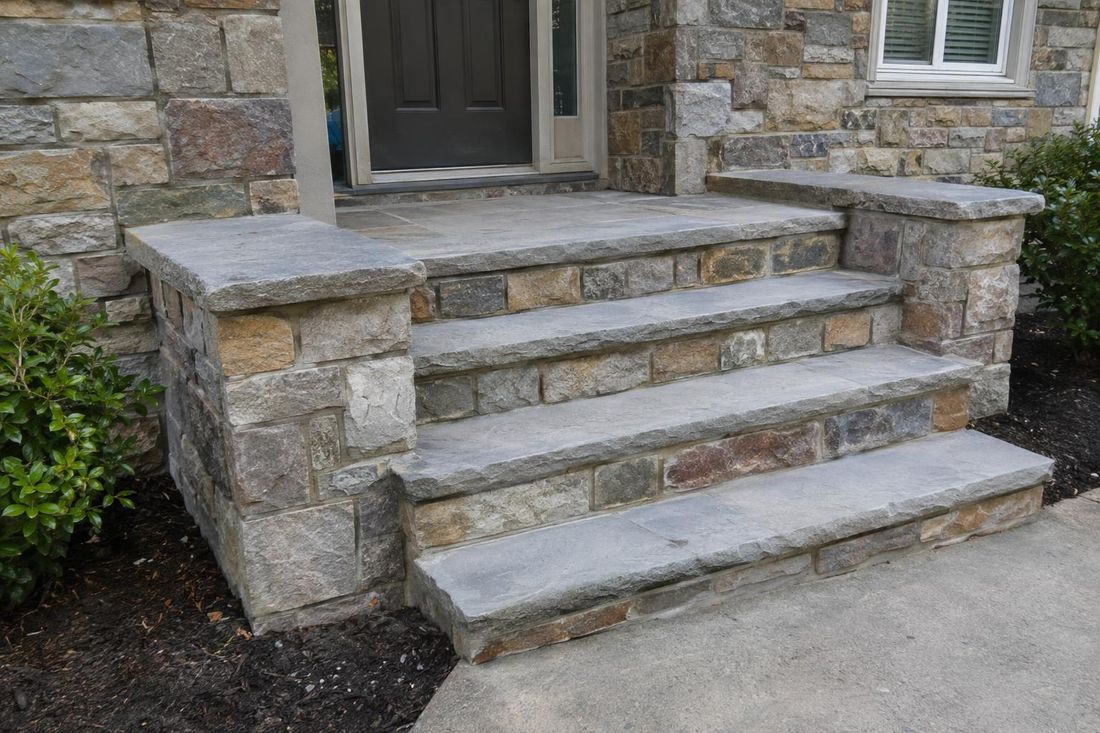
Resetting loose steps and capsWe lift the stone, clean out the old bed and set it level with a slight pitch so rain runs off.
Replacing cracked or missing stonesWe cut out the broken piece and fit a salvaged or matching stone. Your originals go back first if they survived.
Fireplace surrounds and porch columnsSame repair, but we also check for heat staining or a failed cap letting water run down the column.
Mason pointing mortar into stone veneer A person kneels beside a stone wall on a house and holds a pointing trowel loaded with mortar near the joints between stones. A bucket of mortar, a hammer, loose stone pieces and a dark plastic sheet lie on the ground below.
How we do it
We start by taking the old mortar bed out down to sound material. That means chiseling or grinding until we hit mortar that doesn't crumble, not stopping where it's easy. New mortar won't hold to dust. We save every stone that comes off, brush the backs and the wall clean, and dampen both so they don't pull the water out of the fresh mortar.
Then we check the cause, and it's usually water. We look for a failed cap, a gutter spilling on the wall, missing flashing or soil piled against the stone. After that, stones are reset in fresh mortar matched in color. We mix it no harder than the stone and the old joints around it, because mortar that's too hard can crack the stone instead of the joint. We tool the joints last so they shed water.
How a job with us goes
Free estimate and cause check
We come out, look at the damage and tell you what we think caused it. We tap the stones around the failure and check above it for water sources. Fixing a stone without fixing the cause just means a repeat visit.
Loose stone removed and saved
We take off anything that's loose and keep it, since your originals match best. We lay them out in order so each one goes back where it came from.
Surface cleaned and prepared
We chisel out old mortar to sound material and brush the wall and stone backs clean. Fresh mortar only bonds to a clean, damp surface.
Stone reset and joints finished
We butter the bed, press the stone home and check that it's level and lines up with its neighbors. Then we tool the joints once the mortar firms up.
Cleanup and walk-through
We sweep up, haul off debris and walk the repair with you. If the water source is something you can fix, like a gutter, we'll point it out.
Stone steps with flagstone treads and pillars A set of stone entry steps leads up to a dark front door, with flat gray stone treads over multicolored stone-veneer risers. Stone-capped pillars sit on both sides of the steps, with mulch and shrubs alongside.
What drives the cost
The biggest driver is how many stones are involved and how much mortar has to come out. Whether we can reuse your originals matters too, because hunting for a matching replacement takes time. Height counts, since ladders and scaffolding slow the work. Tight spots like a narrow side yard or a chimney corner take longer as well. And if water has damaged what's behind the stone, that has to be fixed first, and it can outweigh the stone work itself. We price it after we've seen it, and the estimate is free.
How long it takes
Most repairs take us a day. A few stones, a step or a section of joints usually fits in that. Mortar needs time to cure, so we'll ask you to stay off a reset step for a while, and we'll tell you how long. Widespread veneer failure takes longer, because we have to open the wall behind it. And we won't close it back up until we've seen what's in there.
Local expertise: residential stone repair in Atlanta
Atlanta gets about 49.7 inches of rain a year. Late winter, early spring and July are the wettest stretches, and fall, especially October, is the driest.
What it means for your job
Mortar, stucco and sealers need dry time. Fall is the easiest season for repointing and sealing, and summer work is planned around afternoon storms.
Overnight freezes can be expected on about 40 days a year in Atlanta.
What it means for your job
Water that soaks into brick, stone and mortar and then freezes is what pops faces off brick and opens joints. Keeping water out matters more here than in places that rarely freeze, and winter mortar work has to be protected overnight.
If many veneer stones are falling, the whole installation may have been done without proper backing, and patching will not hold. We'll tell you that straight rather than reset stones that will drop again. Repair also can't fix a wall that's moving, like one over a settling footing or a bulging retaining wall. That's a rebuild, not a repair. We can get close to a stone that's no longer available, but not always exact. And we won't lay mortar on frozen stone or when a hard frost is coming overnight.
Usually moisture behind the veneer or a poor original bond. We look for the water first, whether it's a gutter, missing flashing or a cracked cap above.
Should I keep the stones that fell?
Yes. Reusing the originals gives the best match. Leave them in a pile by the wall, and we'll clean the backs ourselves.
Can I just glue a stone back on myself?
People try construction adhesive on small ones. It rarely lasts on a wall that's damp behind. And if a stone has fallen once, something's still wrong back there, so we'd rather set it in mortar.
Will the new mortar match the old?
We match color and texture with sample mixes. But mortar looks different wet than dry, so give it a few days before you judge.
Do I need to move anything before you come?
Clear plants, furniture and grills away from the wall. We'll cover what we can, but mortar dust travels.