When stone lets go of a commercial building, the first worry is whoever is walking underneath. We make the area safe first, then we find out why the stone moved.
Qualified MasonsVerified ProfessionalsFree EstimatesOn Time
What stone repair involves
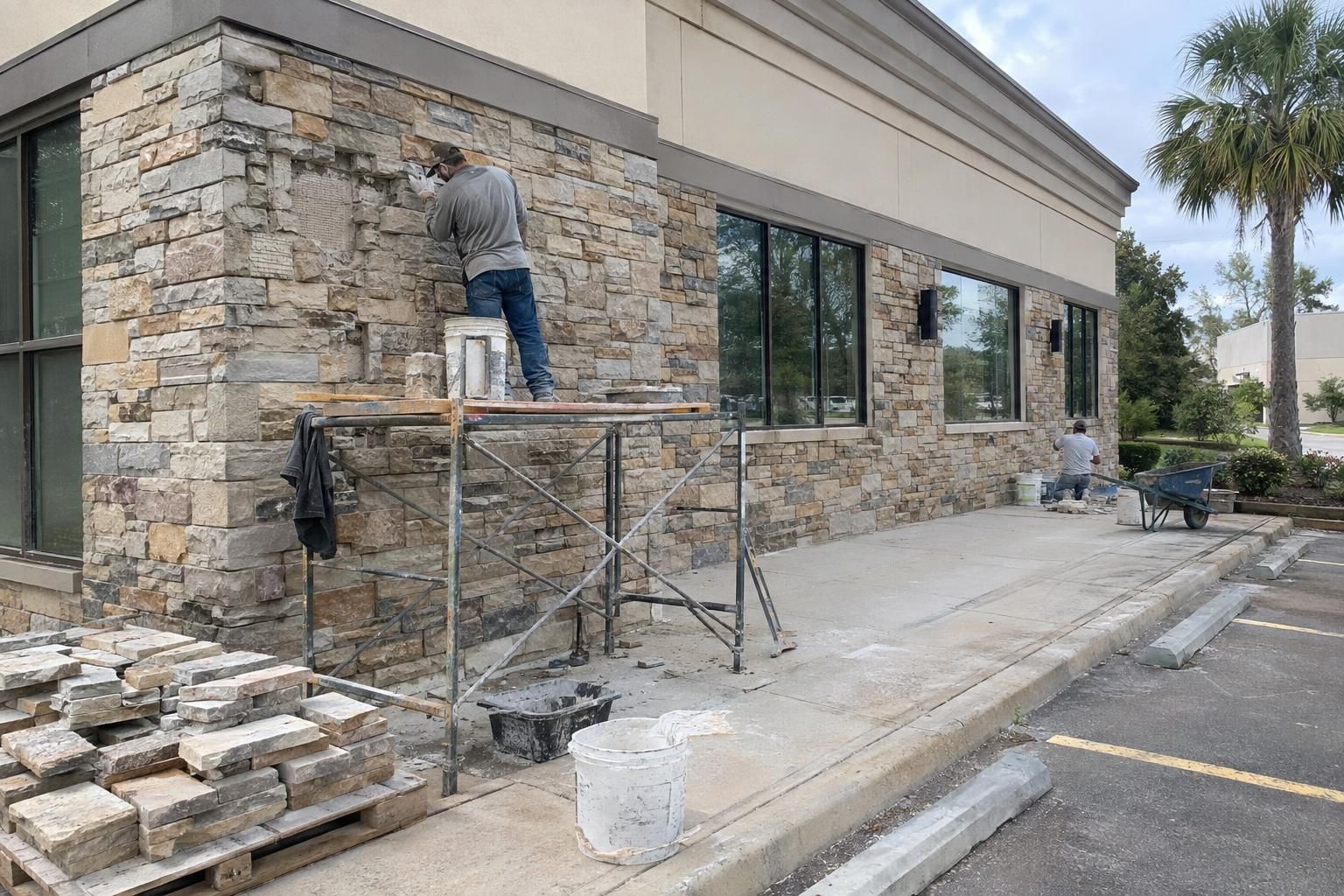
Commercial stone repair is what we do for loose, cracked or missing stone on storefronts, facades, columns and parapets. We sound the stone to find what's loose, pin it or take it down, patch or replace what's damaged, and reseal the joints that let water in. Then we write up what we found and what we did, so you have it for your files.
You need it when a piece lands on the sidewalk, when a tenant mentions a stone that wiggles, or when a cap on a parapet has shifted. One fallen stone usually means its neighbors are in similar shape. And waiting rarely makes the repair smaller. We give free estimates to businesses, property managers and general contractors in Atlanta.
Signs you need stone repair
Stone or chips on the sidewalkThat piece came from somewhere above, and its neighbors were probably fastened the same way. Block off the area and call us.
A dull thud when you knock on itSound stone rings. A hollow or dead sound means the bond or the anchor behind it has let go, even if the face looks fine.
Rust stains or cracks at a stone's cornerSteel behind the stone is rusting, and rust swells. It pushes on the stone until it cracks or shifts.
Open joints at copings and capsWater is getting past the top of the wall and into everything under it. Can you slide a pencil tip into the joint? That's wide enough.
What we handle
Securing or removing loose facade stoneWe sound the wall, pin what can be saved with stainless anchors and take down what can't. Anything we remove is set aside safely so you can decide on a replacement.
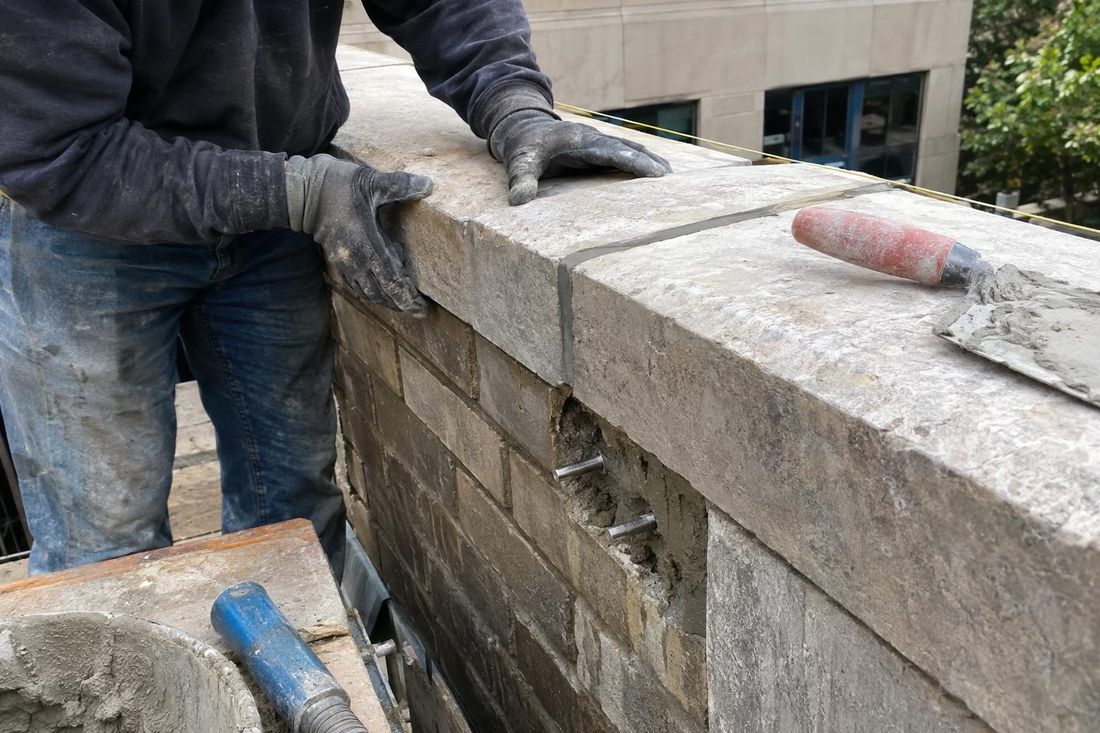
Coping and cap stone resettingWe lift the stones, clean out the old bed and reset them with a slight pitch so water runs off. Caps take the weather first, so open joints up there feed water into the wall below.
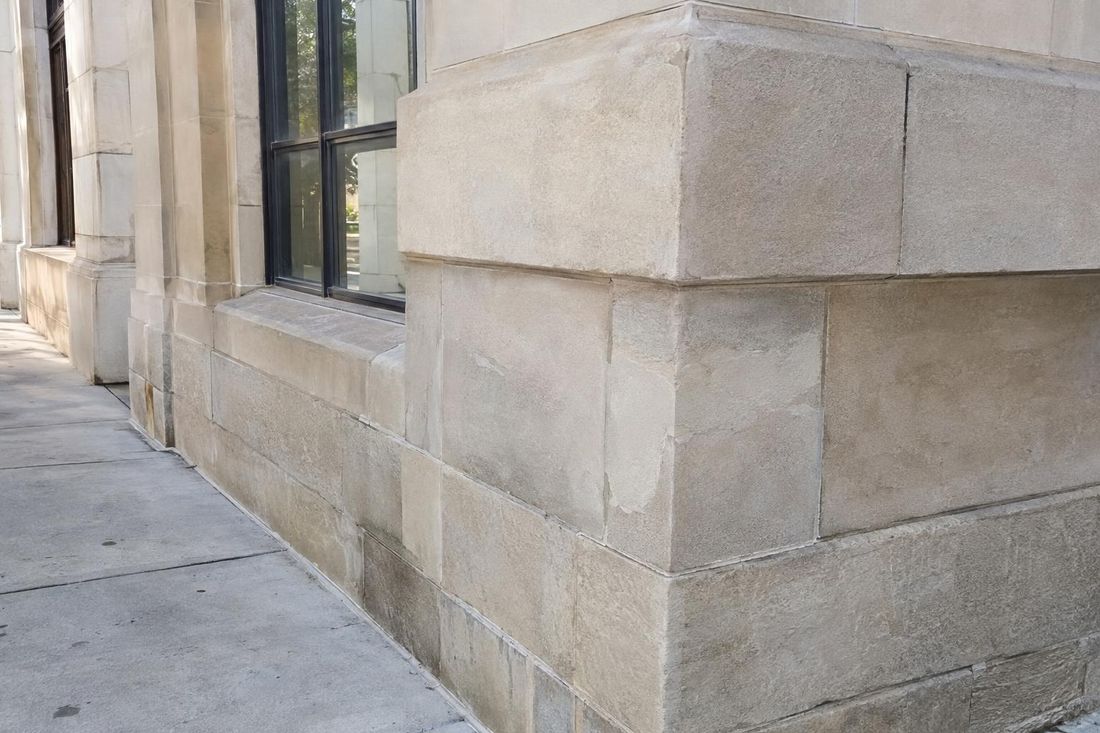
Patching and crack repair in cast stone and limestoneChips and cracks get matched patching mortar. Cast stone and limestone weather differently, so we match each one against the stone itself instead of guessing.
Veneer replacement at storefronts and columnsWhen veneer has failed, we cut out the bad pieces and fit new cut stone. Storefront stone gets bumped by carts, deliveries and car doors, so we look at what hit it, too.
Mason working on stone wall coping A worker in gloves and work clothes rests their hands on a large stone coping along a brick and stone wall. Exposed metal pins stick out of a mortar-filled gap in the wall, and a trowel with wet mortar lies on the stone beside a mortar bucket.
How we do it
Loose units are removed or pinned with stainless anchors. We drill into sound stone and the solid backup behind it, set the anchor and fill the hole so it doesn't show. Stainless matters because plain steel rusts, swells and cracks the very stone it was meant to hold.
Chips and cracks in cut stone are repaired with matched patching mortar, tinted and tooled to blend with the face. When the damage is too big for a patch, we replace the stone with a new cut piece made from measurements of the opening. At copings, we clean out the failed joints and reseal them, so rain stays on top of the wall where it belongs.
How a job with us goes
Site visit and protection below the area
We walk the building and the ground around it. Before anything else, we block off or cover the walkway below, because the first job is keeping people out of the drop zone.
Condition survey and scope
We sound the stone by hand and look closely at joints, cracks and rust stains. Then we write down what needs pinning, patching, replacing or resealing, so you're comparing real scope.
Access set up
Depending on height, we set up a lift or scaffold. Good access means we work with both hands on the stone instead of reaching for it, and that's how repairs come out right.
Repairs, anchoring and joint sealing
We take off what's failed, then anchor, set and patch the stone. Joint sealing comes last, once everything is sitting where it should.
Report of work done
We give you a written report of what we found and what we fixed, plus anything that needs another look later. Property managers usually want it in the building file.
Limestone building corner with patched blocks A corner of a commercial stone building shows large cut limestone blocks beside a sidewalk and a black-framed window. Some blocks have lighter, smoother patches that look like repair material blended into the surrounding stone.
What drives the cost
Several things set the price. Urgency is one, because a rush make-safe call means we rearrange our schedule. Height and access matter too, since a two-story storefront and a tall facade call for very different lifts or scaffold. Replacement stone is cut to order, so fabrication adds cost, and more pieces add more. Anchoring takes time because every pin means drilling, setting and filling. And sidewalk protection, with barriers or a covered walkway, is part of the job whenever people walk below. Our free estimate spells out which of these apply to your building.
How long it takes
Make-safe work can be done quickly, and we treat it as the first priority. Fabricated replacement stone adds weeks, since it has to be measured, cut and delivered before we can set it. So we often secure the area first and come back for the new stone. Patching mortar and joint sealing also need dry weather and time to cure, which can stretch a schedule.
Local expertise: commercial stone repair in Atlanta
Atlanta gets about 49.7 inches of rain a year. Late winter, early spring and July are the wettest stretches, and fall, especially October, is the driest.
What it means for your job
Mortar, stucco and sealers need dry time. Fall is the easiest season for repointing and sealing, and summer work is planned around afternoon storms.
Overnight freezes can be expected on about 40 days a year in Atlanta.
What it means for your job
Water that soaks into brick, stone and mortar and then freezes is what pops faces off brick and opens joints. Keeping water out matters more here than in places that rarely freeze, and winter mortar work has to be protected overnight.
Widespread anchor failure needs an engineer's review before repair. If we find stone after stone loose across a facade, or rusted steel behind it, we'll stop and tell you. Pinning one stone at a time won't fix a failing system. We aren't engineers, and we don't pretend to be. We can't fix leaks that start at a roof or flashing, though we'll point them out. Natural stone varies, so a new piece will be close to the old but never identical.
A piece of stone fell from our building. What now?
Block off the area below and request an urgent visit so the rest can be checked and secured. Keep the piece and take photos of where it fell.
Can chipped stone be patched?
Yes, small damage is patched to match. Larger damage is cut out and replaced with a new cut piece.
Do we need an engineer?
Not for a few loose stones. But if we find widespread anchor failure, we'll tell you, and an engineer should review it before we repair.
Can our business stay open while you work?
Often, yes, with the area below protected by barriers or a covered walkway. Sometimes a lift or fall zone means closing an entrance for a stretch, and we'll tell you that up front.
Will we get something for our records?
Yes. We write up what we found and what we did, so your file shows the condition and the work.