Call (470) 837-6333Get a free estimate
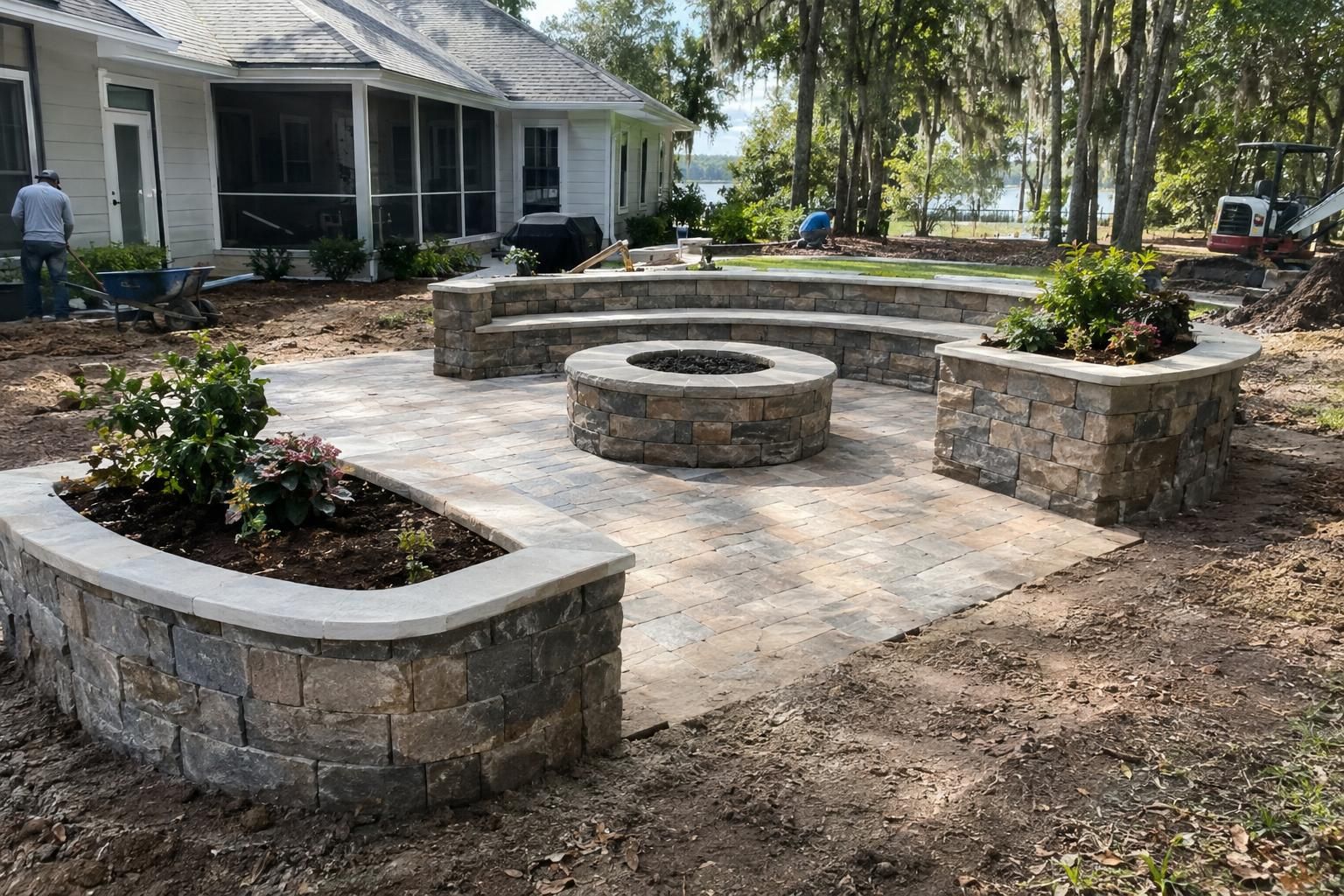
Paver patio with seat wall and planters. A circular stone fire pit sits at the center of a paver patio. A curved stone seat wall wraps around the back, and two raised planter walls with capstones hold shrubs on either side. Workers and an excavator are visible in the background, so the landscaping is still in progress.

Dalton Brothers Masonry Atlanta

Residential Seat walls and planters in Atlanta

A good seat wall gives your patio an edge and gives your guests somewhere to sit that isn't a folding chair.

Call (470) 837-6333

Request your free estimate

Always free and we get back to you ASAP.

By submitting, you agree to our Terms of Use and Privacy Policy and consent to calls and texts about your project from Dalton Brothers and the local partners matched to your request, including by automated means. Consent is not a condition of any purchase.

Qualified MasonsVerified ProfessionalsFree EstimatesOn Time

What seat walls and planters involves

A seat wall is a low wall at sitting height that edges a patio or fire pit. A raised planter is the same construction, filled with soil. Either one can be block, stone, or brick, and either one ends in a cap you can rest on.

When do people call us? Usually when a patio feels like a slab dropped in the yard, or when the fire pit has no real place to gather around. Sometimes it's a flower bed that keeps washing onto the lawn. A wall solves all of that, and the seating comes built in. We set every wall on a proper base so it stays straight, because a wall that settles at one end is just a crooked bench.

Signs you need seat walls and planters

What we handle

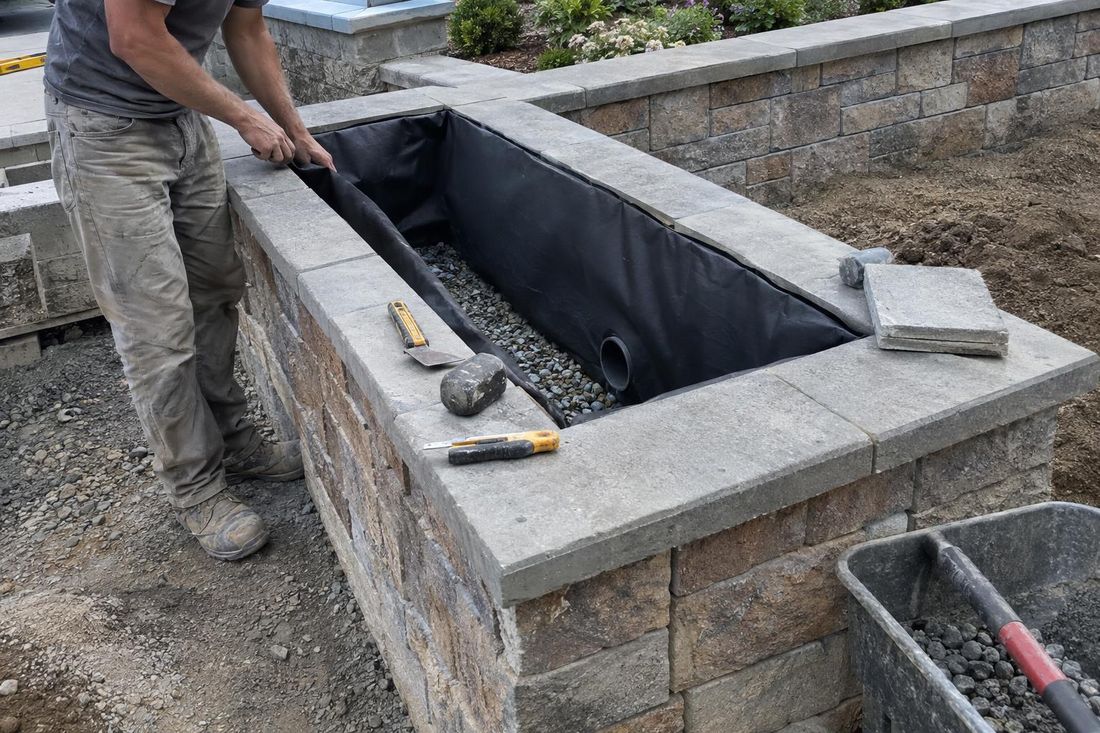
Stone planter wall being lined. A segmental stone block planter wall with gray capstones has its interior lined with black landscape fabric over a base of gravel. A drainage pipe opening is visible near the bottom, and a person in work clothes is smoothing the fabric along the edge, with a trowel, tools and spare cap pieces resting on top.
Stone planter wall being lined A segmental stone block planter wall with gray capstones has its interior lined with black landscape fabric over a base of gravel. A drainage pipe opening is visible near the bottom, and a person in work clothes is smoothing the fabric along the edge, with a trowel, tools and spare cap pieces resting on top.

How we do it

We build seat walls from segmental block, or from a block core faced in stone or brick. Segmental block stacks with a lip or pins, and it's our pick for most curves. A faced wall gets a mortared block core with the veneer over it, and we fill cores with rebar and grout where the wall calls for it. Everything sits on a compacted base or a footing, depending on the wall and the ground. We compact the gravel in thin layers with a plate compactor and check every course with a level. The cap is smooth, at least a foot deep, and glued down so it doesn't shift under you.

Planters get drainage holes and a liner on the soil side. The liner keeps water from soaking through the wall face, and the holes let it out the bottom. We put a layer of gravel under the soil so the holes don't clog with dirt.

How a job with us goes

  1. Free estimate

    We come out to your yard in Atlanta, look at the patio and the ground, and talk about what you want to sit on. We measure while we're there, and it costs you nothing.

  2. Layout

    We mark the wall with paint and string, or a garden hose for curves. Then we walk it with you, because moving a line now is a lot easier than moving a wall later.

  3. Base or footing

    We dig out the soft stuff and compact gravel in layers, or form a footing where the wall needs one. A wall is only as straight as what's under it.

  4. Wall built and capped

    We lay each course to a string line and check level and plumb as we go. Then the cap goes on, glued down, with a smooth top you can sit on.

  5. Drainage and conduit

    Planters get their drainage holes, liner, and gravel. Lighting conduit goes in before the wall closes up, since it's a pain to add afterward.

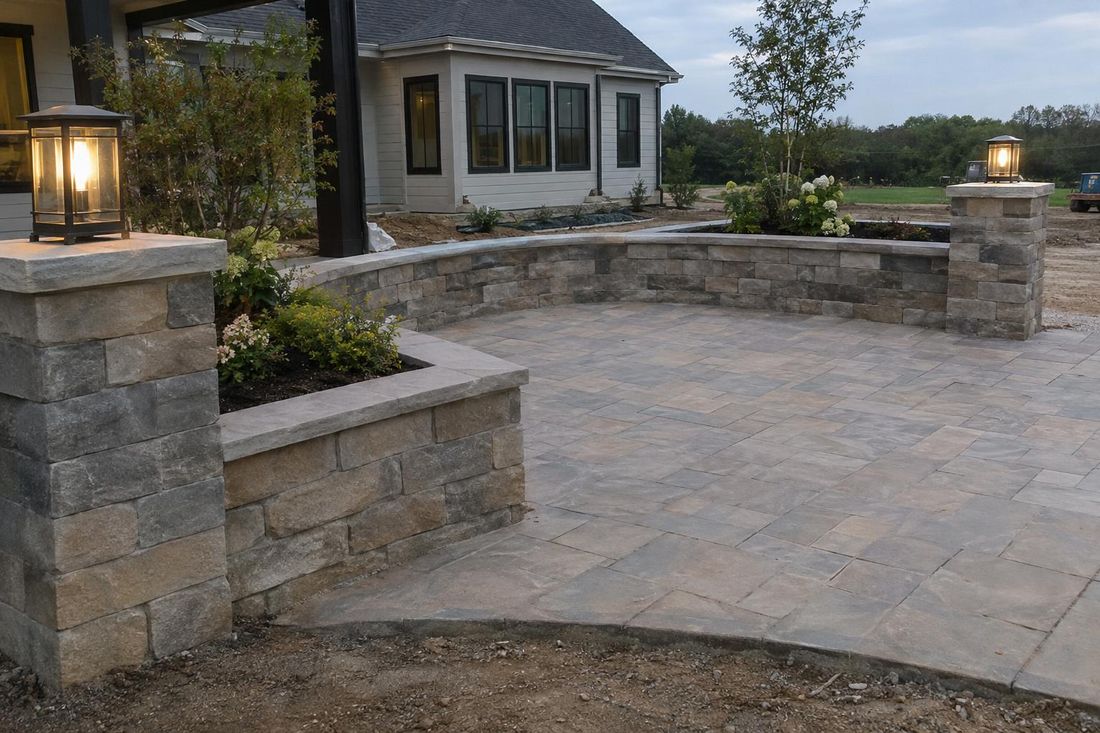
Stone seat wall with planter. A curved segmental stone wall encloses a paver patio, with a raised planter on the left filled with shrubs and flowering plants. Stone pillars with lantern-style lights stand at the wall's ends, and a house sits in the background.
Stone seat wall with planter A curved segmental stone wall encloses a paver patio, with a raised planter on the left filled with shrubs and flowering plants. Stone pillars with lantern-style lights stand at the wall's ends, and a house sits in the background.

What drives the cost

Length drives the price first, because every added foot means more block, more base, and more time. Curves cost more than straight runs since each piece gets cut and fitted. Facing matters too. Plain segmental block is one thing, and stone or brick over a block core is another. The cap material moves it again. Columns and lighting conduit add labor, and so does a planter's drainage and liner work. Access counts as well. If we have to carry material by hand to a back yard, that's more hours. We price it after we see the site, and the estimate is free.

How long it takes

Most seat walls and planters take us two to five days. A short straight wall sits at the quick end. Long curves, stone facing, columns, and lighting conduit push toward the other end. Mortar needs time to set before we cap, and rain can slow us down. We'll give you a real schedule once we've seen the site, not a guess over the phone.

Local expertise: residential seat walls and planters in Atlanta

The red clay of the Georgia Piedmont is typified by the Cecil soil series: very deep, well drained soil on ridges and side slopes, with a red subsoil that averages 35 to 60 percent clay.

What it means for your job

Clay holds water against a wall and does not recover well once it is compacted, so drainage behind a retaining wall and a properly built base under pavers and footings matter more here than the surface material.

Source: USDA NRCS Official Soil Series Description: Cecil →

Atlanta gets about 49.7 inches of rain a year. Late winter, early spring and July are the wettest stretches, and fall, especially October, is the driest.

What it means for your job

Mortar, stucco and sealers need dry time. Fall is the easiest season for repointing and sealing, and summer work is planned around afternoon storms.

Source: Wikipedia: Climate of Atlanta →

Overnight freezes can be expected on about 40 days a year in Atlanta.

What it means for your job

Water that soaks into brick, stone and mortar and then freezes is what pops faces off brick and opens joints. Keeping water out matters more here than in places that rarely freeze, and winter mortar work has to be protected overnight.

Source: Wikipedia: Climate of Atlanta →

Good to know

A planter against the house has to be detailed so soil and water don't sit against the wall. We can leave a gap, add a drainage layer, and slope the soil away, but we'll tell you straight if a spot won't work. A seat wall isn't a retaining wall. If you need to hold back a slope or a lot of soil, that's a different build and may need an engineer or a permit. We also can't build on loose or soft fill until the base is fixed. Fire pit walls have to stay back from the flame. Not sure about your yard? Call us and we'll look.

Seat walls and planters questions

How high should a seat wall be?

About 18 to 22 inches, with a cap at least a foot deep. That's roughly the height of a dining chair, so people can sit down and get up without a struggle.

Can it be added to an existing patio?

Yes, usually built at the patio edge on its own base. We don't hang it off the slab, so the wall and the patio can each move a little without fighting each other.

Do planters really need drainage?

They do. Without drainage holes, water sits in the soil and pushes through the wall. We drill the holes, line the soil side, and lay gravel at the bottom.

Can we put lights in the wall?

Yes. We set conduit while we build, usually in the columns at the wall ends. Your electrician connects the fixtures afterward.

Should I choose block or stone?

Segmental block goes up faster and handles curves well. Stone or brick over a block core looks more like part of the house. We'll talk through which one fits your yard.

Ready for a free estimate on your masonry job?

Free for property owners. No obligation.

Get my free estimateCall (470) 837-6333
Call nowFree estimate